

Q&A with Sen. Julie Gonzales | Democratic whip on legislating for marginalized communities
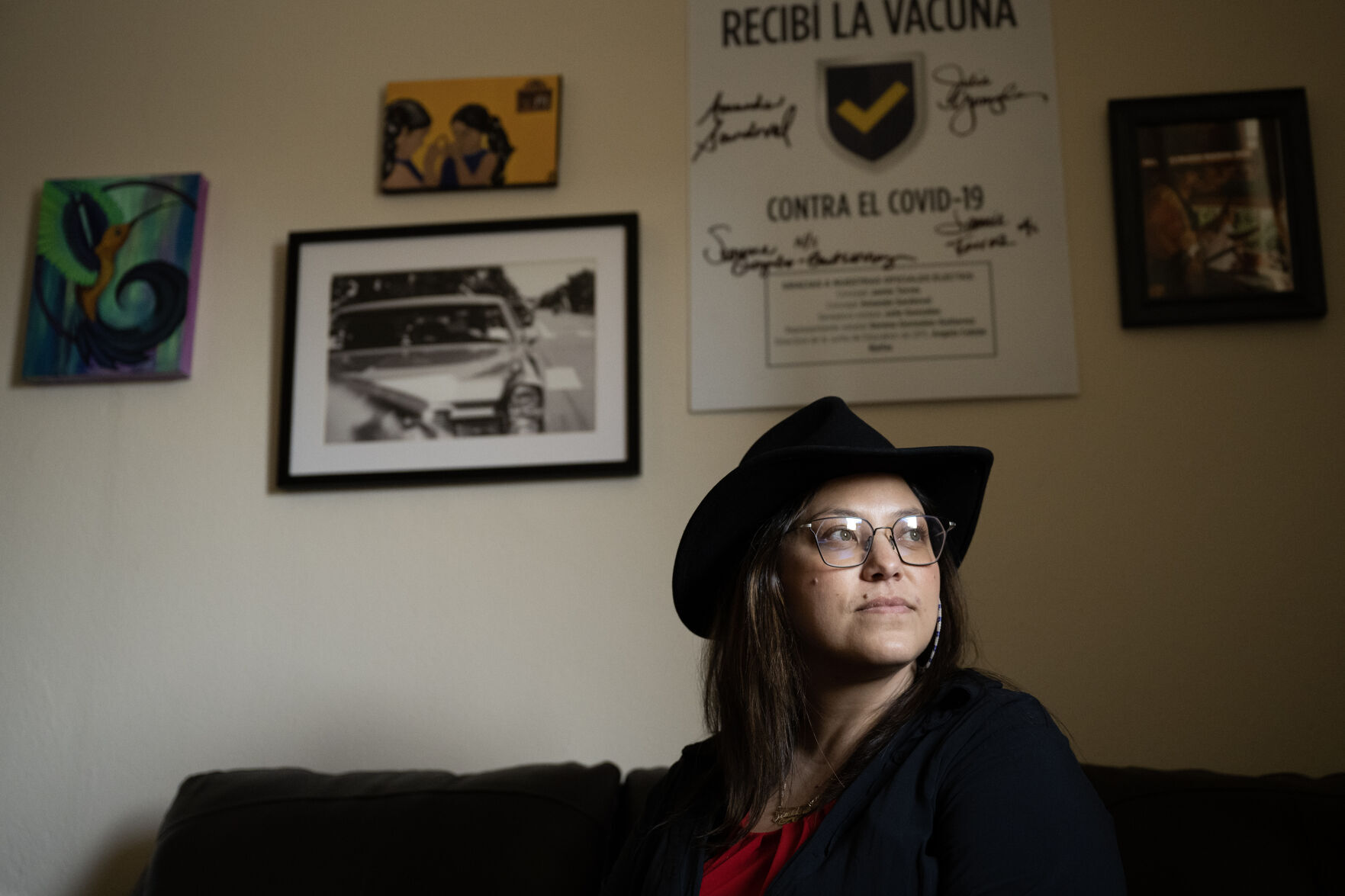
Sen. Julie Gonzales is one of the Colorado Democratic Party’s top political heavyweights going into her second term in the state Senate.
After spending more than a decade advocating for progressive policies from the streets of her Denver community, Gonzales was elected to the Senate in 2018 – earning a whopping 83.1% of the vote. Constituents reelected her for a second and final term in November without opposition.
Gonzales has boasted some of the state’s most influential and controversial legislation in recent years, including prime sponsoring successful bills to repeal the death penalty in Colorado, establish statewide air toxin monitoring and standards, create the Office of New Americans and, most recently, enshrine abortion as a fundamental right.
This session, Gonzales is majority whip of the Senate, co-chair of the Colorado Democratic Latino Caucus and treasurer of the Board of Latino Legislative Leaders. She is also chair of the Judiciary Committee and Committee on Legal Services (one of only three senators to chair multiple committees), a member of two other committees, and prime sponsor of 17 bills so far – the eighth most of any senator.
Just over a month into the 2023 legislative session, Gonzales sat down with Colorado Politics to discuss her goals for the year ahead and how she seeks to legislate for the marginalized.
Colorado Politics: You were politically active long before you joined the Senate, as an influential community organizer and Democratic party volunteer. What inspired you to take the leap and run for office?
Sen. Julie Gonzales: I spent many, many years organizing community members around issues of immigrant rights, educational justice, affordable housing. I actually spent a lot of time protesting on the west steps of the Capitol and organizing people to come to committee hearings. What I realized through that process was that the work outside in the streets and in communities is what makes the work inside the Capitol possible, but you also need folks on the inside to carry bills. So, when my state senator Lucia Guzman was termed out, people started asking me and I was like, “no, no, no.” But I decided to throw my hat in the ring and am really honored to continue her work abolishing the death penalty, holding toxic polluters accountable and running a number of policies that I think reflect the heart and soul of Denver. I’m honored to still organize alongside my constituents, just from here inside the Capitol.
CP: What did you want to accomplish when you first entered the Senate and, looking back now beginning your second term, how do you think you’ve done?
Gonzales: I never anticipated that we would be legislating in the midst of a global pandemic and in the midst of multiple crises: The racial reckoning, an ever-widening gap between working people and the uber-rich. Crisis exacerbates inequality, and my work has shifted to focus on those issues of advancing structural equity. By which I mean working alongside marginalized people – whether they’re people who speak languages other than English, renters and people who live in mobile home parks, folks who are incarcerated, or folks who have been victims and survivors of harm – working alongside those communities to advance policies that hold the wealthy and powerful to account. The pandemic was really clarifying for me to recognize that I couldn’t sit idly by and just take whatever was handed to me at face value, that every single policy merited deep reflection to make sure that our intentions in passing these policies were actually reaching the communities most in need.
CP: What do you want to accomplish this session?
Gonzales: We are in the midst of a housing crisis and how we advance policies to address that housing crisis will depend on who we’re trying to solve it for. The policies we advance to support people experiencing long-term chronic homelessness look very different than the policies we advance to support people who are wanting to purchase their first home. The policies we advance for renters look very different than the policies we advance to ensure that young people are not experiencing chronic homelessness. For many, many, many years, housing was seen largely as a local issue. That’s no longer the case because we’re seeing people who are experiencing homelessness in resort towns, here in Denver, in rural communities and throughout this state. So, that’s going to be a big issue here at the Capitol. I look forward to engaging in a number of those policy fights.
The other question that I’m really interested in over the course of this legislative session is how we ensure that all Coloradans feel safe. There are many different approaches to advance safety. One knee-jerk reaction that we’ve often resorted to is the “tough on crime” approach. We’ve seen the impact of those policies in the mid-90s that led to an era of mass incarceration. We’ve also seen that there are other ways forward to ensure that people who commit harm have the opportunity to rehabilitate so they don’t go back and commit the same mistakes again. Right now, Colorado has a more than 50% recidivism rate. We’ve got to do better. That will be a big focus of our work this legislative session.
The last piece I’ll say is that I’ve been so honored and proud to be the prime sponsor of the Reproductive Health Equity Act (RHEA). Since the Dobbs decision, we’ve seen states across the country are running to pass punitive bans against folks who are seeking abortion care and reproductive health care services. So, this session, I’ll be working to continue that fight and not only re-protect the ability to make your own reproductive health care decisions, but also to advance access.

CP: You’ve previously talked about running a RHEA 2.0 bill to protect abortion care providers and people who come to Colorado for abortions from out of state. Where are things at with that bill?
Gonzales: Drafting. It’s been fascinating. I’m so proud of the coalition that is working – both here in Colorado and across the country – to investigate policies to learn from the state legislatures that have year-round sessions and have already advanced policies, but then also making sure that we’re doing things in the Colorado way. We’ve seen from the municipal ordinance that was introduced last fall in Pueblo that we have to be vigilant. There’s a lot of work to do in order to protect patients and providers and to ensure that we’re protecting all Coloradans. We’re finalizing drafting so that will be introduced soon.
CP: On top of that, you’re already prime sponsoring 17 bills so far this session. Which bills are you most excited about that have been introduced?
Gonzales: I am trying to be very intentional about the policies that I choose to work on, because my focus this session is working on policies that will impact the people who are the most marginalized. One example is, every year, the Senate has a series of sunset reviews that we take up. This year, we are tackling the Sex Offender Management Board sunset. That is an issue that is so deeply complicated on so many levels for both the people who have caused harm and the survivors of that harm. What are the appropriate measures to ensure that people convicted of these offenses are receiving the proper treatment, and that we’re protecting public safety at all levels? If you ask if I’m excited about running this bill, I’m not excited about it, but I know that it’s important. If we don’t act, we are not doing our work of ensuring that we are protecting public safety for all Coloradans, including the people who are offenders, who are currently being warehoused within the Department of Corrections.
I want to make sure those policies are treated with nuance and discernment. The other policy that nobody’s really excited about, but is also deeply important, is the work from the Judicial Interim Committee and the aftermath of the scandal that rocked the Judicial Department. Seeing the deep need for improved processes and better transparency. We’ve spent all summer working through these policy proposals, one of which will require an amendment to the Constitution.
The bills that I’m genuinely excited about are policies working alongside some of the newly elected House members because they bring such an exciting and fresh perspective. Particularly some of the progressive lawmakers who are coming from areas outside of Denver are presenting exciting and bold policy ideas for consideration. Instead of saying, “Oh, no, this can’t be done,” or “What if this is controversial?” they’re saying, “This is what I believe in and this is what I think we should be doing.” I’m really excited to be working with Sen. Janice Marchman on a policy to extend public student loan forgiveness for adjunct faculty across the state. I’m working with Rep. Elizabeth Velasco on ensuring that we are living our values when it comes to language access. Just a whole host of policies on that front.
CP: There’s been a lot of talk about pursuing gun control legislation this year. Can we expect to see you involved in those bills?
Gonzales: There are so many people who are champions in the Senate and, unfortunately, there are also people who have been directly impacted by gun violence. Both Sen. Tom Sullivan and Sen. Rhonda Fields have lost their sons to gun violence. I’m going to support their work, support their efforts. I’m glad to see that there is so much energy and momentum to advance gun safety legislation this legislative session. I absolutely want to see our state do more, but there are a lot of people who have been long-standing champions so I’m just happy to support them.
CP: With the increased Democratic advantage this session, do you intend to bring forward any old legislation that didn’t make it through the first time around? We’ve already seen the reintroduction of a version of your bill to prevent police from lying to juveniles, can we expect more?
Gonzales: My first year in the legislature, I ran a bill to repeal the prohibition on rent stabilization. That bill has been reintroduced by Rep. Javier Mabrey and I’m really excited that bill is coming back. There are a lot of policies that, with these greatly expanded majorities, our constituents are clamoring for, saying, “What are you all doing to address the rising costs of rent?” That’s one policy. It’s certainly not the only policy, I’m also working on policies to support renters, to support people experiencing homelessness, but that’s one that’s coming back.
CP: Speaking of which, how do you feel about the legislature’s expanded Democratic majority after the election? Have things been smooth sailing or are you experiencing any pushback or infighting?
Gonzales: Team blue is a big tent. There are going to be policies in which we have broad agreement, and there are going to be policies in which we don’t always all agree. Certainly, our approach to safety is going to be one in which there are different versions of what that means. When it comes to our economic recovery, there are going to be different versions of where we are centering our policy work. I’m glad that we fought so hard to hold our majority, and it’s clear that Coloradans have trusted Democrats to govern across the board. We don’t always agree and that’s fine, as long as we continue to advance good work on behalf of the people of Colorado. That’s what we were sent here to do.
CP: What do you say to concerns about Democratic overstepping as lawmakers pursue controversial bills such as gun control and abortion protections?
Gonzales: There’s a saying in Spanish, “Dime con quién andas, y te diré quién eres.” That’s, “Tell me who you’re walking with, and I’ll tell you who you are.” We’ve been incredibly clear with voters about exactly the policies that we hope to advance, and the voters said, “Yes, (we) trust you.” I can’t tell you how many times I was knocking doors in Denver, on the Western Slope, in Colorado Springs, in Adams County, in Aurora, in JeffCo, in Pueblo. Different places in the state and voters were telling us the same thing: Address housing, let me make my own decisions about my own body, and make sure that our economic system isn’t rigged for the rich and powerful. That’s where our policy making is going to continue to be centered.
CP: I know you’ve still got many years to go, but now that you’ve been elected to your final term as a state senator, what do you plan to do after you leave the Senate? Have you thought about running for Congress or local office?
Gonzales: I never planned to do this work. I thought I was going to run and push whoever the eventual Democratic nominee for the seat was to the left. I never thought I would become that nominee myself. I never thought I would be sitting here five years in. I take nothing for granted. I take no bill, no committee hearing, no session for granted. I remember my second year in the legislature, I had learned so much from Sen. Lois Court, I served on the Finance Committee alongside her. And she was struck by Guillain-Barré syndrome and was forced to resign just before we began our next legislative session. So, I take none of this work for granted and I’m focused right now on the work that is right ahead of me.


What can Trump do to change the tide before the 2026 midterm elections?
NAOMI LIM Washington Examiner
naomi-lim-washington-examiner@coloradopolitics.com
Updated 6 minutes ago
History will be against President Donald Trump when he tries to hold on to his control of Congress after this year’s midterm elections. From pressuring state Republicans to redraw their congressional districts to create more GOP-leaning seats in the House...

Trump says he ‘aced’ cognitive test amid fresh questions about his health
NAOMI LIM Washington Examiner
naomi-lim-washington-examiner@coloradopolitics.com
Updated 9 minutes ago
President Donald Trump boasted about his cognitive test results after admitting he regrets disclosing he had advanced imaging because of the scrutiny it has stoked regarding his health. “The White House Doctors have just reported that I am in ‘PERFECT...
Appeals judge believes children’s representatives may challenge certain parental rights decisions
Michael Karlik
michael.karlik@coloradopolitics.com
Updated 1 hour ago
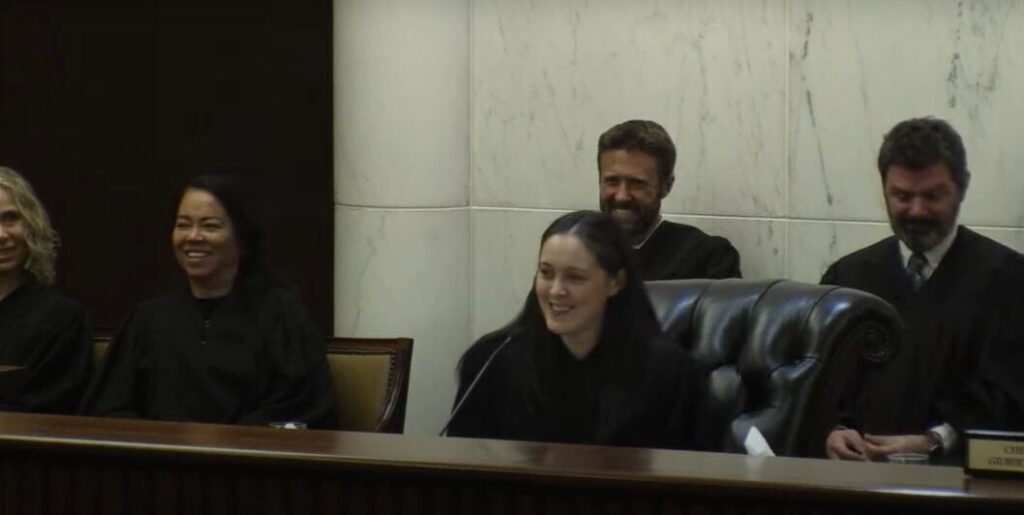
A member of Colorado’s second-highest court argued on Wednesday that, despite a recent state Supreme Court ruling prohibiting anyone other than the government from pursuing child-welfare cases, a child’s legal representative may still appeal certain decisions. By 2-1, a three-judge...
Independent Crank challenger Matt Cavanaugh joins Democratic primary in Colorado’s 5th CD
Ernest Luning
ernest.luning@coloradopolitics.com
Updated 2 hours ago
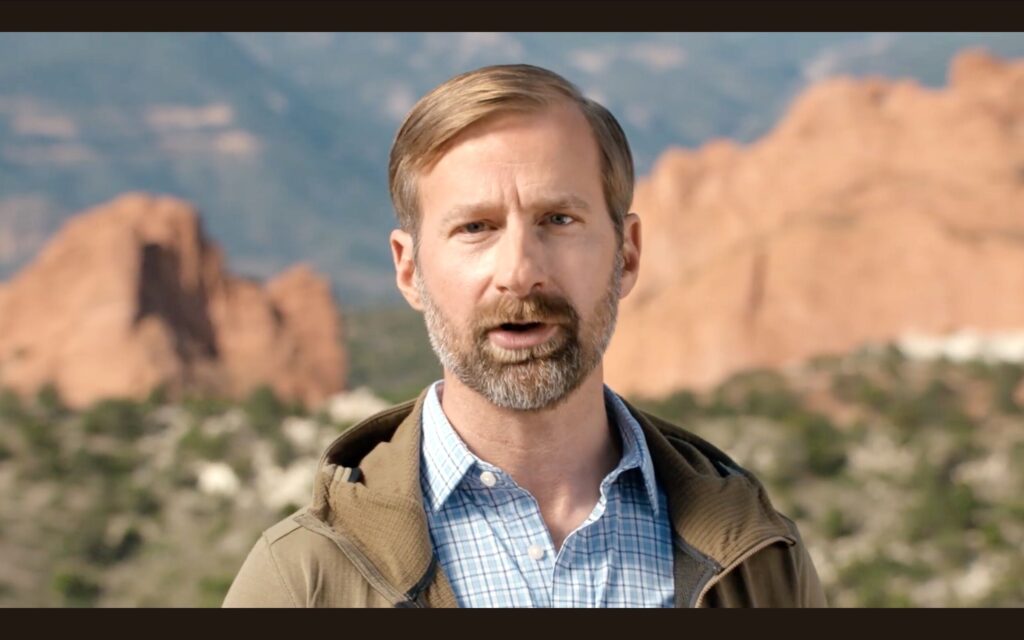
Matt Cavanaugh, the Army combat veteran and author who has been running an independent campaign to unseat first-term Republican U.S. Rep. Jeff Crank in Colorado’s 5th Congressional District, registered this week as a Democrat and will seek the party’s nomination...

Will Colorado Springs get a federal courthouse? Colorado senator, local officials make push for a new facility
Michael Karlik
michael.karlik@coloradopolitics.com
Updated 29 minutes ago
Local officials and one of Colorado’s U.S. senators urged the judiciary earlier this year to explore placing a new federal courthouse and judge’s chambers in Colorado Springs, while the district court is cautioning that Congress must establish new judgeships before...

Colorado experiences record number of flu hospitalizations
Stephanie Earls
stephanie-earls@coloradopolitics.com
Updated 28 minutes ago
With almost 800 hospitalizations statewide last week, Colorado is in the throes of its worst flu surge in almost a generation, less than midway through a season of sickness doctors say they worry hasn’t yet bared its full fangs. “We’ve...
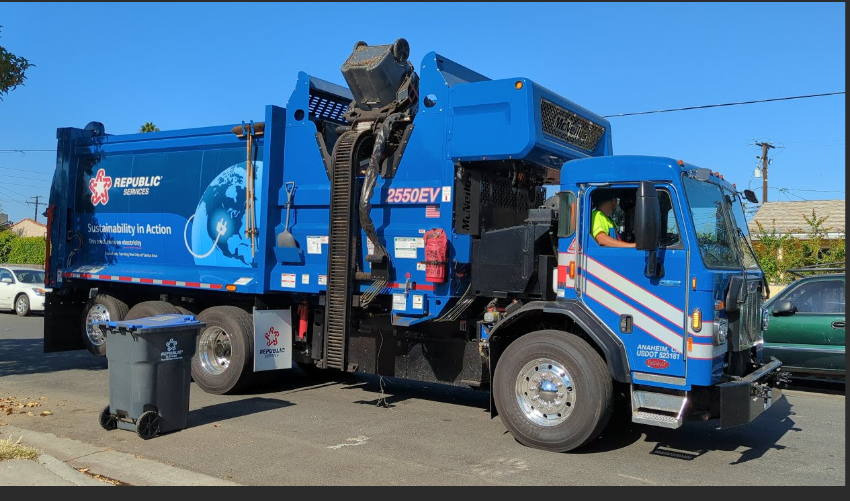
Commerce City to become largest Colorado city with full EV trash collection fleet
Kyla Pearce
kyla.pearce@gazette.com
Updated 3 hours ago
Starting in January, Commerce City will roll out a fully electric recycling and waste collection fleet, making it the largest Colorado city to adopt such a fleet, a city news release announced. In partnership with Republic Services, Commerce City officials...

Feds order coal-fired Craig power plant to remain open
Scott Weiser
scott.weiser@gazette.com
Updated 22 hours ago
The Trump administration’s energy agency has ordered one of three generating units at a Colorado power plant to remain available for operation amid an impending shutdown of the station and its supplying coal mines. The move is one of the...
Appeals court shuts down path to challenge convictions if lawyer tells jury that defendant is guilty
Michael Karlik
michael.karlik@coloradopolitics.com
Updated 23 hours ago
Colorado’s second-highest court concluded on Wednesday that defendants cannot challenge whether the evidence was sufficient to sustain their convictions if their lawyer argues to the jury that it should find the defendant guilty. The U.S. Supreme Court has provided guidance...
Colorado legislature votes to make committee hearing livestreams permanent
Marianne Goodland
marianne.goodland@coloradopolitics.com
Updated 16 hours ago
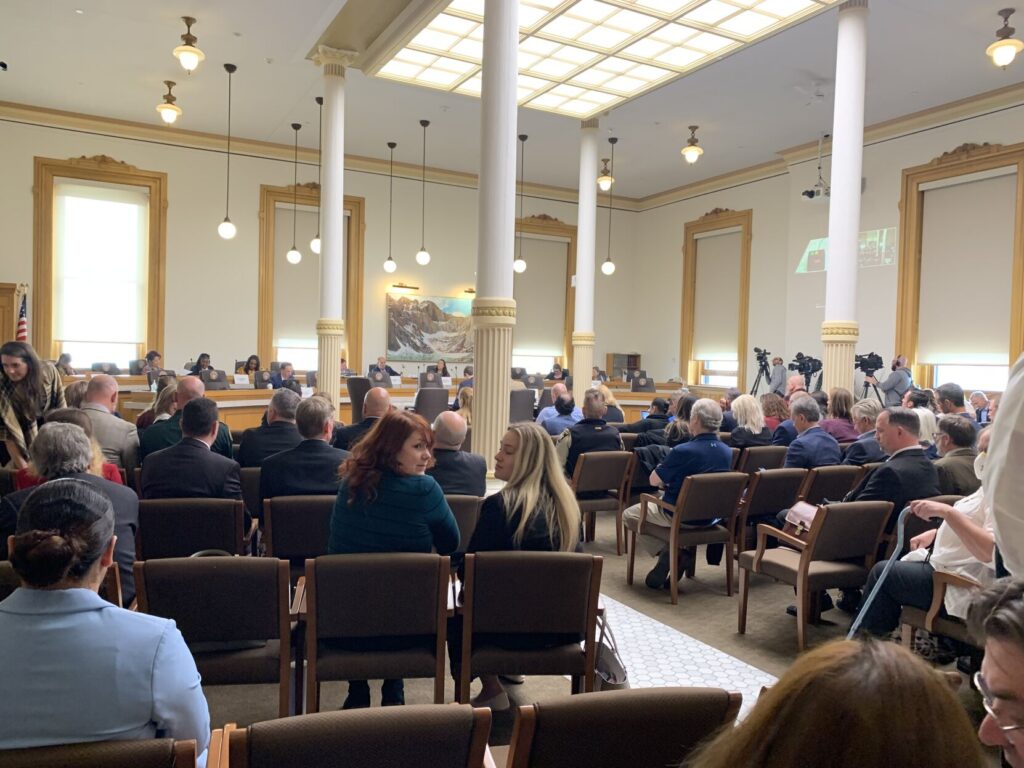
The executive committee of the legislative council — the six top leaders of the House and Senate — voted 5-1 Wednesday to make permanent the video livestreaming of committee hearings, starting in the 2026 legislative session, which begins Jan. 14....
PREV
PREVIOUS

Colorado DMV outage shutters local motor vehicle services, appointments to be rescheduled
Coloradans with driver’s license appointments Monday are asked to reschedule due to a technical issue impacting all state and county motor vehicle offices, the Colorado Department of Motor Vehicles said in a news release. New red-light camera will go live in Colorado Springs next week The department is reaching out to those with an appointment […]

All charter school decisions from state board are final, Supreme Court rules
The Colorado Supreme Court on Monday rejected a reading of state law that would enable some of the Colorado State Board of Education’s decisions on charter school applications to be challenged in court, finding instead that the law renders all decisions final and unappealable. The justices reversed a ruling from the Court of Appeals, which […]