

Pesticides the latest proxy for Colorado lawmakers to grapple with state vs. local control
The next fight over state vs. local control in Colorado’s General Assembly appears to be shaping up around a pesky issue.
State preemption – laws that create statewide standards instead of allowing jurisdiction to set those standards – has been under review by the General Assembly several times in the past few years, including legislation on guns (this year’s House Bill 1165 or 2021’s SB 256), rent control, or bans on plastics.
The next target for turning over statewide control to local jurisdictions: pesticides.
Gov. Jared Polis is believed to be in favor of lifting the state preemption on pesticides, which would allow towns, cities and counties to set up their own list of approved chemicals to deal with pests and weeds.
One of the vehicles being looked at for lifting preemption is the state pesticide applicator act, which is up for renewal in 2023. The sunset review from the Office of Policy, Research and Regulatory Reform at the Department of Regulatory Agencies recommended the act be extended for another 11 years.
But the review didn’t recommend lifting preemption, and that didn’t sit well with environmentalists and others who oppose the use of pesticides.
Current laws maintain a statewide standard of regulation for pesticides, which is managed by the Department of Agriculture. That was affirmed in 2019, when the General Assembly set a statewide standard for dealing with bedbugs, a longstanding problem for apartment-dwellers and landlords.
Forty-four states also have a state standard for pesticides, although Utah allows for local control of pesticides, as does Nevada, Maine and Maryland. Another half-dozen states allow for petitions for local control.
At the federal level, the Federal Insecticide Fungicide and Rodenticide Act provides the U.S. Environmental Protection Agency with the authority to regulate the sale and use of pesticides, and then designates this authority exclusively to the states.
But there’s a gaping loophole in the federal act, one that went all the way to the U.S. Supreme Court. In 1991, the Court ruled that FIFRA does not preempt local government regulation of pesticide use, despite the presumption by most states the legislation did that.
The argument for local control of pesticides is based on concerns around public health, the environment, and even cultural issues. Those who advocate for more control over pesticides cite the declining population of bees, with pesticides as one of the culprits, along with pests and disease.
On Feb. 15, the Senate Agriculture and Natural Resources Committee began working on the sunset review of the pesticide applicator act, a hearing that was just as much about the preemption issue as what’s in the sunset review.
Pesticide applicators complained they weren’t given an opportunity to provide input on some of the sunset’s recommendations, most notably, a requirement to notify people on the state’s Pesticide Sensitivity Registry when pesticides are being applied nearby, whether at home, work or school.
On the other side, those opposed to the use of pesticides claimed the Department of Agriculture, which is in charge of pesticide applications, has a conflict of interest. Some suggested pesticides should be regulated by the Colorado Department of Public Health and Environment.
Louise Chawla, an emeritus professor in environmental design at CU-Boulder, told the committee that even low levels of pesticide exposure can be hazardous to children, and recommended that pesticide applicators who use pesticides around homes or schools be trained in integrated pest management practices.
Many of those who testified in favor of the renewal said they are already doing that.
Kreg Vollmer, an agriculturalist with Western Sugar Cooperative in Sterling, pointed out that while farmers and ranchers already use integrated pest management, some aggressive and invasive weed species are resistant. He also noted that many farmers own property that cross county lines, so lifting the statewide preemption and allowing individual counties to decide what to use would be problematic.
Speaking in support of moving pesticide regulation to the CDPHE, Richard Andrews, who owns an organic farm in Boulder, told the committee the Department of Agriculture “is simply not doing their job when it comes to pesticide regulation.”
“They are not properly staffed, do not have good knowledge of even elemental things such as toxicology and human health and medicine,” he said, claiming it’s a conflict of interest because the Department of Ag is in the business of protecting pesticide applicators rather than a focus on human health.
Why allow local control? Becca Curry of Earthjustice told the committee the risk of pesticides “simply may not be worth it to some Colorado communities.”
“By restoring local authority and removing local preemption, the state can better protect Coloradans,” she said.
Curry also raised the issue of declining bee populations, advocating for the elimination of neonics, a neuro-active insecticide that is chemically similar to nicotine and which has been linked to honey-bee colony collapse disorder.
“We need to make sure experts are the ones weighing in,” said Joe Petrocco, who runs an organic farm in Adams and Weld counties. Organic farming means more weeds and insect damage to crops, he told the committee. Farmers are already taken steps to become more sustainable in growing practices, he said, because it is the right thing to do for families and employees and because the local market demands it. Farmers, who hold applicator licenses, know which pesticides to apply and to which crop, which is designated by the product’s labeling, he said.
“I feel that I can make the best decisions and needs and wants and my specialty. I do this in the field every day.”
Pests don’t respect county boundaries, said Paul Schlagel, who farms in Weld and Boulder counties and inside Longmont city limits, and represented the Colorado Sugar Beet Growers. Lifting the state preemption would be confusing and unmanageable and would make things worse for the applicator, for the communities and environment, he said.
“We can’t separate these farms into different spray patterns. We have to do everything as one,” he told Colorado Politics. “We use the best science possible. Technology is key in agriculture, and what we apply is the safest, latest technology. Our methods we use are different than 10 years ago, but to tie our hands would be a mistake.” In addition, all his ditches start in Boulder County and run into Weld County, and weeds and pests don’t know city or county limits. Lawmakers “need to spend six months in our shoes” before they make decisions that affect us, he added.
“A poison is a poison, even if applicators are properly trained and chemicals are placed in accordance with directions,” said Erin Meschke of Boulder. She noted that the lawsuits against Monsanto over the use of Roundup were for plaintiffs who used the chemical according to the label. She was also among several witnesses who asked that the sunset be extended for less than 11 years. Meschke went on to call for a complete ban on pesticides and herbicides along with abandoning mono crop farming that demands greater use of chemicals every year, stating that “regenerative rotational farming and inclusion of properly grazing livestock is our best route forward.”
Bruce Talbott, president of the Colorado Fruit and Vegetable Growers Association and a lifelong fruit grower in Palisade, said his area is fortunate to have a pest control district, which monitors pest levels and mandates that property owners have to remove trees that are not being cared for. The program’s net result is less pest pressure and less spray materials and applications required to produce a clean crop.
But a lifting of the statewide preemption would challenge their ability to control pests, he explained. Pests don’t respect the boundaries of the jurisdiction and encroach upon other jurisdictions, increasing the cost of control.
And lifting statewide preemption could actually have unintended consequences, such as driving up carbon emissions and threatening biodiversity proposals. Overturning preemption couldn’t come at a worse time to fulfill the state’s obligations to the Endangered Species Act, said Rebecca Larson, chief scientist for Western Sugar Cooperative. She said the company is one of 70 recipients working with the Biden administration on the $3 billion partnership for climate smart commodities program. The program advances soil health as farmers work toward carbon neutrality, and to achieve the goal of the long-term strategy, Larson said farmers need predictable access to crop protection tools that support climate smart agriculture. Overturning the state preemption threatens the program’s success, Larson explained.
Pesticide applicators, however, are not just on farms. They also work on lawns, golf courses and in commercial buildings and homes. When rolling back preemption, said Justin Schmidt of Weedman Lawn Care, powers are given to local politicians and local members of a community that are not educated on what pesticide applicators do, and don’t have the expertise of the Department of Agriculture. Ryan Riley of Saela Pest Control said lifting preemption would create a patchwork of laws, citing, for example, Aurora, which is in three different counties.
The sunset is now headed to bill drafting, and will be sponsored in the Senate by Democrats Sen. Kevin Priola, a former greenhouse owner, and Sen. Dylan Roberts of Eagle, who chairs the Senate Agriculture and Natural Resources Committee.
While that committee is likely to approve a “clean” bill without lifting preemption, other lawmakers outside of the committee are hoping to either amend it or run a separate bill. Rep. Cathy Kipp, D-Fort Collins, told Colorado Politics early in the session she is interested in seeking a ban on preemption and is looking at a standalone bill.
Three years ago, Colorado lawmakers failed in an attempt to lift the state preemption on pesticides. Senate Bill 20-189 would have allowed local governments to regulate pesticide use and application, with exemptions for marijuana and agriculture.
COVID-19 stopped the bill. Despite being sponsored by then-Senate Majority Leader Steve Fenberg and Rep. Monica Duran, who is now the House majority leader, the bill died in committee. The legislature was in the midst of an effort to focus only on COVID, and get rid of just about everything else.


Army veterans Jessica Killin, Joe Reagan qualify for Democratic primary ballot in Colorado’s 5th CD
Ernest Luning
ernest.luning@coloradopolitics.com
Updated 14 hours ago
Democratic congressional candidates Jessica Killin and Joe Reagan secured spots Saturday in Colorado’s June primary to decide who will run against Republican U.S. Rep. Jeff Crank in a district that’s only ever sent GOP lawmakers to Congress. The two Democrats,...

Who has the power to declare war? | Cronin and Loevy
Tom Cronin Bob Loevy
tom-cronin-bob-loevy@coloradopolitics.com
Updated 18 hours ago
Our constitutional framers boldly and ambitiously granted Congress the power to declare war yet granted the executive the responsibility, after war is declared, to supervise war as the commander-in-chief. That worked well until the Cold War began. The U.S. has been...
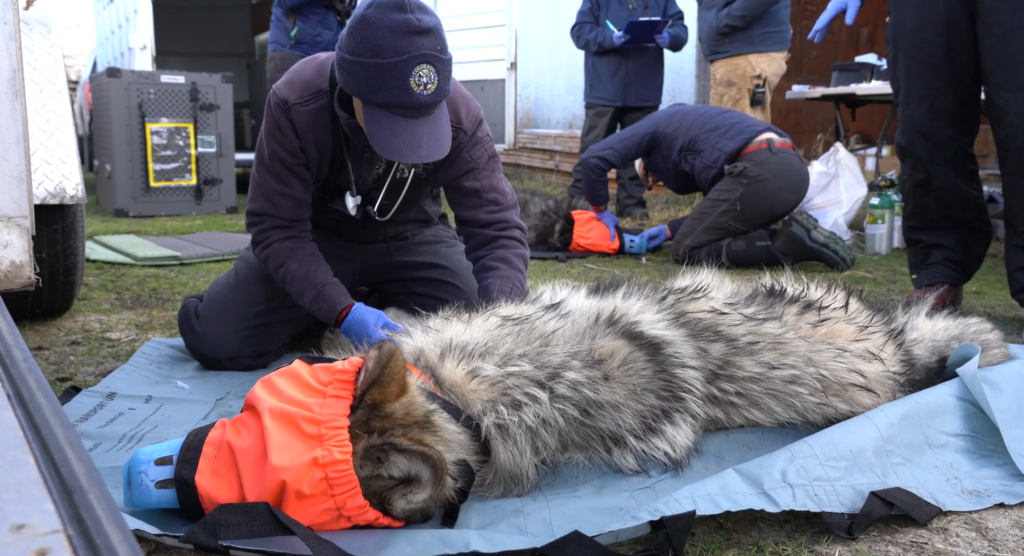
Latest death brings down wolves’ survival rate to 44% in Colorado
Marianne Goodland
marianne.goodland@coloradopolitics.com
Updated 22 hours ago
The female wolf of the mating pair for the King Mountain pack has died, bringing total fatalities to 14 out of the 25 animals reintroduced in Colorado. The wolf, identified as No. 2310, was among the 10 wolves brought to...

The delicate, ever-changing dance between politics and religion | SONDERMANN
By Eric Sondermann
by-eric-sondermann@coloradopolitics.com
Updated 20 hours ago
The dance, really a marathon that brings to mind the classic movie “They Shoot Horses, Don’t They?”, has been going on as long as there have been governments and organized religion. That is to say that this delicate tango has...
Roasts, get yer roasts, here: Capitol M | Week of March 14, 2026
Marianne Goodland
marianne.goodland@coloradopolitics.com
Updated 4 days ago
The lighter side of the Capitol, especially in the past week Apparently, the pending and eventual switch to daylight stupid time has put people in some pretty funny moods. And thank goodness! On March 4, the Senate approved the appointments...

Polly Baca elected to DNC | A LOOK BACK
Rachael Wright, Special to Colorado Politics
rachael.wright@coloradopolitics.com
Updated 4 days ago
Forty-Five Years Ago This Week: After her loss to Republican U.S. Rep. Hank Brown the previous year in the race for the 4th Congressional District, state. Sen Polly Baca-Barragan, D-Thortnon, was elected as one of the three vice-chairs of the...

Colorado Politics Calendar Mar. 16-22
Rachael Wright, Special to Colorado Politics
rachael.wright@coloradopolitics.com
Updated 4 days ago
CoPo’s weekly political calendar will help you find political and public-policy events throughout Colorado. It includes candidate and issue campaign events, public policy meetings, court hearings, state and local party conventions, assemblies, debates, rallies, parades, speaking engagements, traveling dignitary appearances,...

Boebert challenger Eileen Laubacher joins lawsuit aimed at blocking her from Democratic assembly
Ernest Luning
ernest.luning@coloradopolitics.com
Updated 2 days ago
A Denver District Court judge on Thursday permitted Democratic congressional candidate Eileen Laubacher to join a lawsuit filed by one of her primary opponents seeking to prevent Laubacher from participating in the party’s assembly process in a bid to qualify...
Colorado justices weigh fairness concerns after defendant prevailed despite ghosting case
Michael Karlik
michael.karlik@coloradopolitics.com
Updated 15 hours ago
Members of the Colorado Supreme Court struggled on Tuesday to balance the need for one defendant to shield itself against a plaintiff’s claim that its employee sexually assaulted her child, and the fact that the employee legally admitted the allegations...
House Ethics Committee to begin hearing on Weinberg complaint
Marianne Goodland
marianne.goodland@coloradopolitics.com
Updated 2 days ago
The House Ethics Committee on Tuesday will begin a hearing requested by Rep. Ron Weinberg, R-Loveland, tied to an ethics complaint filed against him by Rep. Brandi Bradley, R-Roxborough Park. The ethics committee had found probable cause on two issues...
PREV
PREVIOUS

Gun violence is rising. Two leaders say Denver schools and police need a new relationship.
Nearly a year ago, two former Denver Public Schools administrators pitched an idea for how police and students could form healthy relationships instead of punitive ones. The proposal hasn’t been put into place. Nor have any others that address how Denver schools and city police should work together after a 2020 decision to remove police […]

Poll: 60% of voters undecided in Denver mayor's race; Brough leads field
The race for Denver mayor is wide open, with more than half of voters undecided and none of the candidates cracking the 10% support mark, according to a poll conducted earlier this month. The poll shows former Denver Metro Chamber of Commerce executive Kelly Brough leading with 7.6% of the vote, followed by state Rep. […]