

The grim economic truth of FAMLI, public option | SENGENBERGER
“When you want to help people, you tell them the truth,” the great economist, Thomas Sowell, once admonished. “When you want to help yourself, you tell them what they want to hear.”
With the legislature’s return, we must spend a moment telling the truth about Colorado’s public health insurance option and paid family leave programs – both of which went into effect this year yet are already plagued with problems on the road to complete failure.
The General Assembly approved the standardized government health insurance option in 2021, making Colorado the second state to do so. The law mandates each health insurance company on the exchange provide an individual and small group plan that offers at least one public option plan.
For 2023, these plans are required to have a premium rate that is 6% less than those it offered last year. In 2024, they must be 12% less than those offered this year. By 2026, annual premium increases can’t be greater than the previous year’s medical inflation rate.
Meanwhile, as Politico reports, benefits to enrollees are supposed to be increasingly generous – including co-pays rather than co-insurance, lower out-of-pocket costs and a provider network deemed by the state to be “culturally responsive.” If insurers don’t reduce their premiums an extra 5% next year, the government gets to crack the whip. Colorado’s Division of Insurance “can hold a public hearing and set reimbursement rates for providers that will help insurers meet the premium reduction targets.”
The faulty theory is a public option will provide a lower-cost option with higher-quality offerings for consumers while driving down prices more broadly. Not so fast.
This is all about price controls. Economics literature has long proven price controls don’t work. In fact, not only do they fall short of meeting expectations; they make things worse by creating market shortages, distorting markets and causing other problems.
You can’t just lower prices and change products by waving a magic government wand; that’s not how the real world works. It’s simply not realistic for insurance companies to cut costs and make coverage more robust in the way the would-be government savants claim.
Last month, Politico surveyed three states that tried the standardized government insurance plan, including Colorado. They find that, in Colorado, “only one insurance company out of eight (Denver Health) met all the cost-cutting targets set by lawmakers.”
This jibes with Washington state, which was the first to do this in 2019 and only has five of its 12 insurance carries participating in the program.
“Washington state’s performance on premium costs has also been abysmal,” notes the Heritage Foundation’s Robert E. Moffit, PhD. “While officials expected their public option coverage to have a premium cost between 5% and 10% lower than the standard Affordable Care Act plans on the state’s health insurance exchange, the premium cost turned out to be 11% higher than the private plans.”
People aren’t even signing up for these plans, either. As Politico reports, roughly “7,000 of the nearly 240,000 people who enrolled in individual plans through (Washington’s) health insurance exchange selected public option plans for 2022.”
Our legislature must resist the temptation to “remedy” the situation by forcing more participation by medical and insurance providers or mandating greater premium reductions to boost enrollment – which will only make things worse.
The new FAMLI program is another disaster-in-waiting. Passed Colorado voters in 2021, Proposition 118 established a paid family and medical leave program funded by premium fees that are functionally a payroll tax. The tax is currently 0.45% for both the employer and the employee, adding up to 0.9%. It’s capped at 1.2% and is estimated to bring in $1.3 billion in premiums this year. This month, the state begins collecting the FAMLI tax, but the benefits won’t kick in until next year.
FAMLI’s financial viability is already crumbling. The Common Sense Institute released an analysis of fiscal projections for the program and found that, “under higher cost assumptions… the premium would need to grow to 1.7% to keep the fund solvent.”
It’s wise to consider higher cost assumptions given how excessively generous its offerings are – inevitably encouraging workers to use the benefit more. Eligible workers will be able to claim up to 16 weeks of paid leave at wage replacement rates up to 90% for maternity/paternity leave, personal injury and caring for ailing family members. As CSI points out, several other states have paid family leave programs already in place, but most are “significantly less generous than FAMLI.”
The analysis offers several ways the legislature can shore-up the program, but while they may help for a while, the fiscal health of the program will always be in doubt – and the increased cost of doing business will hamper economic growth.
It is said that the road to hell is paved with good intentions. The public option and FAMLI programs may be well-intentioned, but failure to consider economic reality has inevitably doomed them both. Eventually, who is the government going to force to make up the shortfalls?
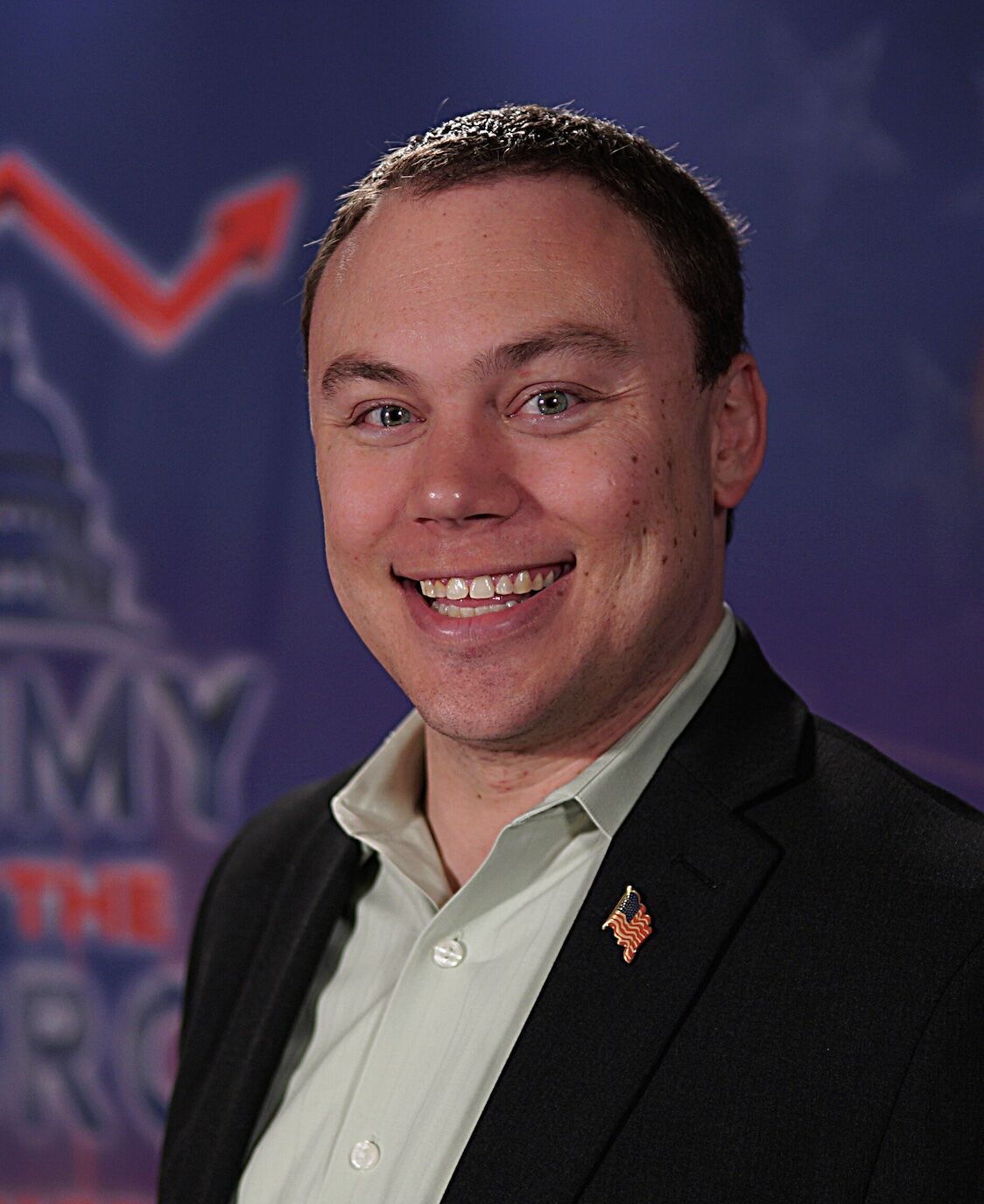
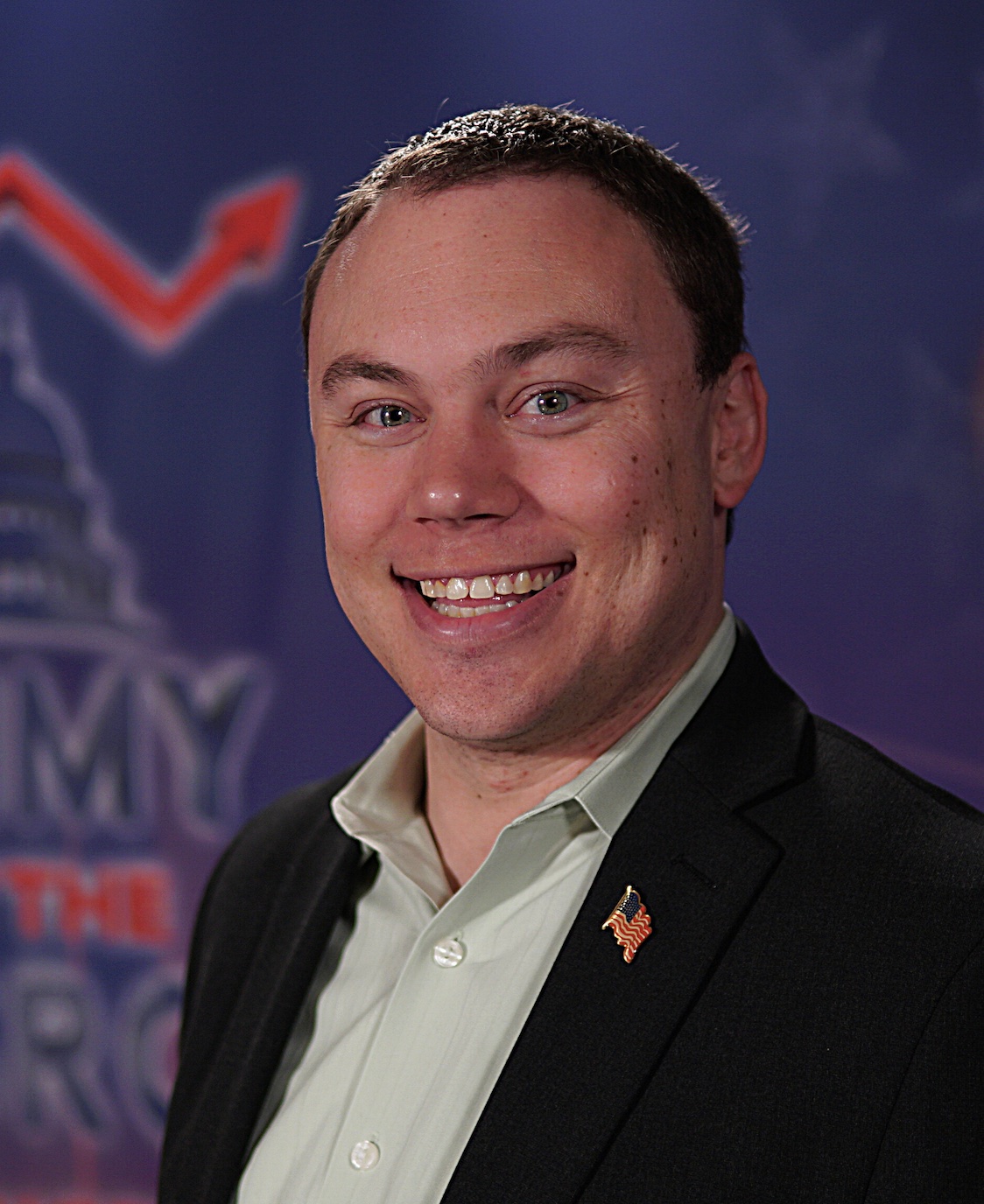
Jimmy Sengenberger is an investigative journalist, public speaker, and host of “The Jimmy Sengenberger Show” Saturdays from 6 a.m. to 9 a.m. on News/Talk 710 KNUS. Reach Jimmy online at JimmySengenberger.com or on Twitter @SengCenter.


Election 2026 will be a big Democratic year, unless President Trump avoids the ‘sixth-year’ jinx | Bob Loevy
Bob Loevy
bob-loevy@coloradopolitics.com
Updated 2 hours ago
Here is analysis of which political party, the Democrats or the Republicans, will win the 2026 general elections for the U.S. Senate and the U.S. House of Representatives next November. Because the U.S. president will not be on the ballot...

Colorado is shrinking — time for our elected officials to take notice | Jon Caldara
Jon Caldara
jon-caldara@coloradopolitics.com
Updated 3 days ago
By Jon Caldara Something strange is happening in Colorado — strange enough that the political class should notice. People are leaving Colorado. After years of being one of the fastest-growing states in the nation, net in-migration has stopped and may...

Capitol M: Return to Gold Dome High, 2026 edition, and a salute to old IU
Marianne Goodland
marianne.goodland@coloradopolitics.com
Updated 4 days ago
Welcome back, campers! The 2026 legislative session is upon the good citizens of Colorado, and for a few, the first Monday of the session, Jan. 19, was pretty special. There are at least four folks in the Capitol who are...

The biggest accelerant of our political tribalism | SONDERMANN
Eric Sondermann
eric-sondermann@coloradopolitics.com
Updated 4 days ago
In years past, my go-to word in describing our political condition was “polarization.” I used it endlessly and still do on occasion. But as time has moved on, and the divide has only grown in depth and toxicity, polarization no...
The ramifications of President Trump’s pursuit of Greenland | Kelly Sloan
Kelly Sloan
kelly-sloan@coloradopolitics.com
Updated 3 days ago
President Donald Trump has evidently stepped back from his threatened fantasy of invading Greenland — the sovereign territory of a U.S. ally — to which many a sigh of relief has been expressed, including by the markets. There was next...

Let’s find out who’s up to the gubernatorial task post Polis | Paula Noonan
Paula Noonan
paula-noonan@coloradopolitics.com
Updated 4 days ago
Gov. Jared Polis is bold and his policies are bolder than bold. That’s the paraphrase of his State of the State speech to open the 2026 General Assembly and start off his last year in office. His sweeping review of...

We dream, we dare, we decouple — how Colorado turns values into policy | OPINION
Colorado Politics
colorado-politics@coloradopolitics.com
Updated 4 days ago
By Kathy White Gov. Jared Polis’ final State of the State address was a clear victory lap. After eight years as governor, he used the moment to highlight accomplishments, reflect on progress and remind Coloradans what his administration has delivered....
Volunteer homeowners’ associations to be hit with new lot-splitting law | Bob Loevy
Bob Loevy
bob-loevy@coloradopolitics.com
Updated 4 days ago
Volunteer homeowners’ associations in Colorado Springs, particularly those close to the downtown area, are preparing for another attack on single-family zoning from Gov. Jared Polis and the state legislature during the just underway 2026 legislative session. The new proposal is...

Comprehensive energy permitting reform benefits Colorado, the mountain west | PODIUM
Colorado Politics
colorado-politics@coloradopolitics.com
Updated 5 days ago
By Ron Dickson Thank you, U.S. Reps. Gabe Evans and Jeff Hurd, for your participation in the Congressional Problem Solvers Caucus and your support of comprehensive energy permitting reform. We also appreciate U.S. Sen. John Hickenlooper’s continued efforts to enhance...

Colorado kids will die with CDC’s recent changes to vaccine schedule | OPINION
Colorado Politics
colorado-politics@coloradopolitics.com
Updated 5 days ago
By Connie Ingram and Lesley Thompson No parent or grandparent should ever face the terror of watching a child fight for their life against a disease that could have been prevented. Yet more families could be put in exactly this...
PREV
PREVIOUS

Where are the College Republicans? | PODIUM
Alec Hanna Republicans often talk about how college students are indoctrinated by liberal faculty who have taken over educational institutions. The merits of this argument can be discussed at another time, but Republicans here in Colorado have seemingly given up entirely on college students. Like many other political operatives, I got my start in politics […]

Deadly fentanyl floods Colorado | Colorado Springs Gazette
A Gazette headline Monday served as a chilling – and alarming – reminder that Colorado is still at war: “DEA’s Rocky Mountain region seized enough fentanyl in 2022 to kill almost every Colorado resident.” That’s right, Coloradans are locked in the same life-and-death struggle against the same deadly opioid that state lawmakers claimed to have […]