

10th Circuit upholds home search because defendant’s mom invited police to look around
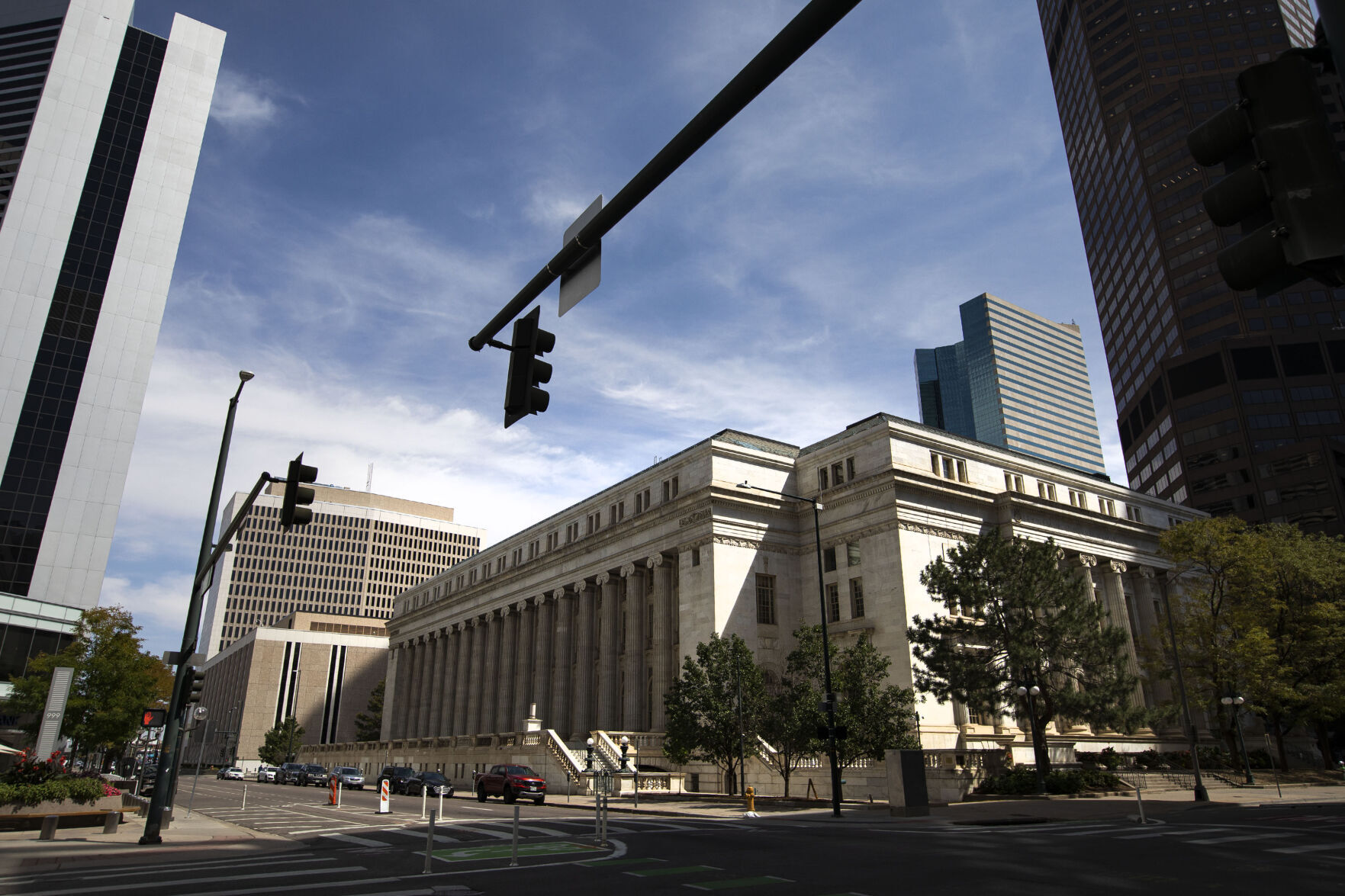
The federal appeals court based in Denver has agreed police were lawfully inside an Adams County home at the explicit invitation of the defendant’s mother when they spotted the defendant’s handgun in a drawer, leading to federal charges for firearms possession.
Mario Raymond Sanchez is serving a three-year sentence for possessing a weapon despite a prior felony conviction prohibiting him from doing so. An officer happened to see the gun in a drawer while inside the home of Sanchez’s mother, where police were awaiting a search warrant.
At the time, Sanchez was a person of interest for a yet-unresolved murder from December 2019. But once the gun was spotted, law enforcement added the new information to their warrant application.
A trial judge found the search of the home was legal under the Fourth Amendment because, even if the discovery of the gun was excluded, police had other evidence establishing probable cause Sanchez had committed a crime.
Last week, the U.S. Court of Appeals for the 10th Circuit simplified the issue even further. Sanchez’s mother consented to police being in her home, they were lawfully inside when they spotted the gun, and probable cause was, therefore, unnecessary.
The mother’s “unbounded permission overrode any such requirement,” wrote Senior Judge Paul J. Kelly Jr. in the court’s Jan. 5 order.
On Jan. 23, 2020, law enforcement was searching for Sanchez – hoping to talk to him about the murder of 21-year-old Alicia Marie Tverberg the previous month. A man recently released from jail had returned to his apartment near Brighton in December, only to find the door open and Tverberg inside, dead from a gunshot wound. While in jail, the man allegedly agreed to let a friend of Sanchez’s, Lindsay Jenson, stay at his apartment.
A confidential informant claimed Sanchez, Jenson and a third party placed Tverberg’s body inside the apartment. Although the informant did not believe Sanchez shot Tverberg, Sanchez had asked Jenson over Facebook to bring him 9mm bullets before the crime. Police felt, at least at the time, Jenson was heavily involved with the murder and Sanchez could be with her.
Officers arrived at the Commerce City home of Serapia Gutierrez, Sanchez’s mother, and she said they were “more than welcome” to come inside. Gutierrez roused Sanchez from his son’s bedroom, where Sanchez was sleeping, and Sanchez met with the officers. He agreed to come with them to the police station.
Gutierrez invited the officers to look through her house, saying she had “nothing to hide.” Police declined to do so, opting to wait for a warrant. Eventually, officers asked Gutierrez to come to the police station for an interview. She agreed to go, along with Sanchez’s son.
Before leaving, however, Gutierrez made arrangements for the other occupants of the house. A family member picked up two elderly relatives who lived with Gutierrez and, after Gutierrez left, Sanchez’s ex-wife came to retrieve a dog who was locked in the bathroom.
Officers remained in the home to await the warrant, and sheriff’s Deputy Sean Allegar accompanied the woman while she looked for the dog’s leash. The woman opened a drawer in the bedroom where Sanchez had been sleeping, only to find a handgun inside. Allegar reported his observation, which made its way into the application for a search warrant.
Police were able to later link the gun to Tverberg’s slaying, although they did not charge Sanchez for murder and the case remains unsolved.
In response to the charge of unlawful firearm possession, Sanchez sought to exclude evidence of the gun from his trial. After a hearing, U.S. District Court Senior Judge R. Brooke Jackson rejected Sanchez’s request, finding Allegar “properly” followed Sanchez’s ex-wife in the home and “purely by chance” saw the gun.
Alternatively, “there was probable cause to believe that Mr. Sanchez was a person of interest, that he might be with Jenson, that he might be with Jenson in that house, that he was in that house, and that he might have a 9mm handgun with him,” Jackson elaborated.
Sanchez appealed, arguing even if police suspected him of possessing a prohibited firearm, there was nothing suggesting Gutierrez’s home was where they could find it.
“You’ve got a Facebook message from a month before,” Judge Nancy L. Moritz observed during oral arguments at the 10th Circuit, “saying he had the gun and he possessed it essentially a month before. Not that he had the gun in the mom’s house, that he lived in the mom’s house – nothing.”
But the government countered there was a “fair probability” of finding the gun wherever Sanchez was.
“The search that happened here was a plain-view search,” added attorney Marissa R. Miller. “When we have a plain-view search, the main question – perhaps the only question – is whether the officer who saw that evidence in plain sight had a legal right to be standing there.”
The 10th Circuit panel hearing the appeal ultimately decided Gutierrez’s consent meant the officers were lawfully inside her home and Allegar’s observation of the gun was fair game.
“They had permission to be in the house. This woman shows up looking for a dog leash. They want to make sure nothing would be taken. So there’s nothing wrong with them following her around,” Kelly explained during oral arguments. “She opens the drawer to get the leash and lo and behold, there’s the gun. What more is needed?”
The case is United States v. Sanchez.

SCOTUS whisperer? Justice Carlos Samour may get second opportunity to turn state dissent into national precedent
Michael Karlik
michael.karlik@coloradopolitics.com
Updated 57 minutes ago
For the second time in two years, Justice Carlos A. Samour Jr. occupies an unusual position: Having his dissent in a Colorado Supreme Court case potentially forming the basis of U.S. Supreme Court precedent. Earlier this week, the nation’s highest...

10th Circuit appoints ex-Colorado solicitor general to argue issue after federal government declines
Michael Karlik
michael.karlik@coloradopolitics.com
Updated 16 hours ago
The Denver-based federal appeals court took the unusual step earlier this month of appointing an attorney to independently argue a key issue in a criminal sentencing appeal after the government indicated it would not contest the defendant’s view of the...

Daniel Domenico to take over as Colorado’s chief federal judge
Michael Karlik
michael.karlik@coloradopolitics.com
Updated 1 hour ago
Daniel D. Domenico will become the new chief judge of Colorado’s federal trial court next week, a role that encompasses the administration of the court as well as a judicial caseload. Under federal law, the chief judge of a U.S....
10th Circuit upholds violations, sanctions against Colorado Springs mental health hospital
Michael Karlik
michael.karlik@coloradopolitics.com
Updated 23 hours ago
The Denver-based federal appeals court agreed earlier this month that the government properly cited and penalized a Colorado Springs psychiatric hospital for failing to protect its staff from known risks posed by patients. The Occupational Safety and Health Administration inspected...
Appeals judges tell Boulder students about workload, ‘attack mode’ during school visit
Michael Karlik
michael.karlik@coloradopolitics.com
Updated 1 day ago
Three judges on Colorado’s second-highest court traveled to Boulder on Tuesday to hear oral arguments in real cases and field questions from students about their professional paths, their workload on the Court of Appeals, and their approach to interacting with...
Judge: CBI ordered to provide access to thousands of DNA cases
Jenny Deam
jenny-deam@coloradopolitics.com
Updated 20 hours ago
Boulder County District Judge Nancy W. Salomone on Monday ordered the Colorado Bureau of Investigation to provide access to thousands of cases where past DNA analysis could be in question or show a pattern. The ruling came in a pre-trial...

Trial delayed for former Fountain city councilwoman accused of public assistance theft
Nick Smith
nick-smith@coloradopolitics.com
Updated 1 day ago
The trial for a former Fountain City Councilmember accused of stealing over $37,000 in public assistance funds has been pushed to July. Detra Duncan, 55, resigned in mid-September 2025 after El Paso County investigators say they found forged documents that...
Judge Timothy Tymkovich to step aside, create Colorado-based vacancy on 10th Circuit
Michael Karlik
michael.karlik@coloradopolitics.com
Updated 21 hours ago
Judge Timothy M. Tymkovich of Colorado has announced his intent to step aside as an active member of the Denver-based federal appeals court, creating the first vacancy for President Donald Trump to fill in his second term. In a Feb....
Divided appeals court reverses murder convictions due to faulty self-defense instruction
Michael Karlik
michael.karlik@coloradopolitics.com
Updated 21 hours ago
Colorado’s second-highest court concluded last week that an incomplete self-defense instruction required the reversal of an El Paso County defendant’s murder convictions. Demetrius Montez Martin was among those present late at night at a club in Colorado Springs. An argument...

New Supreme Court member announced, justices hear oral arguments | COURT CRAWL
Michael Karlik
michael.karlik@coloradopolitics.com
Updated 3 days ago
Welcome to Court Crawl, Colorado Politics’ roundup of news from the third branch of government. The governor announced his pick to fill a vacancy on the state Supreme Court, and the justices heard oral arguments in multiple criminal and civil...
PREV
PREVIOUS

Aurora approves tax repeal
A proposal to repeal the occupational privilege tax in Aurora, which generates about $6 million in annual revenue for the city, will take affect in two years after a bill to eliminate it gained final approval on Monday. The Aurora City Council voted to pass the bill on final reading through a 5-5- vote, with […]

Colorado's Polis begins second term facing major challenges in housing, public safety, inflation
Greeted by a cool and sunny January morning, Gov. Jared Polis started his second term by pledging to “lead the Colorado way” amid growing concerns around affordable housing, public safety, rising cost of living and a state budget with little room for additional spending in the upcoming fiscal year. Polis, Colorado’s 43rd governor, opened his second […]