

Sen. Romer lays groundwork for legislative battle over new state college | A LOOK BACK
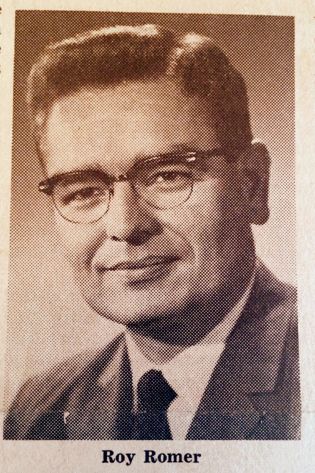
Fifty Years Ago This Week: State Sen.-elect Roy Romer, D-Denver, spoke at the Democratic Forum in Denver to drum up support for the establishment of a new, four-year Denver State College.
Romer had chaired a legislative task force that had been formed in response to an identified need from Denver, Jefferson, Adams and Arapahoe county students who were not being adequately served by CU Boulder’s non-degree granting extension center in Denver.
The most feasible solution, Romer and the task force concluded, was to establish a four-year Denver State College as well as a graduate center to be staffed by personnel from CU Boulder, Colorado School of Mines and Colorado State University.
But CU Boulder Regents and the faculty senate remained intractable in their opposition to the formation of another state college.
In what was quickly becoming one of the most significant battles to face the legislature, Romer said that he took issue with “CU policy makers on the grounds that a separate institution could do a better job of meeting the unique needs of urban area students,” and more affordably.
In 1960, the state legislature had tasked CU Boulder for recommendations address the unmet educational needs of Denver students. The legislative task force found that 25% fewer metro Denver students were going to college compared to similar communities with a state college.
“The further fact is that students in the Denver area now enrolled in the CU extension center and in Opportunity School are different from students on a residence campus like Boulder,” Romer said. “Nearly 90% have at least a part time job, 75% work 40 hours a week, three times as many attend class at night, they are older, and have many special equational needs.”
According to Romer, the task force found that four educational needs existed for metro Denver students: graduate programs, undergraduate programs, high-level specialized technological training and vocational education.
In other news, Shirlee Harhues, president of the Denver Police Wives Association, spoke with The Colorado Democrat saying she was outraged with the continued dangerous practice of the Denver Police Department of having only one police officer per patrol vehicle.
While the issue was being debated, Harhues said, another police officer had been killed while patrolling alone. For years the Denver Police Wives Association had been lobbying heavily to force the city of Denver and the Denver Police Department to implement a two-man per squad car policy.
Harhues said that the Republican dominated “citizens committee” which was formed to address the issue, had informed her that the two-man cars policy would be implemented, but that it would “depend on who will get the credit.”
Twenty-Five Years Ago: Less than two years after she narrowly lost the House District 27 seat to Rep. Barry Arrington, R-Arvada, by less than 10 votes per precinct, Sue Windels again announced she would be making a new bid for her old, Republican-dominated northern Jefferson County seat.
Windels said that the near miss had been lingering in her mind and she’d been working hard since the November 1996 election to keep her name in front of the voters. Shortly after her loss, Windels had formed the newsletter The Voters Voice, which aimed to keep voters informed about political events affecting the community.
In her announcement, Windels argued that Arrington’s stringent pro-life views generated irritation among voters who believed he used his position to further his own religious views instead of representing his constituents.
“My goal is to represent all of the people of House District 27,” Windels said. “If elected, I will be a team player and listen to all points of view rather than using the seat to further my own agenda.”
Windels touted her long history working in education as Jefferson County Parent Teacher Association legislative chairman and Colorado’s PTA director of public policy.
Rachael Wright is the author of the Captain Savva Mystery series, with degrees in Political Science and History from Colorado Mesa University and is a contributing writer to Colorado Politics and The Gazette.

U.S. House probes reports of fraud, waste in Colorado’s Medicaid program
Marianne Goodland
marianne.goodland@coloradopolitics.com
Updated 2 hours ago
A congressional committee is probing reports of waste, fraud and abuse in Colorado’s Medicaid program, citing recent stories outlining over-billing in transportation spending and The U.S. House Committee on Energy and Commerce has sent a letter to Gov. Jared Polis...

Colorado’s congressional redistricting proposal could flip three Republican House seats | ANALYSIS
Michael Braithwaite
michael.braithwaite@gazette.com
Updated 59 minutes ago
A Democrat-backed proposal to redraw Colorado’s congressional map for the 2028 election could flip three Republican districts. The proposal, introduced by a group called Coloradans for a Level Playing Field, is yet another development in a national redistricting debate after...

Appeals court overturns Douglas County vehicular homicide conviction due to faulty jury instructions
Michael Karlik
michael.karlik@coloradopolitics.com
Updated 6 hours ago
Colorado’s second-highest court overturned a defendant’s vehicular homicide conviction and 12-year prison sentence on Thursday after determining a Douglas County judge omitted key language from the jury instructions that could have resulted in a different outcome. James Paul McDonald was...
Colorado lawmakers’ speeches on immigration, Iran draw worries about decorum, grandstanding
Marianne Goodland
marianne.goodland@coloradopolitics.com
Updated 5 hours ago
Several speeches from Colorado legislators this week have raised new worries about decorum and grandstanding in the state House after two members talked about immigration and Iran using what’s called a “point of personal privilege.” Under the rules of the...

Trump fires Homeland Security Secretary Noem after building criticism over immigration enforcement
Michelle L. Price
michelle.l..price@associatedpress.com
Updated 7 hours ago
WASHINGTON (AP) — President Donald Trump on Thursday fired his embattled Homeland Security Secretary Kristi Noem and said he will nominate in her place Oklahoma Republican Sen. Markwayne Mullin. Trump made the announcement on social media on Thursday, two days...
Trump wants to be personally ‘involved’ in picking next Iranian leader: Report
Christian Datoc, Washington Examiner
christian.datoc.washington.examiner@gazetteedit.wpenginepowered.com
Updated 8 hours ago
President Donald Trump told Axios Thursday that he wants to be personally involved with picking Iran‘s next leader, despite multiple senior administration officials repeatedly declaring that “regime change” is not a stated objective of Operation Epic Fury. Trump conducted an...

Iran widens regional war with first strike into Azerbaijan
Brady Knox, Washington Examiner
brady.knox.washington.examiner@gazetteedit.wpenginepowered.com
Updated 8 hours ago
Iran spread the growing regional war to the Caucasus with its first drone strike into Azerbaijan, hitting an airport terminal and damaging a nearby school. A video recorded by someone at Nakhchivan International Airport showed one of the drones exploding...
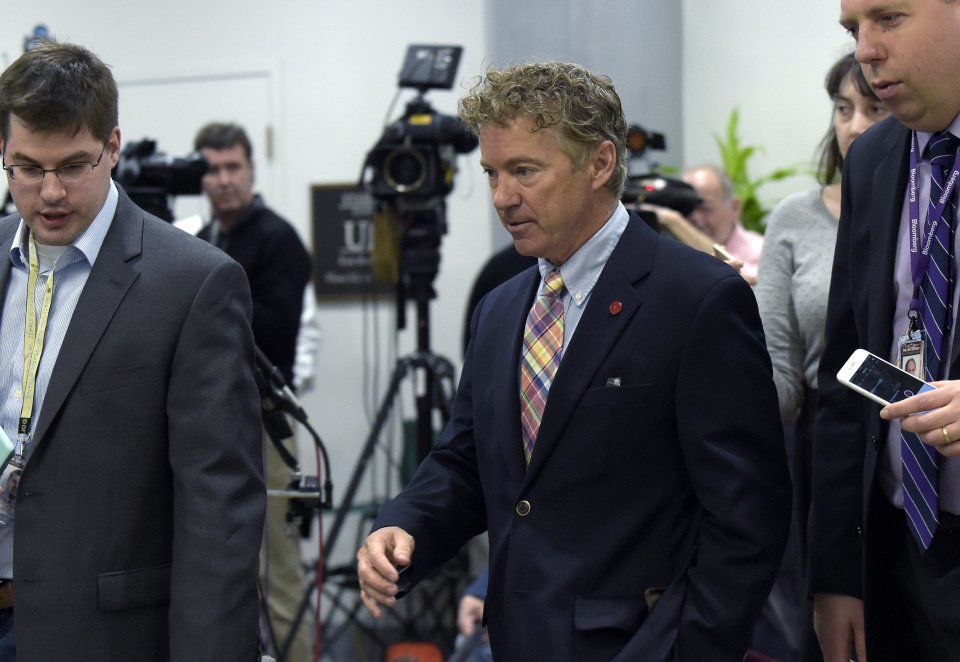
Rand Paul excoriates Congress for failure to pass War Powers Resolution: ‘Should be ashamed’
Claire Carter, Washington Examiner
claire.carter.washington.examiner@gazetteedit.wpenginepowered.com
Updated 8 hours ago
Sen. Rand Paul (R-KY) blasted his colleagues for failing to pass a resolution aimed at limiting President Donald Trump’s military campaign in Iran. The Kentucky Republican made the remarks in an opinion column published on Fox News a day after...
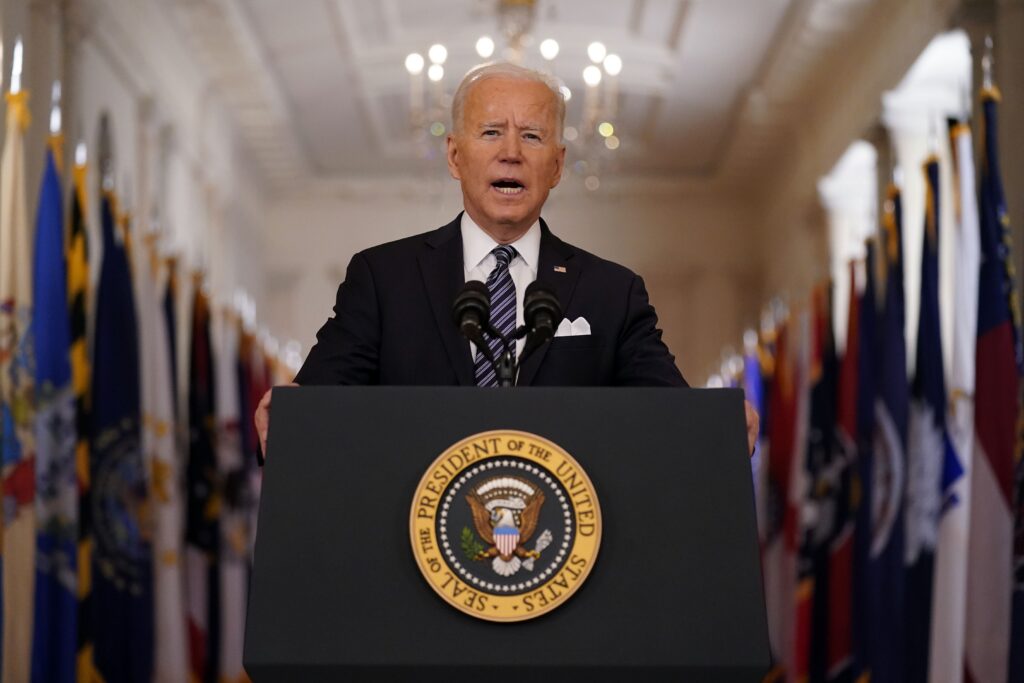
DOJ quietly closes autopen investigation targeting Biden and aides
Kaelan Deese, Washington Examiner
kaelan.deese.washington.examiner@gazetteedit.wpenginepowered.com
Updated 8 hours ago
The Department of Justice has quietly closed an investigation into former President Joe Biden’s use of an autopen to sign official documents, according to a source familiar with the matter. DOJ pardon attorney Ed Martin, the former “weaponization” czar, opened...

Colorado legislators eye changes to credit card ‘swipe fees’
Marianne Goodland
marianne.goodland@coloradopolitics.com
Updated 6 hours ago
Colorado legislators are proposing to eliminate “swipe fees” on sales taxes, a move that proponents say would save businesses tens of thousands of dollars a year but which will likely revive counter-arguments that those fees help create a stable and...
PREV
PREVIOUS

Colorado lawmakers move further left, but will the laws follow suit? | COVER STORY
Democratic candidates dominated Colorado’s November election, creating perhaps the most liberal-leaning legislature in state history. But that doesn’t mean the fight for progressive policies has been won. Democrats flipped seven seats from red to blue in November, leading to a 69-31 Democrat-Republican split at the state Capitol. In the House, the 46-19 split is likely […]

Space Force Guardians train for conflict in Europe during large-scale exercise at Schriever Air Force Base
What if a U.S. satellite was hit by a cyberattack? Guardians recently tackled the hypothetical, but possible scenario and other major potential threats to satellites that are critical for communications and navigation during the Space Force’s version of a two-week war game at Schriever Space Force Base. The simulated space conflict pit space aggressors’ squadrons, […]