

Arapahoe County judge was wrong to condition parents’ visits with child on drug tests: Appeals court
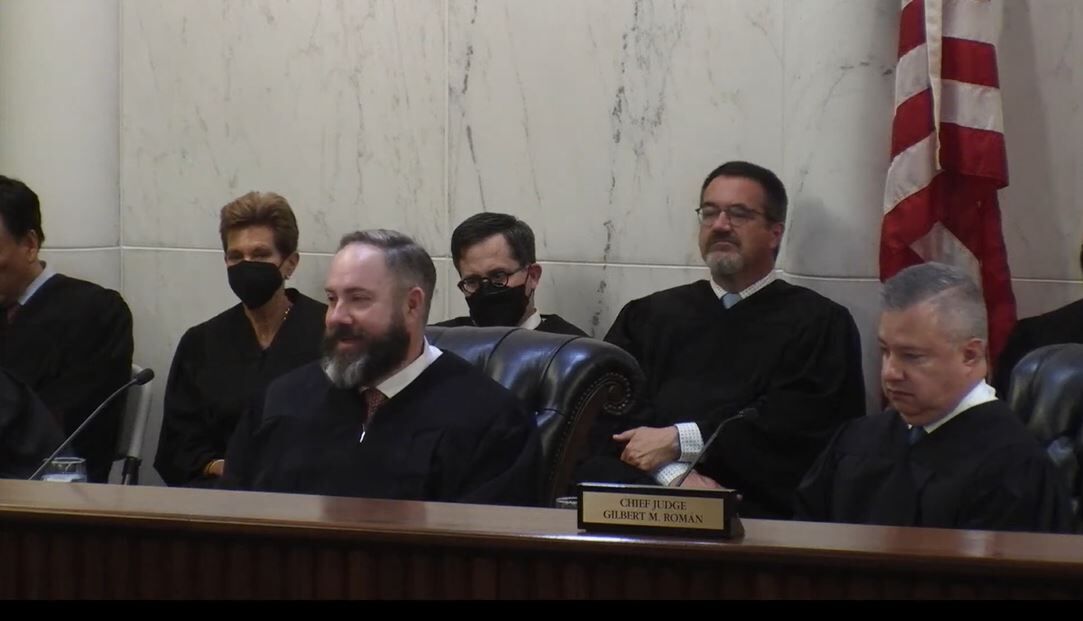
An Arapahoe County judge had no apparent legal basis to require two parents to submit to sobriety tests as a condition for visiting their child, Colorado’s second-highest court determined last week.
Former District Court Judge Natalie T. Chase declined to permit a mother and father to resume in-person visits with a child identified as A.P. during the early COVID-19 pandemic unless the parents completed hair follicle testing and provided regular urinalysis results. The parents did not comply with Chase’s conditions and continued to visit with A.P. solely by video until Chase suspended those visits as well.
A three-judge panel for the Court of Appeals found that, while there was legitimate concern about the parents’ intoxication, there was no evidence the mother and father’s conduct was affecting A.P. at their visits.
Chase “did not explain how gathering information about the parents’ drug use, both current and historical, was necessary to protect the child’s safety,” wrote Judge W. Eric Kuhn in the panel’s Dec. 15 opinion. “Further, the fact that the parents’ test results did not need to be clean, just completed, indicates that the condition was not imposed to ensure the parent’s sobriety during visits.”
Consequently, the panel reversed Chase’s decision terminating the parents’ legal rights over A.P. and directed a new judge to review the issue.
The case of A.P.’s family encompasses a broader series of events that were set in motion in April 2021, when the Colorado Supreme Court publicly censured Chase and accepted her resignation.
At the time, the court found she had violated multiple tenets of judicial conduct after Chase admitted to misusing office resources and disparaging a colleague. More prominently, however, was Chase’s acknowledgement she had said the N-word in front of judicial employees and expressed her views on the Black Lives Matter movement from the bench. That behavior violated the prohibition on judicial bias or prejudice.
Quickly, parties appealing Chase’s rulings in their juvenile cases raised the censure as grounds for reversing her decisions. Within a month, the Court of Appeals returned the first case to the trial court, ordering a new judge to review whether Chase’s admitted bias played a role in the termination of a Hispanic father’s parental rights.
A.P.’s case also received a fresh look. Even though A.P.’s parents were white, retired Judge Kenneth M. Plotz determined that “any bias or prejudice to one person is bias and prejudice to all” and reversed Chase’s termination decision based on the facts in the censure.
But then the Supreme Court stepped in.
“Only when a judge was actually biased will we question the reliability of the proceeding’s result,” wrote Justice William W. Hood III in June. The censure, on its own, was not grounds for overturning Chase’s orders, court clarified.
Plotz acknowledged as much in November when he analyzed the first case the Court of Appeals sent to him – that of the Hispanic father whose rights Chase terminated. Even though Chase suspended the man’s visitations with his children, which even she had admitted was a rare move, Plotz found Chase’s comments and actions did not “show actual bias by clear and convincing evidence.”
When A.P.’s case returned to the Court of Appeals, as one of the other rare instances of visitations being ended, the focus shifted away from Chase’s bias and onto her rationale for linking drug testing with parental visitations.
Arapahoe County’s involvement with the family began in November 2019 amid allegations that A.P.’s parents were abusing drugs. The county took temporary custody of the girl. In March 2020, visitations with A.P.’s parents moved to video due to the rapidly-spreading novel coronavirus. But by May, in-person visits were possible again.
The legal representative for A.P. asked Chase to “freeze” in-person visits until the parents took hair follicle and urine tests, saying it would get them “engaged in the necessary treatment.” Chase agreed, reasoning that “in-person visits could be a danger to this child if we don’t know (the parents’) sobriety.”
The parents did not complete the requisite testing, so video visits with A.P. continued. At one point, the county believed A.P. was having “extreme reactions” to the video calls, prompting Chase to end those in August 2020. A month later, with no visitations taking place, the county moved to terminate the parents’ legal rights over A.P. Chase granted the request early the following year.
The Court of Appeals panel was critical of the decision to link in-person visits with drug testing. A.P.’s legal representative apparently believed Chase could use the requirement as a means of forcing the parents to stay sober.
“But we are not aware of any authority,” Kuhn wrote, “that would allow such an order. In fact, this court has said much the opposite.”
Further, no one had offered evidence showing in-person visits negatively affected A.P. Because the panel found no health or safety concern underlying the visitation order, it deemed Chase’s imposition of drug testing conditions to be improper.
The case is People in the Interest of A.P.


Federal judge green-lights excessive force trial against Fort Collins officers
Michael Karlik
michael.karlik@coloradopolitics.com
Updated 21 hours ago
A federal judge concluded last week that a jury will need to resolve whether two Fort Collins police officers violated a man’s constitutional rights by using excessive force after he refused to accept a citation. In a Jan. 21 order,...
Federal judge declines to dismiss strike-breaking nurses’ lawsuit over wage violations
Michael Karlik
michael.karlik@coloradopolitics.com
Updated 21 hours ago
A federal judge last week declined to dismiss 39 nursing employees’ claims for compensation against a Greenwood Village-based company for its alleged violations of state and federal law. U.S. Nursing Corporation employs health care professionals to cross the picket lines...
Appeals judge argues prior decision on defendant’s ‘3-strikes’ sentence was wrong
Michael Karlik
michael.karlik@coloradopolitics.com
Updated 21 hours ago
A member of Colorado’s second-highest court argued on Thursday that a defendant stands wrongfully sentenced under the state’s “three-strikes” law, and an earlier appellate decision saying otherwise was incorrect. A three-judge Court of Appeals panel agreed that Kiki Lamount Douglas’...

DA touts accomplishments from first year in office but she also faced backlash
Kyla Pearce
kyla.pearce@gazette.com
Updated 1 day ago
District Attorney Amy Padden celebrated one year in office this week by touting her accomplishments, major convictions and “increased accountability” in a news release. Padden, who was elected in 2024 and took the helm of the 18th Judicial District office...

Appeals court overturns convictions after Douglas County judge let biased juror serve
Michael Karlik
michael.karlik@coloradopolitics.com
Updated 2 days ago
Colorado’s second-highest court reversed a defendant’s robbery-related convictions and 18-year prison sentence on Thursday because a Douglas County judge allowed a biased juror to serve. During Ahmarion Kaliel Shead’s trial in January 2023, one juror, identified as “J.H.,” indicated on...

Federal judge blocks USDA ‘pilot project’ affecting Colorado food assistance
Michael Karlik
michael.karlik@coloradopolitics.com
Updated 3 days ago
A federal judge blocked the U.S. Department of Agriculture on Wednesday from proceeding further with a “pilot project” that would require five Colorado counties to rapidly recertify more than 100,000 households for food assistance. In a brief ruling from the...
Colorado lawmakers hear about increased judicial discipline complaints, fallout from Missy Woods misconduct
Michael Karlik
michael.karlik@coloradopolitics.com
Updated 3 days ago
Members of the Colorado legislature’s judiciary committees heard about a large increase in complaints against judges and additional forensic misconduct that has come to light, during three days of oversight hearings last week. Leaders of several judicial-related agencies appeared between...
Federal judge warns DOJ against raising repeatedly rejected arguments in immigration detention cases
Michael Karlik
michael.karlik@coloradopolitics.com
Updated 3 days ago
A federal judge in Colorado warned the U.S. Department of Justice on Monday against raising arguments that she and other judges have repeatedly rejected in cases challenging the lawfulness of immigration detentions. In a Jan. 26 order finding the government...

Colorado Supreme Court to address child’s CCTV testimony
Michael Karlik
michael.karlik@coloradopolitics.com
Updated 4 days ago
The Colorado Supreme Court announced on Monday that it will review the impact of a victim’s closed-circuit testimony on the prosecution of a juvenile defendant. At least three of the court’s seven members must agree to hear an appeal. There...

10th Circuit to hold all-judges hearing, judicial committee turns down ‘civility code’ | COURT CRAWL
Michael Karlik
michael.karlik@coloradopolitics.com
Updated 5 days ago
Welcome to Court Crawl, Colorado Politics’ roundup of news from the third branch of government. The Denver-based federal appeals court agreed to hold a rare all-judges hearing in a criminal case, plus a state Supreme Court committee overwhelmingly rejected a...
PREV
PREVIOUS

New federal judges in the spotlight, state Supreme Court's last 2022 arguments | COURT CRAWL
Welcome to Court Crawl, Colorado Politics’ roundup of news from the third branch of government. For this final Court Crawl of 2022, Coloradans recently received a preview of their new federal judges, plus the state Supreme Court closed out its arguments for the calendar year. Judges on the horizon ? There are two planned vacancies next […]

Rep. Adrienne Benavidez resigns from Colorado House weeks after reelection
Mere weeks after she was reelected to serve her fourth and final term in the Colorado House of Representatives, state Rep. Adrienne Benavidez announced she will be resigning from her position. Benavidez, D-Commerce City, sent a letter to the House chief clerk Tuesday announcing that she will be stepping down. Her resignation is effective on Jan. […]