

Service academy athletes figure to see direct path to pro sports removed by provision in defense spending bill
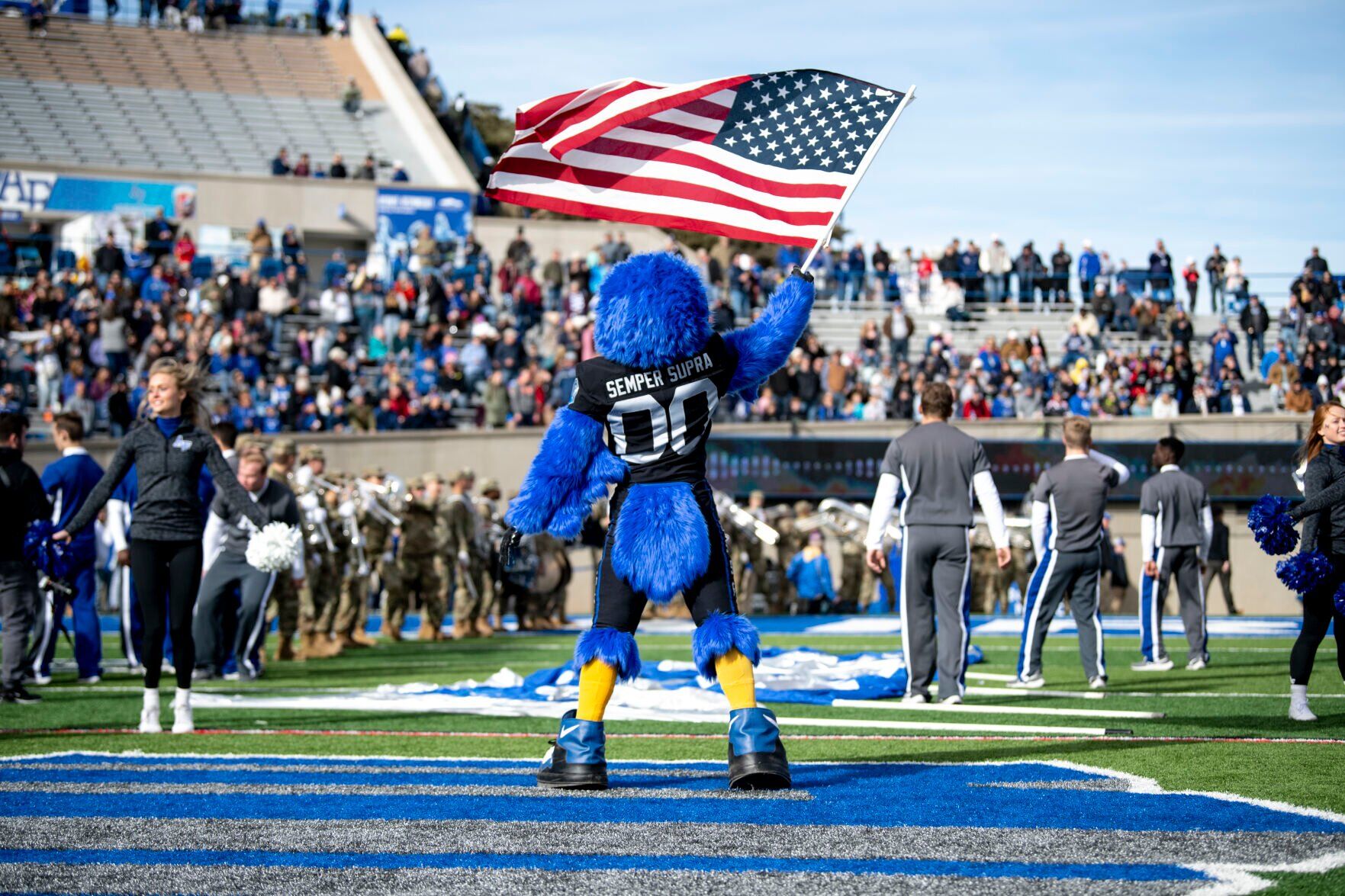
The days of service academy athletes delaying commissioning and turning pro immediately after graduation appear to be at an end.
The pending change will stem from a 16-word section buried deep in the fine print of the $857.9 billion funding bill that passed the House and Senate with overwhelming support over the past week and now awaits President Joe Biden’s signature.
Section 553 of the National Defense Authorization Act for Fiscal Year 2023 states that, “agreement by a cadet or midshipman to play professional sport constitutes a breach of service obligation.”
While no specified course of action has been announced for athletes in regards to their service obligation before playing professionally, in the past an absence of a policy specifying an alternative has meant a requirement of at least two years on active duty before a graduate can switch from active duty to reserves and be cleared for a full-time athletic career.
This shift is the latest in more than a half-decade’s worth of sudden changes on this topic. In 2016 the Navy allowed quarterback Keenan Reynolds to turn pro immediately after graduation, reversing the long-held standard of a two-year active duty requirement. The Reynolds decision led to a change in policy that called for athletes to be commissioned directly into the reserves upon graduation. That changed abruptly on the eve of the NFL Draft in April 2017, when the standard again reverted to two years of service and threw a last-minute wrench into the draft prospects of several Air Force players, most notably receiver Jalen Robinette.
The policy changed again in 2019 under President Donald Trump, allowing athletes to delay commissioning at graduation but requiring that their military service be fulfilled, or their education repaid, following their athletic career.
The two-year wait has not prevented some athletes from making it professionally. Basketball Hall of Famer David Robinson served for two years following his Navy playing career. Air Force graduates Chad Hennings, Ben Garland and Bryce Fisher were among those to fulfill their commitments before embarking on NFL careers. Former Falcons pitcher Griffin Jax, who was the first service academy graduate to make it to the majors in baseball, debuted in 2021 after finishing his time on active duty.
But this latest policy shift is sure to complicate recruiting when it is passed into law.
Air Force football coaches have not been shy about promoting the possibility of an NFL career in their social media posts. A message from an assistant posted to Twitter last month noted that the academy will set up graduates for numerous paths – a Master’s degree, the highest pay of all college grads, leadership development – but listed “The NFL” first.
James Jones IV invited to Miami Dolphins camp, joining four other NFL-bound Air Force players
Football coaches have been able to present a best-of-all-worlds picture to recruits, noting the quality of education, the ability to play at a high level (Air Force will seek its third 10-win season in four years when it plays Baylor next week in the Armed Forces Bowl) and knowing that at the end either a guaranteed job as a 2nd Lieutenant or an NFL opportunity will be waiting.
Under this policy, Air Force has signed several recruiting classes with 15 or more three-star recruits. More than it hauled in at any other point, according to figures found by The Gazette.
The early signing period for the high school Class of 2023 begins on Dec. 21.
What isn’t known is how this law, when enacted, will impact specific individuals.
Parker Ferguson and Nolan Laufenberg, both 2021 graduates, and Jordan Jackson, a 2022 graduate, have spent this season on NFL practice squads after having their commissioning delayed after graduating from Air Force.
Will they be grandfathered in?
Then there are the potentially different cases of Brad Roberts and Isaac Cochran, standouts from this year’s team.
Cochran graduated from Air Force on Wednesday, as his timeline was altered by leaving for the fall semester in 2020 on turnback. The 6-foot-4, 325-pound lineman was not commissioned upon graduation, as he intends to pursue the NFL Draft after being named a second-team Walter Camp All-America selection.
Because he has already graduated and started the process before the law takes effect, it’s possible his situation could be viewed differently than that of Roberts, who will graduate in May. Roberts has set the all-time single-season rushing record for the Falcons with 1,612 yards and intends to test the pro waters either as a fullback or tailback.
“Right now the plan is to try and pursue the NFL if I get a shot, but obviously one of the reasons I came here was to be able to serve after, so if I’m given a chance in the NFL I’d be extremely grateful for that,” Roberts said last week, prior to the bill passing the House. “If not, I’m excited for a future in the Air Force.”
There are sure to be other cases that will present unique challenges to the new policy. One that will not is that of Paul Skenes, the pitcher/catcher who is widely regarded as a top-five prospect for the 2023 MLB Draft. Skenes opted to transfer from Air Force to LSU this past summer, a move that could now net him millions of dollars in draft bonus that might not otherwise have been available because of military obligations that he now would have faced.
The next few weeks figure to be filled with questions that don’t yet have concrete answers for current Falcons and recruits weighing their options as Air Force, as well as Army and Navy, adjust to a new set of rules for athletes.
Again.


Lake Mead hits historic low water level as Colorado River struggles | OUT WEST ROUNDUP
The Associated Press
the-associated-press@coloradopolitics.com
Updated 4 days ago
NEVADA Lake Mead hits new low BOULDER CITY — Lake Mead, the largest reservoir in the United States, has plummeted to its lowest water level since it was filled some 90 years ago, another sign of the crisis plaguing the...
Democrats and their big roll of the dice | SONDERMANN
Eric Sondermann
eric-sondermann@coloradopolitics.com
Updated 4 days ago
For Republicans on the ballot this fall, the hand they are forced to play is rather set. Even if so many of them had not so meekly submitted to President Donald Trump’s agenda, they would still be largely tethered to...

Reagan’s PATCO Showdown ignited Colorado labor backlash | A LOOK BACK
Rachael Wright, Special to Colorado Politics
rachael.wright@coloradopolitics.com
Updated 3 days ago
Forty-five years ago this week: “It’s the old Nixon reaction as far as I’m concerned. He thinks he’s the Great God Almighty and can do no wrong … in the eyes of the public,” said Zelda Bransted, spokesman of the...
Federal judge green-lights excessive force, retaliation claims for trial against Fort Collins officers
Michael Karlik
michael.karlik@coloradopolitics.com
Updated 1 day ago
A federal judge green-lit a jury trial last week against multiple Fort Collins police officers on claims that they used excessive force on one man who was standing unarmed in his underwear, and retaliated against another man for exercising his...

Jeff Crank, Jessica Killin set to face off in 2 debates in Colorado’s 5th Congressional District
Ernest Luning
ernest.luning@coloradopolitics.com
Updated 2 days ago
Republican U.S. Rep. Jeff Crank and Jessica Killin, his Democratic challenger, have agreed to debate twice in the weeks leading up to the general election in Colorado’s 5th Congressional District, their campaigns have said. Crank is seeking a second term...

CSI study reviews impacts of Colorado’s mandatory sex‑trafficking sentencing measure
Marissa Ventrelli
marissa.ventrelli@coloradopolitics.com
Updated 9 hours ago
A new report by the think-tank Common Sense Institute examines what could happen if Colorado voters approve Initiative No. 108, which establishes mandatory life sentences for offenders convicted of sexual trafficking of a minor. The measure is backed by Protect...
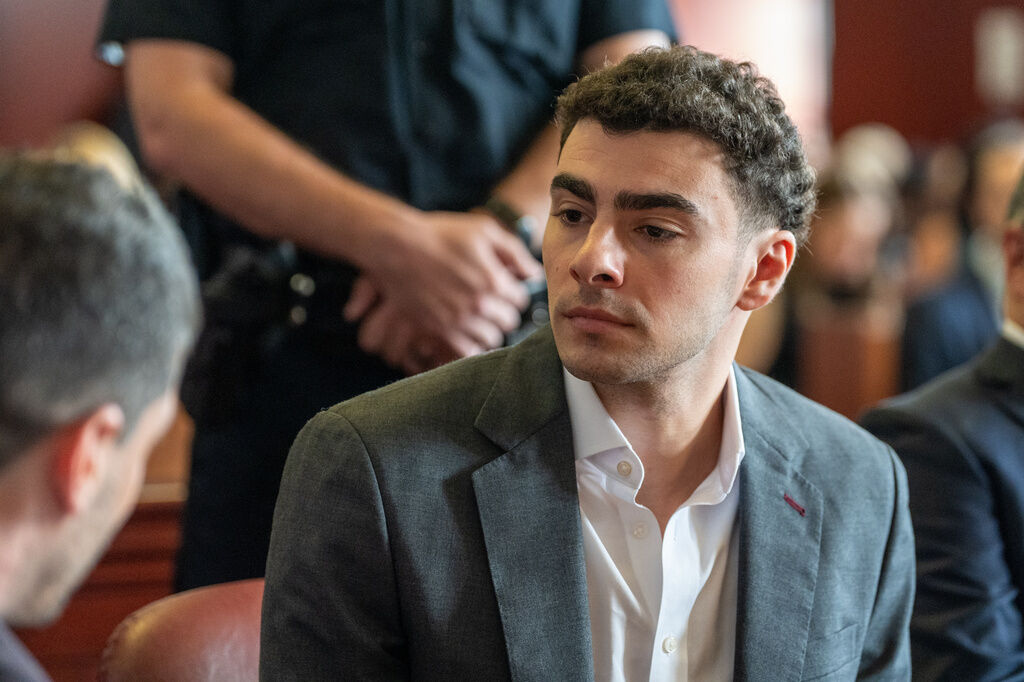
Luigi Mangione pleads guilty in UnitedHealthcare CEO Brian Thompson murder case
Kaelan Deese
kaelan-deese@coloradopolitics.com
Updated 2 days ago
Luigi Mangione pleaded guilty Friday to two federal stalking charges connected to the 2024 killing of UnitedHealthcare CEO Brian Thompson, a major development that could complicate New York prosecutors’ separate murder case against him. Mangione, 28, not only pleaded guilty in Manhattan federal court...

French court blocks Macron’s social media ban for children under 15
Emily Hallas
emily-hallas@coloradopolitics.com
Updated 2 days ago
France’s top court struck down on Friday a law championed by President Emmanuel Macron that would have made it illegal for children to have social media accounts. The law, approved by lawmakers in July, was set to take effect at...

10th Circuit revives wage violation lawsuit against Papa John’s operator
Michael Karlik
michael.karlik@coloradopolitics.com
Updated 2 days ago
The Denver-based federal appeals court on Tuesday reinstated a former Papa John’s delivery driver’s lawsuit alleging violations of federal and state wage law. Steve Mighell worked for one month at a Denver Papa John’s location in summer 2023. He alleged...

Golden fire chief fired days after city manager as city investigates ‘racist incident’
Matt Kyle
matt.kyle@denvergazette.com
Updated 2 days ago
The City of Golden has terminated its fire chief days after terminating the city manager due to a “racist incident” earlier this year at a city fire station. City officials said that in March, a “Snoop on a Stoop” doll,...
PREV
PREVIOUS

12 years in City Hall: Denver Mayor Michael Hancock's triumphs and failures
Outgoing Mayor of Denver, Michael Hancock, sits down with Denver Gazette for exclusive interviewTom HellauerTomHellauertom.hellauer@denvergazette.comhttps://secure.gravatar.com/avatar/a3dc80c0a9d47d671f1f3da872cc0a06?s=100&d=mm&r=g Denver Mayor Michael Hancock knows what he’ll regret most from his three terms as the most powerful elected leader in Denver: Thanksgiving, 2020, when Hancock was caught traveling in the thick of a raging pandemic despite having urged the public to […]
'This is real:' Historic bird flu believed to be killing record number of iconic species in Colorado
For Jeff Travis and his guiding outfit on Colorado’s southeast plains, the hunt for an iconic, winged migrant has been different this season. “They act totally different,” Travis, owner of Lamar-based Outwest Adventures, said of the snow geese. Sometimes, he said, the birds will just be standing alone in the field – or trying to […]