

Colorado think tank sees economic perils ahead, argues for free market approach to challenges

A Denver-based think tank argued for the adherence to free-market principles when crafting policy in a new report that gives Colorado’s economy a strong rating but which also warns about a “sour” climate ahead.
The new report by the Common Sense Institute paints both an optimistic and foreboding future, noting that Colorado’s employment growth ranks among the top 10 states in the country but that perils persist in the form of slowing migration, which could mean insufficient workforce, rising inflation and the possibility of a recession.
The proper response to these challenges, the group insisted, is pursuit of the “tried-and-true principles of the free enterprise system.”
“The record of history is clear: a decentralized economic system, free of cumbersome regulation, will consistently deliver greater wealth, better services, more advanced industries, and improved overall outcomes for the individuals, families, and communities throughout our state,” the report said. “An embrace of free enterprise principles will guide policymakers and voters in their quest to bring Colorado to its full potential, even in challenging economic times.”
The public-policy debates in Colorado mirror those in other states and often offer glimpses of the contending theories on how best to organize economic activity within the confines of America’s capitalist experiment. The tensions manifest in many forms, notably in taxation and government spending.
The group’s 2023 Free Enterprise Report surveyed eight policy areas: jobs and the economy; education; energy and environment; health care; housing and community; infrastructure; state budget; and taxes and fees – rated Colorado’s performance, noted recent policies, and then summarized major issues on the horizon for each.
Three of the areas – jobs and the economy; energy and environment; and health care – received a thumbs-down. The rest got a neutral rating.
The group added a disclaimer by noting its assessments are neither the final word nor the only valid perspectives. Indeed, others contend that a free enterprise approach must be tempered with regulations to ensure a level playing field and prevent calcification of systems. Many also argue for a more robust role for government, saying only the latter has sufficient resources and the influence to effect lasting and necessary changes.
The report said Colorado’s economy has so far performed well, ranking No. 7 in growth among the states between the third quarter of 2021 and the third quarter of 2022. Colorado’s employment growth also remained strong, up 2.3% above pre-pandemic levels, putting the state at No. 11 in post-pandemic employment recovery.
Colorado’s unemployment rate stood at 3.4%, below the national average, the report noted.
But the state’s inflation rate stood at 7.7% over the past 12 months, which translated to the average Colorado household spending $9,207 more since 2020.
Worrisome indicators exist, the report said. Colorado has twice as many job openings as the unemployed, but its net migration has slowed – to a “pace that may be insufficient to meet future workforce needs.”
“Rising inflation and the strong possibility of a recession sour Colorado’s economic outlook,” the report said. “If a recession occurs, the economy will slow, output will fall, and the unemployment rate will increase.”
Common Sense Institute, which adopts a nonpartisan posture but advocates for free-market and economic vitality, also argued that new regulations will affect employers, who will soon have to navigate “regulatory overhauls” and new programs, notably the Paid Family and Medical Leave Insurance (FAMLI). Minimum wages in Denver and Colorado also will start in January, which means more labor costs for some Colorado businesses.
“Colorado policymakers will face tough decisions with high inflation and a potential recession on the horizon,” said the study’s author, Evelyn Lim, a CSI 2022 Mike A. Leprino Fellow. “To ensure a stable and competitive economic position, a reprioritization of essential issues and a return to the principles of free enterprise in addressing those issues will keep the state on the right path through economic uncertainty.”



Clash of the titans: Democratic race for governor pits two candidates similar in focus, but very different in style | Vince Bzdek
Vince Bzdek
vince.bzdek@gazette.com
Updated 11 hours ago
By Vince Bzdek The race for governor is shaping up to be a clash of Democratic titans, U.S. Sen. Michael Bennet and Attorney General Phil Weiser. They are two of Colorado’s highest profile politicians with deep track records who...

Colorado High School Activities Association reaches settlement with D-49, other school districts in trans athletics lawsuit
Eric Young
eric.young@gazette.com
Updated 2 days ago
Months after adopting new policies restricting students to athletic participation based on their biological sex and filing a federal lawsuit, School District 49 and other Colorado school districts have reached a settlement with the Colorado High School Activities Association (CHSAA)...

New-look Douglas County school board names returning director as president
Noah Festenstein
noah.festenstein@denvergazette.com
Updated 4 days ago
After four new directors swore in earlier than expected, the new-look Douglas County school board met for the first time Tuesday night to elect a new board president and discuss issues addressed by the previous board. Douglas County voters in...
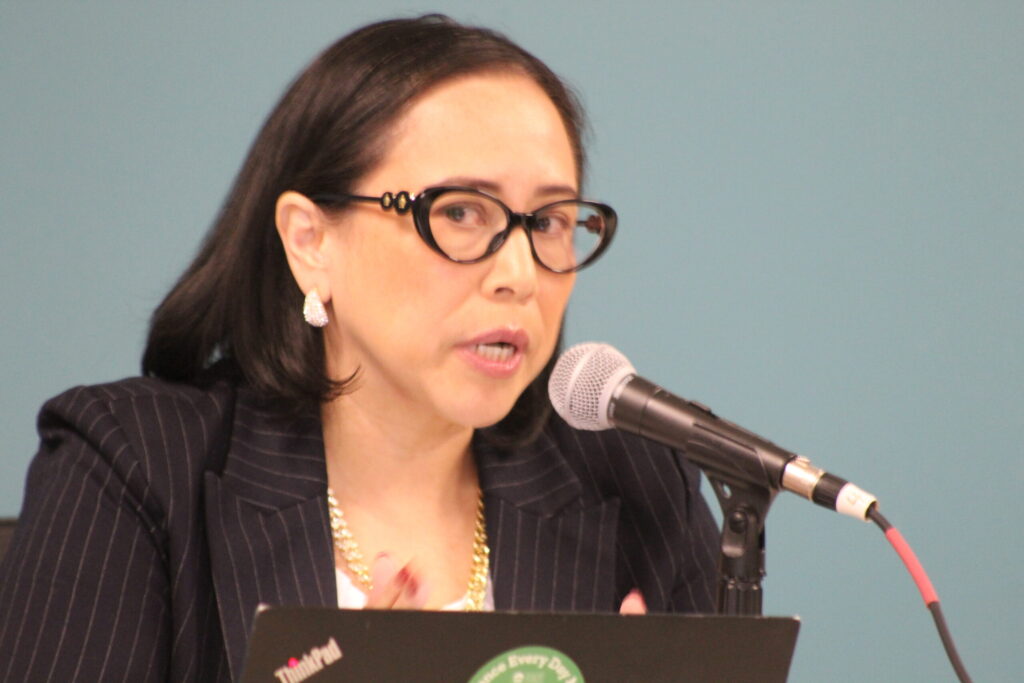
Denver school board elects Gaytán as president
Nico Brambila
nico.brambila@denvergazette.com
Updated 5 days ago
After weeks of jockeying for votes, the Denver Public Schools Board of Education chose a new slate of officers during a specially called meeting Tuesday, selecting Director Xóchitl Gaytán as board president — a role that carries significant control over...
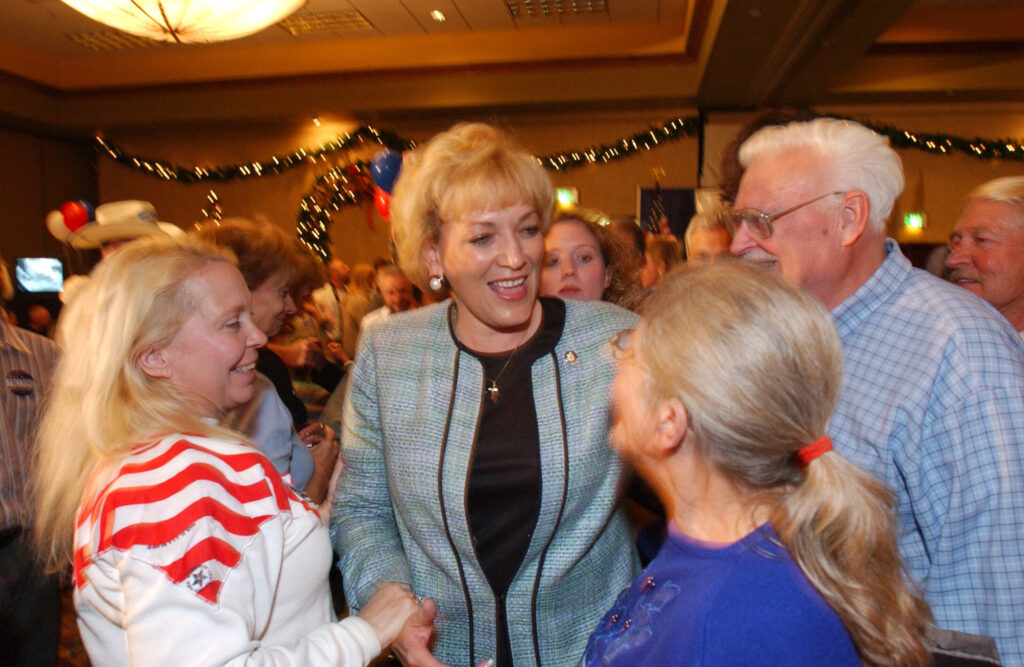
Colorado Higher Education Director Angie Paccione to step down
Marianne Goodland
marianne.goodland@coloradopolitics.com
Updated 2 hours ago
Angie Paccione, who has led the Colorado Department of Higher Education since 2019, is returning to the private sector, Gov. Jared Polis said. Paccione’s last day is Jan. 9. The governor’s office said Gov. Jared Polis would decide on the...

Survey reveals widespread dissatisfaction with Colorado’s public education system
Marissa Ventrelli
marissa.ventrelli@coloradopolitics.com
Updated 4 days ago
Most Colorado voters are dissatisfied with the state’s public education system and many lament that it’s headed in the wrong direction, citing – among other worries – “woke” ideology permeating schools, according to a recent poll. Meanwhile, the minority of...

Colorado Springs D-11 board member running for state House seat
Eric Young
eric.young@gazette.com
Updated 1 week ago
A Colorado Springs District 11 board member has thrown their hat into the ring for a seat in the state House of Representatives. A candidate affidavit and committee registration form for Jill Haffley, vice president of D-11’s Board of Education,...
Jeffco Public Schools discusses budget cuts, mill levy
Sage Kelley
sage.kelley@denvergazette.com
Updated 2 weeks ago
A $60 million structural deficit continues to hang over the Jeffco Public Schools. The Jeffco Board of Education met with members of the district’s financial team on Nov. 13 to discuss updates to the Budget Reduction Blueprint — or overall...
Audit: Denver school district owes more than it owns, despite nearly $1B in unspent bond cash
Nico Brambila
nico.brambila@denvergazette.com
Updated 2 weeks ago
Denver Public Schools is operating with a negative net position — owing more in long-term obligations than it holds in assets — a rare and troubling financial posture for a major Colorado school district, according to an audit. Presented on...
DPS board president creates committees that may fall outside public view
Nico Brambila
nico.brambila@denvergazette.com
Updated 2 weeks ago
As one of her last official acts on the Denver Public Schools Board of Education, President Carrie Olson created a two-member committee that will not likely conduct its business in public as state law demands. The two-person committee headed by...
PREV
PREVIOUS

Recount confirms Democrat Bob Marshall as winner in Colorado's House District 43 race
Democrat Robert “Bob” Marshall was officially declared the winner in the election for Colorado’s House District 43 on Monday, following a recount requested by Republican opponent Rep. Kurt Huffman. Results from the Secretary of State’s Office show that Marshall and Huffman each lost one vote in the recount, keeping Marshall’s margin of victory exactly the same as the […]

Court upholds $187,000 sanction against lawyers who claimed election rigging by Dominion, Facebook
The federal appeals court based in Denver upheld a sanction of nearly $187,000 against two attorneys who pursued unproven claims that Dominion Voting Systems, Facebook and multiple officials in swing states violated the rights of all American voters during the 2020 presidential election. The U.S. Court of Appeals for the 10th Circuit previously agreed the […]