

An unhappy 100th for the Colorado River Compact | Colorado Springs Gazette
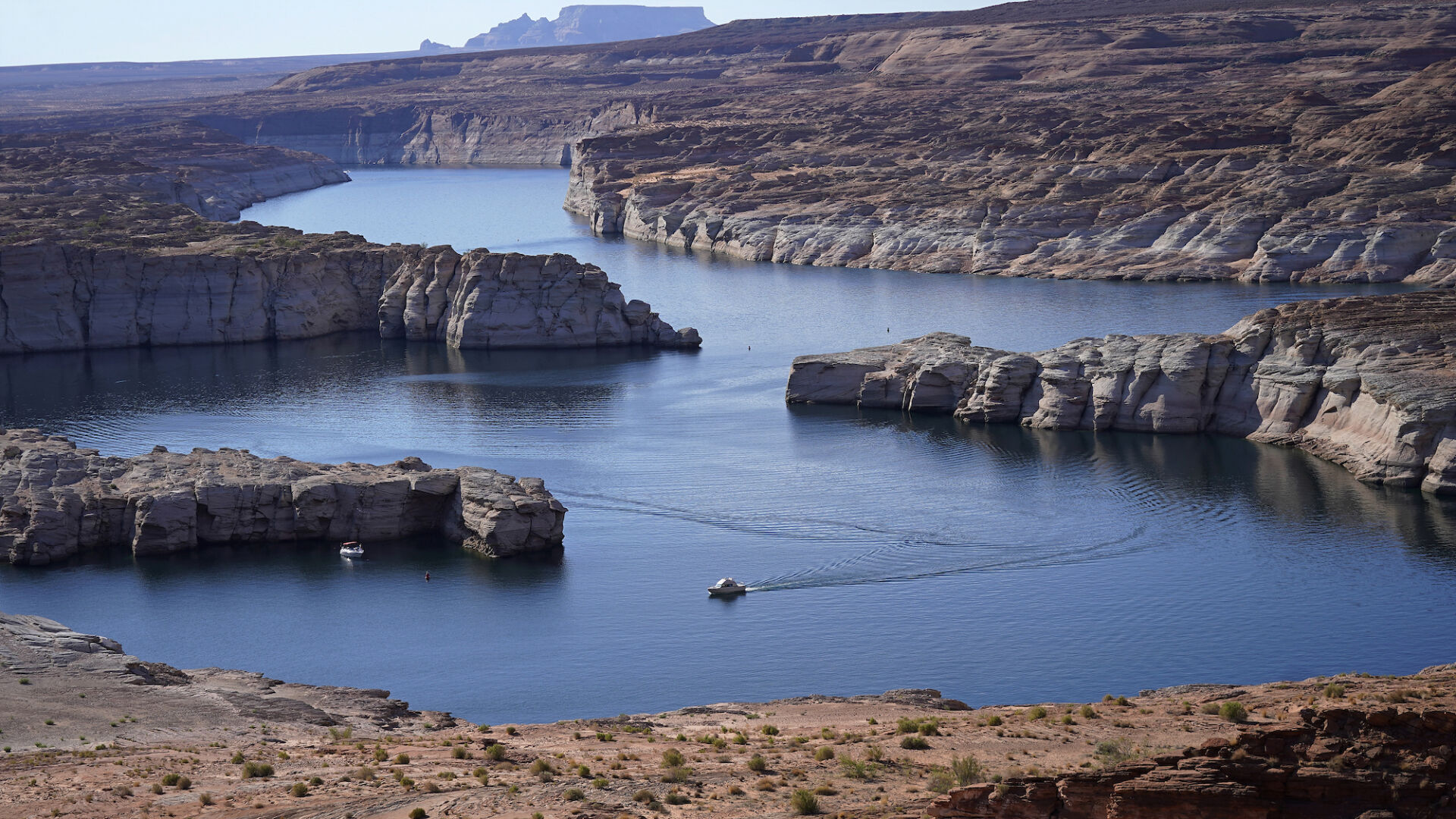
The historic Colorado River Compact was 100 years old on Thursday, as The Gazette noted in a report observing the occasion. And if you’ve never heard of that groundbreaking agreement divvying up water from the West’s most identifiable river, you’re undoubtedly not alone.
The compact and the river it governs – and, for that matter, water in general in the arid West – are easy to take for granted. Outside the world of politics, water policy is a dull subject. Most residents along the Front Range, across the state and in the six other states that signed the compact a century ago – probably don’t realize what an epic challenge it has been to secure the water that comes out of the taps in their homes.
We cannot afford to take it for granted, however, and the crisis facing the Colorado River in particular is emblematic of the West’s overall water struggle.
As The Gazette’s report reminded us, our state’s defining river today is in greater peril than it has been at any time in history amid the West’s explosive growth and a 23-year drought that has limited the river’s flows year after year.
The river now serves more than 40 million people with water for residential and agricultural use as well as through electricity generated by the Glen Canyon and Hoover dams. Compact members Colorado, New Mexico, Utah and Wyoming are in the Colorado River’s upper basin, and Arizona, California and Nevada are in the lower basin. It is the lower-basin states with their burgeoning populations that are feeling the most critical shortage. Today little water makes its way to Mexico, where the Colorado River ends its run and empties into the Sea of Cortez.
What’s being done about it?
The U.S. Department of the Interior recently called for more cooperation between the compact’s members because water levels down river in Lake Mead and Lake Powell are so low that power generation may have to be curtailed. The Interior Department’s Bureau of Reclamation recently announced a new program to pay farmers in lower-basin states up to $400 for each acre-foot of water they don’t use.
Yet, conservation efforts alone seem like half-measures that inevitably lead to diminishing returns. As we asked here recently, what if we started putting more water into the Colorado River basin instead of ratcheting down ever further how much is taken out of it? Increase supply, in other words, instead of futilely trying to curb demand. Some are taking up that challenge.
Arizona’s state government is laying plans with Mexico for a jointly developed desalination plant that would turn seawater into fresh water along the Arizona-Mexico border, where the Colorado River empties into the Sea of Cortez. That has the potential to lower water use downstream and leave more up river in upper-basin states.
There’s also great potential in new technology enabling water reuse, which is not so much a form of conservation as it is turning old water into new. Israel recycles and reuses nearly 90% of its water and Spain over 30%, a water expert recently wrote in a Gazette commentary.
That kind of innovative thinking is what’s needed to give the compact, and the river itself, a new lease on life.
Colorado Springs Gazette Editorial Board

From pause to progress — a better path on AI policy | OPINION
Colorado Politics
colorado-politics@coloradopolitics.com
Updated 12 hours ago
By Brittany Morris Saunders and Loren Furman Last year, following the Special Legislative Session, we wrote in Colorado Politics that delaying Colorado’s AI Act was not a setback. It was an opportunity. We asked state leaders to pause, bring more...

Cutting Prop 123 would cost Colorado far more than it saves | OPINION
Colorado Politics
colorado-politics@coloradopolitics.com
Updated 3 hours ago
By Luke Teater Colorado’s legislative budget writers are about to receive updated revenue forecasts and begin making final cuts to close a historic budget gap, and Proposition 123’s affordable housing financing tools are on the chopping block. But in their...
Colorado’s place in President Trump’s oil-and-gas approach | Paula Noonan
Paula Noonan
paula-noonan@coloradopolitics.com
Updated 23 hours ago
Head spinning is the unwanted reality of today’s world. Let’s start at the international level. The wars in the Middle East since the 1950s have never ended. Though religion and ethnicity are factors, oil and gas access is always predominant...

Reject onerous ad limits in sports-betting bill | OPINION
Colorado Politics
colorado-politics@coloradopolitics.com
Updated 2 days ago
By Justin Sasso A dangerous precedent is potentially afoot in the Colorado state Senate right now, where a bill was recently introduced to restrict advertising for local broadcast media across Colorado. Senate Bill 26-131, seemingly designed to discourage Coloradans from participating...
Reform to Colorado’s grantmaking drives efficiency, strengthens state’s partnership with nonprofits | OPINION
Colorado Politics
colorado-politics@coloradopolitics.com
Updated 2 days ago
By Marco Dorado and Jack Murphy Colorado’s nonprofit sector is one of the most significant contributors to our state’s economic and civic life, with more than 14,000 registered nonprofit organizations supporting more than 262,000 jobs — approximately 10% of all...

Costly auto mandate amounts to needless overkill | FEEDBACK
Colorado Politics
colorado-politics@coloradopolitics.com
Updated 2 days ago
HB26-1199 is currently in the legislature, and let me explain how this affects you. Currently in the state of Colorado, your vehicle’s emissions have to meet California standards even though you do not live in California. Though we all can agree...
Congress needs to protect 340B for rural Colorado | PODIUM
Colorado Politics
colorado-politics@coloradopolitics.com
Updated 23 hours ago
By Rod Pelton A lot of politicians talk about understanding what life is like for our rural communities, but not many really do. I’m a third-generation Cheyenne County farmer and rancher; I grew up on the eastern plains of Colorado, raised...
Caldara overlooked facts in slamming utilities | FEEDBACK
Colorado Politics
colorado-politics@coloradopolitics.com
Updated 3 days ago
Normally, I appreciate the variety of perspectives published on Colorado Politics. But regarding Jon Caldara’s recent column on Xcel, he irresponsibly neglects key facts to the point of annihilating credibility (“Are our overlords normalizing power outages?” March 15). He neglects...

Fix the process before reauthorizing state PUC | OPINION
Sara Blackhurst
sara-blackhurst@gazette.com
Updated 3 days ago
What needs to be fixed before reauthorizing the Public Utilities Commission? The answer is simple: the process. The last time the commission was reauthorized in 2021, lawmakers expanded its role in meaningful ways — particularly as Colorado accelerated its clean...
What exactly makes you a public figure? | Hal Bidlack
Hal Bidlack
hal-bidlack@coloradopolitics.com
Updated 4 days ago
Well, once again, this non-lawyer columnist is going to jump in the deep end of legal scholarship and will explore a recent Colorado Court of Appeals decision. Buckle up. In yet another terrific Colorado Politics Court Crawl article, we learned...
PREV
PREVIOUS

A fiscal fail safe at Colorado’s Capitol | Denver Gazette
It can take years in office for a lot of politicians to mature when it comes to spending the public’s money. For the handful of Colorado lawmakers appointed to the state legislature’s powerful Joint Budget Committee, the transformation takes only days. Lawmakers who were hardly known as penny pinchers before sitting on the panel learned […]

Sheriffs aren’t above the law — even ‘red flag’ | PODIUM
Dennis Maes In October 2021, I authored a guest editorial in my local newspaper surrounding the debate concerning Colorado’s “red flag” law. My opening sentences read: “The real fear about the ‘red flag’ legislation should not be the substance of the bill but the utter disrespect for the rule of law by certain law enforcement […]