

Divided 10th Circuit upholds own ruling rejecting immunity for church in employment lawsuit
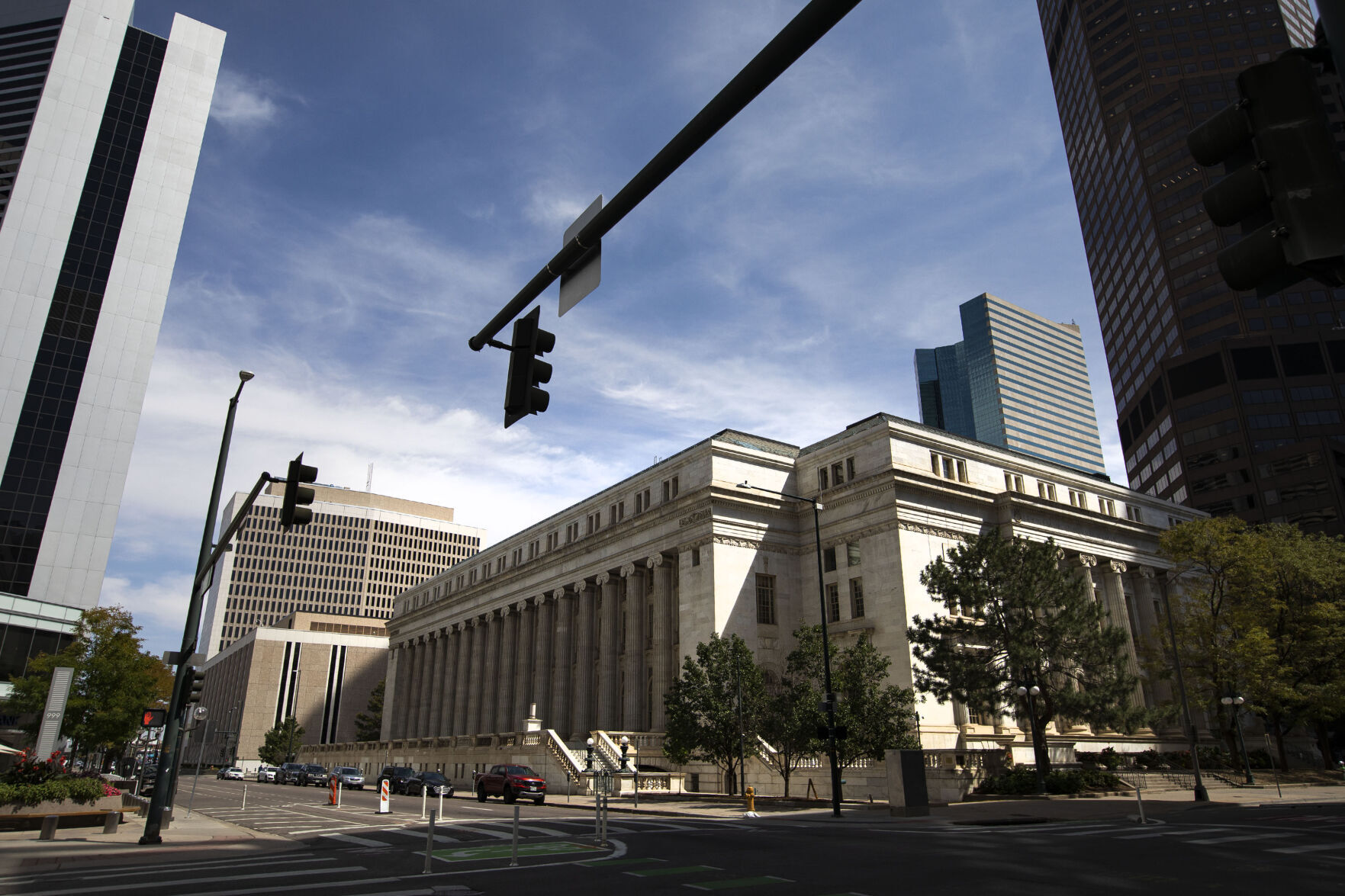
In an unusual 6-4 decision, the federal appeals court based in Denver has refused to reconsider its ruling from earlier this year that found an Arvada church may be held legally liable for allegedly retaliating against one of its former employees.
Originally decided in June by a three-judge panel, Faith Bible Chapel International and its religious school, Faith Christian Academy, sought a rare all-judges review before the U.S. Court of Appeals for the 10th Circuit, called an “en banc” hearing. Both sides accused the other of departing from U.S. Supreme Court precedent and misrepresenting the facts of the case.
The central question before the appeals court was whether it could review a trial judge’s decision finding it unclear whether Gregory Tucker met the definition of a “minister” while working at Faith Christian. If he had, Tucker could not sue his former employer for discrimination because of a “ministerial exception” the Supreme Court has recognized for faith organizations when they make personnel decisions based on religious needs.
Tucker’s lawsuit against Faith Bible garnered significant interest nationwide from faith organizations and scholars of the First Amendment, who worried the 10th Circuit’s interpretation of the ministerial exception would have the effect of improperly entangling the court system in disputes that are fundamentally religious in nature.
Senior Judge David M. Ebel, who authored the original majority opinion turning away Faith Bible’s appeal, issued a statement after the court’s en banc vote. He defended the panel’s first-of-its-kind decision to not treat the ministerial exception as outright immunity for religious organizations – the kind that would have entitled Faith Bible to an immediate appeal and to potentially avoid trial altogether.
“Our panel decision denying Faith Christian an immediate appeal is consistent with well-established lines of Supreme Court precedent and does not create any circuit split,” Ebel wrote on Nov. 15. “What little authority there is instead unanimously supports our decision.”
Judge Carolyn B. McHugh, as the other judge who formed the majority in the original ruling, also signed on to Ebel’s statement.
The court’s decision to reject en banc review fell largely along partisan lines. Among the active, non-senior judges who considered whether to rehear the case, the votes in the negative came from McHugh, Scott M. Matheson Jr., Gregory A. Phillips, and Nancy L. Moritz, all appointees of Barack Obama; Veronica S. Rossman, a Joe Biden appointee; and Harris L Hartz, an appointee of George W. Bush.
Voting in favor of revisiting and possibly reversing the panel’s decision were Timothy M. Tymkovich, a Bush appointee; Allison H. Eid and Joel M. Carson III, appointees of Donald Trump; and Robert E. Bacharach, an Obama appointee.
Chief Judge Jerome A. Holmes, a Bush appointee, recused himself from voting.
Tucker worked at Faith Christian for 14 years between 2000 and 2018, originally teaching science but then becoming the director of student life – a position also referred to as “chaplain.” As part of his chaplain duties, he organized weekly “chapel meetings.”
After reportedly growing concerned about racism at the school, Tucker organized a “Race and Faith Chapel” in January 2018. While initially well-received, parents later complained to the administration. The school stripped Tucker of his duties before terminating him in February 2018.
Tucker then sued Faith Bible, claiming it had fired him in retaliation for his opposition to a racially-hostile environment, which is a protected activity under federal law. Faith Bible moved to dismiss the lawsuit, claiming Tucker was a minister and, under the ministerial exception, the courts could not hear Tucker’s lawsuit because of the religious nature of the personnel decision.
U.S. District Court Senior Judge R. Brooke Jackson considered whether to grant summary judgment to Faith Bible, which enables a judge to resolve a case without a trial if the key, undisputed facts allow a party to prevail on the law alone. In Faith Bible’s favor, Jackson acknowledged Tucker’s title as “chaplain,” his employment contract’s requirement that he adhere to Christianity, and his duties related to the “spiritual wellbeing of students.”
However, Tucker also presented evidence suggesting he was not a minister. His work did not involve preaching, he did not counsel students about theology, and when he asked the school superintendent whether he qualified as a minister under federal tax law, the superintendent allegedly said no.
Jackson concluded there was a factual dispute about whether Tucker qualified as a minister and elected to send the case to a jury to decide.
Faith Bible then immediately appealed to the 10th Circuit. Although such interlocutory, or mid-case, appeals are uncommon, Faith Bible argued the ministerial exception should be treated akin to the concept of qualified immunity. Whereas the ministerial exception is meant to prevent government meddling in religious institutions, qualified immunity is a defense solely available to government workers – barring lawsuits entirely unless an official violates a person’s clearly-established legal rights.
This summer, the 10th Circuit’s panel decided, 2-1, that it had no jurisdiction to hear the case because the ministerial exception was not in the same category of qualified immunity that entitles a defendant to an immediate appeal. While Faith Bible could raise the exception as a defense at trial, the majority found Jackson correctly identified the conflicting evidence that a jury must sort out about Tucker’s status.
“Unlike the ‘ministerial exception,’ the Supreme Court has explicitly recognized that qualified immunity protects government officials not only from liability, but also from the burdens of litigation itself,” wrote Ebel for himself and McHugh. “Faith Christian has not cited any case holding that the ‘ministerial exception’ similarly immunizes a private religious employer from the burdens of litigating employment discrimination claims brought against it.”
Bacharach dissented, believing not only that the ministerial exception enabled Faith Christian to have its appeal heard immediately, but that the facts showed Tucker was indeed a minister who was barred from suing his employer.
“Subjected to suit, the religious body could suffer judicial meddling in religious doctrine,” Bacharach warned, “and blurring of the line between church and state.”
Faith Bible, represented by The Becket Fund for Religious Liberty in Washington, D.C., quickly moved for an en banc review. It argued the 10th Circuit’s decision was unprecedented and at odds with other federal appeals courts. Faith Bible accused Tucker of misrepresenting his employment to the court, and characterized the panel’s decision as “allowing disgruntled clergy to employ the power of the federal judiciary to probe the mind of the church.”
Tucker, represented by Americans United for Separation of Church and State, also out of Washington, D.C., similarly pointed the finger at Faith Bible for mistakenly claiming the court’s decision would require all employment discrimination claims against faith organizations to be heard by juries.
Because the “core facts are in dispute, the panel appropriately allowed the case to proceed and left factfinding to the trial court,” Tucker’s lawyers wrote.
Legal briefs in support of Faith Bible began pouring in to the 10th Circuit, with First Amendment scholars, religious groups inside and outside of Colorado, and 16 Republican-led states urging the entire 10th Circuit to hear the case.
Specifically, the Colorado Catholic Conference, along with the Association of Christian Schools International and other Christian organizations, worried the 10th Circuit panel had eroded the “protection” of immunity for religious employers.
“To tell a religious school that it is constitutionally entitled to fire a teacher-minister based on non-compliance with the school’s religious standards, but that it will cost the school several hundred-thousand dollars in legal fees if the court finds any issues of fact for trial,” the groups wrote, “is to leave the school with an impossible choice: retain religiously antagonistic personnel to avoid the cost of litigation, or preserve religious identity but risk bankrupting the school with legal fees.”
Ebel, a Ronald Reagan appointee, insisted in his statement following the en banc vote that there would be no governmental “meddling” in religious decisions because faith organizations may already be sued for employment discrimination by non-ministerial employees. The panel’s decision, he explained, would simply enable a jury to decide if the exception applied to Tucker.
Bacharach also authored a statement echoing the arguments of the outside groups that faith-based employers would now be subject to “time-consuming and expensive litigation.”
“Given these burdens from the litigation itself, religious bodies will undoubtedly hesitate before deciding whether to suspend or fire renegade ministers,” he wrote.
Tymkovich and Eid also signed on to Bacharach’s statement.
The case is Tucker v. Faith Bible Chapel International.

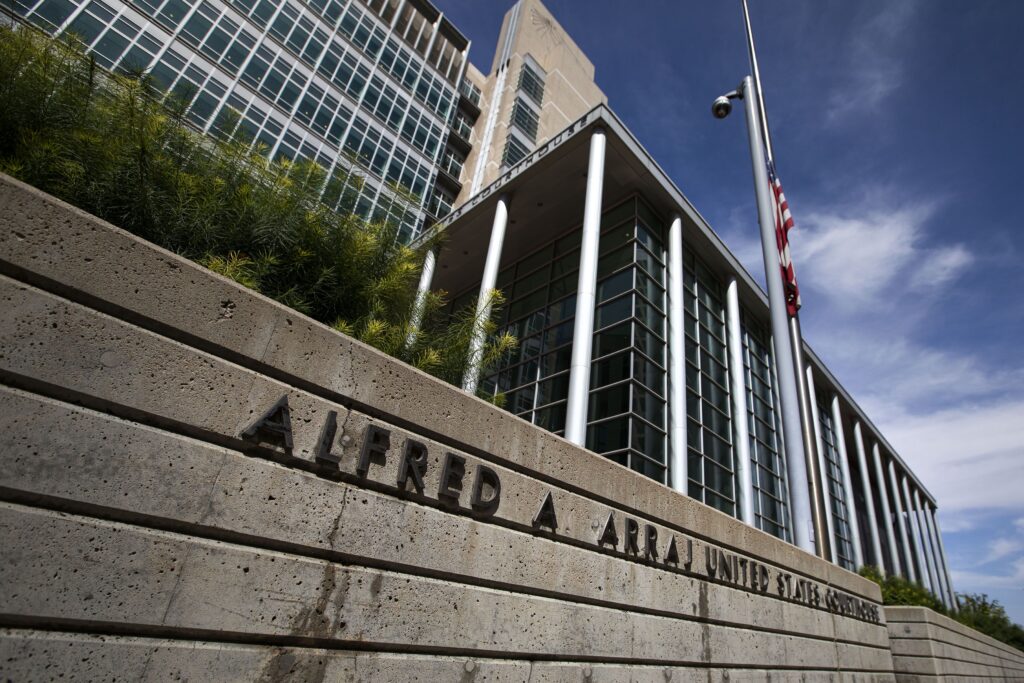
Federal judge declines to dismiss strike-breaking nurses’ lawsuit over wage violations
Michael Karlik
michael.karlik@coloradopolitics.com
Updated 6 hours ago
A federal judge last week declined to dismiss 39 nursing employees’ claims for compensation against a Greenwood Village-based company for its alleged violations of state and federal law. U.S. Nursing Corporation employs health care professionals to cross the picket lines...
Appeals judge argues prior decision on defendant’s ‘3-strikes’ sentence was wrong
Michael Karlik
michael.karlik@coloradopolitics.com
Updated 13 hours ago
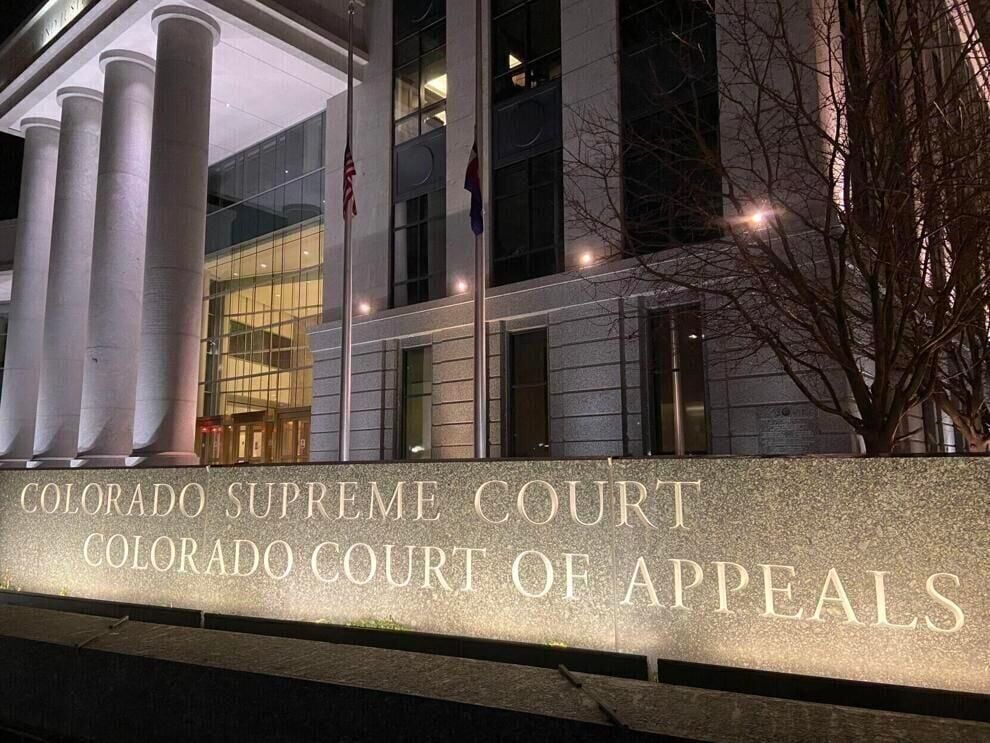
A member of Colorado’s second-highest court argued on Thursday that a defendant stands wrongfully sentenced under the state’s “three-strikes” law, and an earlier appellate decision saying otherwise was incorrect. A three-judge Court of Appeals panel agreed that Kiki Lamount Douglas’...

Appeals court overturns convictions after Douglas County judge let biased juror serve
Michael Karlik
michael.karlik@coloradopolitics.com
Updated 13 hours ago
Colorado’s second-highest court reversed a defendant’s robbery-related convictions and 18-year prison sentence on Thursday because a Douglas County judge allowed a biased juror to serve. During Ahmarion Kaliel Shead’s trial in January 2023, one juror, identified as “J.H.,” indicated on...

Federal judge blocks USDA ‘pilot project’ affecting Colorado food assistance
Michael Karlik
michael.karlik@coloradopolitics.com
Updated 2 days ago
A federal judge blocked the U.S. Department of Agriculture on Wednesday from proceeding further with a “pilot project” that would require five Colorado counties to rapidly recertify more than 100,000 households for food assistance. In a brief ruling from the...
Colorado lawmakers hear about increased judicial discipline complaints, fallout from Missy Woods misconduct
Michael Karlik
michael.karlik@coloradopolitics.com
Updated 2 days ago
Members of the Colorado legislature’s judiciary committees heard about a large increase in complaints against judges and additional forensic misconduct that has come to light, during three days of oversight hearings last week. Leaders of several judicial-related agencies appeared between...
Federal judge warns DOJ against raising repeatedly rejected arguments in immigration detention cases
Michael Karlik
michael.karlik@coloradopolitics.com
Updated 2 days ago
A federal judge in Colorado warned the U.S. Department of Justice on Monday against raising arguments that she and other judges have repeatedly rejected in cases challenging the lawfulness of immigration detentions. In a Jan. 26 order finding the government...

Colorado Supreme Court to address child’s CCTV testimony
Michael Karlik
michael.karlik@coloradopolitics.com
Updated 3 days ago
The Colorado Supreme Court announced on Monday that it will review the impact of a victim’s closed-circuit testimony on the prosecution of a juvenile defendant. At least three of the court’s seven members must agree to hear an appeal. There...

10th Circuit to hold all-judges hearing, judicial committee turns down ‘civility code’ | COURT CRAWL
Michael Karlik
michael.karlik@coloradopolitics.com
Updated 3 days ago
Welcome to Court Crawl, Colorado Politics’ roundup of news from the third branch of government. The Denver-based federal appeals court agreed to hold a rare all-judges hearing in a criminal case, plus a state Supreme Court committee overwhelmingly rejected a...

Divided Colorado Supreme Court curtails use of laced-substances defense
Michael Karlik
michael.karlik@coloradopolitics.com
Updated 2 days ago
The Colorado Supreme Court on Monday walked back the ability of criminal defendants to claim their conduct was the result of consuming an intoxicating substance that secretly contained another behavior-altering substance. Under state law, “involuntary intoxication” is an affirmative defense,...
Colorado justices say utilities commission overreached by immunizing Xcel in rate document
Michael Karlik
michael.karlik@coloradopolitics.com
Updated 9 hours ago
Xcel Energy cannot rely upon a rate-setting document to broadly immunize itself from liability against electrocutions, the Colorado Supreme Court ruled on Monday. The justices originally heard the electrocution-related lawsuit from Francisco Cuevas to decide whether Xcel’s tariff, which sets...
PREV
PREVIOUS
Democrat Adam Frisch concedes to GOP Rep. Lauren Boebert after razor-thin loss in Colorado House race
Democrat Adam Frisch formally conceded defeat to U.S. Rep. Lauren Boebert Friday morning after an unofficial vote count showed the Republican incumbent has a narrow lead in Colorado’s 3rd Congressional District. Frisch, an Aspen businessman, said in an online press conference that he had just gotten off the phone with Boebert. At noon on Friday, […]
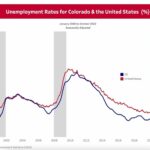
Colorado unemployment rate rose in October
Colorado’s seasonally adjusted unemployment rate increased slightly to 3.6% in October, up two tenths of a percentage point from the month before, the state Department of Labor and Employment reported Friday. The labor force in Colorado increased by 1,900 in October to 3,256,900. The number of individuals employed declined by 5,000 to 3,140,400, the jobs […]