

Report: Growing job force, less savings for Coloradans in the third quarter

Colorado continued to see a growing job force in the third quarter, according to a report released Tuesday by the Leeds Business Research Division at the University of Colorado Boulder and Colorado Secretary of State Jena Griswold.
Colorado’s employment in September increased by 4.1% year over year, the 16th best percentage increase in the nation. The most significant increases were in leisure hospitality, professional and business services and other services. Lower-paying industries saw the largest gain in wage growth.
The per capita personal income in Colorado of $73,357 ranked eighth nationally and per capita personal income growth ranked first nationally at 6%.
New entity filings increased by 14.5% compared with the same period last year and 10.6% since last quarter, despite the trend normally seeing a decrease during the transition from the second quarter to the third. Delinquencies and dissolutions, though, also saw growth year over year by 27.1%, which indicates that businesses are struggling. There were 11,614 dissolutions, fewer than the previous quarter.
Despite job growth and per capita personal income reports, the Leeds Business Confidence Index stood at 39.8, which indicates a bear market.
Inflation remains a concern, though it appears to be less severe than nationwide; the Consumer Price Index in the Denver-Aurora-Lakewood region increased 7.7% year over year in September, less than the national growth of 8.2%.
People are gaining debt and lowering their contribution to their own savings in order to maintain their lifestyle, according to Brian Lewandowski, who is with the Leeds Business Research Division.
“I don’t think anyone has been able to really hide away from the current inflationary environment and most of us haven’t really experienced this in our lifetime,” he said in a virtual news conference.
“So the way we see people coping with it is we’re seeing a decrease in the personal savings rate and we’re seeing higher borrowing rates (in national data).”
Retail gasoline prices increased slightly in October compared to last year, but are down since June. There are now 22 active oil rigs in Colorado, which is twice as many as the previous October.
“Overall, today’s report indicates a bright future for Colorado’s economy,” Griswold said.



Judge rules that Colorado law makes it too hard for parties to bar unaffiliated voters from primaries
Ernest Luning
ernest.luning@coloradopolitics.com
Updated 3 hours ago
A federal judge ruled in favor of the Colorado Republican Party late Tuesday, saying that a portion of the state law that allows unaffiliated voters to cast ballots in party primaries is unconstitutional because it imposes an unrealistic burden on...

10th Circuit upholds regulator’s methodology for Tri-State exit fees
Michael Karlik
michael.karlik@coloradopolitics.com
Updated 6 hours ago
The Denver-based federal appeals court upheld a regulatory agency’s methodology for calculating the fee owed by entities seeking to withdraw from Tri-State Generation and Transmission Association last week. Tri-State is a Westminster-based cooperative that provides and transmits electricity to member...
Federal judge proposes sanctions against Mike Lindell’s lawyers for continued fake citations
Michael Karlik
michael.karlik@coloradopolitics.com
Updated 7 hours ago
A federal judge is once again pursuing sanctions against lawyers for MyPillow CEO Mike Lindell for continuing to cite to court cases that do not exist, likely based on the faulty output of artificial intelligence tools. Last year, a jury...
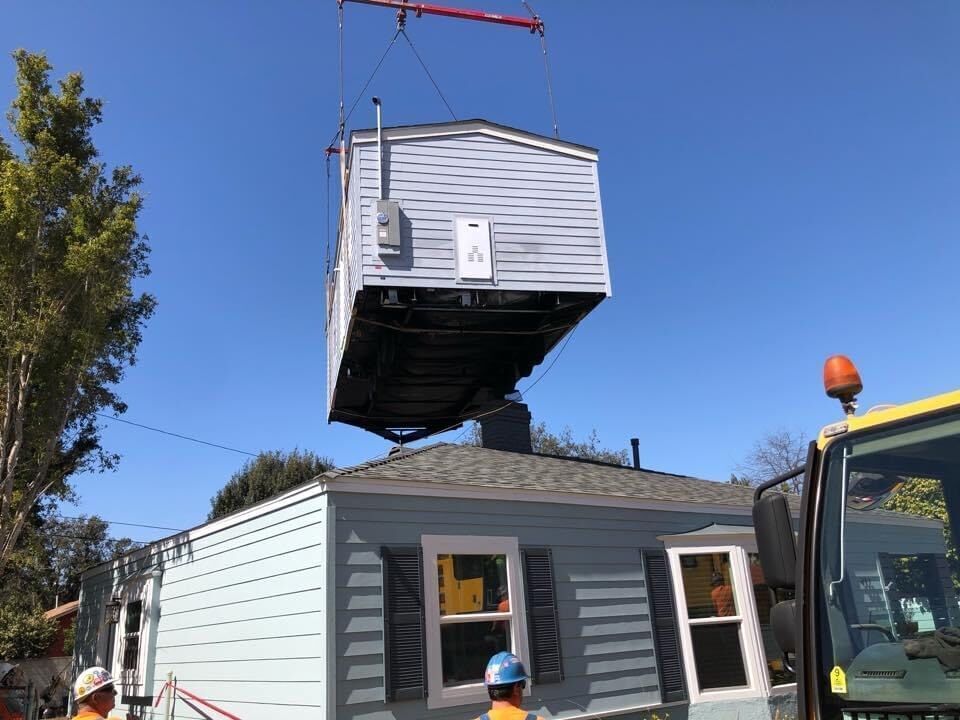
Front Range cities oppose Democratic proposal to permit lot‑splitting as a path to affordable housing
Marianne Goodland
marianne.goodland@coloradopolitics.com
Updated 7 hours ago
Colorado lawmakers are pressing ahead with a plan to let homeowners split their lots to make room for smaller, more affordable houses. The proposal has drawn sharp opposition from Aurora, Colorado Springs, Denver and other Front Range cities that argue...

Susan Blanco signals views on role of appellate courts in first opinion as Colorado justice
Michael Karlik
michael.karlik@coloradopolitics.com
Updated 10 hours ago
Justice Susan Blanco’s first solo opinion as a new member of the Colorado Supreme Court made clear her view of the guardrails that keep the state’s highest court tethered to the issues it is asked to decide. On Monday, the...

Hegseth features Fort Carson soldiers after returning from Middle East, gives warning on Iran war
Reuters
reuters@gazette.com
Updated 10 hours ago
Defense Secretary Pete Hegseth said on Tuesday the next few days in the war against Iran would be decisive and warned Tehran that the conflict would intensify if it did not make a deal. Hegseth also highlighted his trip to the Middle...

Denver Council narrowly approves deal with Axon
Deborah Grigsby
deborah.smith@denvergazette.com
Updated 14 hours ago
After weeks of delay, the Denver City Council narrowly approved a one-year $150,000 contract with Axon for 50 automated license plate-reading cameras and the necessary system hardware, replacing the city’s former vendor, Flock. The 7-6 vote came during Tuesday’s regular...

Colorado leaders weigh next steps after Supreme Court rejects state ban on ‘conversion therapy’
Marissa Ventrelli
marissa.ventrelli@coloradopolitics.com
Updated 1 day ago
Colorado leaders said they are weighing next steps after the U.S. Supreme Court on Tuesday rejected the state’s ban on “conversion therapy” for children, as critics and supporters cheered or lambasted the ruling. The court’s near-unanimous decision called the Colorado...

Aurora homeless shelter opened too early, CEO says, as mold and plumbing issues emerge
Kyla Pearce
kyla.pearce@gazette.com
Updated 14 hours ago
Aurora’s largest homeless services project launched “way too early,” its CEO told city leaders Tuesday, saying the rushed opening left residents living amid mold, plumbing failures, and other issues inside the former hotel. During Tuesday’s Housing, Neighborhood Services and Redevelopment...

Gov. Polis declares April ‘dig safely month’ to mark 40th anniversary of Colorado 811
Scott Weiser
scott.weiser@gazette.com
Updated 14 hours ago
Gov. Jared Polis declared April 2026 as “Dig Safely Month” in Colorado, an annual observance that this year highlights the 40th anniversary of Colorado 811, the state’s One-Call Notification System. “Before everyone starts their warm weather projects around the house,...
PREV
PREVIOUS

City, County of Denver and Denver Health announce $70M proposed 2023 operating agreement
Denver Health and the City and County of Denver on Tuesday announced an updated $70 million annual operating agreement with 35 changes, including the hiring of a second medical director and the expansion of first responder medical training. The agreement is one that Mayor Michael Hancock and Denver Health CEO Donna Lynne say will renew and […]
Water district plans for new filtration system to eliminate 'forever' chemicals, follow EPA advisory
The South Adams County Water and Sanitation District plans to build a new filtration system to catch “forever chemicals” that may be undetectable, even as the district noted that the Environmental Protection Agency has “moved the goalposts.” The district said it hired a leading environmental and construction services firm, Brown and Caldwell, to design a new […]