

BIDLACK | When will both parties rein in mega-donors?
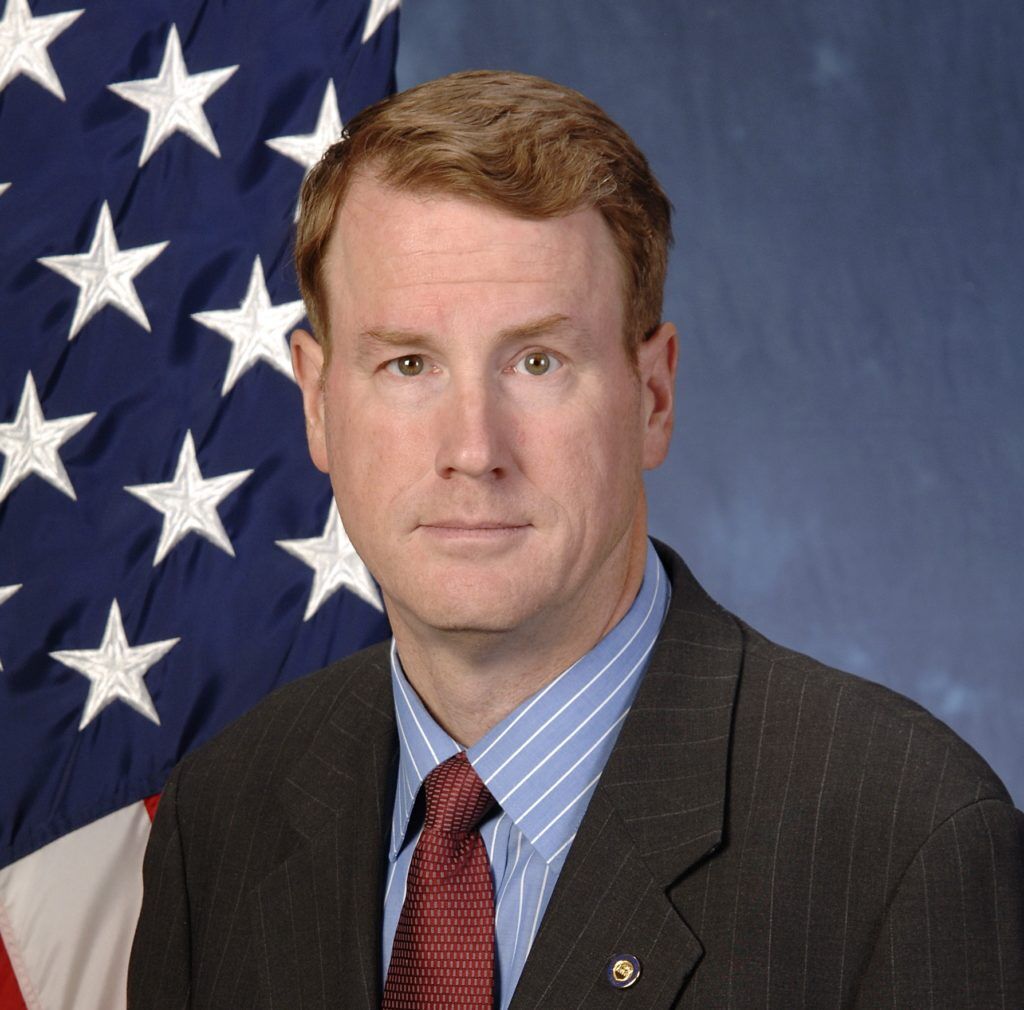
I’ve mentioned my quixotic run back in 2008 for the U.S. Congress on many occasions. I entered the campaign with two personal goals: first that I would never lie to a reporter or a constituent, and second that I would incur no debt at the end of the campaign. Far too many former candidates, in their quest for office, end up pouring their own money into their campaigns. For some who are wealthy (cough… Polis… cough) that works out just fine. But I know of far too many folks who were less well-off but heard the siren song of a winning election night, and who ended up in debt after a losing campaign. I’m happy to report that I met both goals, ending my campaign with $1,100 (out of $248,000 raised) in the bank. Oh, and about a month later, I got a call from a labor-union representative who said they were now ready to make a maximum donation of $5,000 to my campaign. I told the guy that the campaign was over. He said I could use it to retire some of my debt. I told him I had no debt, and he was rather shocked.
I thought of those long-ago days as I read a couple of different Colorado Politics stories about money in campaigns. One story reported on the outside money pouring into Colorado as ballots drop and we get closer and closer to Election Day. One New York billionaire donated $3 million to Colorado campaigns. Oh, and I’m talking about Michael Bloomberg. Did you think Trump? Turns out, he’s not really a billionaire, but I digress…
Bloomberg has donated $2 million to a committee to run ads against GOP gubernatorial candidate Heidi Ganahl and another million to a gun safety group. Another group that backs Democrats raised nearly $2 million in the past two weeks. And of course, it’s not just the Dems. The Senate Majority Fund, that backs Republicans, spent over $2 million in just the last two weeks in support of GOP candidates. Lots of this money is aimed at state legislative races, which shows that both parties now understand the absolutely critical importance of said legislatures. The GOP figured it out 30 years ago (hence their current success nationally at the state level) and the Dems seem to have finally figured it out as well.
I don’t like to brag (ed: really?), but in just the last couple of days, I have gotten personal texts and emails from Nancy Pelosi, Chuck Schumer and a host of other nationally important Dems urging me to make donations to various causes. I thought I was special (ed: really?), but it turns out the major parties are all in on fundraising for this important midterm election. This is nuts, frankly, and I suspect your phone has been ringing off the hook (will some older person please explain to any confused young person what “off the hook” means?) because money has become so vitally important in campaigns. Heck, CoPo reported on a half-dozen races for the state Senate wherein campaign spending was about $5.3 million. Stunning.
So, what, if anything, can be done about it? We know that the U.S. Supreme Court, in the famous (or should I say infamous?) case known as Citizens United basically removed any limits on what big corporations and labor unions could spend during elections. Spending money on behalf of, or attacking, candidates was, according to SCOTUS, a form of political speech, and is therefore protected. Oh, and this case was not, as far too many think, about corporations being “people.” That issue was settled long ago, in that corporations have certain rights that are basically the same as if they were, in fact, people. That only means that Walmart, for example, can own the parking lot at a store (like a person could) or that corporations can sue and be sued for their actions. Corporations are people, but that’s not the point.
After Citizens we saw huge increases in the money pouring into elections, as noted in the examples above. My entire campaign for the U.S. congress raised less than a quarter-of-a-million bucks, and today that is just a drop in the massive bucket of modern campaign spending.
Frankly, it isn’t those donations you and I make of a few dollars that makes the difference. While we are being bombarded with appeal after appeal for money, the really big bucks come from these big mega-donors, and from PACs that spend money on behalf of candidates or issues. Though your $25 is appreciated, the candidate is likely spending much of his or her time on the phone with mega-donors, in hopes of scoring big donations, or hoping that an outside group will decide to spend money there.
So, what can we do?
Well, though it is true that the Supreme Court has decided money is speech, I have a different and somewhat different (ed: crazy?) idea. You see, I’ve read the Constitution a few times through the years, and I recall that Article 1, Section 4 states, “The Times, Places and Manner of holding Elections for Senators and Representatives, shall be prescribed in each State by the Legislature thereof; but the Congress may at any time by Law make or alter such Regulations, except as to the Places of chusing Senators.”
So, simply put, the manner of elections is up to the states (unless the U.S. Congress overrules them). My crazy idea is that individual states could pass state laws to limit political spending in a couple of ways. First, a law could require that every donor’s name be published. Far too much money is “dark money” from groups with secret memberships (sometimes just a rich guy or two). Second, the state law could set limits on how much money could be spent during an election cycle for a particular office.
I readily admit that this would be a tricky and complicated idea to implement, but maybe, just maybe, it could be a start to chipping away at the outrageous influence mega-donors have in the current climate. I don’t expect, of course, for either party to agree to basically signing away their big-money raisers, but it might be the first tiny step in meaningful campaign finance reform.
Maybe…
Hal Bidlack is a retired professor of political science and a retired Air Force lieutenant colonel who taught more than 17 years at the U.S. Air Force Academy in Colorado Springs.


Colorado hates its disabled citizens | Jon Caldara
Jon Caldara
jon-caldara@coloradopolitics.com
Updated 3 days ago
This is a selfish column. The legislature is about to hurt my disabled son. My son, Chance, has Down syndrome and a few years ago would have been labeled “retarded.” Then “developmentally delayed.” Now the hypersensitive prefer “intellectually disabled.” Whatever...
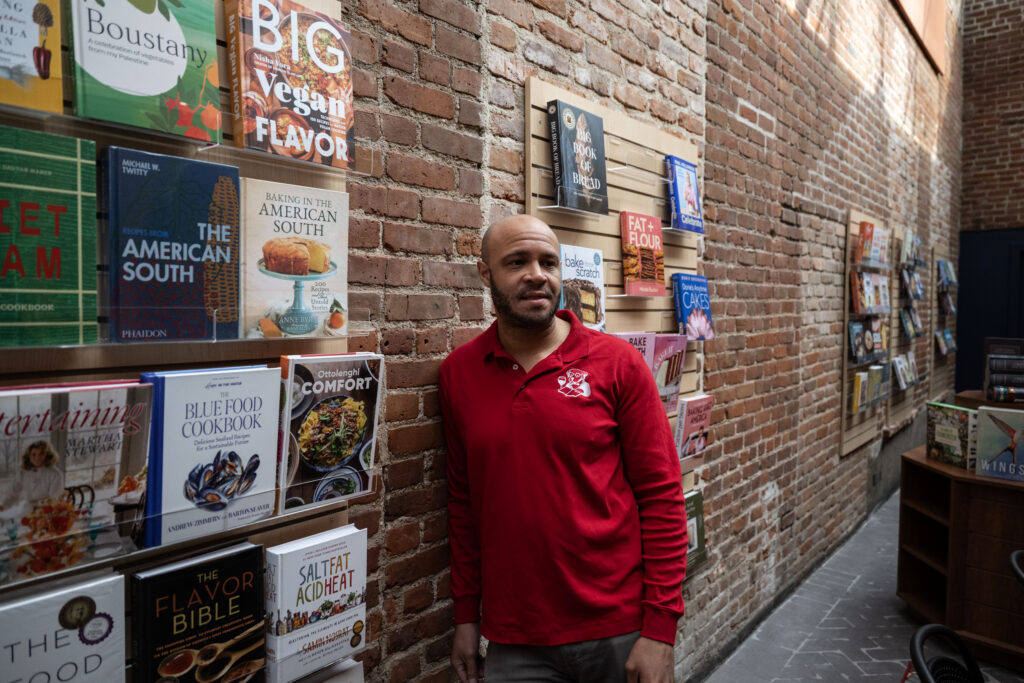
Kwame Spearman warrants plenty of criticism, not cancellation | SONDERMANN
By Eric Sondermann
by-eric-sondermann@coloradopolitics.com
Updated 3 days ago
All of us are flawed humans, some more so than others. This is the tale of Kwame Spearman who burst onto Denver’s business and political scene a handful of years back. His ride has taken a downhill trajectory. Within the...
From pause to progress — a better path on AI policy | OPINION
Colorado Politics
colorado-politics@coloradopolitics.com
Updated 2 days ago
By Brittany Morris Saunders and Loren Furman Last year, following the Special Legislative Session, we wrote in Colorado Politics that delaying Colorado’s AI Act was not a setback. It was an opportunity. We asked state leaders to pause, bring more...
Cutting Prop 123 would cost Colorado far more than it saves | OPINION
Colorado Politics
colorado-politics@coloradopolitics.com
Updated 2 days ago
By Luke Teater Colorado’s legislative budget writers are about to receive updated revenue forecasts and begin making final cuts to close a historic budget gap, and Proposition 123’s affordable housing financing tools are on the chopping block. But in their...
Colorado’s place in President Trump’s oil-and-gas approach | Paula Noonan
Paula Noonan
paula-noonan@coloradopolitics.com
Updated 3 days ago
Head spinning is the unwanted reality of today’s world. Let’s start at the international level. The wars in the Middle East since the 1950s have never ended. Though religion and ethnicity are factors, oil and gas access is always predominant...
Reject onerous ad limits in sports-betting bill | OPINION
Colorado Politics
colorado-politics@coloradopolitics.com
Updated 3 days ago
By Justin Sasso A dangerous precedent is potentially afoot in the Colorado state Senate right now, where a bill was recently introduced to restrict advertising for local broadcast media across Colorado. Senate Bill 26-131, seemingly designed to discourage Coloradans from participating...
Reform to Colorado’s grantmaking drives efficiency, strengthens state’s partnership with nonprofits | OPINION
Colorado Politics
colorado-politics@coloradopolitics.com
Updated 3 days ago
By Marco Dorado and Jack Murphy Colorado’s nonprofit sector is one of the most significant contributors to our state’s economic and civic life, with more than 14,000 registered nonprofit organizations supporting more than 262,000 jobs — approximately 10% of all...

Costly auto mandate amounts to needless overkill | FEEDBACK
Colorado Politics
colorado-politics@coloradopolitics.com
Updated 3 days ago
HB26-1199 is currently in the legislature, and let me explain how this affects you. Currently in the state of Colorado, your vehicle’s emissions have to meet California standards even though you do not live in California. Though we all can agree...
Congress needs to protect 340B for rural Colorado | PODIUM
Colorado Politics
colorado-politics@coloradopolitics.com
Updated 3 days ago
By Rod Pelton A lot of politicians talk about understanding what life is like for our rural communities, but not many really do. I’m a third-generation Cheyenne County farmer and rancher; I grew up on the eastern plains of Colorado, raised...

Caldara overlooked facts in slamming utilities | FEEDBACK
Colorado Politics
colorado-politics@coloradopolitics.com
Updated 4 days ago
Normally, I appreciate the variety of perspectives published on Colorado Politics. But regarding Jon Caldara’s recent column on Xcel, he irresponsibly neglects key facts to the point of annihilating credibility (“Are our overlords normalizing power outages?” March 15). He neglects...
PREV
PREVIOUS

Prop 122 expands mental health care for vets, everyone
Jason Lopez When I returned from my third tour in Afghanistan in 2015, adjusting to the slow tempo and seclusion of civilian life was difficult. Accustomed to the constant commotion and camaraderie found in a war zone, my new life felt directionless, unsettling and solitary. A month after I returned home, I fell asleep on […]

Colorado Springs Gazette: Trump's insult proves O'Dea's high character
Unintended endorsements don’t get much better than this. Former President Donald Trump on Monday slammed Colorado Republican senatorial candidate Joe O’Dea in a post on Trump’s Truth Social platform. Trump’s attack on O’Dea came after O’Dea pledged to campaign against any attempt by Trump to seek another White House term. Trump responded with a personal […]