

State Supreme Court opens comment period for jury bias proposal
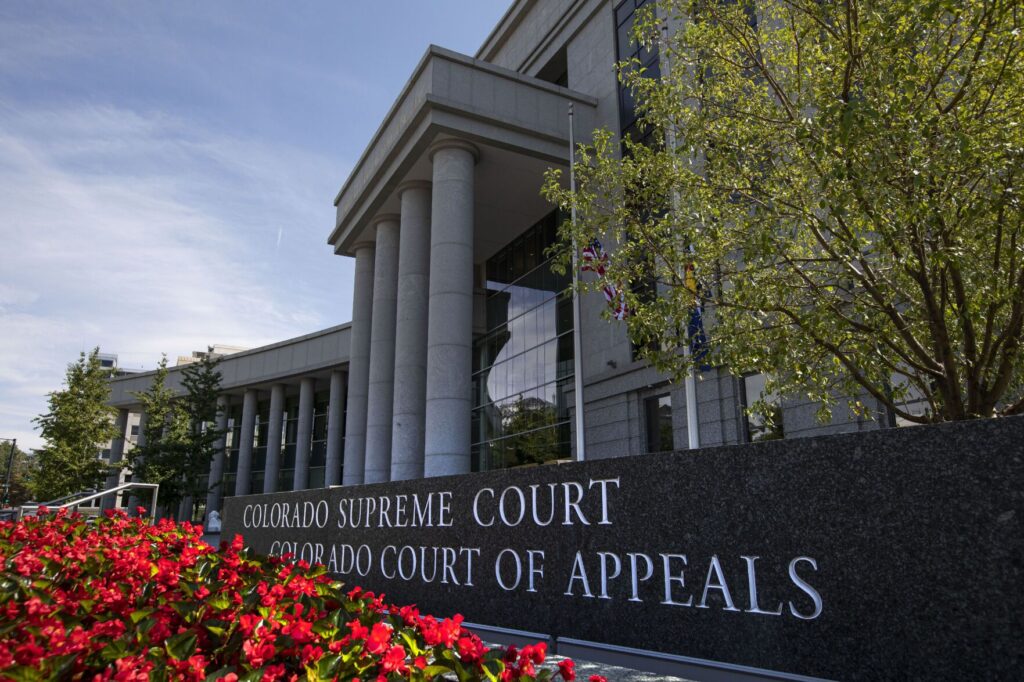
The Colorado Supreme Court has decided to take up a proposal addressing implicit racial bias in jury selection, opening a public comment period for rules that would curb the use of tactics historically used to exclude jurors of color.
Previous efforts to address racial bias have faltered. Last year, the Supreme Court declined to advance a similar set of changes it received from its rules committee, citing a need for further consensus. Then four Democratic lawmakers abandoned their own attempt to enact the proposal legislatively this year, in the face of opposition from all 22 elected district attorneys.
The two-page draft now under consideration would restrict the ability of prosecutors to dismiss, or strike, people of color from jury pools for reasons that, while not explicitly racial, nevertheless correlate with race.
“The proposed rule will increase jury diversity; lead to better and more reliable decision making; increase confidence in the criminal justice system by prompting the elimination of racial bias,” wrote attorney Kevin M. McGreevy to the Supreme Court, “and promote increased juror turnout among under-represented racial and ethnic demographics.”
The current effort to combat race-based juror strikes stems from the U.S. Supreme Court’s landmark 1986 ruling in Batson v. Kentucky. After a prosecutor excused the Black members of a jury pool, leaving an all-white jury to convict the Black defendant, the Supreme Court deemed intentional, race-based discrimination in jury selection unconstitutional.
The ruling gave rise to “Batson challenges,” which enable trial judges to halt the dismissal of jurors of color. If a prosecutor attempts to excuse a juror with a peremptory strike – which typically does not require a reason – a Batson challenge by the defendant forces the prosecutor to explain their actions with a “race-neutral” reason. The trial judge must ultimately weigh the race-neutral reason against the circumstances and decide whether racial discrimination is likely taking place.
Batson challenges, however, may not be effective where the prosecution’s justification for striking a juror is only indirectly linked to race. For example, a prosecutor may dismiss a Black juror who expresses distrust in the police based on his past experiences. Or a Hispanic juror if she seems inattentive or fails to make eye contact.
To that end, the Colorado Supreme Court’s Rules of Criminal Procedure Committee voted 8-4 in July to forward a proposal to the justices that would make it harder to strike jurors of color based on their lived experiences or their demeanor in the courtroom.
“On a number of proposed provisions, there was agreement among the members of the committee. On a number of other provisions, however, there was not,” wrote Court of Appeals Judge John Daniel Dailey, who chairs the rules committee, in an email to the Supreme Court earlier this month.
The proposal deems certain race-neutral justifications as invalid by default, including if a juror has prior contact with law enforcement, believes police engage in racial profiling or lives in a “high-crime neighborhood.” The rule would also require corroboration from the judge or the defense if a prosecutor wishes to strike a juror for demeanor-based reasons, such as their body language or attitude.
Trial judges would not decide whether purposeful racial discrimination is taking place with a juror strike, but instead whether an “objective observer could reasonably view race or ethnicity as a factor.”
“The perception of most of the trial judges on our Committee was that adoption of the proposed rule would lead to more people of color serving on juries,” wrote McGreevy, who led the effort to revive the jury bias proposal in the rules committee.
Washington and California were the first states to adopt similar policies on racial bias. Washington did so through its Supreme Court, and California enacted its rules legislatively. McGreevy explained in his memo that members of the rules committee spoke with a trial judge and a prosecutor in Washington, who both believed the rule has led to an increase in people of color serving on juries in that state.
The Colorado Supreme Court also received a counterproposal from Robert M. Russel, a prosecutor with the Denver District Attorney’s Office and a member of the rules committee. Russel advised it would be better for the Supreme Court “to do nothing than to adopt the latest proposal.”
A key problem Russel saw with the rule change was the prohibition on striking a juror for expressing a mistrust of police officers. Because police testify routinely in criminal jury trials, he argued prosecutors have a legitimate reason for dismissing jurors who are skeptical of law enforcement.
However, the state’s second-highest court has recently weighed in on that issue, landing on the side of protecting jurors to a limited extent. Last week, the Court of Appeals ruled that a Black juror could not be dismissed solely because she had negative experiences with police based on her race.
The Supreme Court has set a deadline of Jan. 25 for the public to submit written comments on the proposed rule change. The justices will hold a hearing on Feb. 7 for those who wish to speak.

Federal judge blasts government for violating court order, confiscating man’s property
Michael Karlik
michael.karlik@coloradopolitics.com
Updated 6 hours ago
A federal judge gave the government three hours on Friday to return the property of a man released from immigration detention, which it allegedly retained in violation of her previous order. “At its most benign, this failure is an unforced...
DA’s withdrawal from veterans treatment court not judge’s problem, ethics panel says
Michael Karlik
michael.karlik@coloradopolitics.com
Updated 2 days ago
There are no ethical concerns from a judge continuing to participate in a specialty veterans treatment court if the district attorney’s office has withdrawn from the program, the Colorado Supreme Court’s ethics committee advised on Wednesday. Colorado law permits chief...
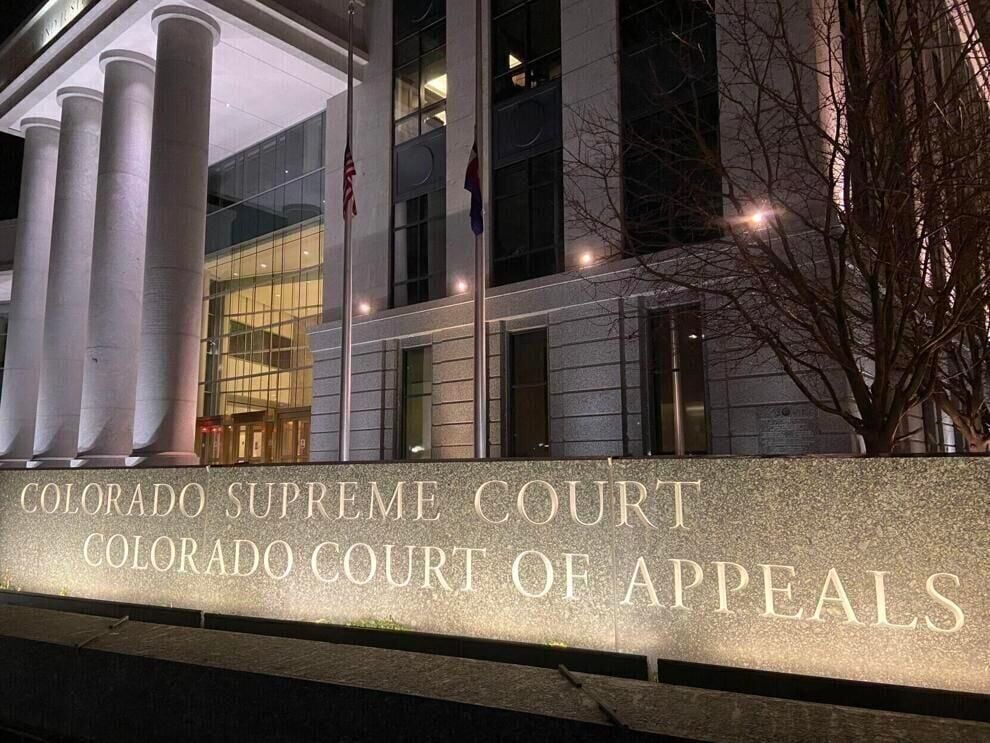
Divided appeals court orders insurance company to pay $35,600 for delayed disclosure of policy
Michael Karlik
michael.karlik@coloradopolitics.com
Updated 2 days ago
Colorado’s second-highest court concluded on Thursday that an insurance company violated state law when it refused to disclose an automobile policy to an injured motorist for nearly one year after she requested it. By 2-1, a three-judge Court of Appeals...
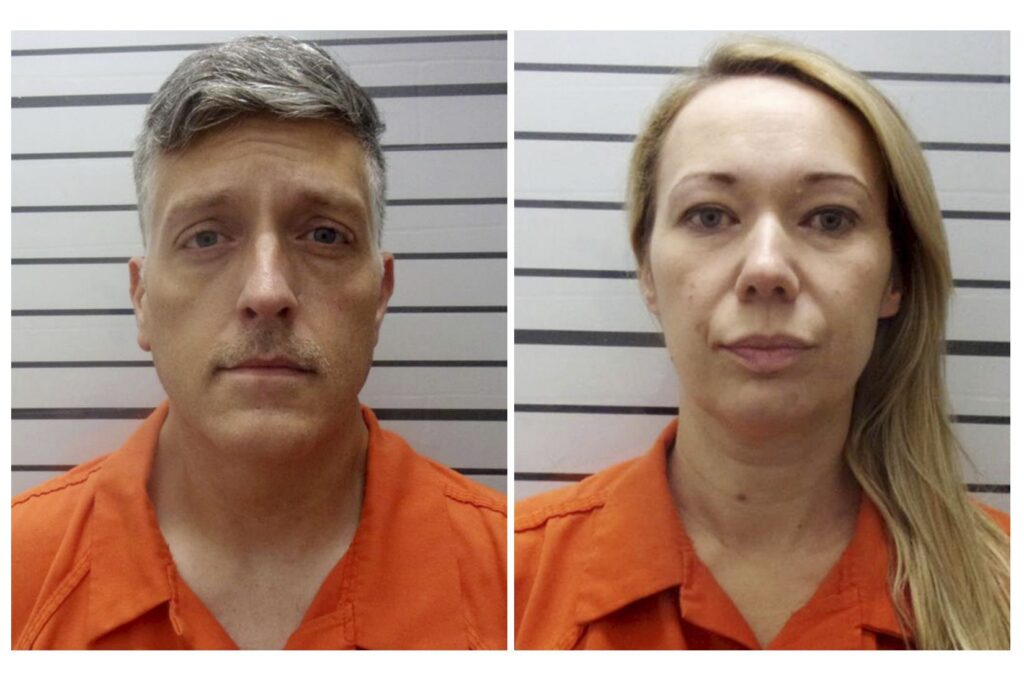
Judge expected to decide Monday whether to accept latest plea agreements for Hallfords
Mackenzie Bodell
mackenzie-bodell@coloradopolitics.com
Updated 2 days ago
An El Paso County judge is expected to decide Monday whether to accept new negotiations that would extend the prison sentence for Jon and Carie Hallford, coming on the heels of the court rejecting the original plea agreements for the...
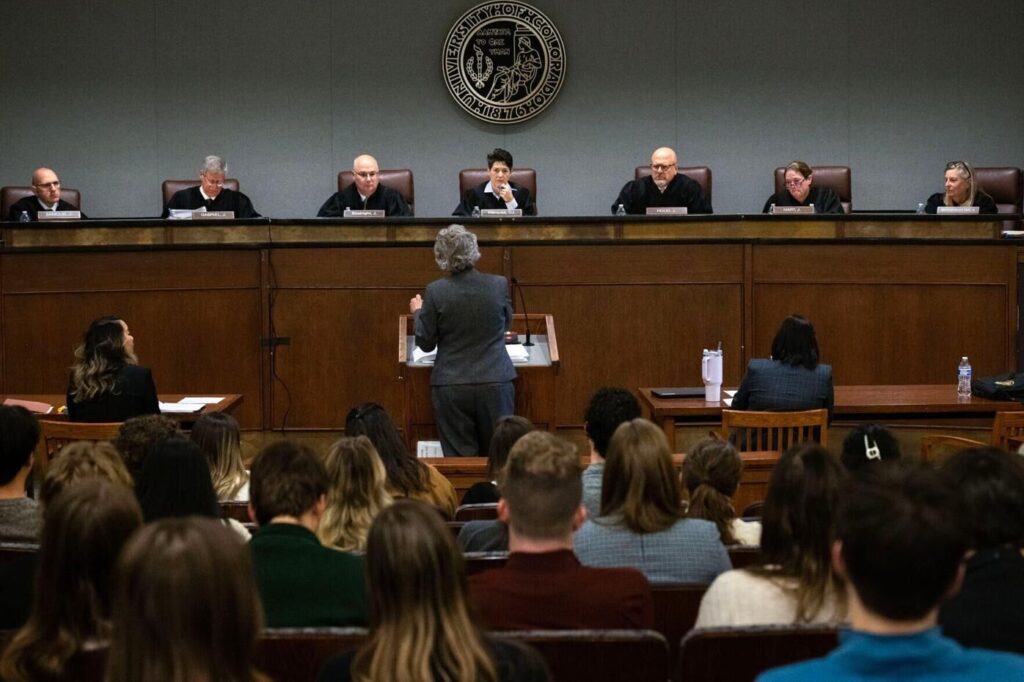
Who are the 3 finalists for the Colorado Supreme Court?
Michael Karlik
michael.karlik@coloradopolitics.com
Updated 3 days ago
A citizen-led nominating commission has chosen the finalists for a vacancy on the Colorado Supreme Court, the first opening in five years on the seven-member court. The vacancy arose after the unexpected resignation of Justice Melissa Hart, who formally departed...
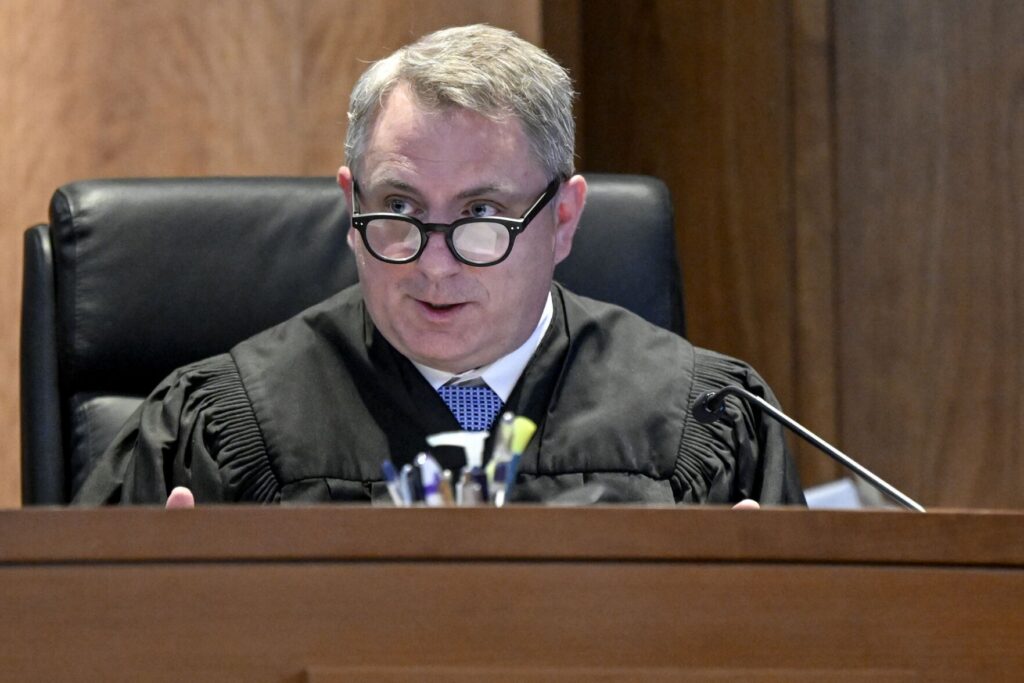
Christopher Zenisek, trial judge experienced with high-profile cases | SUPREME COURT FINALISTS
Michael Karlik
michael.karlik@coloradopolitics.com
Updated 3 days ago
After the Marshall fire burned through Boulder County in the final days of 2021 and wound up destroying more than 1,000 homes, the sprawling 4,000-plaintiff litigation was assigned to District Court Judge Christopher Zenisek of Jefferson County. Zenisek would go...
Andrea Wang, water and energy expert | SUPREME COURT FINALISTS
Michael Karlik
michael.karlik@coloradopolitics.com
Updated 3 days ago
When the late Chief Justice Mary Mullarkey authored a 2002 opinion in the complex and long-running Taylor Ranch case involving landowners’ claims to access a 77,000-acre tract in the San Luis Valley, she worked with her law clerk, Andrea S....
Susan Blanco, innovator in the judiciary | SUPREME COURT FINALISTS
Michael Karlik
michael.karlik@coloradopolitics.com
Updated 3 days ago
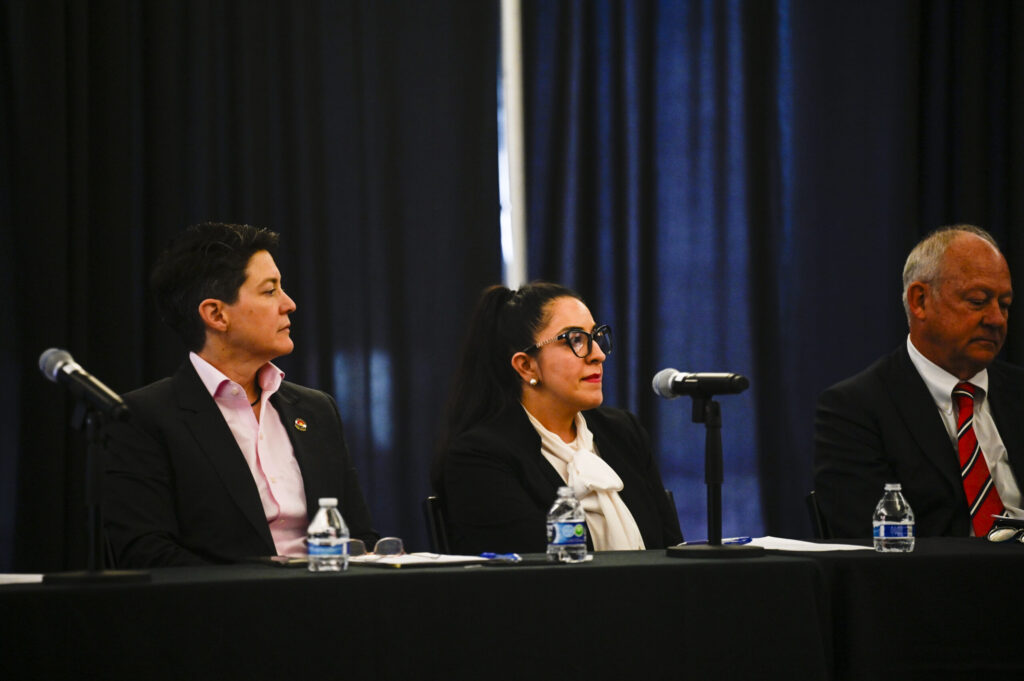
Less than 24 hours after her selection as a finalist for a Colorado Supreme Court vacancy, Chief Judge Susan Blanco was back on the bench in Fort Collins, moving methodically through the variety of complications she encountered. “Your goatee might...

Colorado joins lawsuit against Trump energy emergency order
Scott Weiser
scott.weiser@gazette.com
Updated 4 days ago
Colorado Attorney General Phil Weiser joined a multistate lawsuit challenging an executive order invoking the National Emergencies Act that President Donald Trump issued on the day of his inauguration. The order fast-tracks fossil fuel projects by bypassing or shortening environmental...
Colorado’s federal judges slash motions backlog to lowest in years
Michael Karlik
michael.karlik@coloradopolitics.com
Updated 3 days ago
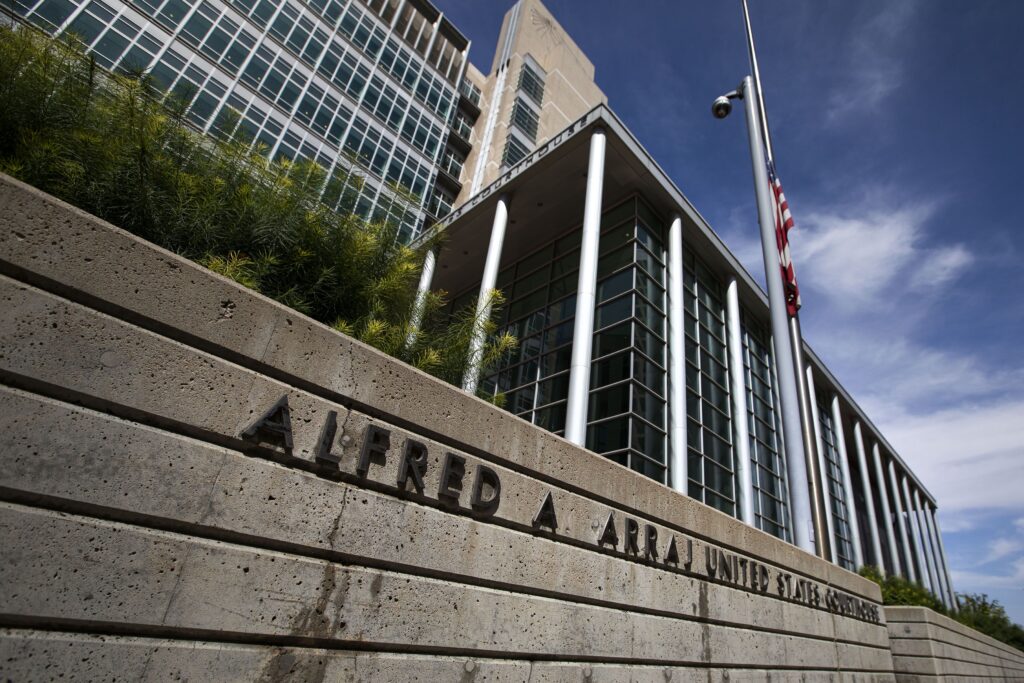
Colorado’s federal trial judges collectively had 37 motions in civil cases that had been sitting on their dockets for at least six months without a ruling, as of Sept. 30. That is the smallest backlog the state’s U.S. District Court...
PREV
PREVIOUS
Gov. Polis pledges to improve school safety at state summit
Gov. Jared Polis vowed to improve students’ mental and physical safety in classrooms while speaking at Colorado’s annual School Safety Summit on Thursday. Colorado is no stranger to school tragedies, from the Columbine High School massacre in 1999, to the STEM School Highlands Ranch mass shooting in 2019, to the string of shootings outside of Aurora […]
Colorado approves nearly $7 million in economic development incentives
An electric plane company could grow its operations in Centennial or Jefferson County after landing almost $3 million in state economic development tax credits. The Colorado Office of Economic Development and International Trade’s Economic Development Commission on Thursday approved almost $7 million in economic incentives for five companies to either locate, or grow, their businesses […]