

ANALYSIS: Roe decision led to spike in Colorado’s voter registration, particularly among women
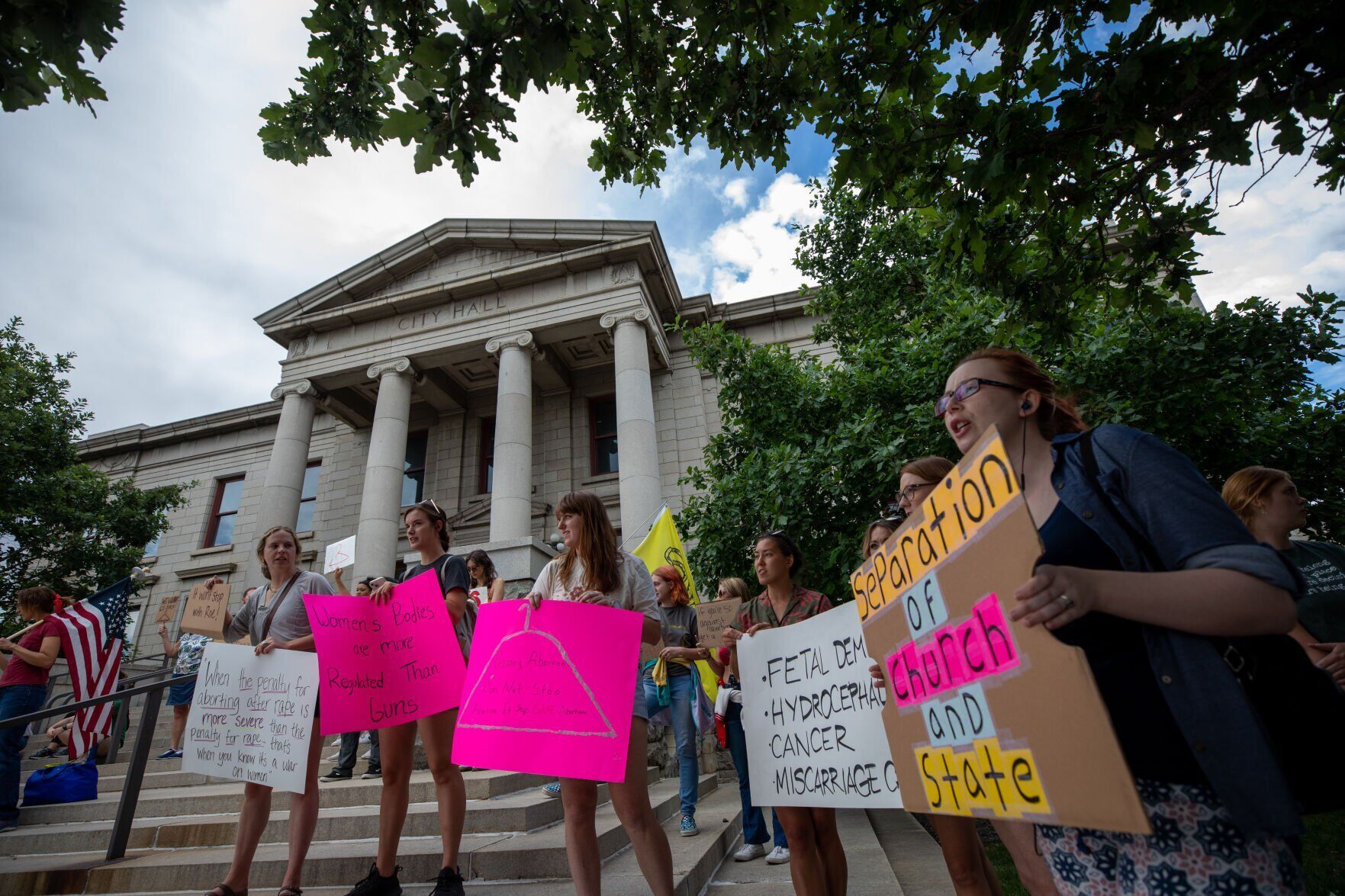
Voter registration in Colorado surged, particularly among women, in spikes that coincide with the U.S. Supreme Court’s decision overturning Roe v. Wade, a Colorado Politics analysis shows.
The analysis, which delved into voter registrations between May and September of this year, shows women, especially Democrats, are outpacing registrations by men in all but one of the seven most competitive Senate races. The surge was most pronounced in three congressional districts: CD2, which includes Boulder; CD5, which covers Colorado Springs; and, the battleground CD7, which includes Jefferson County and parts of Douglas County.
Confounding variables could explain the spikes, in part or in whole. But at the outset, the data seem to support the hypothesis the court decision is a motivating factor in election engagement.
For example, between January and May of this year, new voter registrations for Democratic women averaged just under 2,900 per month. In June, the month when the Dobbs decision was published, the number jumped to 5,737, almost double the average.
New voter registrations for Republican women averaged 1,350 per month between January and May, but 3,079 Republican women registered in June, more than double the monthly average.
Unaffiliated women put in about 8,000 new voter registrations per month between January and May, but in June that jumped to 11,486, an increase of more than 40%.
This surge stands in sharp contrast to voter registration trends in Colorado in 2014, when voter registrations by women declined between Jan. 1 and Sept. 1, 2014. In 2018, voter registrations by women increased only slightly in the same time period.
Ryan Winger of Magellan Strategies told Colorado Politics he found “non-polling” data useful in seeing trends.
Winger doesn’t regard the spikes as a “game changer in CO but a trend nonetheless.” Crucially, he said, the analysis reflects behavior “without voters having the ability to hide by not responding to surveys.” Winger is referring to the difficulty pollsters face in getting people to participate in polls.
He added the Supreme Court’s ruling “probably was just a steroid shot into a trend that had already been occurring where women were more likely to register as U or D than R,” referring to unaffiliated voters, Democrats and Republicans, respectively.
The data shows greater levels of new registrations after the leak and again after the ruling in Dobbs v. Jackson Women’s Health, in which the justices overturned the longstanding precedent guaranteeing access to abortion, leaving it to the states to decide the parameters of their abortion statutes.
Politico reported on a leaked a draft of the Dobbs decision on May 2. The court’s published decision came out on June 24.
By that date, voter registrations in Colorado were already beginning to surge among women of all political persuasions, but most notably among unaffiliated and Democratic voters.
The New York Times observed a similar trend in at least five states – Florida, Idaho, North Carolina, Ohio and Pennsylvania – three of which are battleground U.S. Senate races. Notably, the Times said a week after the court’s decision, more than 70% of newly-registered voters in Kansas were women.
In August, Kansas voters voted down an amendment that would have stripped residents of the right to an abortion. The vote, at 59% against 41%, mirrored the most recent vote in Colorado Proposition 115, which would have banned abortions after 22 weeks gestation. The measure lost by a nearly identical 59% to 41% margin in 2020.
While the surge was most in CD2, CD5, and CD7, voter registration changes appears to be considerably diminished in Congressional District 8, one of the most-watched races in the country.
Some reports point out that Republicans had been registering to vote in greater numbers in the two years prior to the Dobbs decision, so Democrats in some states are only catching up.
That hasn’t been the case in Colorado, where Democrats held a steady lead in voter registrations over Republicans for the last six years. That said, the biggest jump in voter registrations have occurred among unaffiliated voters, although election results in the past two elections indicated they lean Democrat. Active women voters also outnumber men by about 70,000, according to the most recent statistics from the Secretary of State’s office.
The surge in Colorado could play a role in the state’s most hotly contested state Senate races.

Rep. Ron Weinberg won’t seek reelection
Marianne Goodland
marianne.goodland@coloradopolitics.com
Updated 11 hours ago
Republican Rep. Ron Weinberg of Loveland announced on Thursday evening that he will not seek another term in the Colorado House. “Serving this community has been one of the greatest honors of my life,” the two-term state representative said on...
Colorado title board OKs ballot measures to eliminate flat income tax in favor of graduated brackets
Marianne Goodland
marianne.goodland@coloradopolitics.com
Updated 11 hours ago
Proponents hoping to change Colorado’s income tax structure from a flat rate to graduated tiers — thereby raising taxes for some brackets — walked away from a Wednesday meeting with eight ballot measures approved by the title board. The coalition...
‘The people’s lawyer should show up,’ Democratic AG candidates say as Griswold misses forum
Thelma Grimes
thelma.grimes@coloradopolitics.com
Updated 9 hours ago
Watch the forum here. Three Democratic primary candidates running for Colorado attorney general used a forum Wednesday night to call out the absence of a fourth contender at an event hosted by the Denver Press Club. In their opening statements,...

Colorado Democrat John Hickenlooper raises over $1.1 million in 4th quarter for reelection bid
Ernest Luning
ernest.luning@coloradopolitics.com
Updated 9 hours ago
U.S. Sen. John Hickenlooper’s reelection campaign raised over $1.1 million in the fourth quarter of 2025 and finished the year with more than $3.8 million in the bank, the Colorado Democrat’s campaign said Thursday. The fundraising haul brings Hickenlooper’s total...
Democrats Michael Bennet, Phil Weiser and their backers bank $9 million for Colorado gubernatorial race
Ernest Luning
ernest.luning@coloradopolitics.com
Updated 19 hours ago
Democratic gubernatorial candidates U.S. Sen. Michael Bennet and Attorney General Phil Weiser, and the campaign committees that support them, entered the election year with almost $9 million on hand, as the race to succeed term-limited Colorado Gov. Jared Polis heats...

Longtime Denver resident Dick Young, a retired rear admiral and pioneering civic advocate, dies at 94
Ernest Luning
ernest.luning@coloradopolitics.com
Updated 6 days ago
Richard Edward Young, a retired rear admiral, attorney and towering figure in Colorado’s civic landscape for more than six decades, died Jan. 7. He was 94. A lifelong advocate for civil rights, fair housing, veterans and his neighborhood, Young was...
Opening Day: Colorado lawmakers return to state Capitol for 2026 session
Marianne Goodland
marianne.goodland@coloradopolitics.com
Updated 1 week ago
Underneath the pomp and circumstance of this morning’s opening ceremonies, the 100 lawmakers who took their seats at the state Capitol face a daunting task — how to keep the state’s economy moving forward in the midst of a challenging...

Kenny Nguyen selected to represent Colorado House District 33
Marianne Goodland
marianne.goodland@coloradopolitics.com
Updated 1 week ago
Kenny Nguyen, a member of the Broomfield City Council, was chosen by a 36-member Democratic vacancy committee on Monday to represent House District 33. Nguyen will replace Sen. William Lindstedt, who was appointed by Gov. Jared Polis last week to...
U.S. Sen. Michael Bennet, Colorado Attorney General Phil Weiser clash at Democratic gubernatorial forum
Ernest Luning
ernest.luning@coloradopolitics.com
Updated 1 week ago
Things got a little chippy Saturday at a union hall north of Denver, as Democratic gubernatorial candidates U.S. Sen. Michael Bennet and Colorado Attorney General Phil Weiser sparred over the effectiveness of their respective responses to President Donald Trump’s second...
Colorado Democratic vacancy committee selects Lori Goldstein for HD 29
Marianne Goodland
marianne.goodland@coloradopolitics.com
Updated 1 week ago
A Democratic vacancy committee on Sunday chose Lori Goldstein, president of the Adams 12 Board of Education, to serve the final year of Rep. Shannon Bird’s term. Bird, a Democrat who would have been term-limited this year, resigned her seat...
PREV
PREVIOUS
Aurora council consider building new campus to curb homelessness
At a price tag of at least $50 million, some Aurora City councilmembers proposed to construct a new campus for the homeless that would offer not only a place to live but also services to aid their transition to self sufficiency. The vision emerged out of city officials’ travel to two cities in Texas and […]

Poll points to neck-and-neck race between Yadira Caraveo, Barb Kirkmeyer in Colorado's new 8th CD
The race to represent Colorado’s new 8th Congressional District is in a statistical dead heat as voting begins, an internal poll conducted by the Democratic candidate shows. A telephone survey conducted Oct. 11-16 of 600 likely voters in the district by national Democratic firm Global Strategy Group for state Rep. Yadira Caraveo, the Democratic nominee, […]