

Durango Herald: Citizens Agenda model serves voters over politicians
Election season gives the editorial board a front-row seat in meeting and getting to know candidates, whether it’s in person or on Zoom. The way it usually goes is candidates give us an elevator speech, then we have a field day of questions for them. Like any job interview, sometimes more important than the actual answers are how candidates answer the questions. This is often more telling.
Meeting so many candidates in a short period of time, we can’t help but notice commonalities and strategies. Some are focused on their statistical chances of winning, leaning into the numbers. Others rely on their appeal or message to particularly bases. Some measure themselves in favorable environments against vulnerable opponents.
Even though we’re the ones asking the questions, candidates sometimes talk at us instead of to us or, ideally, with us. No matter the position they’re coming from, this tactic can spill over into the way election stories are written. And we’d like to change this.
One impressive election reporting model aims to reverse the power dynamic away from politicians – and their chances of winning – to the voters, centering coverage on the public’s information needs and wants. Jay Rosen, a New York University journalism professor, has refined this reporting model called Citizens Agenda, public-powered journalism applied to elections coverage. If reporters ask the right questions to enough people in enough ways, they can derive this agenda. It’s practical, tactical and we like its responsive, useful style.
We’re a little late to the party for this election season, as far as fully implementing methods. But we are inspired by how we can better engage – and serve – readers, and we’ll cherry-pick from this model when appropriate.
Here’s a simplified version of how the Citizens Agenda works. First, the easy part. We identify the people we will inform. An essential beginning question is what do we want candidates to discuss as they compete for votes?
This question is asked repeatedly with answers confirmed and tested. Results are put into a draft agenda. The agenda is lobbed back at voters. This is what we think we heard – how did we do? Did we get this right?
The agenda is then published on media websites as a live, dynamic product. Reactions are gathered, answers synthesized. This way, the agenda naturally transforms into instructions for campaign reporting. As the twists and turns come, when it’s easy to get pulled into wacky controversies, the agenda becomes the mission and guiding light. Journalists return to it, always asking how situations align with the Citizens Agenda. We press candidates, then report back to readers.
Next, a voters guide is created with candidates on the left side of a grid and, across the top, items on the Citizens Agenda. Fill in with what the candidates have done, said or proposed. This is that transformative moment when journalism becomes public service.
Finally, we keep listening, tweaking, changing as the ground shifts. The Citizens Agenda is an editorial distillation. It involves judgment and nuance and the ability to explain the thinking – not just data.
Inside each step is an opportunity for journalists to build trust and transparency, and rethink newsroom organization and leadership.
We like this approach. The Citizens Agenda originates with voters – who own it – and make decisions from this place.
Durango Herald Editorial Board


Colorado is shrinking — time for our elected officials to take notice | Jon Caldara
Jon Caldara
jon-caldara@coloradopolitics.com
Updated 3 days ago
By Jon Caldara Something strange is happening in Colorado — strange enough that the political class should notice. People are leaving Colorado. After years of being one of the fastest-growing states in the nation, net in-migration has stopped and may...
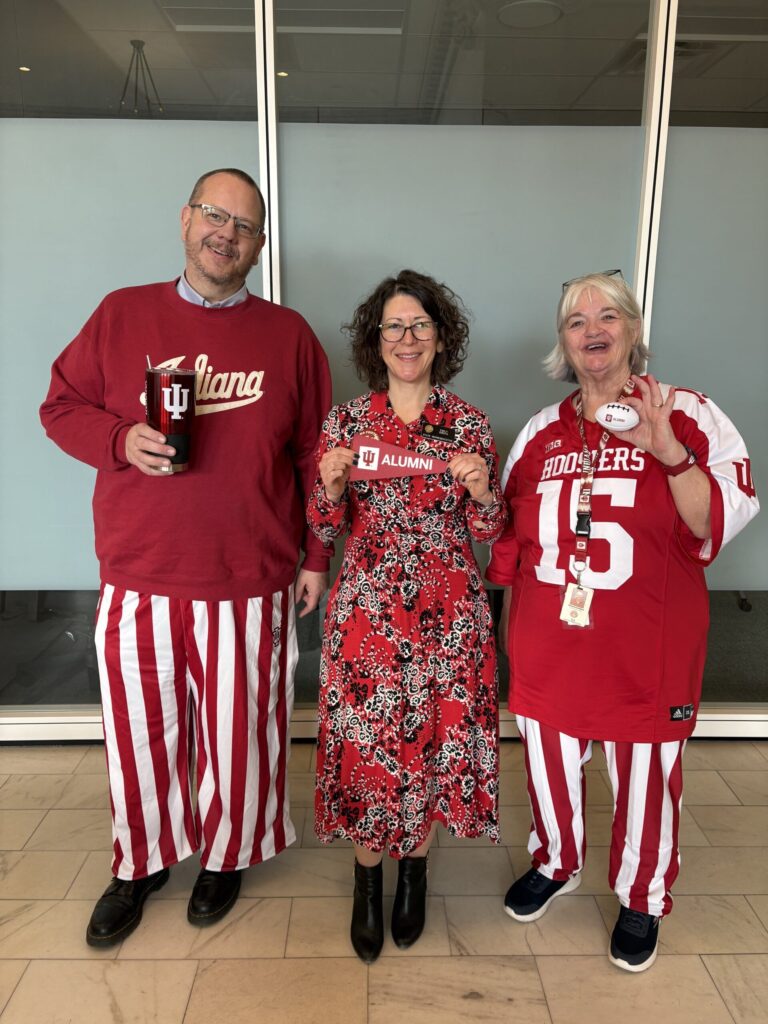
Capitol M: Return to Gold Dome High, 2026 edition, and a salute to old IU
Marianne Goodland
marianne.goodland@coloradopolitics.com
Updated 3 days ago
Welcome back, campers! The 2026 legislative session is upon the good citizens of Colorado, and for a few, the first Monday of the session, Jan. 19, was pretty special. There are at least four folks in the Capitol who are...

The biggest accelerant of our political tribalism | SONDERMANN
Eric Sondermann
eric-sondermann@coloradopolitics.com
Updated 4 days ago
In years past, my go-to word in describing our political condition was “polarization.” I used it endlessly and still do on occasion. But as time has moved on, and the divide has only grown in depth and toxicity, polarization no...
The ramifications of President Trump’s pursuit of Greenland | Kelly Sloan
Kelly Sloan
kelly-sloan@coloradopolitics.com
Updated 2 days ago
President Donald Trump has evidently stepped back from his threatened fantasy of invading Greenland — the sovereign territory of a U.S. ally — to which many a sigh of relief has been expressed, including by the markets. There was next...
Let’s find out who’s up to the gubernatorial task post Polis | Paula Noonan
Paula Noonan
paula-noonan@coloradopolitics.com
Updated 3 days ago
Gov. Jared Polis is bold and his policies are bolder than bold. That’s the paraphrase of his State of the State speech to open the 2026 General Assembly and start off his last year in office. His sweeping review of...

We dream, we dare, we decouple — how Colorado turns values into policy | OPINION
Colorado Politics
colorado-politics@coloradopolitics.com
Updated 4 days ago
By Kathy White Gov. Jared Polis’ final State of the State address was a clear victory lap. After eight years as governor, he used the moment to highlight accomplishments, reflect on progress and remind Coloradans what his administration has delivered....
Volunteer homeowners’ associations to be hit with new lot-splitting law | Bob Loevy
Bob Loevy
bob-loevy@coloradopolitics.com
Updated 4 days ago
Volunteer homeowners’ associations in Colorado Springs, particularly those close to the downtown area, are preparing for another attack on single-family zoning from Gov. Jared Polis and the state legislature during the just underway 2026 legislative session. The new proposal is...

Comprehensive energy permitting reform benefits Colorado, the mountain west | PODIUM
Colorado Politics
colorado-politics@coloradopolitics.com
Updated 5 days ago
By Ron Dickson Thank you, U.S. Reps. Gabe Evans and Jeff Hurd, for your participation in the Congressional Problem Solvers Caucus and your support of comprehensive energy permitting reform. We also appreciate U.S. Sen. John Hickenlooper’s continued efforts to enhance...

Colorado kids will die with CDC’s recent changes to vaccine schedule | OPINION
Colorado Politics
colorado-politics@coloradopolitics.com
Updated 5 days ago
By Connie Ingram and Lesley Thompson No parent or grandparent should ever face the terror of watching a child fight for their life against a disease that could have been prevented. Yet more families could be put in exactly this...

Solutions right in front of us to solve political extremism crisis | OPINION
Colorado Politics
colorado-politics@coloradopolitics.com
Updated 5 days ago
By Landon Mascareñaz Everywhere I went these past two weeks, the sentiment was the same: “What are we going to do about political extremism and the conflict in this country?” I heard it from folks on the left, right and...
PREV
PREVIOUS

Colorado Springs Gazette: Elect Lang Sias, the Top Gun for Colorado
Tom Cruise is not running for Colorado state treasurer. Yet, we have Lang Sias. He’s like Top Gun’s Maverick – in real-life – minus the risky test-the-limits behavior. After a conversation with Sias, one must wonder why we lack candidates of this quality for president of the United States. That’s not an exaggeration. He is […]

SLOAN | O'Dea to the rescue
Kelly Sloan When a U.S. Senate Republican candidate from Colorado attracts the attention of The Wall Street Journal, George Will and umpteen millions of dollars in directed ire from the national Democratic Party, you know he must be on to something. Joe O’Dea is running against the Democratic incumbent Michael Bennet in a race that […]