

‘Parents are awake’: School activists prepare for long-term staying power

Two years after COVID-19 school closures provided the catalyst for a nationwide grassroots parent movement, activists across the country have established an infrastructure network to keep their movement from fizzling out.
Highlighting the staying power of parent activism was the first annual Moms for Liberty Summit, held last month in Tampa, Florida. The event, which featured appearances from Florida Gov. Ron DeSantis (R-FL), Sen. Rick Scott (R-FL), former Education Secretary Betsy DeVos, and others brought together several hundred parent activists from across the country.
With more than 200 local chapters in 38 states and over 100,000 members, Moms for Liberty’s rapidly and continually growing network is perhaps a preview of the long-term outlook of local parent activism, even as the motivating factors that prompted its birth in 2020 recede from memory.
In an interview at the organization’s summit last month, Moms for Liberty co-founder Tina Descovich said the grassroots parent movement is “very sustainable” and the structure of the organization was expressly designed to endure.
“The reason we set it up the way we did is for sustainability,” Descovich said. “We’ve seen for a long time that parents have neglected public education for the most part.”
Descovich said parents in the past, including herself, sent their children to school with the idea that “everything is wonderful,” especially as their children would come home with stellar report cards.
“We neglected our duty to stay involved on what school districts are passing and doing,” she said. “And I think when parents are awake, they’ll never go back to sleep again. And so when we set [Moms for Liberty] up, we did it in a way that had legal structures for each chapter so that it is sustainable.”
The level of scrutiny from activists from all points of the political spectrum has turned campuses into ground zero for the country’s most divisive issues.
The clashes highlight increasingly polarized communities. On the one hand, school districts and their supporters argue they pursued policies meant to protect the children and their staffers, and, often, they were compelled to abide by health mandates meant to confront the pandemic. Supporters of traditional schools also insist that criticism that critical race theory is being taught in schools, for example, is overblown. And some say this highly politicized climate has made it more difficult for school districts to attract and retain teachers, some of whom have decided to leave their profession.
On the other hand, parents have pressed for more transparency and accountability, arguing districts should be more open about what children are taught in the classrooms.
Each Moms for Liberty chapter, Descovich explained, maintains its own bylaws, annually elects its own leaders, and, through an infrastructure in place, allows the group’s members to respond to each district’s unique challenges.
“There will be issues that come and go,” she said, “Yes, there will be people that, now that schools are open, may not be as active in the chapter, but there’s going to be a new issue, there’s going to be a new curriculum. Before this, there was Common Core. Before that, there were issues with sex education. This has been going on for decades, but this is the first time that there’s been a sustainable solution.”
And while Moms for Liberty boasts an impressive network of member chapters, the organization does not fully encompass the degree to which parent activism has found a foothold in school districts across the country.
Hundreds of school districts and localities have their own independent activist groups that also sprang up in the midst of COVID-19 school closures and later moved on to other issues, such as critical race theory and gender theory in school curricula.
Nicole Neily, president of Parents Defending Education, another parent activist organization, told the Washington Examiner earlier this year that the growth of parent activism was “truly astonishing” and noted that its continued success was due in part to bringing parents together from all social, political, and racial backgrounds.
“From coast to coast, disenchanted parents have found each other and coalesced around a few simple, discrete ideas: Parents should be involved in their children’s education,” Neily said. “Children should not face discrimination on the basis of immutable characteristics like race or sex. Students should be taught how to think, not what to think.”
“It’s interesting that the current frustration with education transcends political and racial lines — so there are many unusual bedfellows who find themselves working together towards a common goal,” she added.
But forming chapters and organizations was only the first step. Moms for Liberty-affiliated activists and their independent counterparts have taken significant steps to influence political outcomes, beginning with school board elections.
While Moms for Liberty’s national organization does not endorse school board candidates themselves, Descovich and her co-founder Tiffany Justice told the Washington Examiner they help chapters vet school board candidates in their own communities.
“[The chapters] know who their school board members are, they know how they voted, they know if they … have stood up for parental rights,” Descovich said.
The new attention on school board members and elections has led to scores of new conservative school board members over the last year, many of whom campaigned on opposing COVID-19 mandates and critical race theory in schools.
In Colorado, Douglas County became a national flashpoint of this socio-cultural battle after a handful of parents mounted a recall effort against four members of the Douglas County School Board over Covid-19 efforts.
During elections in 2021, voters elected a new board that, among other things, promised to give parents a place at the education table. The elections shifted the school board from a body largely supported by teachers’ advocates to a 4-3 board with the majority backed by conservative education groups. A conservative strategist characterized the results as “a repudiation of a union-backed board that kept schools closed for too long.”
The district has been in a pitched political battle since.
The new board, split between its conservative and progressive members, dropped the mask mandate in Douglas County and ousted the superintendent, an action that reflected the new partisan lines on the board. That move, along with district’s other ideological clashes, spurred student walkouts, teacher resignations, and heated board meetings and lawsuits.
With the increased engagement in local politics from parent activists, high-profile politicians, such as Florida’s DeSantis, have begun offering their own endorsements to school board candidates.
Moms for Liberty endorsed DeSantis’s reelection bid for Florida governor last month, while the governor has backed 29 different school board candidates throughout the Sunshine State.
“I’m proud to release my full slate of pro-parent, student-first school board candidate endorsements,” DeSantis said last month. “Our school board members are on the frontlines of defending our students and standing up for parental rights.”
The parent movement, its organization, and its political effectiveness led Parents Defending Education’s Neily to compare it to the Tea Party in 2010.
“The grassroots enthusiasm we’ve seen over the past 18 months from parents has been truly astonishing — the last time I can remember anything like this forming was during the Tea Party,” Neily said of the fiscally conservative movement that fueled the 2010 red wave in Congress.
“Without a doubt, parents have recognized that there is strength in numbers — and courage is contagious. We’ve heard many stories where a local activist speaks up and then is contacted by dozens of people in their community who hold similar views.”
Editor’s note: This story is part of a series by the Washington Examiner called “Empowering Families in Education News.”


Colorado legislators eye changes to credit card ‘swipe fees’
Marianne Goodland
marianne.goodland@coloradopolitics.com
Updated 22 minutes ago
Colorado legislators are proposing to eliminate “swipe fees” on sales taxes, a move that proponents say would save businesses tens of thousands of dollars a year but which will likely revive counter-arguments that those fees help create a stable and...

Republicans take another crack at Homeland Security funding, citing Iran war
Kevin Freking
kevin.freking@associatedpress.com
Updated 45 minutes ago
WASHINGTON (AP) — Republicans are invoking the war in Iran and the prospect of retaliatory terrorist attacks as they tee up votes Thursday on a funding bill for the Department of Homeland Security. The House already approved a DHS spending...
Not-so-public comment in Douglas County | Paula Noonan
Paula Noonan
paula-noonan@coloradopolitics.com
Updated 11 hours ago
Let’s do some high and low history. First, the high history. England’s King George III didn’t like the complaining he heard from the American colonies, so he went to war to shut the people up. President Donald Trump doesn’t like...
Why Colorado should stop charging swipe fees on sales taxes | OPINION
Colorado Politics
colorado-politics@coloradopolitics.com
Updated 11 hours ago
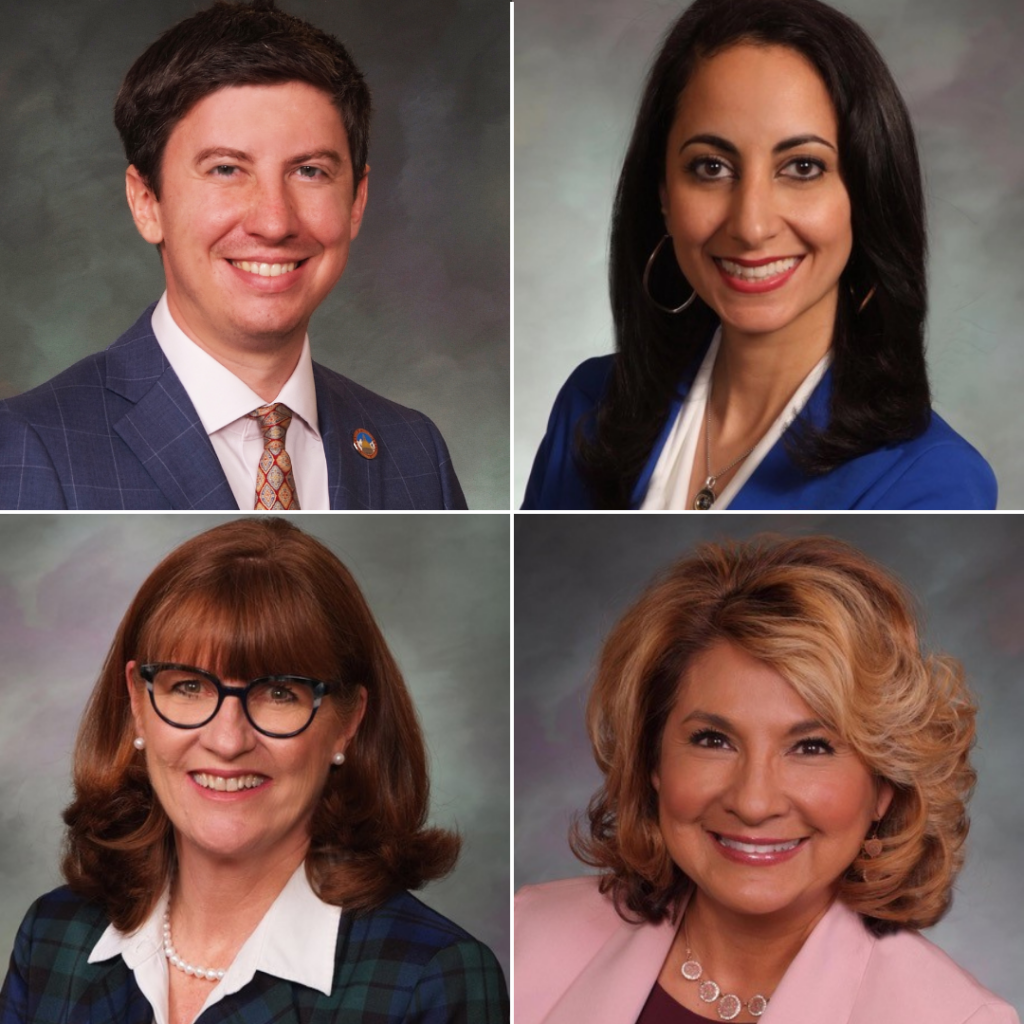
By William Lindstedt, Iman Jodeh, Julie McCluskie and Monica Duran Small businesses across Colorado are working harder than ever right now to keep their doors open, hire local workers and serve their communities. But every day, they are forced to...

Colorado can be a gamechanger in regulating GLP-1 weight loss drugs | OPINION
Colorado Politics
colorado-politics@coloradopolitics.com
Updated 11 hours ago
By Nancy Glick “As goes California, so goes the nation” is a phrase reflecting California’s reputation as a bellwether in setting regulations that often become a precedent for national policy. Now, Colorado can play this role, setting new safety standards...

Almost 40 apply for board to oversee revitalization of Colfax Avenue
Kyla Pearce
kyla.pearce@gazette.com
Updated 1 hour ago
Aurora officials received almost 40 applications for the Aurora Downtown Development Authority Board that will oversee the revitalization of Colfax Avenue. The application period ended Saturday, and an Aurora spokesperson said 38 people applied. Of the 38 applicants, 32 met...
Colorado can be a gamechanger in regulating GLP-1 weight loss drugs | OPINION
Colorado Politics
colorado-politics@coloradopolitics.com
Updated 11 hours ago
By Nancy Glick “As goes California, so goes the nation” is a phrase reflecting California’s reputation as a bellwether in setting regulations that often become a precedent for national policy. Now, Colorado can play this role, setting new safety standards...

Colorado declares measles outbreak after third case linked to Broomfield school
Nico Brambila
nico.brambila@denvergazette.com
Updated 53 minutes ago
An unvaccinated Adams County child who tested positive for measles is tied to a case from Broomfield High School last month, leading state health officials to declare an outbreak. Colorado has four measles cases to date, amid a national outbreak....

Federal audit finds $77.8M in improper Medicaid payments for Colorado autism therapy
Nico Brambila
nico.brambila@denvergazette.com
Updated 58 minutes ago
Colorado’s Medicaid payments for a therapeutic program for individuals with autism increased 172% in four years, prompting a federal audit by the Office of the Inspector General. Auditors found Colorado made $77.8 million in improper Medicaid payments for Applied Behavior...

Proposed changes to wildfire code would add protections to eastern edge of Colorado Springs
Brennen Kauffman
brennen-kauffman@coloradopolitics.com
Updated 30 minutes ago
New construction rules may be coming to the higher-risk wildfire areas around Colorado Springs, including the grassland on the city’s eastern side. Colorado Springs Fire Marshal Kris Cooper presented an early draft of the proposed changes to the city’s wildfire...