

COURT CRAWL | Fallout from censured judge, 10th Circuit weighs in on religious exemption

Welcome to Court Crawl, Colorado Politics’ roundup of news from the third branch of government. The state Supreme Court has concluded a former judge’s admission of bias does not necessarily mean she was biased in a particular case, and Colorado’s federal appeals court issued a first-of-its kind ruling on the intersection between religious freedom and anti-discrimination laws.
Biased judging
? Last year, the Colorado Supreme Court gave a rare public censure to then-Arapahoe County District Court Judge Natalie T. Chase. She had admitted to using the N-word in front of court employees, sharing her views on the Black Lives Matter movement from the bench and other workplace-related misconduct. Among other professional ethical violations, the Supreme Court censured Chase for “manifesting bias or prejudice based on race or ethnicity by her words or actions.”
? After Chase’s censure and resignation, two adults whose parental rights Chase had terminated asked for a second look from a different judge, who ended up overturning Chase’s order based on the censure. But last week, the Supreme Court reinstated Chase’s original decision, saying there needed to be something more than the censure to find that she was actually biased in the case.
? “Although Judge Chase stipulated to several instances of misconduct and resigned her position, the censure order doesn’t support Parents’ claim of bias or an appearance of impropriety in their case. For that to be true, there would need to be some connection between the facts giving rise to the censure and what’s at issue in Parents’ case.” -Justice William W. Hood III

? In response, the Office of Respondent Parents’ Counsel, which represents indigent parents in child welfare proceedings, issued a statement condemning the court’s decision for requiring litigants to show a judge was actually biased in their case. ORPC added that there are other cases likely to be appealed to the Supreme Court also involving Chase:
“The crux of Ms. Chase’s public censure is her failure to live up to the standards that we expect from judicial officers, who hold tremendous power over the lives of Colorado residents. … In censuring Ms. Chase, the Supreme Court recognized the harm that she has done to Coloradoans both directly and through the resulting loss of public confidence in the judiciary. The court prevented Ms. Chase from doing any more harm by accepting her resignation, but now refuses to address the astronomical harm that she has already done. The Court’s dedication to finality of orders over the importance of doing actual justice is disheartening and flies in the face of the purpose of the censure: to protect all citizens from her bias and misconduct.”
10th Circuit appeals
? An Arvada church and religious school fired one of their employees, Gregory Tucker, because – in his telling – he organized an anti-racism assembly for students. When he sued, the church attempted to claim the “ministerial exception” to anti-discrimination laws, which allows houses of worship to make their own personnel decisions in accordance with their faith and without government interference.
? A lower court judge decided a jury would hear the question of whether Tucker was a “minister” under the exception. Faith Bible Chapel appealed to the U.S. Court of Appeals for the 10th Circuit to argue Tucker was clearly a minister. But notably, the church made a novel procedural argument: Because the ministerial exception makes them immune from being sued, they claimed, they were allowed to appeal the trial judge’s decision immediately like police officers can do when judges deny them qualified immunity.
? By a 2-1 decision, a 10th Circuit panel said no, the ministerial exception is not like qualified immunity; no, Faith Bible could not immediately appeal; and no, it would not reconsider the trial judge’s ruling.
? The Gazette also reported that the 10th Circuit is allowing a lawsuit to proceed over the Kansas Highway Patrol’s alleged practice of sidestepping the requirement of reasonable suspicion to detain out-of-state drivers, including from Colorado.

Other appeals
? Fremont County detectives tried to interrogate a jailed suspect 16 hours after he invoked his right to remain silent. The state Court of Appeals found those actions failed to honor the defendant’s constitutional rights and it ordered a new trial.
? Later this month, the Colorado Supreme Court will hear arguments about when juvenile judges have a reason to know that a child in a welfare proceeding qualifies as an “Indian child” under longstanding federal law. A quick resolution is needed because the Court of Appeals, in four recent decisions, has split down the middle on this issue.
? A Pueblo County judge allowed jurors to hear of a man’s racist comments to a friend hours before he allegedly assaulted another person. After the state Supreme Court changed the law governing such evidence earlier this year, the Court of Appeals reversed the defendant’s conviction.
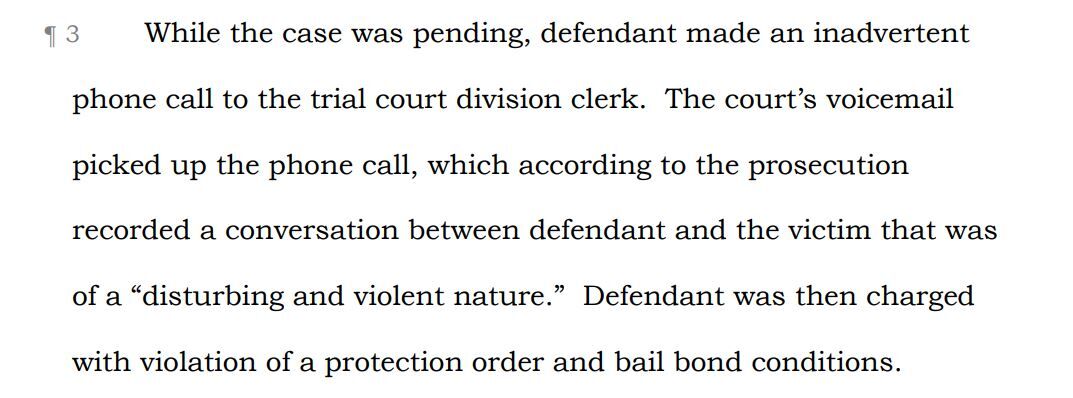
? A defendant was subject to a no-contact order with his kidnapping victim. He ended up violating that order, but in a very unusual way:
Vacancies and appointments
? Incoming U.S. Supreme Court Justice Ketanji Brown Jackson has hired her first clerks, and among them is Kerrel Murray, a former clerk for Chief Judge Timothy M. Tymkovich of Colorado. Tymkovich is a 2003 appointee of the Bush administration to the 10th Circuit.
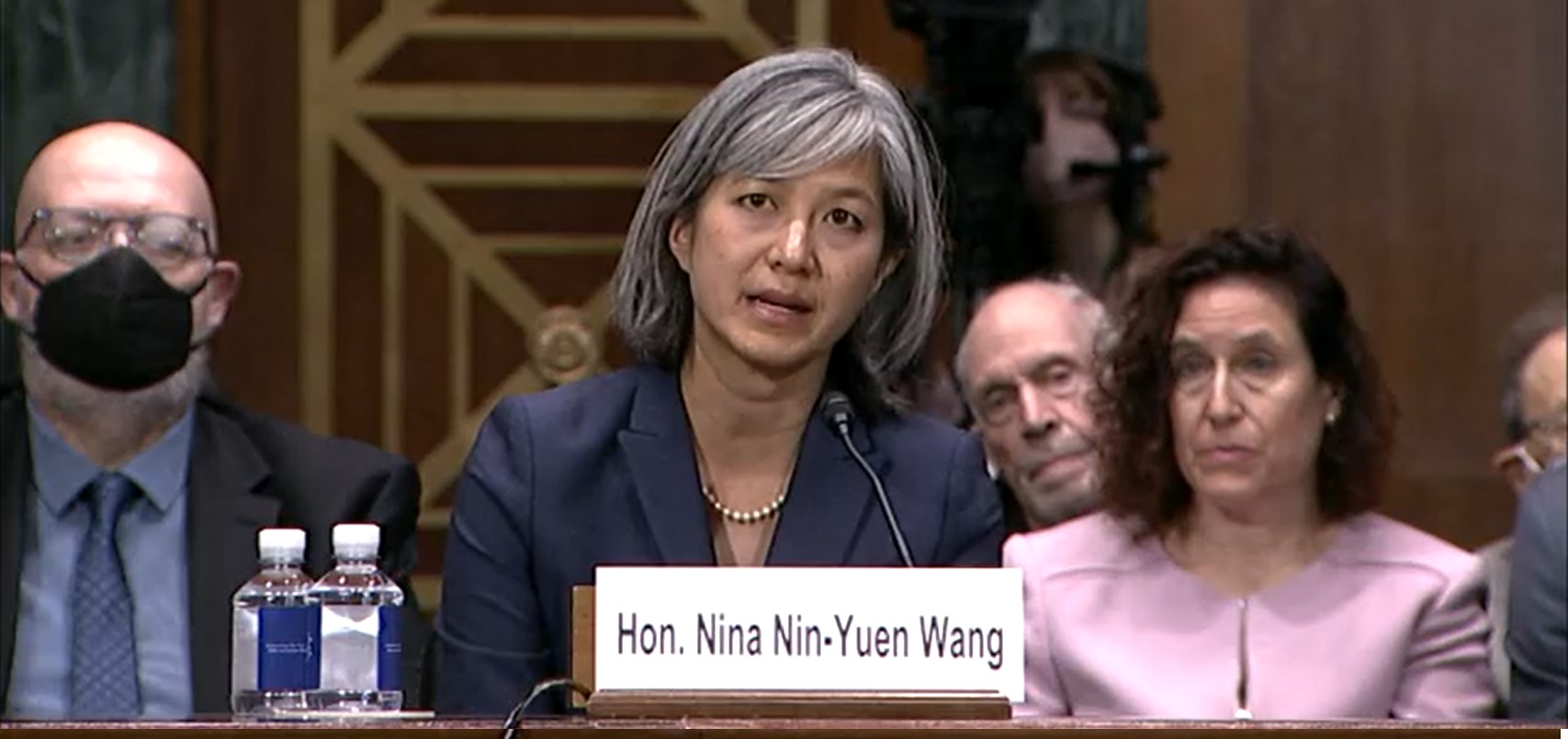
? U.S. Magistrate Judge Nina Y. Wang, who is the president’s nominee for a federal district court vacancy, will receive a vote in the U.S. Senate Judiciary Committee this Thursday.
? The governor has appointed Bent County Court Judge Samuel S. Vigil, who is also a part-time magistrate, to be a district court judge in the 16th Judicial District.
? There are multiple upcoming vacancies in Colorado’s state courts: In the 17th Judicial District (Adams and Broomfield counties) there is an open district court seat caused by the retirement of Judge Katherine R. Delgado and an Adams County Court seat due to the resignation of Judge Cindy Dang. In the 15th Judicial District (Baca, Cheyenne, Kiowa and Prowers counties), there is a district court vacancy from the retirement of Judge Stanley A. Brinkley. Finally, in the Third Judicial District (Las Animas and Huerfano counties), Chief Judge Leslie J. Gerbracht is retiring, with a vacancy effective Jan. 10 of next year.
? The Biden administration has nominated Pueblo County Sheriff Kirk Taylor to be the next U.S. Marshal for Colorado.
Open program applications
? The state Judicial Department has announced there are $1.94 million in grants available to nonprofit organizations providing a full range of legal services to people undergoing or at risk of eviction. The deadline to apply is June 27.
? There are also $2.1 million in grants to organizations helping those experiencing “family violence.” The funds are intended for services like assistance with divorce, legal separation, child custody, child support and related matters. Applications for the Family Violence Justice Fund Grant Program are also due by June 27.
Miscellaneous decisions
? Officials in the town of Calhan likely engaged in “some misconduct” under state law, but not a federal violation, a judge found.
? An Englewood hotel operator, a disabled plaintiff and a federal judge all agreed that the hotel was in violation of the Americans with Disabilities Act and improvements should be made.
? Espionage? Bribery? Science? A federal judge has tossed a whistleblower retaliation lawsuit involving a heated dispute between researchers in Colorado.



10th Circuit rejects ‘penalty’ for children of naturalized citizens seeking visas
Michael Karlik
michael.karlik@coloradopolitics.com
Updated 14 hours ago
The Denver-based federal appeals court joined three of its peers earlier this month and determined the child of a newly naturalized U.S. citizen is not moved to a longer visa line as a result of his parent gaining citizenship, and...
Appeals court recognizes longer window to sue insurers for withholding policy details
Michael Karlik
michael.karlik@coloradopolitics.com
Updated 9 hours ago
Colorado’s second-highest court split with its own prior decision earlier this month and concluded injured motorists have two years, not one, to sue insurance companies for withholding relevant information about an at-fault driver’s policy. In 2019, Colorado lawmakers enacted a measure to...

Appeals court decides free speech cases, error-prone judge reversed again | COURT CRAWL
Michael Karlik
michael.karlik@coloradopolitics.com
Updated 21 hours ago
Welcome to Court Crawl, Colorado Politics’ roundup of news from the third branch of government. The state’s Court of Appeals decided multiple cases implicating free speech rights, plus Colorado’s most error-prone judge was reversed on appeal yet again. Heard on...

Federal judge dismisses claims against medical contractor for Eagle County jail suicide
Michael Karlik
michael.karlik@coloradopolitics.com
Updated 4 days ago
A federal judge dismissed the claims against a medical contractor for the Eagle County jail and its employees earlier this month, concluding there were insufficient allegations that they violated the constitutional rights of a man who died by suicide in...

Federal judge advances lawsuit seeking overtime compensation for Aurora firefighter trainees
Michael Karlik
michael.karlik@coloradopolitics.com
Updated 13 hours ago
A federal judge gave preliminary approval earlier this month to a class of Aurora firefighter trainees who may sue the city over allegations that they were denied overtime pay in violation of federal law. Joseph Elias, who attended Aurora’s fire...
Appeals court says jury not obligated to apply discounts to determine value of stolen merch
Michael Karlik
michael.karlik@coloradopolitics.com
Updated 13 hours ago
Colorado’s second-highest court concluded on Thursday that it was up to a Douglas County jury to determine the value of stolen merchandise at a defendant’s theft trial, after both sides presented different estimates of the items’ value. Under state law,...
Public figures have limited path to sue over accusations of criminality, says appeals court
Michael Karlik
michael.karlik@coloradopolitics.com
Updated 4 days ago
Colorado’s second-highest court ruled last week that a public figure cannot sue for defamation solely because a person publicly accuses them of committing a crime, as the statement may be constitutionally protected opinion. A three-judge Court of Appeals panel narrowed...
Federal judge to consider sanctioning ex-Colorado judicial discipline director
Michael Karlik
michael.karlik@coloradopolitics.com
Updated 5 days ago
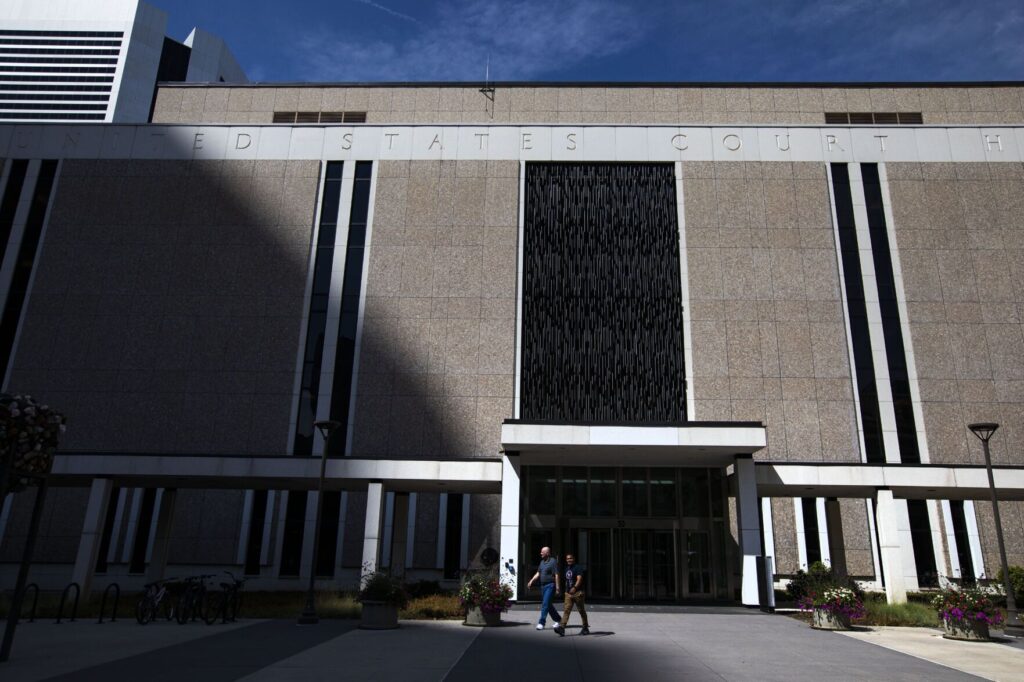
A federal judge ordered Colorado’s former head of judicial discipline on Wednesday to explain why she should not sanction him for making inaccurate statements about the defendants in his lawsuit against the Colorado Supreme Court and related entities. U.S. District...

Federal judge green-lights trial against Denver officer over race-based enforcement
Michael Karlik
michael.karlik@coloradopolitics.com
Updated 4 days ago
A federal judge green-lit a jury trial last week on a man’s claim that a Denver police officer engaged in racially selective enforcement of the law by arresting him for video recording at a police station, while not arresting a...
Federal judge says 8 years in solitary confinement not grounds to reduce man’s sentence
Michael Karlik
michael.karlik@coloradopolitics.com
Updated 6 days ago
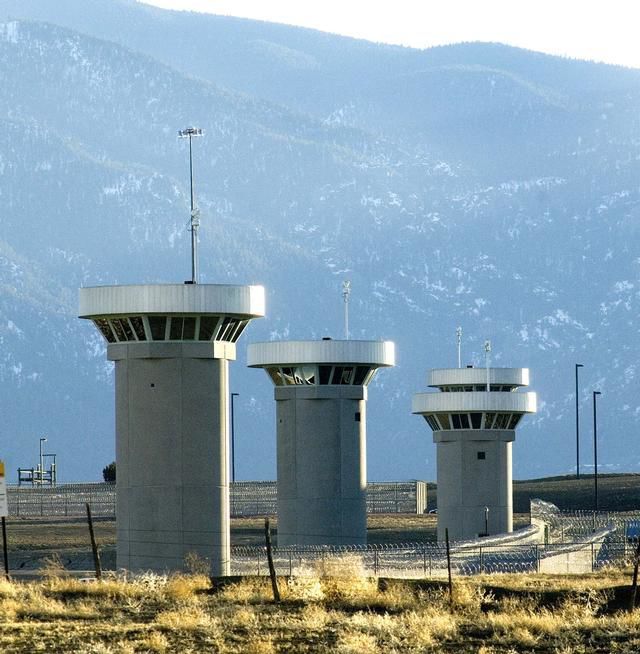
A federal judge concluded earlier this month that a man’s eight years allegedly spent in solitary confinement did not justify granting his request for a sentence reduction. However, U.S. District Court Senior Judge William J. Martínez signaled his willingness to...
PREV
PREVIOUS
Q&A with Sen. John Cooke | Minority leader on getting things done and forging friendships
After nearly eight years as a Colorado state senator, John Cooke is leaving elected office with no plans of returning. Cooke concluded his last legislative session in May, facing an impending term limit this January. Since entering the Senate in 2015, the Greeley Republican served as majority whip, assistant minority leader and was promoted to […]

Judge dismisses part of Boston Marathon bomber's lawsuit challenging prison restrictions
A federal judge has dismissed some of the First Amendment claims brought by Dzhokhar Tsarnaev, the man convicted of killing four people in connection with the April 2013 Boston Marathon bombing and who is now challenging his prison restrictions in Colorado. Tsarnaev, who is facing a death sentence, is currently at the United States Penitentiary – Administrative […]