

Federal judge green-lights Colorado Springs church’s defamation case for trial
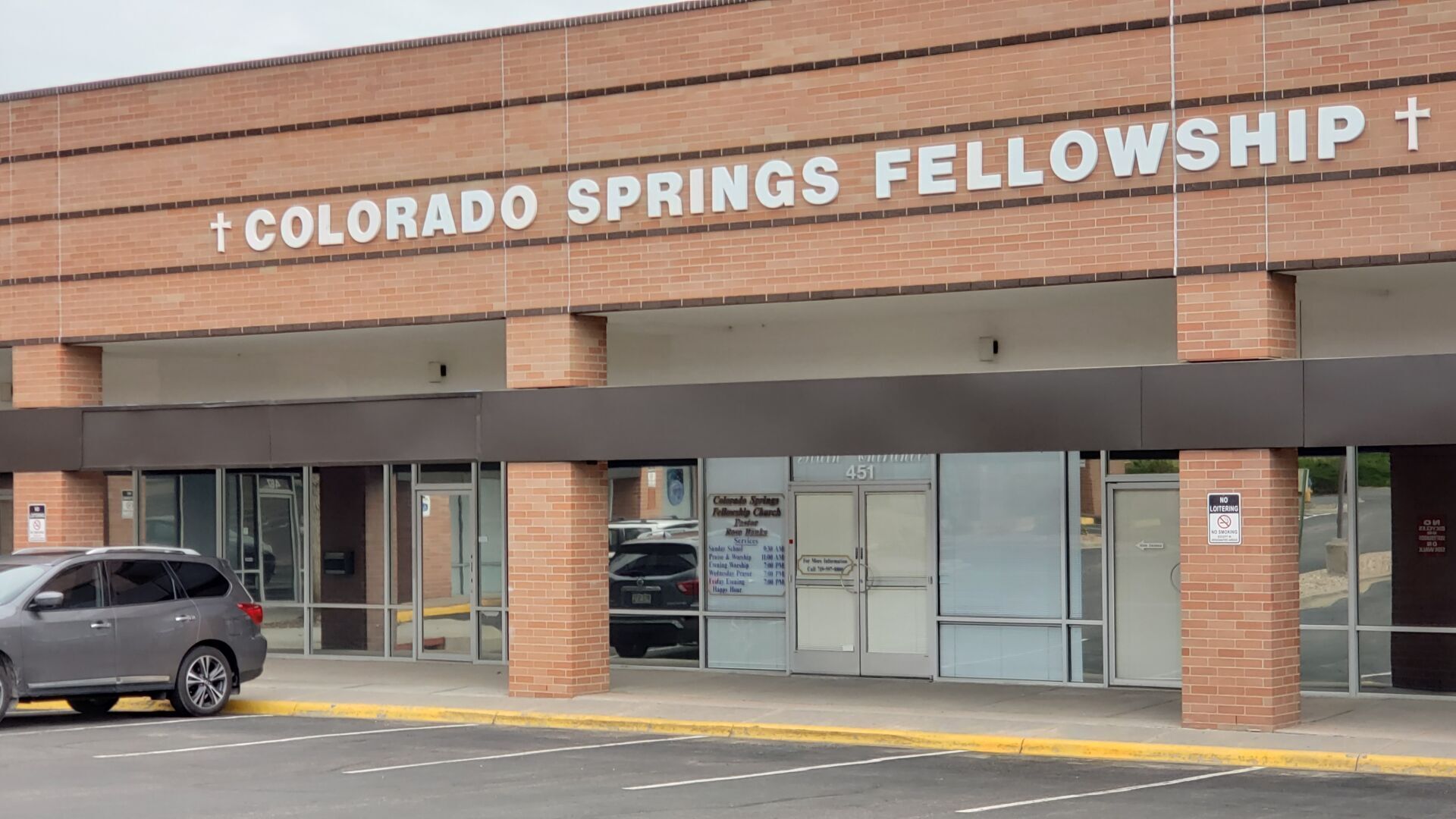
A federal judge has cleared the way for a jury to decide a Colorado Springs church’s defamation lawsuit, after finding that neither side could prevail outright as a matter of law.
Colorado Springs Fellowship Church; its pastor, Rose Banks; and her son, Lamont Banks, sued Terrelle Jackson for a series of allegedly false and damaging statements he made online about each of them. The dispute reached the point where both sides reportedly maintained competing websites where they spoke ill of each other.
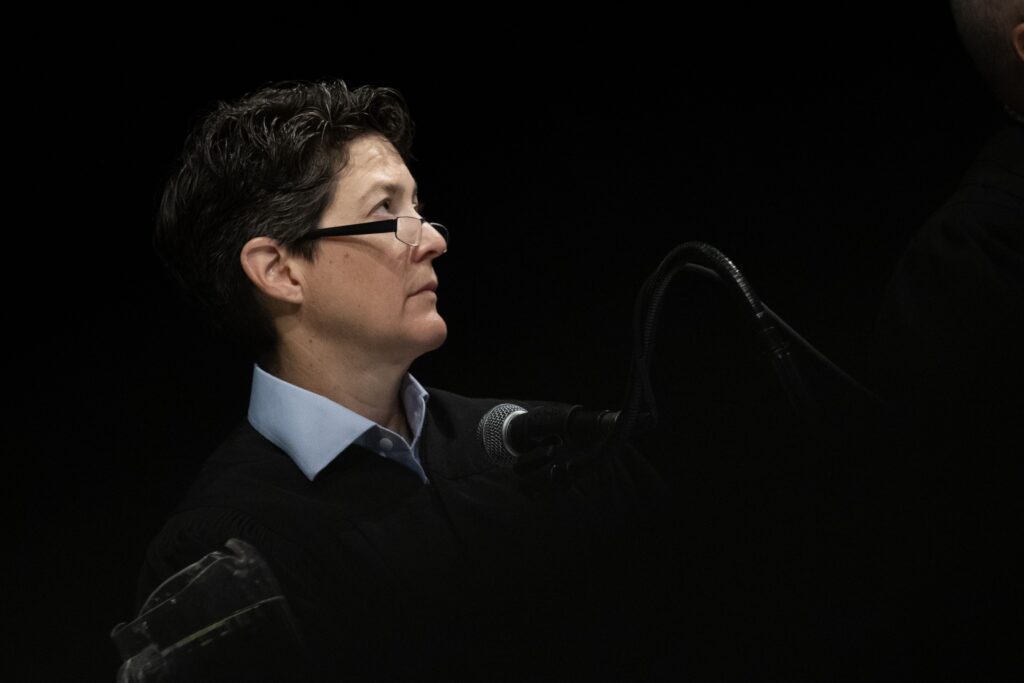
Last week, U.S. Magistrate Judge Nina Y. Wang denied all of the parties’ motions for summary judgment, which would have resolved the case without a trial. She concluded that Jackson, who was representing himself, had failed to advance arguments supported by facts, but also that the plaintiffs had not shown that Jackson posted statements he knew to be untrue and defamatory.
“Indeed, the record is replete with evidence suggesting that Mr. Jackson has never waivered in his belief that the Church is a ‘cult,’ that Rose Banks mishandled the Church’s finances, or that Lamont Banks is ‘almost a sex offender’,” Wang wrote in a May 9 order.
On Wednesday, the district court took the uncommon step of appointing a lawyer for Jackson. The attorney declined to comment on Wang’s decision.
Jackson, who lives in Texas, told Colorado Politics that he was ready for a jury trial so that the “frivolous” case would be over.
“Truth is an absolute defense in any court of law and I have told nothing but the truth and have every bit of evidence to prove my statements,” he said.
The lawsuit alleges that in November 2018, Jackson began to harm the reputation of the church and the Bankses with social media statements and video commentary. Jackson’s Facebook posts called Rose Banks the “wicked witch of the West,” claimed parishioners were “brainwashed” and accused her sons of sexual impropriety.
Jackson also posted a two-hour-long video of himself talking about the church.
“Let’s talk about this cult, the witchcraft and undercover sin and bondage that goes on in this place. The sex ring and scandals that go on under this leadership and strange stuff done all in the name of God!” the caption on YouTube reads.
The plaintiffs lodged claims against Jackson for defamation, emotional distress, and extreme and outrageous conduct. They asked a court to award monetary damages, order Jackson to refrain from making any further statements about them, and for Jackson to issue a retraction.
Jackson maintained that everything he said about the church and the Bankses was true. A website he started repeatedly labeled Lamont Banks as a pedophile, bringing up Banks’ conviction for sexual exploitation of a child that the state Court of Appeals reversed.
The plaintiffs decried Jackson’s “obsessive and compulsive and unrestrained and inexplicable behavior,” adding that “like the proverbial dog with a bone, he cannot seem to let go, and seems to have some sort of unexplained, irrational need to continue.”
However, another website, titled “The Truth,” sprang up accusing Jackson of being a “hypocrite and a fraud” and traveling “from state to state engaging in homosexual acts.” Jackson wrote to the court this year that the plaintiffs were now harassing him.
Under Colorado law, defamation is a false or damaging statement made about one person and communicated to another. Wang, in evaluating the allegations, found it unclear whether the plaintiffs were claiming that the Bankses were public figures, which would require that Jackson have made his statements with “actual malice,” or if they were private figures, for which they would need to show that Jackson was negligent in publishing falsehoods.
Ultimately, she did not believe the plaintiffs had proven either element of defamation. Any evidence that Jackson’s statements were genuinely false did not matter if Jackson believed them to be true at the time.
“Nor do Plaintiffs adequately demonstrate that Mr. Jackson knew of, and nevertheless disregarded, contrary facts that might have led a reasonable person to question the veracity of his statements,” Wang wrote.
Using Jackson’s label of Lamont Banks as “almost a sex offender” as an example, Wang pointed out that because Banks had sustained a conviction, albeit later reversed on appeal, Jackson had not acted maliciously by using that term.
She further declined to find that Jackson inflicted emotional distress, also concluding there was insufficient evidence that Jackson acted recklessly or intended to cause emotional harm.
The attorney for the plaintiffs did not immediately respond to a request for comment. Wang has set a pretrial conference for the case in July.
The case is Banks et al. v. Jackson.
Editor’s note: This story has been updated to clarify the description of Terrelle Jackson’s website.


Appeals court overturns Douglas County vehicular homicide conviction due to faulty jury instructions
Michael Karlik
michael.karlik@coloradopolitics.com
Updated 21 hours ago
Colorado’s second-highest court overturned a defendant’s vehicular homicide conviction and 12-year prison sentence on Thursday after determining a Douglas County judge omitted key language from the jury instructions that could have resulted in a different outcome. James Paul McDonald was...

Federal judge dismisses malicious prosecution claim against former Denver prosecutor
Michael Karlik
michael.karlik@coloradopolitics.com
Updated 2 days ago
A federal judge concluded on Monday that a former Denver prosecutor could not be sued for allegedly causing the arrests of two plaintiffs after they failed to appear for trial on the scheduled date, even though the trial had been...
Judicial discipline commission reports increased transparency, increased submissions
Michael Karlik
michael.karlik@coloradopolitics.com
Updated 2 days ago
The Colorado Commission on Judicial Discipline received 473 misconduct complaints about judges in 2025, which was nearly 29% higher than in 2024 and substantially greater than any time in the past decade. However, only 31 complaints were referred to the commission...
Colorado Gov. Jared Polis ignites fierce debate after raising clemency questions in Tina Peters case
Marianne Goodland
marianne.goodland@coloradopolitics.com
Updated 2 days ago
Gov. Jared Polis ignited a political firestorm Tuesday night after weighing in on the prison sentences of two former Colorado officials — a Democrat and a Republican — convicted of attempting to influence a public servant. The comments quickly fueled...

Colorado Supreme Court signals intervention in dispute over treatment for trans children
Michael Karlik
michael.karlik@coloradopolitics.com
Updated 3 days ago
The Colorado Supreme Court ordered Children’s Hospital Colorado on Tuesday to explain why it should not direct the organization to resume providing certain types of services to transgender children in compliance with the state’s non-discrimination law. Last month, a Denver...

Judge nixes latest policy requiring 7 days’ notice for Congress members to visit ICE facilities
Michael Kunzelman
michael.kunzelman@associatedpress.com
Updated 3 days ago
WASHINGTON (AP) — A federal judge agreed on Monday to temporarily suspend the latest version of a Trump administration policy that requires members of Congress to provide a week’s notice before they can visit immigration detention facilities. U.S. District Judge...
Judge nixes latest policy requiring 7 days’ notice for Congress members to visit ICE facilities
Michael Kunzelman
michael.kunzelman@associatedpress.com
Updated 3 days ago
WASHINGTON • A federal judge agreed on Monday to temporarily suspend the latest version of a Trump administration policy that requires members of Congress to provide a week’s notice before they can visit immigration detention facilities. U.S. District Judge Jia...
Colorado Supreme Court clarifies restraining order violations can always support burglary charge
Michael Karlik
michael.karlik@coloradopolitics.com
Updated 2 days ago
The Colorado Supreme Court’s majority ruled on Monday that a violation of a restraining order can also serve as a basis for finding a defendant guilty of burglary. Under state law, a person commits second-degree burglary by unlawfully entering or...

10th Circuit judge creates vacancy, district court gets new chief judge | COURT CRAWL
Michael Karlik
michael.karlik@coloradopolitics.com
Updated 3 days ago
Welcome to Court Crawl, Colorado Politics’ roundup of news from the third branch of government. A longtime member of the Denver-based federal appeals court will give the president a vacancy to fill, plus Colorado’s federal trial court will see a...

Morgan County man accused of killing wife, staging her suicide charged with first-degree murder
Kyla Pearce
kyla.pearce@gazette.com
Updated 3 days ago
A grand jury announced the indictment of 52-year-old Ronald Lowry, who is accused of killing his wife in October 2023 and staging the crime scene to look like a suicide. Lowry, who was arrested Friday in Morgan County, was charged...
PREV
PREVIOUS

Colorado's Bennet wants new federal body to regulate Twitter, FB, other digital platforms
U.S. Sen. Michael Bennet on Thursday unveiled legislation to create a new federal entity with vast powers to regulate, investigate and sanction Twitter, Facebook and other digital platforms. The legislation establishes a five-member Federal Digital Platform Commission, giving it the authority to hold hearings, conduct investigations and establish rules for digital platforms, according to Bennet’s office. […]

Denver receives grant funding from EPA for brownfield improvements
The U.S. Environmental Protection Agency announced that Denver will receive a $500,000 Brownfields Assessment Grant to advance cleanup and revitalization of properties along the Federal Boulevard Corridor. Priority sites include a former college campus, a vacant commercial property and a former gas station. Denver’s Department of Public Health and Environment as well as Denver Economic […]