

Lawmakers introduce new bill in continued effort to rid Colorado of ‘forever chemicals’

Next week, the House Energy & Environment Committee will review the latest effort to reduce Coloradans’ exposure to perfluoroalkyl and polyfluoroalkyl chemicals, nown as PFAS.
House Bill 1345 is sponsored by Reps. Mary Bradfield, R-Colorado Springs and Lisa Cutter, D-Littleton, and intends to continue lawmakers’ efforts to reduce exposure to PFAS, which is known as a “forever chemical” because the chemical is nearly indestructible.
PFAS is added to a wide range of consumer and commercial products; in Colorado, lawmakers began targeting PFAS in the 2019 session for its use in firefighting foam and firefighters’ flame-resistant equipment, which made its way into the water supplies in Fountain, Widefield and Security, in El Paso County.
According to the Natural Resources Defense Council, studies of both people and animals show PFAS is linked to health risks, including cancer, hormone disruption, liver and thyroid problems, interference with vaccine uptake, reproductive harm, and abnormal fetal development.
The National Institute of Environmental Health Sciences, part of the National Institute of Health, said scientists are unable to even determine the environmental half-life for PFAS, the amount of time it takes 50% of the chemical to disappear.
Manufacturers add PFAS to products to make them flame-retardant and/or water and grease resistant.
And that’s what Bradfield and Cutter intend to address through HB 1345; the addition of PFAS to a whole host of products in Colorado, including carpets and rugs, cookware, cosmetics, fabric treatments, food packaging, oil and gas products, textiles and upholstered furniture.
Bradfield told Colorado Politics she is most interested in one other line of products: those used by babies and children. That includes playpens, baby blankets and sheets, strollers, car seats and clothing.
HB 1345 addresses products for the most vulnerable, she said.
The bill exempts firefighting foam used to fight chemical or oil fires, because it is the best at extinguishing those blazes, she said. But if there is a release of firefighting foam with PFAS into water systems, that would have to be reported to a “water quality spills hotline” within 24 hours, to include the trade and product name, quantity and type of PFAS.
HB 1345 asks businesses to look for products with safer alternatives, gives them plenty of time to change purchasing and use up their existing stock, Bradfield said.
“There isn’t anything to get up in arms about today,” given the two-year timeline the bill envisions, she said.
Bradfield has a couple of ideas about amendments, including one that would allow for analysis into the amount of PFAS in a product, which she said might not be at a dangerous level. A lot of that research has already been done by the Food and Drug Administration, Bradfield explained.
She said she also is contemplating language that would narrow the definition around PFAS, given that there are several different kinds of these chemicals, and she’s got her eye on one in particular.
Colorado is not alone in addressing the PFAS problem. The White House announced last year it would direct a comprehensive approach to address the impact of PFAS in air, water and food. The Environmental Protection Agency was directed by the administration to come up with new policies to safeguard public health, protect the environment, and hold polluters accountable.
In other news:
The renaming of Pikes Peak Community College is just one vote away from heading to the governor’s desk, after the Senate Education Committee greenlighted House Bill 1280 this week. The bill would change the name to Pikes Peak State College, although its mission, as a two-year college, would not change.
Bill sponsor Sen. Paul Lundeen, R-Monument, told the education committee that the meaning of community college has evolved over time. Pikes Peak “is so much more,” Lundeen said. The name change would better represent what the college is doing, noting that among its offerings is a bachelor of science degrees in nursing.
Lee the name change reflects a more significant institution with a broader array of programs. Pikes Peak has become a national school, due to its proximity to the area’s military installations, and the college’s graduates head off to far-off lands. The name change would elevate its gravitas, Lee said.
“Where is Pikes Peak State?” joked Sen. Kevin Priola, R-Henderson.
Pikes Peak President Lance Bolton told the committee his institutions serves almost 20,000 students, from adult learners to traditional-age students pursuing the first two years of their bachelor’s degrees. Graduates are “fueling the high revving economic engine of the Pikes Peak region,” he said.
The name change would reflect the college’s goals to grow alongside the community and to remain “market relevant,” he said, and would help market it to students, faculty and others, and to combat the stigma that “community college” sometimes carries.
Bolton also addressed the issue of what happens to graduates in the military who obtain the nursing degree, and that they have to explain why the degree says it is from a community college when applying for jobs in other states. “Names have power,” he added.
Jalen Johnson, the president of the student government association at Pikes Peak, said the name change is one that will garner respect and improve marketability.
The bill passed unanimously and was placed on the Senate’s consent calendar, meaning the sponsors – – don’t anticipate any opposition or controversy and the bill will likely pass unanimously in that chamber.
HB 1280 was not amended by the Senate Education Committee and without amendments from the Senate, would head to Gov. Jared Polis to sign upon passage by the Senate.



Abortion stays legal in Wyoming as top court strikes down laws, including pill ban | OUT WEST ROUNDUP
The Associated Press
the-associated-press@coloradopolitics.com
Updated 4 days ago
WYOMING Court strikes down abortion bans FORT COLLINS — Abortion will remain legal in Wyoming after the state Supreme Court ruled on Jan. 6 that two laws barring the procedure, including the country’s first explicit ban on abortion pills, violate...
Colorado oilmen may play key role in Trump’s Venezuelan oil takeover plan
Vince Bzdek
vince.bzdek@gazette.com
Updated 1 day ago
When President Donald Trump summoned oil executives to the White House recently to push for major investment in Venezuela, an interesting sprinkling of smaller independent companies from Denver was invited along with the big names of American oil. One of...

Colorado Politics Calendar Jan. 19-25
Rachael Wright
rachael.wright@coloradopolitics.com
Updated 5 days ago
CoPo’s weekly political calendar will help you find political and public-policy events throughout Colorado. It includes candidate and issue campaign events, public policy meetings, court hearings, state and local party conventions, assemblies, debates, rallies, parades, speaking engagements, traveling dignitary appearances,...

Elder Groff attends opening day of state legislature to cheer on son | A LOOK BACK
Rachael Wright
rachael.wright@coloradopolitics.com
Updated 5 days ago
Twenty-Five Years Ago This Week: “There is a God,” sighed former state Sen. Regis Groff, D-Denver, as he watched the Democrats assume control of the Colorado Senate for the first time in 40 years. “Now they’re in the cubbyholes,” chuckled...
Colorado appeals Trump’s rejection of federal disaster declarations for flooding, fires
The Denver Gazette
the-denver-gazette@coloradopolitics.com
Updated 2 days ago
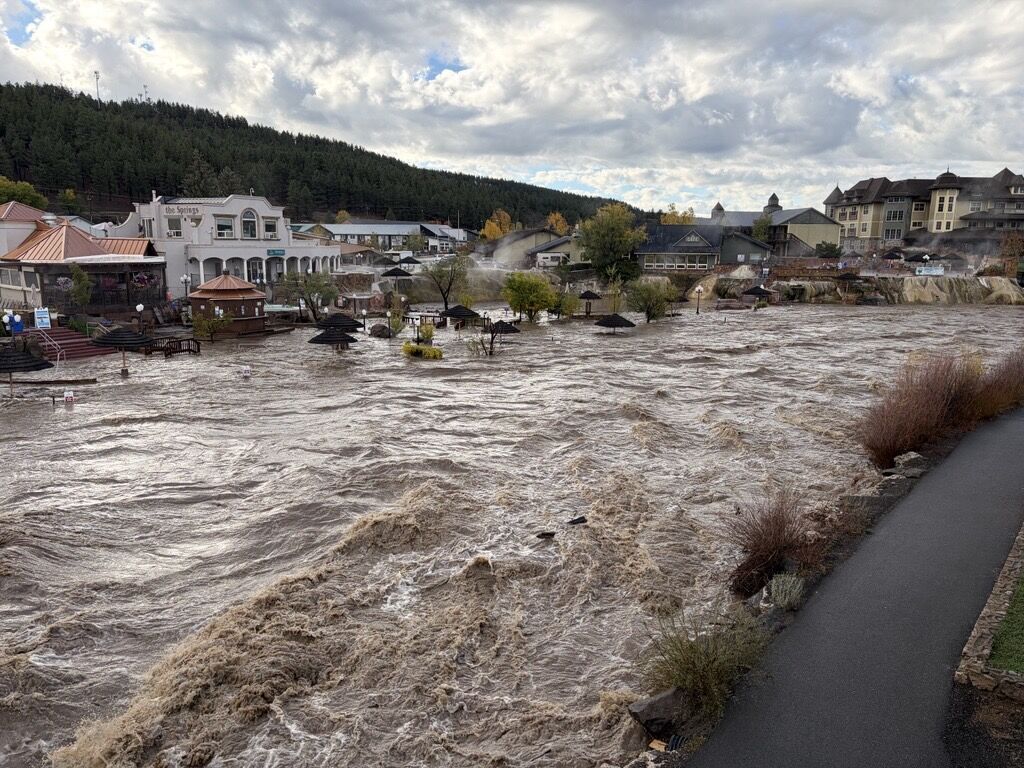
Colorado has formally appealed the Trump administration’s decision to deny requests for federal disaster declarations tied to two wildfires and flooding last year. Gov. Jared Polis said the state asked the federal government to reconsider its denials for the Elk...
10th Circuit oral arguments to feature trial judges for first time in 12 years
Michael Karlik
michael.karlik@coloradopolitics.com
Updated 2 days ago
When the Denver-based federal appeals court convenes next week to hear oral arguments, six new faces will be staring down from the bench. No, the U.S. Court of Appeals for the 10th Circuit has not added six new members. It...
Federal judge says ICE cannot impose monitoring conditions beyond immigration judge’s order
Michael Karlik
michael.karlik@coloradopolitics.com
Updated 2 days ago
A federal judge told U.S. Immigration and Customs Enforcement on Thursday that it cannot impose additional restrictions or monitoring conditions beyond those ordered by an immigration judge when releasing a person on bond. In November, U.S. District Court Judge Gordon...
Colorado justices weigh constitutionality of student backpack search based on confidential tip
Michael Karlik
michael.karlik@coloradopolitics.com
Updated 1 day ago
The Colorado Supreme Court considered on Wednesday whether a tip submitted through the state’s confidential school safety system provided a Douglas County administrator with reasonable suspicion to search a student’s backpack for drugs. A trial judge blocked evidence from the...

The odd couple: Vance and Rubio stick together through 2028 speculation
W. James Antle III Washington Examiner
wjamesantleiiiwashingtonexaminer@wpstage.coloradopolitics.com
Updated 2 days ago
Washington insiders keep straining to see daylight between Vice President JD Vance and Secretary of State Marco Rubio, only for the two of them to maintain a united front. Vance and Rubio met together at the White House with Denmark’s...

Democrats ready war powers blitz to exploit a Trump ‘vulnerability’
Ramsey Touchberry, Washington Examiner
ramsey.touchberry.washington.examiner@gazetteedit.wpenginepowered.com
Updated 2 days ago
Senate Democrats believe they’ve uncovered a backdoor to limiting President Donald Trump’s military operations abroad and conducting oversight despite limited minority power and few Republicans willing to buck the administration. Democrats are prepared to force a flurry of votes on...
PREV
PREVIOUS

Fentanyl bill would do little to improve key opioid treatment in jails, experts say
A sweeping bill that seeks to address the fentanyl crisis in Colorado would do little to improve a key treatment option in jails, experts said last week. Meanwhile, sheriffs said that if legislators want to improve the program, they should be prepared to pay for it. Under the bill, jails who receive behavioral health funding […]

Q&A with Elisa Overall | Helming Colorado's access to justice project in the face of persistent barriers
FAST FACTS: Elisa “Emo” Overall is the first executive director of the Colorado Access to Justice Commission, taking on that role in March 2021 Fluent in Spanish and Portuguese, she grew up between Arizona and Mexico and graduated from the University of Denver’s law school Worked in private practice representing indigent defendants and prior to […]