

House approves Colorado’s $36.4 billion budget for next year, sends spending plan to Senate
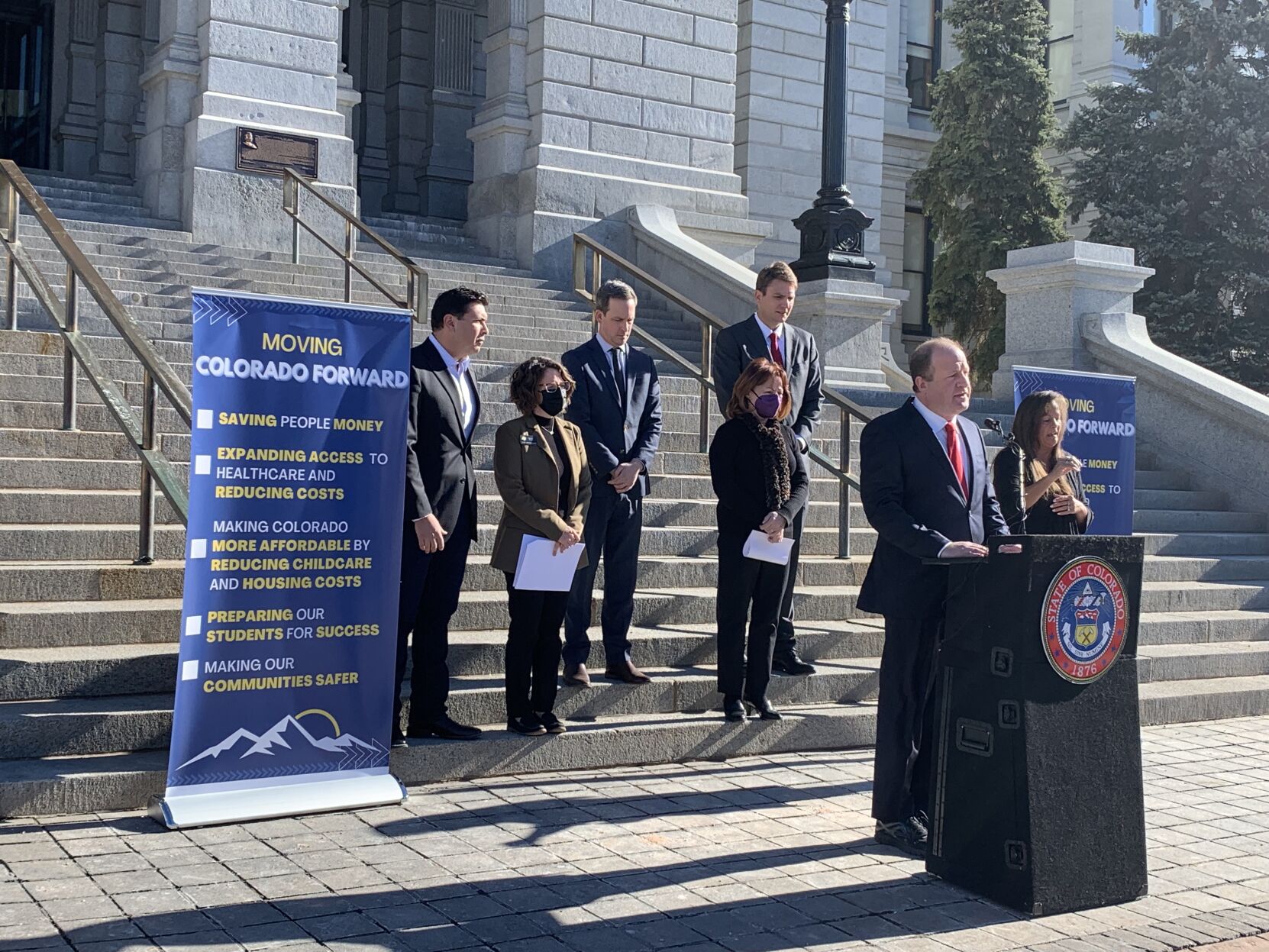
The House on Thursday approved the Colorado government’s spending plan for the upcoming fiscal year on a party-line vote and sent it to the state Senate for consideration.
Lawmakers amended the $36.4 billion budget a dozen times on Wednesday, adding $63.5 million in cash and general fund dollars but stripping out $1.5 million in expansion funding from the Office of Public Guardianship.
The other amendments added funding for two agricultural programs, and money tied to the reintroduction of wolves in northern Colorado.
Rep. Marc Catlin, R-Delta, told his House colleagues Wednesday that the federal government is requiring an environmental impact statement prior to the reintroduction of wolves, and that the state has to pay for it. The $1.9 million from the general fund would pay for that study, which would instead be done by the state, Catlin said.
Catlin said if Coloradans want wolves, they’re going to have to pay for it.
During debate on House Bill 1329 Thursday, Republicans hammered on government growth.
House Minority Leader Rep. Hugh McKean of Loveland said there is a larger story to tell about the budget, and not just the “minutiae” of moving dollars around. McKean noted the number of full-time employees the budget funds. He said that tells him about how much government has grown.
He pointed to the Air Pollution Control Division within the Colorado Department of Public Health and Environment, which received $661,739 in the current year, but which will get $45 million more in general fund dollars in the upcoming year.
The money would pay for future obligations for several years, McKean said, citing what he learned from Joint Budget Committee staff.
“These are the kinds of concerns I have about obligating general fund in the out-years,” he said. “This is the big picture. When we see a 1,010.1% increase in general fund obligation [in one year], we ought to stop and take a look at it.”
That proposed funding for the division would pay for adding 82.6 full-time employees.
Over the last eight years, the numbers in the budget kept growing, said Rep. Patrick Neville, R-Castle Rock, who argued that’s by strategy and design.
Programs start off with funding from gifts, grants and donations, and then the money dries up, creating pressure on the legislature to fund them, he told the House.
“Look at the strategy differences when we budget,” he said.
He argued that amendments to slash government spending – he and Rep. Dave Williams, R-Colorado Springs offered nine of them in Wednesday’s debate – are meant to hold the executive branch accountable.
The governor could tell department heads to live within their means, but that hasn’t happened since he’s been in the legislature, Neville said.
He complained that lawmakers perennially “adopt the policies” the executive branch seeks, but they balk at funding programs that are truly needed, such as roads and bridges, and argue that no steady revenue stream exists for them.
Still, he noted, the budget has grown significantly over the years.
“I don’t see government as my deity. I don’t see government as the solution to all of society’s problems,” he said.
Government spending increases in the proposed budget, acknowledged Speaker Pro Tem Rep. Adrienne Benavidez, D-Adams County.
But she emphasized that the state population is growing, too, and that explains some of the growth in government.
She said the state must also be prepared for what comes next, and while the budget may be higher now, there could be cuts in the future. She added that those cycles of growth and cuts are part of the budget process.
She lauded the 15% increase in the general fund reserves, calling it “thinking ahead.”
“We need to be prepared for that downturn,” she said, adding decisions made in this budget are prudent and will deal with the ups and downs.
Benavidez said the state needs to invest in critical areas, pointing to suicide rates, the housing crisis and transportation needs.
“Those are all important,” she said. “The decisions made in this budget are smart, fiscally sound … and if we have to make tougher decisions down the road, we can do that.”
Rep. Leslie Herod, D-Denver, noted the cuts from just two years ago.
“We didn’t have to do that this year,” the Joint Budget Committee member said.
Herod also noted a complication – American Rescue Plan Act dollars that must be spent within a timeframe and communities begging for more support.
“This is a responsible and balanced budget for Colorado,” she said, adding it sets aside money for families, businesses and record investments in public schools.
Directly speaking to a child who was in the gallery, Herod added, “This budget invests in your future.”
The 40-24 party-line vote included a “no” vote from JBC member Rep. Kim Ransom, R-Littleton, who while as a member of the JBC helps craft the budget, but votes against it every year.
The Long Appropriations Bill and its 14 accompanying measures that help balance the budget now head to the state Senate, where it will be introduced on Monday, according to Senate Majority Leader Dominick Moreno, D-Commerce City. The Senate Appropriations Committee will review it Tuesday, with caucuses Wednesday morning and second reading debate to follow the same day. A final vote is likely for Thursday.
The Senate Appropriations Committee is expected to remove all the changes adopted this week by the House during the floor debate.
marianne.goodland@coloradopolitics.com



US service member missing after Iran shot down fighter jet has been rescued, US officials say
Associated Press
associated-press@coloradopolitics.com
Updated 22 hours ago
JERUSALEM — President Donald Trump announced early Sunday that the U.S. had rescued an aviator nearly two days after he was shot down over Iran. The extraction came after a frantic search in what appears to be a remote, mountainous region of...

Low and slow meets forever: US postage stamps honor lowrider car culture | OUT WEST ROUNDUP
The Associated Press
the-associated-press@coloradopolitics.com
Updated 5 days ago
NEW MEXICO Stamps honor lowrider culture ALBUQUERQUE — From Mexican American and Chicano barrios in the American Southwest to the halls of the Smithsonian on the National Mall and even the streets of Japan, lowrider culture has become part of...

Colorado Politics Calendar Apr. 6-12
Rachael Wright, Special to Colorado Politics
rachael.wright@coloradopolitics.com
Updated 5 days ago
CoPo’s weekly political calendar will help you find political and public-policy events throughout Colorado. It includes candidate and issue campaign events, public policy meetings, court hearings, state and local party conventions, assemblies, debates, rallies, parades, speaking engagements, traveling dignitary appearances,...
Democrats rebounding without learning necessary lessons | SONDERMANN
Eric Sondermann
eric-sondermann@coloradopolitics.com
Updated 2 days ago
“When we fight, we win!” That, reportedly, was the chant heard over and over again at the Colorado Democratic Assembly a week ago. It suggests that pugilism has been the piece missing from the Democratic toolkit. Perhaps it was just...
An April Fool’s Day to remember | Capitol M | Week of April 4, 2026
Marianne Goodland
marianne.goodland@coloradopolitics.com
Updated 4 days ago
The lighter side of the Capitol, and if light were weight, the Capitol would have lifted off better than the Artemis II rocket on April Fool’s Day. There was a plethora of Fools at the Capitol for April Fool’s Day...
Federal judge sides with Mesa County school district in ex-student’s First Amendment claims
Michael Karlik
michael.karlik@coloradopolitics.com
Updated 3 days ago
A federal judge concluded last week that Mesa County Valley School District 51 and three of its administrators did not violate the First Amendment rights of a former student when they imposed minor discipline in response to disruptive behavior. In...

Colorado Supreme Court intervenes in 4 ongoing cases
Michael Karlik
michael.karlik@coloradopolitics.com
Updated 3 days ago
The Colorado Supreme Court recently moved to intervene in four ongoing cases, including two criminal prosecutions, a civil lawsuit, and a child welfare proceeding. At least four of the court’s seven members must agree to hear a case outside of...
Colorado ski resorts announce early closures amid historic snowpack lows, high temperatures
Kyla Pearce
kyla.pearce@gazette.com
Updated 2 days ago
Vail Resorts is the latest area to announce season closure Wednesday As Colorado’s historically low snowpack year comes to a close and spring conditions take over the mountains, the state’s major ski resorts are announcing closing dates — some of...

Kentucky Gov. Andy Beshear set to headline Colorado Democrats’ annual fundraising dinner
Ernest Luning
ernest.luning@coloradopolitics.com
Updated 3 days ago
Kentucky Gov. Andy Beshear, one of the Democrats’ top 2028 presidential prospects, is scheduled to deliver the keynote address at the Colorado Democratic Party’s annual fundraising dinner in June in Denver, the party said Friday. Serving his second term as...
Gov. Polis names new leaders for Colorado health agencies in wake of Medicaid turmoil
Marianne Goodland
marianne.goodland@coloradopolitics.com
Updated 3 days ago
Gov. Jared Polis, on Thursday, announced he was appointing Gretchen Hammer to serve as acting executive director of the Colorado Department of Health Care Policy and Financing, and deputy executive director Stephanie Beasley to become the next commissioner of the...
PREV
PREVIOUS

Republican candidate for state House seat found guilty in violation of protection order
The only Republican candidate for House District 21, Karl Dent, was found guilty Wednesday of violating a civil protection order restraining him from having contact with a former girlfriend. The jury of six found Dent not guilty of violating a criminal protection order based on the same incident. The civil protection order prevents Dent from […]

Colorado legislature honors Transgender Day of Visibility: ‘You are safe here’
Members of the Colorado legislature honored Transgender Day of Visibility Thursday, celebrating transgender people and their contributions to society, as well as raising awareness of the discrimination they face. Transgender Day of Visibility is recognized globally each year on March 31. Transgender activist Rachel Crandall started it in 2009 in response to the lack of recognition […]