

Tune in to the Colorado Conversations on housing affordability on March 31

The Colorado we want.
That’s the animating spirit behind Gov. Jared Polis’s speech in January, when he stood before the Colorado General Assembly to outline his vision for navigating the big challenges the state faces.
“We promise to use every single tool at our disposal to save hardworking Coloradans the money you need to live the life you want,” the governor said.
But the idea of a free people charting their own course toward a better future is colliding furiously against a Colorado reality – many Coloradans can’t afford to participate in the charting of that course precisely because they are priced out of buying a home or renting an apartment. It’s hard to contemplate a vibrant future when a person can’t secure a home.
Data from the Common Sense Institute paint a dispiriting landscape: In May 2021, home listings in the Denver metro area stood at a record low 2,075, when the monthly average hovered at 15,563. The 12-month the price of the average single-family home sold spiked by 29% – closing at $700,559!
The core of the problem seems straightforward: Colorado is building too few houses, failing to meet the demand, particularly in the last decade.
The Common Sense Institute said the state needs to build 54,190 new housing units annually over the next five years just to get back to the average housing to population ratio between 1986 and 2008.
But Peter LiFari, a 2021 Terry J. Stevinson Fellow at the Common Sense Institute and executive director of the affordable housing developer Maiker Housing Partners, argues that the causes of Colorado’s housing crisis are far more nuanced than supply and demand.
“We don’t have a free market in housing,” LiFari told Colorado Politics.
Instead, he said, Colorado labors under a “highly overregulated” market that offers no economies of scale to drive down the cost but all the incentives to maximize it.
To LiFari, one solution to the housing crisis is to lift regulatory barriers, particularly at the local level, and unleash the kind of innovation that has allowed the car industry to supply Americans with an array of affordable transportation choices.
And it’s not like policymakers haven’t hunkered down to offer solutions, he maintained. Indeed, Polis identified the lack of housing as one of the biggest challenges confronting Coloradans today.
“Rising housing costs are pricing people out of neighborhoods they’ve lived in for years,” he said in January as we welcomed the work to “create stronger, healthier, and more affordable communities.”
But it’s a complicated and emotional issue, and what’s clear is the policies currently in place aren’t working, LiFari argued.
That’s one perspective on one aspect of this labyrinthian system to house Americans.
There are more.
And that’s why Colorado Politics and The Denver Gazette are hosting a forum on housing affordability.
In addition to LiFari, the other panelists are Ted Leighty, Chief Executive Officer of the Colorado Association of Home Builders; Elizabeth Peetz, Vice President of Government Affairs for the Colorado Association of REALTORS; Karen Kallenberg, Executive Director of Habitat for Humanity of Colorado; and, Jonathan Cappelli, Executive Director of Neighborhood Development Collaborative.
The forum – another presentation by Colorado Conversations, the Gazette family’s new platform for discussing the state’s biggest public policy issues – start promptly at 8 a.m. on March 31 via Zoom. It’s free to attend. Register here: denvergazette.com/housing.



Denver police chief on mask ban, mayor’s orders: ‘What enforcement looks like, I’m not exactly sure’
Deborah Grigsby
deborah.smith@denvergazette.com
Updated 9 hours ago
Denver bans wearing of face masks by law enforcers, use of city property to stage immigration operations As Denver takes steps to restrict federal agents conducting immigration enforcement in the Mile High City, its police chief said he is unclear...
Colorado lawmakers move to curb eminent domain powers after Xcel dispute
Marissa Ventrelli
marissa.ventrelli@coloradopolitics.com
Updated 14 hours ago
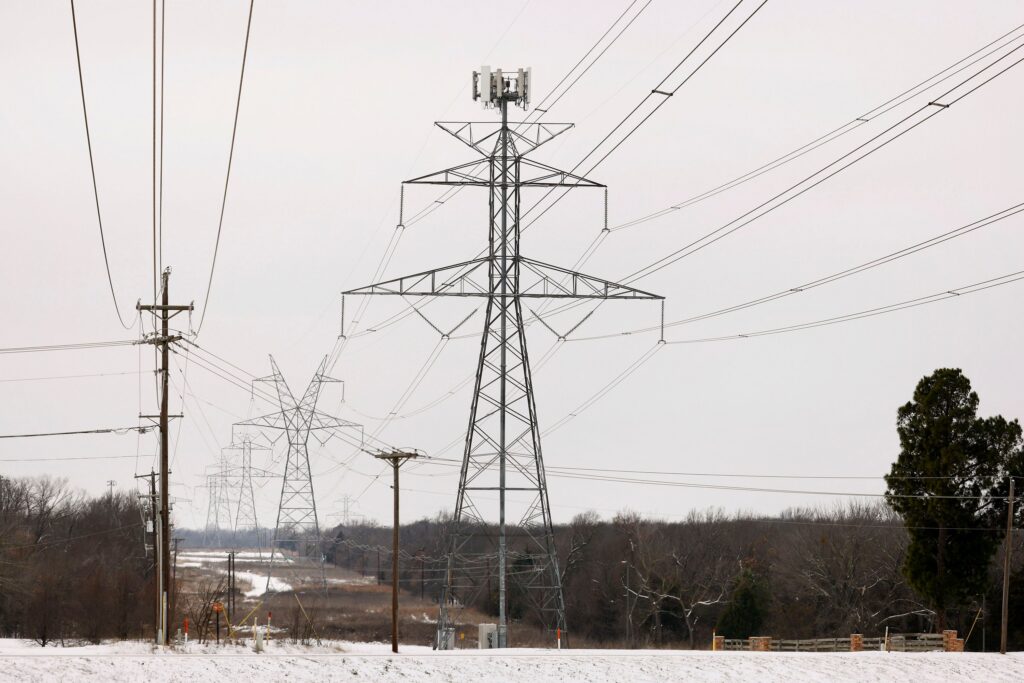
After months of backlash over Xcel Energy’s use of eminent domain in eastern Colorado, lawmakers representing Elbert and El Paso counties are advancing legislation that would bar utilities from initiating property takings until they’ve secured state approval and all required...

As parents claim some AI chatbots encourage teen suicide, Colorado legislators eye regulation
Marissa Ventrelli
marissa.ventrelli@coloradopolitics.com
Updated 11 hours ago
Juliana Peralta of Thornton was a vibrant, happy kid, said her mom, Cynthia Montoya. Then, in the final months of 2023, Cynthia began to notice a change in her 13-year-old daughter. Peralta had become more withdrawn and was on her...

Trump to attend dignified transfer of six US service members killed by Iran
Christian Datoc, Washington Examiner
christian.datoc.washington.examiner@gazetteedit.wpenginepowered.com
Updated 13 hours ago
President Donald Trump will attend the soon-to-be-held dignified transfer of six American service members killed so far by Iran in Operation Epic Fury. White House press secretary Karoline Leavitt made the announcement during her Wednesday press briefing. “These heroes represent...

Judge declines to block potential Boebert challenger from going through assembly process in Colorado’s 4th CD
Ernest Luning
ernest.luning@coloradopolitics.com
Updated 15 hours ago
Congressional candidate Eileen Laubacher, one of the Democrats seeking to challenge Republican U.S. Rep. Lauren Boebert, can participate in the party’s caucuses and assemblies pending a court hearing later this month, a Denver judge ruled Tuesday in response to a...
Sanctuary cities declined 17,864 requests to hold illegal immigrants for ICE in 2025: Noem
Anna Giaritelli Washington Examiner
anna-giaritelli-washington-examiner@coloradopolitics.com
Updated 15 hours ago
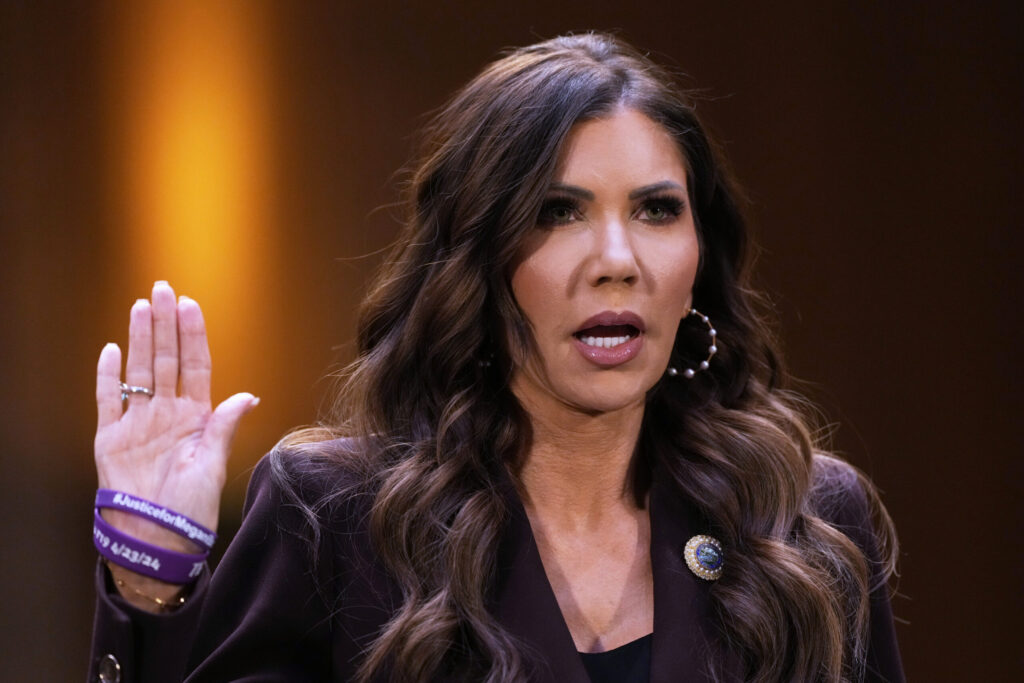
Sanctuary cities and counties declined to turn over 17,864 illegal immigrants in police custody to Immigration and Customs Enforcement in 2025, according to the Department of Homeland Security. Homeland Security Secretary Kristi Noem testified before the House Judiciary Committee on...

Federal judge dismisses malicious prosecution claim against former Denver prosecutor
Michael Karlik
michael.karlik@coloradopolitics.com
Updated 16 hours ago
A federal judge concluded on Monday that a former Denver prosecutor could not be sued for allegedly causing the arrests of two plaintiffs after they failed to appear for trial on the scheduled date, even though the trial had been...
Judicial discipline commission reports increased transparency, increased submissions
Michael Karlik
michael.karlik@coloradopolitics.com
Updated 17 hours ago
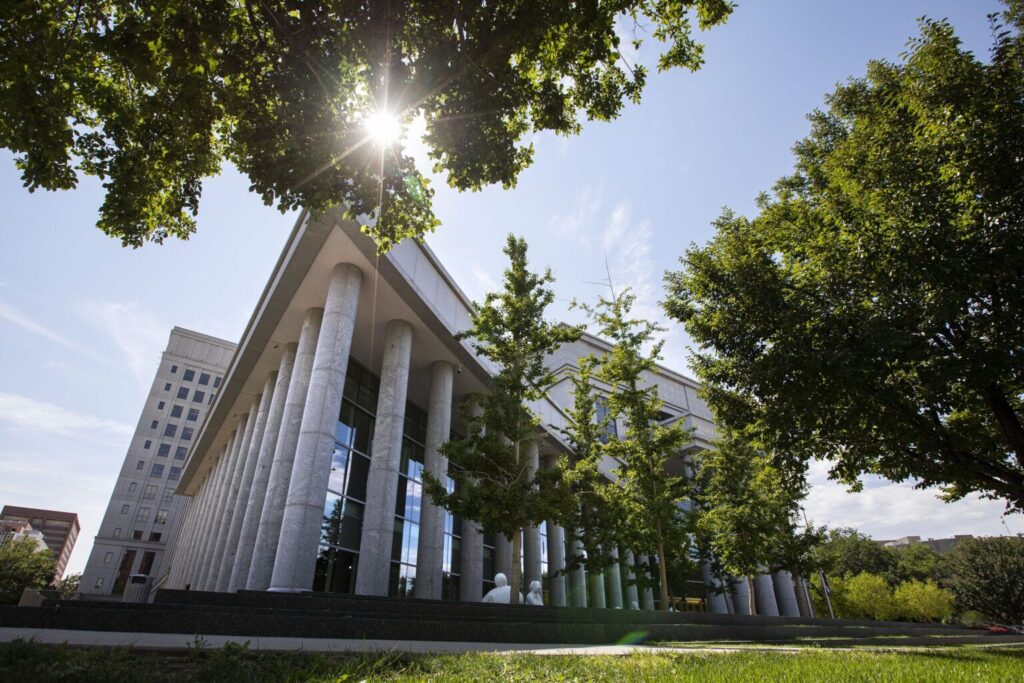
The Colorado Commission on Judicial Discipline received 473 misconduct complaints about judges in 2025, which was nearly 29% higher than in 2024 and substantially greater than any time in the past decade. However, only 31 complaints were referred to the commission...
Colorado Gov. Jared Polis ignites fierce debate after raising clemency questions in Tina Peters case
Marianne Goodland
marianne.goodland@coloradopolitics.com
Updated 10 hours ago
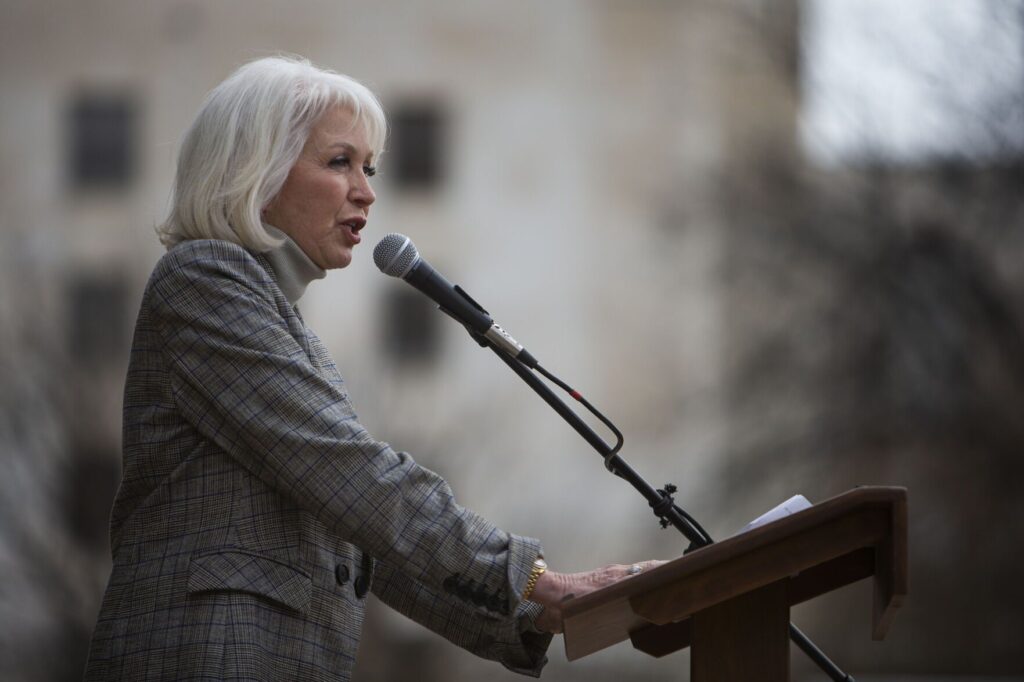
Gov. Jared Polis ignited a political firestorm Tuesday night after weighing in on the prison sentences of two former Colorado officials — a Democrat and a Republican — convicted of attempting to influence a public servant. The comments quickly fueled...

Colorado Supreme Court signals intervention in dispute over treatment for trans children
Michael Karlik
michael.karlik@coloradopolitics.com
Updated 2 days ago
The Colorado Supreme Court ordered Children’s Hospital Colorado on Tuesday to explain why it should not direct the organization to resume providing certain types of services to transgender children in compliance with the state’s non-discrimination law. Last month, a Denver...
PREV
PREVIOUS

Denver judge dismisses Jan. 6 participant's lawsuit against news anchor
A Littleton man who posted online that he either was – or was with – the “first guy to storm” the U.S. Capitol on Jan. 6, 2021 failed to show that 9News anchor Kyle Clark defamed him in the course of his reporting, a Denver judge ruled on Monday. District Court Judge Ross B.H. Buchanan granted Clark’s […]
Governor's Citizenship Medal: Tim Foster honored for leadership, public service
Tim Foster believes there is no better way to lead than by effective communication and interaction. When he was president of Colorado Mesa University in Grand Junction, it wasn’t uncommon for him to stop and say hello to faculty members or ask students how classes were going. “When you walk across campus with him, I’ll […]