

Denver judge dismisses Jan. 6 participant’s lawsuit against news anchor

A Littleton man who posted online that he either was – or was with – the “first guy to storm” the U.S. Capitol on Jan. 6, 2021 failed to show that 9News anchor Kyle Clark defamed him in the course of his reporting, a Denver judge ruled on Monday.
District Court Judge Ross B.H. Buchanan granted Clark’s motion to dismiss the defamation lawsuit after determining Chad Burmeister had not demonstrated Clark’s statements were materially false and were the product of malice toward Burmeister. Buchanan agreed that Clark’s reporting, which characterized Burmeister as “boasting” and “bragging” about being part of the pro-Donald Trump rally to overturn the results of the 2020 election, was a reasonable interpretation of Burmeister’s social media posts.
“Thus, the court finds it is clear that any reputational damage incurred by Plaintiff was primarily caused by his own decision to publicly post a photograph and caption which average members of the public understood indicated that he was proud of either being, or being with, the “(f)irst guy to storm the capital (sic) today,” wrote Buchanan in the March 28 order.
Burmeister, who describes himself as an investor and entrepreneur on his website, filed suit against Clark and 9News’ corporate owner in November. He put forward a single claim for defamation, claiming the station had acted with “reckless disregard for the truth or falsity” of Clark’s statements and “did not have one shred of evidence” to support the claim that Burmeister stormed the Capitol.
“Burmeister and his family have been repeatedly threatened. Former friends and neighbors say they hope Burmeister ‘rots in jail’ and gets ‘raped in prison’,” the lawsuit reads. “Burmeister continues to suffer from extreme anxiety, sleeplessness, loss of self-esteem, fear of being unable to provide for and protect his family, fear of what colleagues and members of the community think of him, and fear that some crazy person will appear at his doorstep with a gun.”
The defendants filed a special motion to dismiss under a procedure the legislature established in 2019. The anti-SLAPP law – an acronym for Strategic Lawsuits Against Public Participation – was based on the General Assembly’s finding that the judicial process should not be used to chill speech on matters in the public interest. A special motion to dismiss allows judges to toss lawsuits like Burmeister’s if there is no reasonable likelihood that plaintiffs will prevail on their claims.
Burmeister took issue with a segment 9News aired on Jan. 7, 2021 in which Clark highlighted Burmeister’s apparent statement that he was the “first guy” to storm the Capitol. Clark also pointed out that Burmeister had later edited that post to read, “Peaceful march to the capital,” and asserted that Burmeister had traveled to Washington, D.C. “expecting trouble.”
Burmeister’s Facebook page “is full of QAnon conspiracies about the ‘storm,’ that’s the moment when QAnon believers think that President Trump is going to round up and execute his opponents,” Clark added, referring to the pro-Trump conspiracy movement.
Buchanan, in granting the special motion to dismiss, observed that Clark had accurately quoted Burmeister regarding his Jan. 6 involvement. As to Burmeister’s claim that Clark’s reporting resulted in professional and personal consequences for him, the judge pointed out that people online were already interpreting Burmeister’s Facebook post to mean he had participated in the violent assault on the Capitol – even before the broadcast took place.
There were also multiple screenshots the judge included in his order showing posts on Burmeister’s Facebook page referencing the QAnon “storm”. Clark’s statement that Burmeister’s social media page was full of QAnon material “is merely a rational observation related to the content of Plaintiff’s Facebook posts,” Buchanan wrote.
The Colorado Supreme Court has not yet interpreted the anti-SLAPP law, which prompted Buchanan to look to California’s largely-similar statute for his analysis. Reporting on a matter of public concern is protected speech, unless the defamatory statements are made maliciously. A media outlet can show that such statements are substantially true in order to defend against allegations of defamation.
The malice standard stems from the U.S. Supreme Court’s 1964 decision in New York Times Company v. Sullivan. The justices concluded that people alleging defamation must demonstrate that an outlet knew a statement was false or acted with reckless disregard toward the possibility that it may be false.
Recently, in a high-profile federal trial in New York, both a jury and a judge separately reached the conclusion that The New York Times was not liable for an erroneous editorial referencing former Republican vice presidential candidate Sarah Palin. A spokesperson for The Times said the verdict affirmed the principle that lawsuits should not “punish or intimidate news organizations that make, acknowledge and swiftly correct unintentional errors.”
Accordingly, Buchanan determined that Burmeister would not likely prevail on his underlying claim of defamation.
“Viewing the evidence in the light most favorable to Plaintiff, the court finds that, at most, he demonstrated that Defendants’ publication contained some partially misleading statements,” Buchanan concluded.
An attorney for the defendants declined to comment on behalf of his clients, and Burmeister’s attorney did not immediately return an email seeking comment.
The case is Burmeister v. Clark et al.



Federal judge dismisses malicious prosecution claim against former Denver prosecutor
Michael Karlik
michael.karlik@coloradopolitics.com
Updated 14 hours ago
A federal judge concluded on Monday that a former Denver prosecutor could not be sued for allegedly causing the arrests of two plaintiffs after they failed to appear for trial on the scheduled date, even though the trial had been...
Judicial discipline commission reports increased transparency, increased submissions
Michael Karlik
michael.karlik@coloradopolitics.com
Updated 14 hours ago
The Colorado Commission on Judicial Discipline received 473 misconduct complaints about judges in 2025, which was nearly 29% higher than in 2024 and substantially greater than any time in the past decade. However, only 31 complaints were referred to the commission...
Colorado Gov. Jared Polis ignites fierce debate after raising clemency questions in Tina Peters case
Marianne Goodland
marianne.goodland@coloradopolitics.com
Updated 7 hours ago
Gov. Jared Polis ignited a political firestorm Tuesday night after weighing in on the prison sentences of two former Colorado officials — a Democrat and a Republican — convicted of attempting to influence a public servant. The comments quickly fueled...
Colorado Supreme Court signals intervention in dispute over treatment for trans children
Michael Karlik
michael.karlik@coloradopolitics.com
Updated 1 day ago
The Colorado Supreme Court ordered Children’s Hospital Colorado on Tuesday to explain why it should not direct the organization to resume providing certain types of services to transgender children in compliance with the state’s non-discrimination law. Last month, a Denver...
Judge nixes latest policy requiring 7 days’ notice for Congress members to visit ICE facilities
Michael Kunzelman
michael.kunzelman@associatedpress.com
Updated 1 day ago
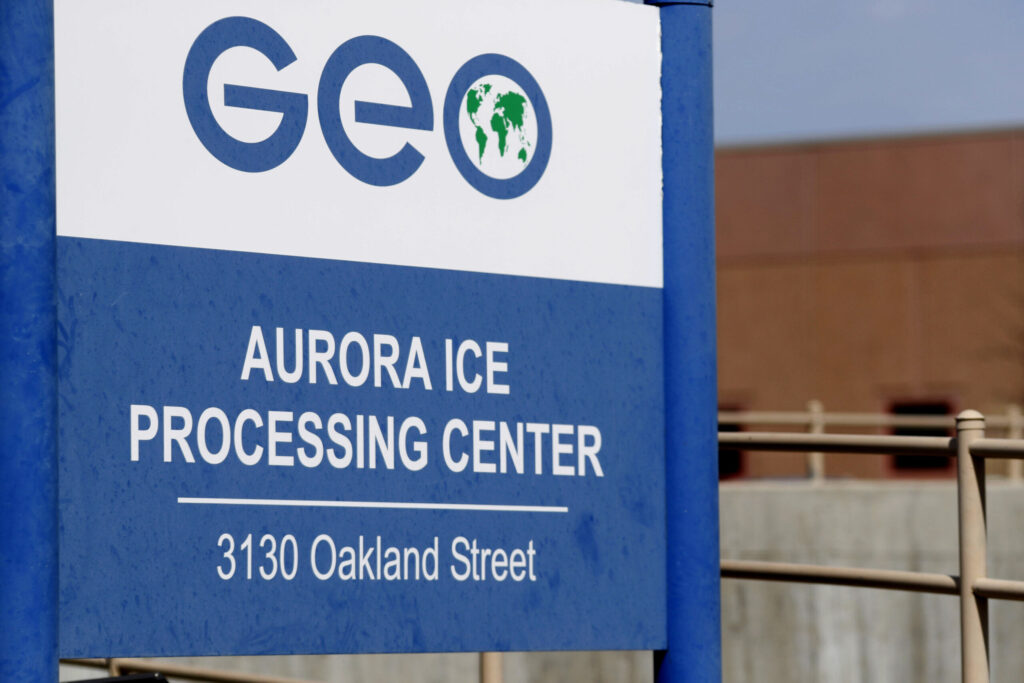
WASHINGTON (AP) — A federal judge agreed on Monday to temporarily suspend the latest version of a Trump administration policy that requires members of Congress to provide a week’s notice before they can visit immigration detention facilities. U.S. District Judge...
Judge nixes latest policy requiring 7 days’ notice for Congress members to visit ICE facilities
Michael Kunzelman
michael.kunzelman@associatedpress.com
Updated 1 day ago
WASHINGTON • A federal judge agreed on Monday to temporarily suspend the latest version of a Trump administration policy that requires members of Congress to provide a week’s notice before they can visit immigration detention facilities. U.S. District Judge Jia...
Colorado Supreme Court clarifies restraining order violations can always support burglary charge
Michael Karlik
michael.karlik@coloradopolitics.com
Updated 7 hours ago
The Colorado Supreme Court’s majority ruled on Monday that a violation of a restraining order can also serve as a basis for finding a defendant guilty of burglary. Under state law, a person commits second-degree burglary by unlawfully entering or...

10th Circuit judge creates vacancy, district court gets new chief judge | COURT CRAWL
Michael Karlik
michael.karlik@coloradopolitics.com
Updated 2 days ago
Welcome to Court Crawl, Colorado Politics’ roundup of news from the third branch of government. A longtime member of the Denver-based federal appeals court will give the president a vacancy to fill, plus Colorado’s federal trial court will see a...

Morgan County man accused of killing wife, staging her suicide charged with first-degree murder
Kyla Pearce
kyla.pearce@gazette.com
Updated 1 day ago
A grand jury announced the indictment of 52-year-old Ronald Lowry, who is accused of killing his wife in October 2023 and staging the crime scene to look like a suicide. Lowry, who was arrested Friday in Morgan County, was charged...
Gov. Jared Polis moves to end ICE subpoena fight over Colorado workers’ personal data
Marianne Goodland
marianne.goodland@coloradopolitics.com
Updated 5 days ago
The effort by Gov. Jared Polis to comply with an administrative subpoena from U.S. Immigration and Customs Enforcement for information held by several state agencies is over. Polis, in a motion filed Feb. 20, asked for a permanent injunction and...
PREV
PREVIOUS

Collective bargaining draft shows counties and higher ed in, K-12 out
The newest draft of a collective bargaining bill for public sector employees would allow only public sector employees in counties and higher education to set up unions and engage in collective bargaining with their employers. Those employees, under the undated draft, include any employee, save for temporary employees who work less than 90 days over […]

Tune in to the Colorado Conversations on housing affordability on March 31
Colorado Conversations logo The Colorado we want. That’s the animating spirit behind Gov. Jared Polis’s speech in January, when he stood before the Colorado General Assembly to outline his vision for navigating the big challenges the state faces. “We promise to use every single tool at our disposal to save hardworking Coloradans the money you need […]