

Collective bargaining draft shows counties and higher ed in, K-12 out
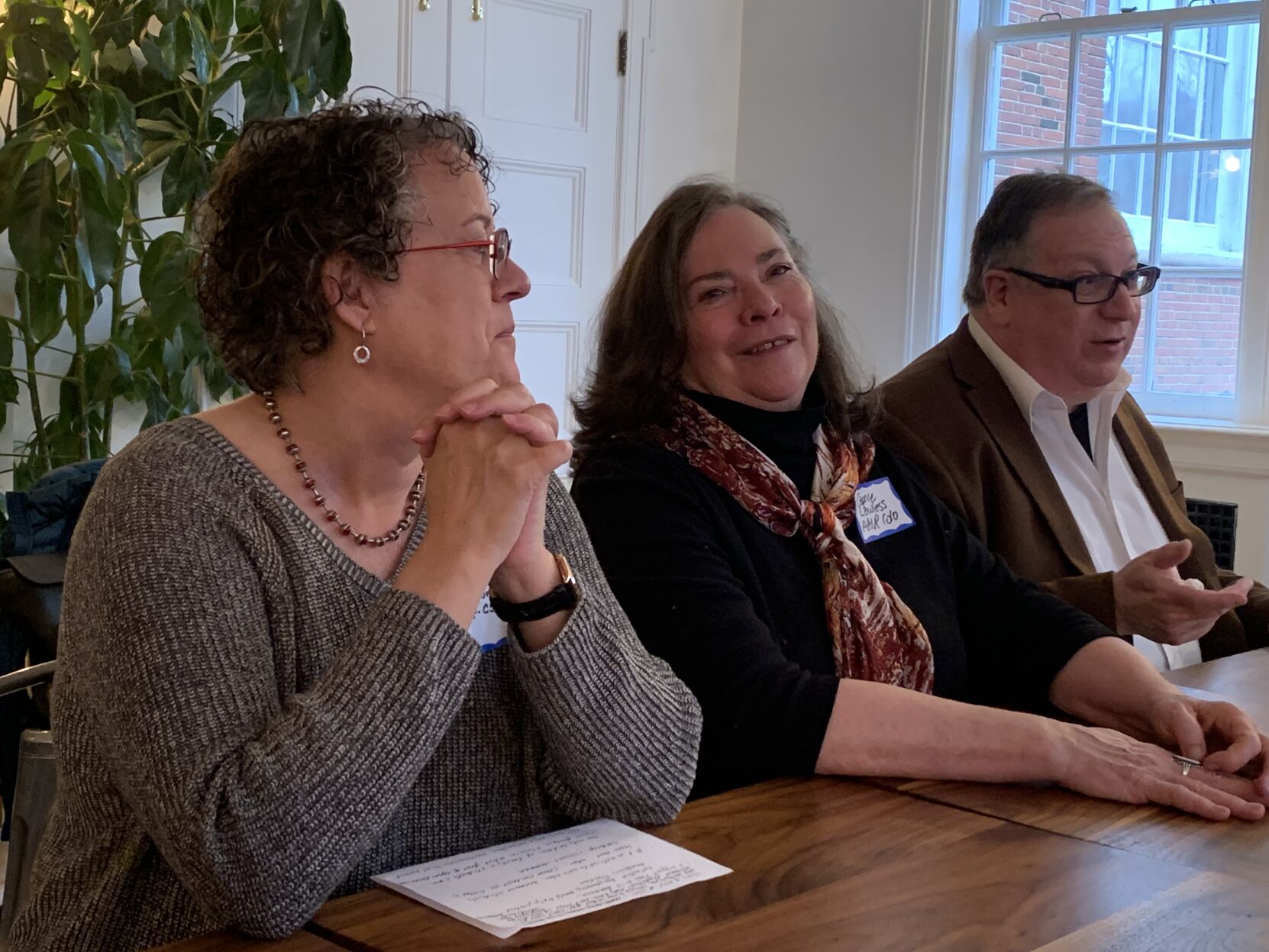
The newest draft of a collective bargaining bill for public sector employees would allow only public sector employees in counties and higher education to set up unions and engage in collective bargaining with their employers.
Those employees, under the undated draft, include any employee, save for temporary employees who work less than 90 days over a 365-day period. That would include the largest portion of faculty at community colleges and a substantial portion of the faculty at four-year institutions: part-time faculty, known as adjuncts, who teach on a per-course basis.
Workers in K-12 public education including charter schools, cities and towns, special districts or any other political subdivision of the state are left out of the bill, which has been in the works since last year.
Amie Baca-Oehlert, president of the Colorado Education Association that represents public school teachers, said in a statement to Colorado Politics that the 39,000 members of the Colorado Education Association “are deeply disappointed that the collective bargaining bill apparently going forward will not include all K-12 educators in Colorado.
“We believe that all public service workers should have basic rights and a say in their workplace as our working conditions are our students’ learning conditions,” Baca-Oehlert said.
She added that CEA “will continue to advocate for educators’ rights and protections so that we can have a stable and supported workforce serving the students of Colorado, no matter their zip code or how much their parents make.”
About 39 of the state’s 178 school districts have collective bargaining agreements with their teachers, mostly in large, metro-Denver area school districts.
The bill draft is also unpopular among higher ed and the counties, which while not opposed to the concept of collective bargaining do not want to be required to offer it. Four counties have existing collective bargaining agreements with their employees: Adams, Pueblo, Summit and Las Animas counties.
Opponents of the bill point to the costs to engage in collective bargaining, as demonstrated by the 2020 bill on state employees. That bill estimated the cost of collective bargaining for state employees at $6 million in the 2021-22 budget, but the actual costs may have been as high as $8 million.
According to the community college system, the costs will be higher, pegged at $10 million per year. The draft bill does not address the increase.
Former Democratic Lt. Gov. Joe Garcia, now chancellor of the state’s community college system, asked lawmakers in a Feb. 18 letter to either exclude the community college system or create just one collective bargaining unit for the entire system.
Garcia’s community college system includes 13 colleges on 38 campuses. The bill places no limits on the number of collective bargaining units that could be set up on each college campus, which could range from one collective bargaining unit for the entire community college system to separate units for each college or even each campus, as well as separate units for adjunct faculty, full-time faculty and professional staff.
According to one study, adjunct faculty comprise 50% of classroom instructors. They’re considerably cheaper to hire, receive no benefits and are paid as low as $2,000 per course. In 2020, Inside Higher Ed cited a report from the American Federation of Teachers, which backs the collective bargaining bill, that said about 25% of adjunct faculty live in poverty.
Beyond one bargaining unit for the whole community college system, opponents are also seeking a no-strike provision, which is drawing comparisons to the 2020 state employee collective bargaining bill.
But it’s an apples to oranges comparison, according to Senate President Steve Fenberg, D-Boulder, one of the bill’s expected sponsors along with House Majority Leader Rep. Daneya Esgar, D-Pueblo.
He told Colorado Politics that the collective bargaining bill being contemplated does not mandate unions for public sector employees. Those who want to set up a union would go through a process outlined in the draft bill that is similar to how private unions are set up. It begins with a petition signed by at least 30% of the employees in that proposed bargaining unit that would designate a non-profit employee organization to represent them. Then a secret ballot election would be held, in which a vote of 50% plus one of employees would be required. Employees would also have the choice of “no representation” on that ballot.
The draft bill says that what happens in the private sector can now happen in the counties and in higher education, Fenberg explained.
Fenberg pointed out that the 2020 bill created and recognized Colorado WINS as the union for state employees. The no-strike provision was negotiated as part of the bill authorizing WINS as the union. In effect, the bill was the contract, he explained.
When workers go to the bargaining table in the private sector, Fenberg said that’s when they negotiate certain provisions such as strikes or pay in return for a contract. The bill he intends to carry with Esgar does not designate a union, so strike rights would be part of the negotiations in a contract between the public sector employees and the college, university or county. The size and scope of the bargaining unit also is a matter for negotiation and not the bill itself, he added.

marianne.goodland@coloradopolitics.com

Colorado GOP chair Brita Horn says she’ll resign next month, points to ‘divide within our party’
Ernest Luning
ernest.luning@coloradopolitics.com
Updated 4 hours ago
Colorado Republican Party Chair Brita Horn said Thursday that she will resign her position next month following the GOP’s state assembly, citing what she described as an “enduring divide” within the party “marked by vitriol and hostility.” Horn’s announcement came...
Colorado justices skeptical of appellate court’s limitation on prosecution’s appeal
Michael Karlik
michael.karlik@coloradopolitics.com
Updated 8 hours ago
The Colorado Supreme Court seemed skeptical on Tuesday that Denver prosecutors should be barred from appealing a trial judge’s permanent dismissal of a criminal case, based upon the sequence of events after the original ruling. Prosecutors charged Quinn M. Jebe...
Federal judge: Government violated order shielding man from deportation in ‘one-off mistake’
Michael Karlik
michael.karlik@coloradopolitics.com
Updated 10 hours ago
A federal judge acknowledged on Thursday that the government violated his order by deporting a man in immigration detention during his pending court case, but it “serves nobody’s interests” to require the government to return him. On Feb. 18, Tesfami...

Wolf depredation payouts in Colorado top $700K for 2025, double annual funding
Marianne Goodland
marianne.goodland@coloradopolitics.com
Updated 11 hours ago
The Colorado Parks and Wildlife Commission approved more than $706,000 in wolf depredation claims for 2025 during its March meeting last week, an amount that exceeds the state’s annual wolf compensation fund by more than double. The commission also rejected...

U.S. intelligence report suggests Iranian regime is not at risk of imminent collapse
Washington Examiner Staff, Washington Examiner
washington.examiner.staff.washington.examiner@gazetteedit.wpenginepowered.com
Updated 9 hours ago
Washington Examiner Recent U.S. intelligence reports have assessed that after nearly two weeks of Operation Epic Fury, Iran’s government leadership is not in danger of imminent collapse. The evaluation comes after 12 days of regular military strikes by United States...

Colorado committee recommends rejecting alcohol, marijuana tax hike to fund mental health care
Marissa Ventrelli
marissa.ventrelli@coloradopolitics.com
Updated 13 hours ago
In a rare move, Colorado’s Capital Development Committee unanimously recommended that another legislative committee reject a bill asking voters to approve higher excise taxes on alcohol and marijuana to fund a new mental health hospital in Aurora. Sponsored by Rep....
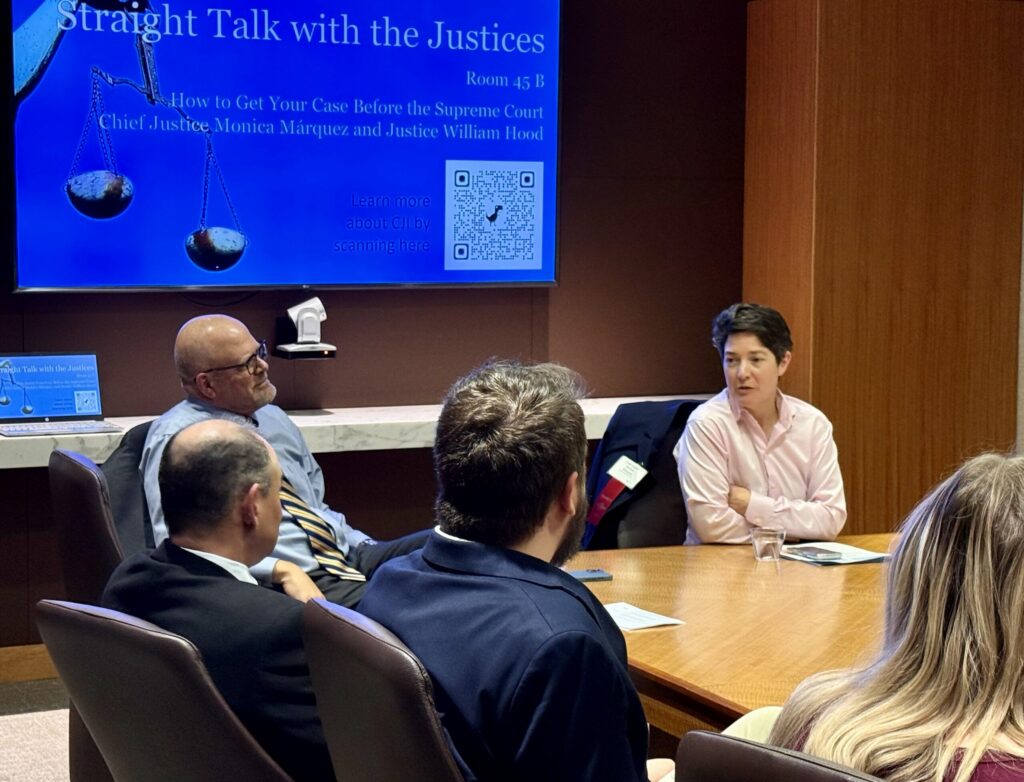
Colorado Supreme Court lifts curtain on decision-making at legal event
Michael Karlik
michael.karlik@coloradopolitics.com
Updated 13 hours ago
Members of the Colorado Supreme Court sat down with lawyers on Wednesday to answer questions about behind-the-scenes topics, including what happens immediately after an appeal is argued, why they might intervene in an ongoing case, and the consequence of a...
Senate, House leaders propose bill to cut outdated Colorado regulations and expand agency oversight
Marissa Ventrelli
marissa.ventrelli@coloradopolitics.com
Updated 7 hours ago
A bipartisan group of Colorado’s top legislative leaders is pushing a bill that would require periodic reviews of state regulations and expand lawmakers’ ability to scrutinize agency programs during oversight hearings. Senate Bill 137, sponsored by Senate President James Coleman,...
House Republicans split over SAVE America Act pressure campaign
David Sivak, Washington Examiner
david.sivak.washington.examiner@gazetteedit.wpenginepowered.com
Updated 16 hours ago
House Republicans are torn over how difficult to make life for the Senate as a band of rebels pressures Majority Leader John Thune (R-SD) to pass a national voter ID bill. Speaker Mike Johnson (R-LA) has cautioned House conservatives that...

Republican Jeff Crank, Democrat Jessica Killin qualify by petition for Colorado’s 5th CD primary
Ernest Luning
ernest.luning@coloradopolitics.com
Updated 17 hours ago
Republican U.S. Rep. Jeff Crank and Jessica Killin, one of the Democrats challenging the first-term incumbent, have both qualified for the primary ballot in Colorado’s 5th Congressional District after turning in a sufficient number of petition signatures, state election officials...
PREV
PREVIOUS

Aurora camping ban will take effect by end of April
Aurora City Council passed on final reading the urban camping ban sponsored by Mayor Mike Coffman in a 6-5 vote, with Coffman breaking council’s tie vote. This means the ban will take effect by the end of April. The ban will prohibit all urban camping on private and public property within Aurora. It also requires […]

Denver judge dismisses Jan. 6 participant's lawsuit against news anchor
A Littleton man who posted online that he either was – or was with – the “first guy to storm” the U.S. Capitol on Jan. 6, 2021 failed to show that 9News anchor Kyle Clark defamed him in the course of his reporting, a Denver judge ruled on Monday. District Court Judge Ross B.H. Buchanan granted Clark’s […]