

BIDLACK | Citizen-initiated grand-jury investigations are mob rule
If you are like me (Ed: not very likely…) you look forward every week to the Colorado Politics section entitled Out West Roundup (we are in the west after all) featuring a few quick hits on news items from around our region.
This week’s edition has several fascinating stories, and I recommend you go read them now before continuing to peruse my current rant…
All caught up? Good!
As is usually the case, I found a couple of stories that made me feel good about what is going on, and a couple that troubled me. I think I actually heard everyone’s eye-roll when reading the story about the chap from back east who had to be rescued twice in two days while hiking the Arizona mountains. Turns out, if you intend to hike mountains in the winter, you should probably bring a proper coat, but I digress…
The story I want to focus on today is not, to my own surprise and likely that of some of my readers, the story about Idaho’s legislature sending a Texas-style anti-abortion bill to their governor’s desk. This bill would ban any abortions after six weeks (which, as we all know, is long before many women even know they are pregnant) and would allow family members and select others to sue an abortion provider up to four years later for twice the Texas limit, a full $20,000. Oh, and while the law prevents a rapist from suing, it allows the relatives of the rapist to sue on, I guess, the rapist’s behalf. Horrible legislation and yet one more step toward the inevitable (and shameful) overturning of Roe v. Wade. But I’m not going to talk about that today.
Instead, please consider with me the story about what the New Mexico Supreme Court had to do recently. On March 7, that Court ruled that citizens cannot convene a grand jury to investigate (and then overturn) their governor’s actions regarding COVID.
I’ve written before on the COVID foolishness we are continuing to see in our society. In spite of just under a million Americans dead from the pandemic, there are still those who insist on their right to be, well, stupid, and who deny either that the virus is real, or that the shots work, or some other anti-science point of view. Oh, and freedom, of course. Freedom to be reckless in a manner that actually puts others’ lives at risk.
But I’m not going to talk about that either (Ed: will you *please* get to the point?).
Instead, I want to ponder the other aspect of this story that may have escaped your initial attention. In New Mexico, citizens can circulate a petition and if they get enough signatures, a grand jury is empaneled to investigate the issue of concern. Some anti-science folks in New Mexico, we learn from the CP roundup, tried to create a grand jury to “investigate” the governor’s orders during the crisis about things such as masks and in-person teaching in schools. Multiple lawsuits were filed, and they all lost, leaving the Governor’s powers intact. The grand jury path was a last-ditch effort, and it too failed.
But what is amazing to me is the very concept that regular citizens can, merely through the collections of signatures, force the formation of an actual grand jury to investigate nearly anything. There are only six states that allow this process (the aforementioned New Mexico, as well as Kansas, North Dakota, Nebraska, Nevada and Oklahoma).
Back in 1995, some citizens in Oklahoma forced a grand jury to investigate the Oklahoma City bombing, asserting that the conspiracy went well beyond Timothy McVeigh and Terry Nichols. The grand jury was created and investigated and found, you guessed it, nothing more that those two monsters.
My main point here (Ed: finally!) is that I’m glad Colorado doesn’t have the same laws as New Mexico. It is, frankly, a terrible idea to allow regular folks, with nothing more than a strong feeling that something should be investigated, to force the creation of a grand jury. Get enough signatures (which, if you have the time and money isn’t too hard to do) and you could, say, force the formation of a grand jury to investigate that odd neighbor of yours, or your local school board, or wherever your flights of fancy suggest.
As with the OK City case, absent a strong legal foundation, these grand juries are not likely to find much that actual professional investigators already did, but they are costly in two ways. First, the money – tax dollars – that an already overburdened court system must spend, and second, the damage such a panel can do to innocent people. Even the negative attention in the press created by a person being “investigated by a grand jury” might be enough to destroy a person’s business or livelihood, regardless of innocence or guilt.
The Founders knew what they were doing when they created a republic and not a direct democracy. They wanted a buffer between the momentary passions of the outraged and the actual wheels of governance. A direct democracy might work in, say the classic New England town meeting, where a small community can vote on where stop signs should go. But decisions about whom the judicial system will haul into court should be decisions made by, well, the judicial system.
Yet another reason to be happy that we live in Colorado, but watch your back if you move to New Mexico, and make sure you don’t tick off your neighbors.
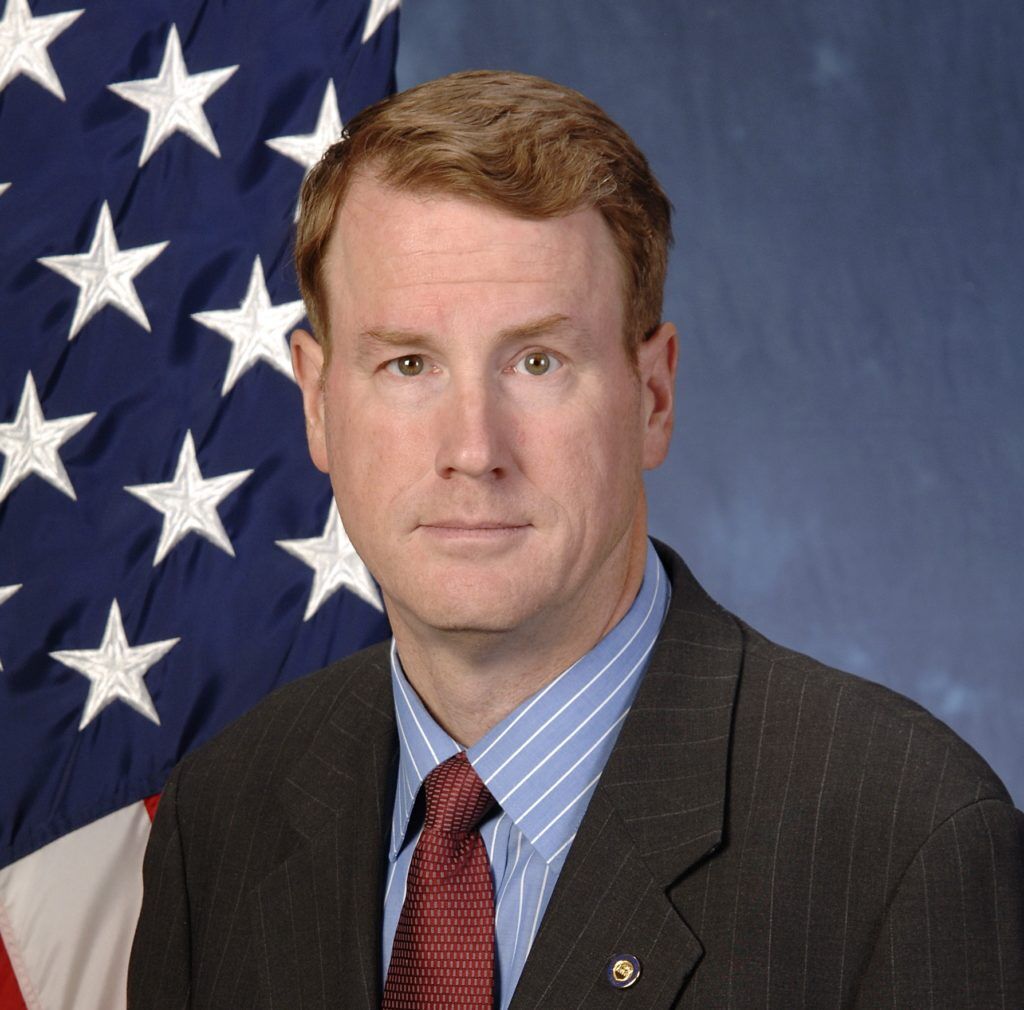
Hal Bidlack is a retired professor of political science and a retired Air Force lieutenant colonel who taught more than 17 years at the U.S. Air Force Academy in Colorado Springs.


If only walls could talk in Colorado governor’s office | Dick Wadhams
Dick Wadhams
dick-wadhams@coloradopolitics.com
Updated 11 hours ago
Restoring the office of the governor in the Colorado State Capitol to its historic glory was a worthy project despite its cost. There is probably never a good time to spend $2.4 million on such a restoration but it is...

TABOR and the Colorado Constitution’s fiscal Gordian Knot | Miller Hudson
Miller Hudson
miller-hudson@coloradopolitics.com
Updated 10 hours ago
A corporate president advised me once there are two kinds of lawyers: “those who tell you why you can’t do things and those who figure out how to get things done anyway.” He only hired the latter. Since the adoption...

Fierce, capable women at the Super Bowl of livestock shows | Rachel Gabel
Rachel Gabel
rachel-gabel@coloradopolitics.com
Updated 10 hours ago
The first cattle to show in the CoBank Arena in the Sue Anschutz-Rodgers Livestock Center at the National Western Stock Show were the Herefords of the Catch-a-Calf program. Anschutz is an ardent supporter of the program and a big fan...
Election 2026 will be a big Democratic year, unless President Trump avoids the ‘sixth-year’ jinx | Bob Loevy
Bob Loevy
bob-loevy@coloradopolitics.com
Updated 10 hours ago
Here is analysis of which political party, the Democrats or the Republicans, will win the 2026 general elections for the U.S. Senate and the U.S. House of Representatives next November. Because the U.S. president will not be on the ballot...

Colorado is shrinking — time for our elected officials to take notice | Jon Caldara
Jon Caldara
jon-caldara@coloradopolitics.com
Updated 3 days ago
By Jon Caldara Something strange is happening in Colorado — strange enough that the political class should notice. People are leaving Colorado. After years of being one of the fastest-growing states in the nation, net in-migration has stopped and may...
Capitol M: Return to Gold Dome High, 2026 edition, and a salute to old IU
Marianne Goodland
marianne.goodland@coloradopolitics.com
Updated 4 days ago
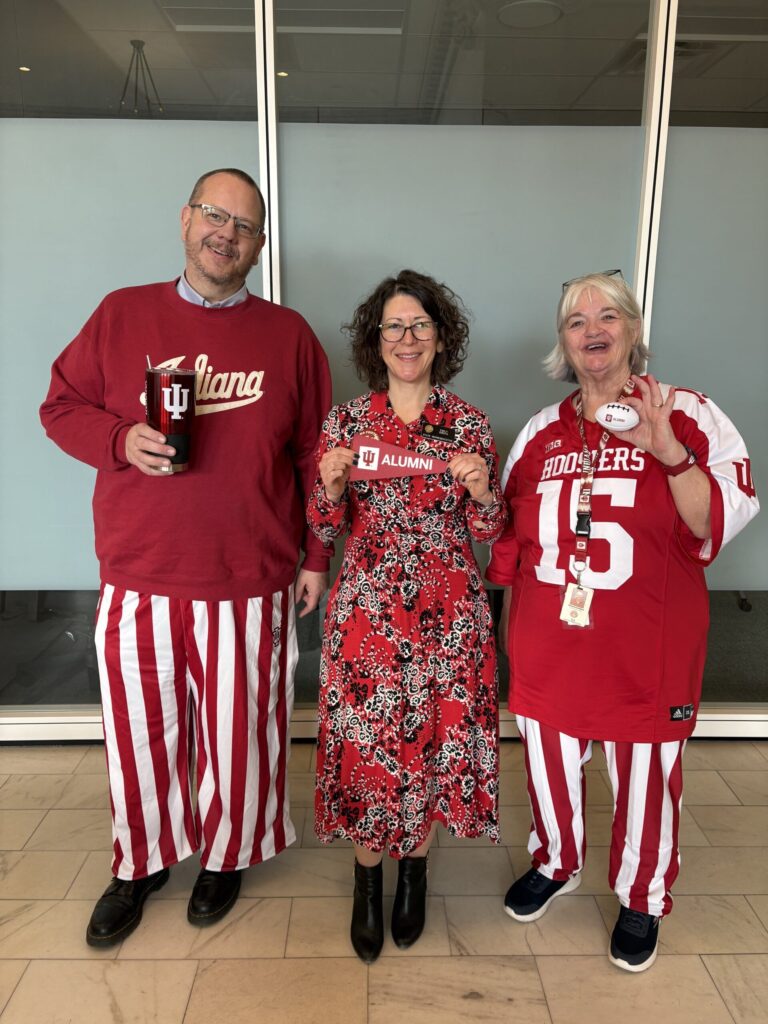
Welcome back, campers! The 2026 legislative session is upon the good citizens of Colorado, and for a few, the first Monday of the session, Jan. 19, was pretty special. There are at least four folks in the Capitol who are...

The biggest accelerant of our political tribalism | SONDERMANN
Eric Sondermann
eric-sondermann@coloradopolitics.com
Updated 5 days ago
In years past, my go-to word in describing our political condition was “polarization.” I used it endlessly and still do on occasion. But as time has moved on, and the divide has only grown in depth and toxicity, polarization no...
The ramifications of President Trump’s pursuit of Greenland | Kelly Sloan
Kelly Sloan
kelly-sloan@coloradopolitics.com
Updated 3 days ago
President Donald Trump has evidently stepped back from his threatened fantasy of invading Greenland — the sovereign territory of a U.S. ally — to which many a sigh of relief has been expressed, including by the markets. There was next...

Let’s find out who’s up to the gubernatorial task post Polis | Paula Noonan
Paula Noonan
paula-noonan@coloradopolitics.com
Updated 4 days ago
Gov. Jared Polis is bold and his policies are bolder than bold. That’s the paraphrase of his State of the State speech to open the 2026 General Assembly and start off his last year in office. His sweeping review of...

We dream, we dare, we decouple — how Colorado turns values into policy | OPINION
Colorado Politics
colorado-politics@coloradopolitics.com
Updated 4 days ago
By Kathy White Gov. Jared Polis’ final State of the State address was a clear victory lap. After eight years as governor, he used the moment to highlight accomplishments, reflect on progress and remind Coloradans what his administration has delivered....
PREV
PREVIOUS

Invest in Colorado’s water infrastructure
Tony MiloDave Anderson It is no secret that Colorado and many other areas around the world are facing a water crisis. An inherently complicated problem to solve, it stems from many complex issues, from water rights and appropriation to scarcity and pollution. Research shows that we will be unable to meet even 56% of global […]
Denver Gazette: ‘Camping’ bans protect the community
A leading advocate for Denver’s homeless took a shot at the city’s sporadically enforced camping ban last week – revealing a failure to grasp the policy’s purpose. The criticism also reflected a surprising misunderstanding of the addicts and other drifters who opt for a life on the streets at the community’s expense. As reported by […]