

National teacher union leaders visit Colorado to advocate for collective bargaining bill
Just how significant would it be for Colorado to allow part-time college faculty to unionize and engage in collective bargaining?
Look no further than the state Capitol Monday, when national presidents of the American Federation of Teachers and the American Association of University Professors met with Gov. Jared Polis, hoping to keep public higher education in a pending collective bargaining bill for the public sector.
Higher education and local government representatives told Colorado Politics they haven’t seen a draft of the legislation since last year. However, they believe the bill has been narrowed from all public sector employees, including K-12 and those who work in special districts and cities and towns, to just county employees and those in public higher ed. Supporters, including Senate President Steve Fenberg, D-Boulder and House Majority Leader Rep. Daneya Esgar, D-Pueblo, the legislation’s sponsors, aren’t saying when the measure would be introduced.
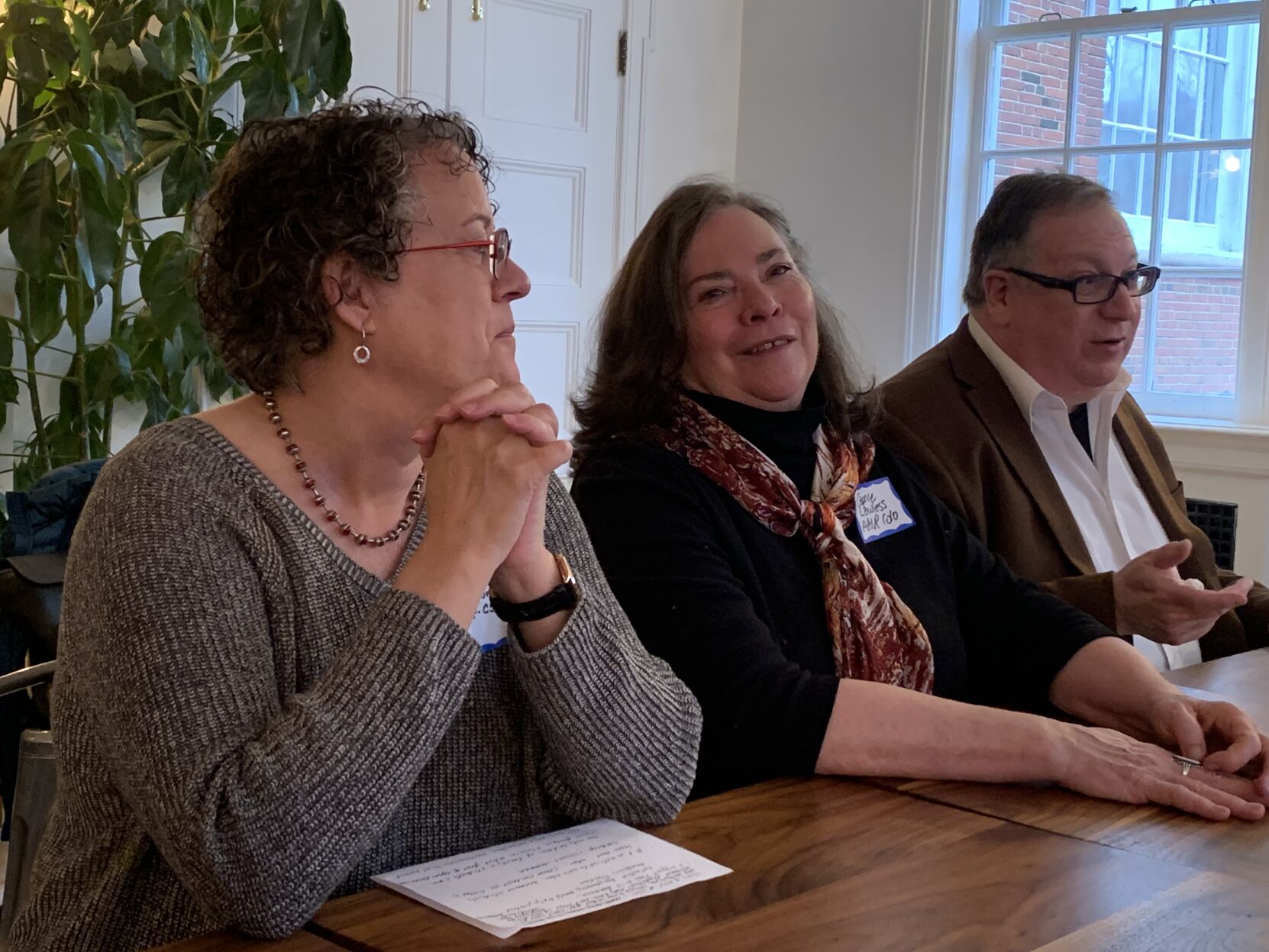
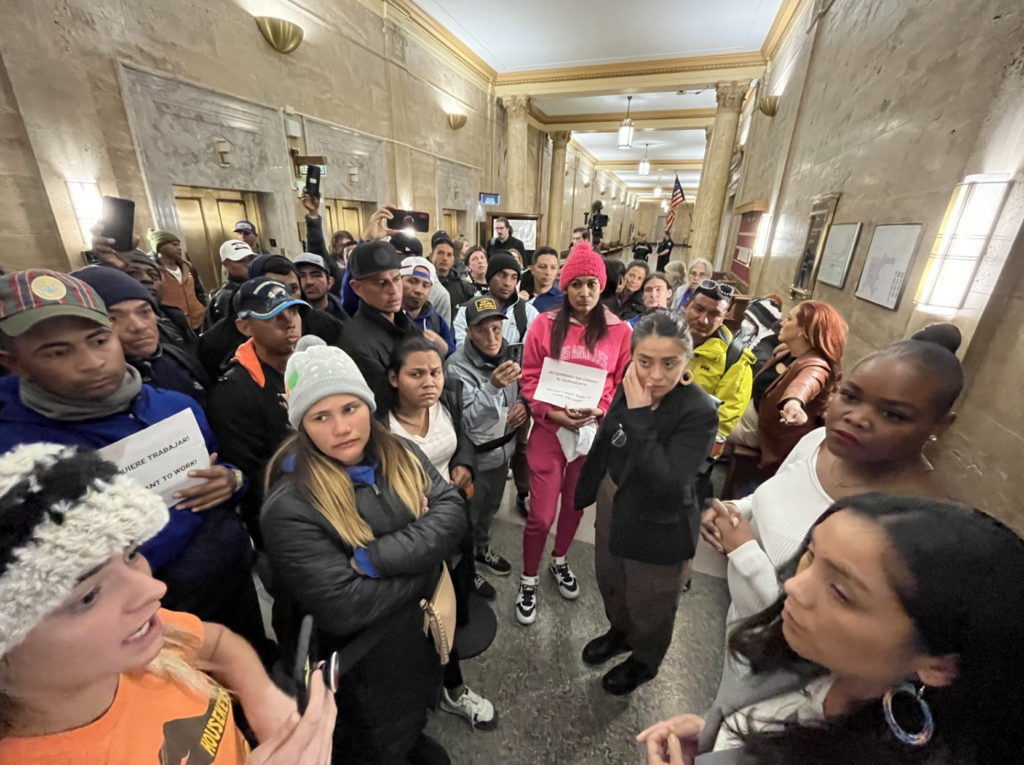
No one is more adamant about the need for collective bargaining than adjunct faculty at the state’s public colleges and universities, many of whom spoke at a roundtable Monday on efforts to extend collective bargaining rights to more government workers.
Adjunct faculty are little more than temporary employees. They don’t get health insurance, vacation or sick pay, and often don’t even have offices at the colleges where they teach. Pay is among the biggest issues: the average pay is $2,500 per course per semester, and most adjuncts cobble together a living by teaching multiple courses at multiple colleges, leading them to be called “freeway flyers.” About 70% of the courses at the seven Front Range community colleges are taught by adjuncts, and about 40% at the six rural community colleges, according to AFT and AAUP representatives at the roundtable.
The system is broken, said Joann McCarthy, an adjunct at the Community College of Denver. Adjuncts, who mostly have master’s or doctoral degrees, are often relegated to teaching remedial education when they can do so much more, she said. They are hired to teach classes at the worst times, with the neediest students, and because they’re working at multiple colleges, they have no time to meet with students outside of class, she added.
Colleges claim to put students first, she but they put those who teach those students last, she argued.

marianne.goodland@coloradopolitics.com
Caprice Lawless, who teaches at Front Range Community College, said those who teach are devoted to teaching, but the low pay and lack of health insurance means that, when she gets sick and needs to go to the emergency room, she calls first to make sure she absolutely needs to miss work. And even when told she’s under an emergency, she asks what her other options are, she said, adding that’s what occurred recently when she had a kidney stone and was “peeing blood.”
Lawless said she accommodates roommates to make ends meet, estimating she’s had 33 in the last 10 years. She can’t afford background checks, so several times she’s had to evict roommates, call the police or had roommates with mental health issues, she said, adding, “My house is my retirement plan.”
She said she has also sponsored workshops for other adjuncts, instructing them on how to get food stamps, subsidized housing, charity support for car repairs and how to find help paying utility bills.
“We need to restore community into the community college system,” Lawless said.
It isn’t only faculty adjuncts who are advocating for collective bargaining.
Craig Svonkin is a tenured faculty member at Metropolitan State University of Denver. Moving to Colorado from California resulted in a cut in pay, Svonkin said.
“I have it better” than the adjuncts, Svonkin said, adding he has twice opened up his Capitol Hill apartment to adjuncts who are being evicted.
Without collective bargaining, faculty – especially adjuncts – are afraid to speak up for better pay or working conditions, Svonkin said.
“Most of my friends would leave higher ed if they could,” he said, adding students don’t choose to go into higher education as a profession because of poor conditions.
In a recent letter to lawmakers and the governor, higher education institutions pointed out that, should the collective bargaining bill pass and without additional funding to cover higher costs, it would mean higher tuition for students.
“Public institutions of higher education would experience unique challenges to implement such a policy, especially given the wide variation in their operating and governance structures, missions, student populations and employee mix. A collective bargaining policy applied uniformly across the higher education ecosystem would likely have inequitable and unintended consequences,” the institutions said in the letter, adding those consequences included tuition increases, administrative costs and potential loss of student financial aid.
The other sticking point is for critics is the ability to strike. Critics also point to other logistical issues, such as how many individual bargaining units could be formed on each college campus.
But Svonkin said faculty members advocate against tuition hikes and are the ones who look for ways to cut costs.
AFT President Randi Weingarten said her organization had been among the most vocal groups in advocating for education funding from the American Rescue Plan Act, which sent $125 billion to K-12 and $40 billion to public colleges and universities.
Collective bargaining will strengthen the workforce and say to employees “you are valued,” Weingarten said.
Her AAUP counterpart, Irene Mulvey, said students deserve stable faculty members who have decent working conditions and are not scrambling to make ends meet.
“It’s exploitation and it’s shameful,” she said of the current situation. “When students suffer, the quality of education suffers.”
In the last five years, Weingarten said, collective bargaining has strengthened institutions, resulted in more innovation and helped with recruitment and retention.
Mulvey said supporters are looking for the most “expansive” bill possible. That could include collective bargaining units beyond faculty members. Over the past 20 years, public higher education has sought permission from the legislature to move classified positions, which are part of the state personnel system, to non-classified, at-will positions, and have done so with great success.
While they “can’t fight every battle,” Weingarten said they hope to lift up every worker and not just faculty members.
“We’re in it to win it,” Mulvey said.
Mulvey and Weingarten refused to answer a question from Denver Post reporter Alex Burness on the past conversations they’ve had with Polis, who has been opposed to a broader bill that includes more than just counties and public higher ed.


Highway 115 fire blows up, road closed south of Colorado Springs
Nick Smith
nick-smith@coloradopolitics.com
Updated 7 hours ago
A fast-moving fire burning along Colorado 115 south of Colorado Springs blew the containment line Thursday, spreading farther east onto Fort Carson and scorching nearly 700 acres, officials said. The blaze was fully uncontained as of late Thursday afternoon, officials...
Public figures have limited path to sue over accusations of criminality, says appeals court
Michael Karlik
michael.karlik@coloradopolitics.com
Updated 10 hours ago
Colorado’s second-highest court ruled last week that a public figure cannot sue for defamation solely because a person publicly accuses them of committing a crime, as the statement may be constitutionally protected opinion. A three-judge Court of Appeals panel narrowed...
Proposed data center regulation in Colorado draws critics, backers
Scott Weiser
scott.weiser@gazette.com
Updated 8 hours ago
A packed marathon hearing at the state Capitol in Colorado highlighted the sharp divide between two competing approaches to the effects of data centers, one of America’s fastest-growing technology sectors. Data centers are the physical facilities that host the servers,...

Conservation Colorado proposes measures aimed at oil and gas companies
Marissa Ventrelli
marissa.ventrelli@coloradopolitics.com
Updated 10 hours ago
The environmental group Conservation Colorado has introduced four ballot measures it says are in response to an initiative that aims to enshrine Colorado businesses’ and consumers’ right to purchase and sell natural gas in the state’s Constitution. Filed with the...

Colorado revenue forecast worsens, pushing budget shortfall to nearly $1.5B
Marianne Goodland
marianne.goodland@coloradopolitics.com
Updated 8 hours ago
The latest revenue forecasts from economists in both the governor’s office and the Colorado legislature show that the state’s budget predicament has worsened — by hundreds of millions of dollars more. That, in turn, means cuts programs and services in...
Federal judge to consider sanctioning ex-Colorado judicial discipline director
Michael Karlik
michael.karlik@coloradopolitics.com
Updated 9 hours ago
A federal judge ordered Colorado’s former head of judicial discipline on Wednesday to explain why she should not sanction him for making inaccurate statements about the defendants in his lawsuit against the Colorado Supreme Court and related entities. U.S. District...

With jails overcrowding, Gov. Jared Polis asks for new prisons as lawmakers face budget shortfall
Marianne Goodland
marianne.goodland@coloradopolitics.com
Updated 8 hours ago
The Polis administration is asking for hundreds of millions of dollars to expand the state’s prison system, just as Colorado’s legislators are bracing for a worsening fiscal outlook. The request sets up a clash over priorities at a time when...
Costs explode for Colorado program covering pregnant women and children living in the U.S. illegally
Marianne Goodland
marianne.goodland@coloradopolitics.com
Updated 17 hours ago
A state program providing health care to pregnant women and children living in the country illegally is costing far more than lawmakers expected, with expenses nearly tripling in just a year and threatening to squeeze Colorado’s budget amid a nearly...

Costs explode for Colorado program covering pregnant women and children living in the U.S. illegally
Marianne Goodland
marianne.goodland@coloradopolitics.com
Updated 1 day ago
A state program providing health care to pregnant women and children living in the country illegally is costing far more than lawmakers expected, with expenses nearly tripling in just a year and threatening to squeeze Colorado’s budget amid a $1...

Universities sue to block dismantling of Boulder’s NCAR
Scott Weiser
scott.weiser@gazette.com
Updated 13 hours ago
A consortium of universities filed a federal lawsuit Monday, alleging the Trump administration’s plan to dismantle the National Center for Atmospheric Research is unlawful retaliation against Colorado. The group also argued that the move violates federal law. The University Corporation...
PREV
PREVIOUS

COURT CRAWL | Denver policing trial continues, Supreme Court weighs business issues
Welcome to Court Crawl, Colorado Politics’ roundup of news from the third branch of government. Last week, the civil trial over Denver’s police response to the 2020 racial justice protests continued in federal court, and the Colorado Supreme Court turned its focus to business-related issues. Ex-city employees take the stand ? The jury trial over Denver’s […]

Q&A with Sen. Janet Buckner | Senator on her past and future in the Capitol
Sen. Janet Buckner never thought she’d be in politics, but she’s about to celebrate her seventh year serving in the Colorado legislature. After a long career as a speech and language therapist and a medical salesperson, Buckner retired in 2007 but was thrust into action when her husband, former Rep. John Buckner, died in office. […]