

TRAIL MIX | Petitioning onto Colorado’s primary ballot no cakewalk for candidates
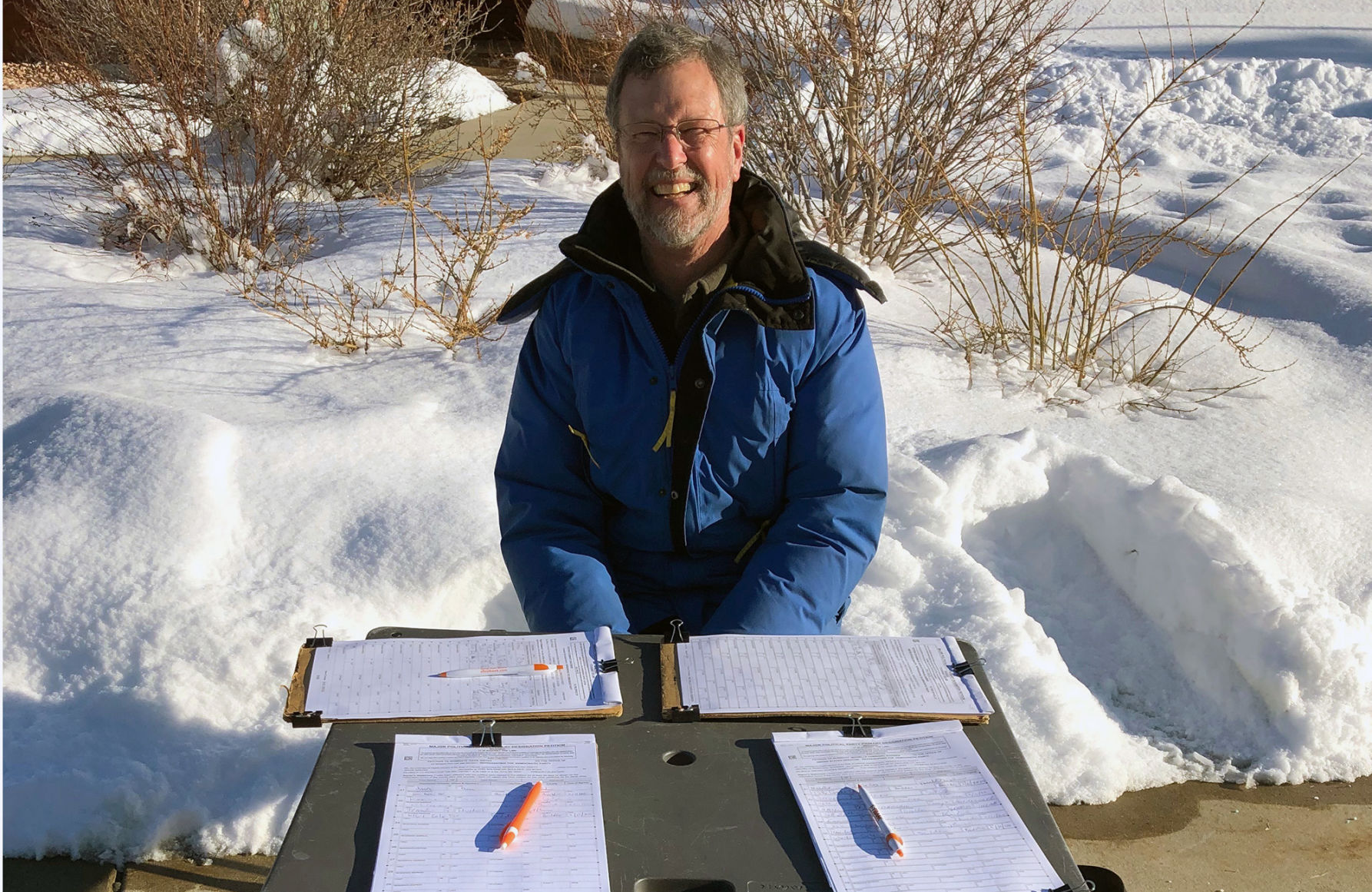
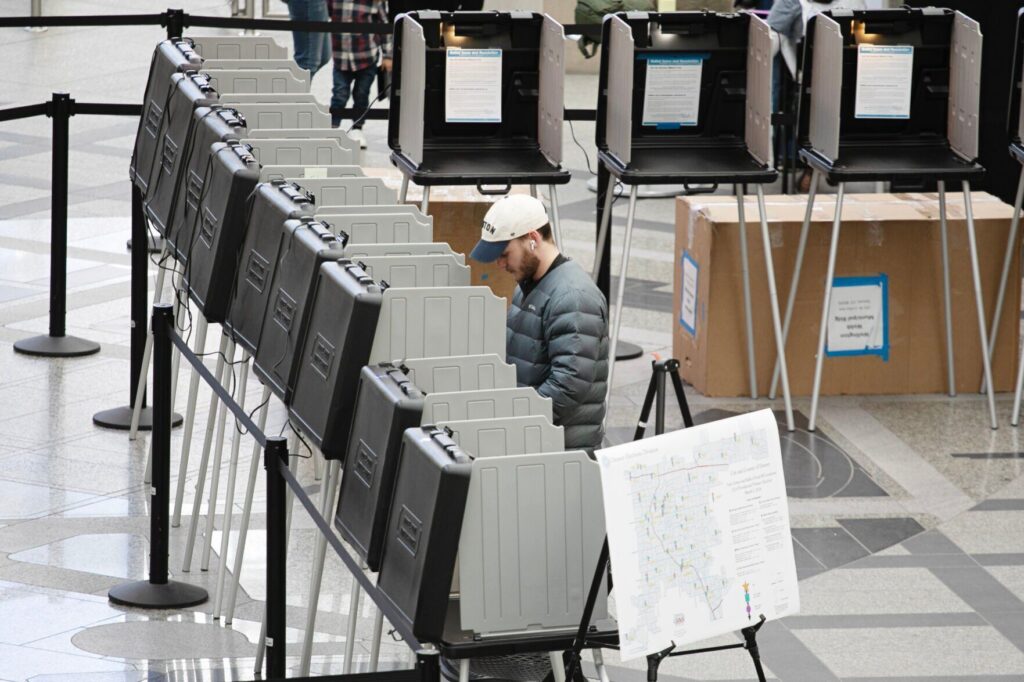
Colorado’s two-pronged process to get on this year’s June 28 primary ballot is in full swing, with precinct caucuses kicking off the scramble for delegates during the first five days of March and dozens of candidates accelerating the chase for signatures as the March 15 deadline to submit nominating petitions looms.
Candidates can take multiple routes to the state’s Democratic or Republican ballot: by collecting signatures, by going through the assembly process, or by opting for both methods.
The assembly track involves winning support from 30% of the delegates at county, district and state assemblies, with both major parties wrapping up on April 9.
This year, the Republicans will be convening at the World Arena in Colorado Springs, where they’ll designate candidates for U.S. senator and statewide offices, with the top vote-getter in each category winning top-line designation on the ballot. There will be less suspense on the Democratic side at the party’s virtual convention on the same day, since the Democratic incumbents who hold all those offices are seeking reelection and face only nominal opposition.
Candidates can also gain entry in the primaries by gathering signatures from fellow party members. That process began in mid-January, giving potential contenders roughly two months to collect their John Hancocks, with varied requirements depending on the office sought.
Those who go both the assembly and petition route face the same petition requirements but only need support from 10% of delegates to get on the ballot.
Candidates often start out simultaneously pursuing delegate votes and petition signatures – “We’re keeping all options open” is a familiar refrain – but usually pick one or the other, because it’s the rare campaign with the resources to go all-in on both.
In recent years, leading candidates for major office in Colorado have run into a range of calamities while attempting to convert the signatures they’ve collected into spots on primary ballots, sometimes resulting in derailed campaigns, enormous legal expenses and a couple of hair-raising reversals.
In 2018, for instance, Republican gubernatorial candidate Walker Stapleton withdrew his petitions after they’d been deemed sufficient when evidence emerged that the firm he’d hired had cut corners, potentially invalidating hundreds of signatures.
Within days, Stapleton’s campaign retooled and jumped into the state assembly, where he secured top-line in the primary and prevented some potential rivals from emerging. He went on to win a four-way primary – two other candidates qualified by petition – but lost in November to Democrat Jared Polis, who is seeking a second term this year. Stapleton later sued the petition-gathering firm for breach of contract and recouped the money he’d paid.
Republican U.S. Rep. Doug Lamborn had hired the same firm in 2018 – it was a lawsuit challenging his petitions that brought the irregularities to light – and had to take his case to multiple state and federal courts before a judge placed him on the ballot.
Several other candidates have hit snags at the end of their petition drives, most prominently Republican U.S. Senate candidate Jon Keyser, who discovered after he officially made the ballot that one of the petition-gatherers hired by the firm he’d engaged had forged numerous signatures, including at least one who had died before supposedly signing his petition. While he remained on the primary ballot, his campaign never recovered from the waves of bad news, and the one-time frontrunner finished fourth in a field of five candidates.
Last cycle, candidates who were pushing the petition deadline saw their efforts go up in smoke as pandemic restrictions made signature-gathering all but impossible for the last, crucial weeks. Democratic U.S. Senate hopefuls Lorena Garcia, Michelle Ferrigno Warren and Diana Bray sought a work-around, but a judge’s ruling kept them off the ballot.
More candidates are trying to petition their way onto the ballot this year than in any previous year, though the 69 candidates aiming for Colorado’s 2022 primary ballot just barely edges out the previous high point of 67 candidates who pulled petitions in 2018. Neither year’s total is typical, however, since fewer than half as many candidates took the petition route in 2016 and 2020, with fewer still making the attempt in previous election years.
Different from last cycle, when it took 10,500 valid signatures to make the primary ballots for governor and U.S. senator – with 1,500 required from each of the state’s seven congressional districts – this year candidates for the two ticket-topping offices must turn in 12,000 valid signatures, since Colorado has added an eighth congressional district, with the same minimum requirement from each district.
Candidates for other statewide offices need to gather 1,000 signatures per congressional district, for a total of 8,000.
Congressional candidates have to turn in 1,500 valid signatures, while legislative candidates need 1,000 signatures, whether they’re running for the state House or the state Senate. (In the rare districts with exceptionally low numbers of registered voters or poor turnout, candidates can turn in 30% of the number of votes cast in the previous cycle’s primary if it’s less than the stated requirement.)
In addition to handling petitions for U.S. Senate and U.S. House candidates, the Secretary of State’s Office oversees candidates seeking statewide executive offices – governor, attorney general, state treasurer, secretary of state – as well as candidates for the General Assembly, the State Board of Education, University of Colorado Board of Regents and district attorneys.
independent and minor-party candidates face different requirements and deadlines, as do candidates for other petition efforts administered by the Secretary of State’s Office, including RTD directors. Candidates petitioning at the county level – for commissioner, county treasurer, assessor, sheriff, coroner and surveyor – go through their respective county clerks’ offices. Petitions for citizen-initiated ballot measures, referenda and recalls operate under different procedures with different timelines, though the Secretary of State’s Office is responsible for the statewide versions.
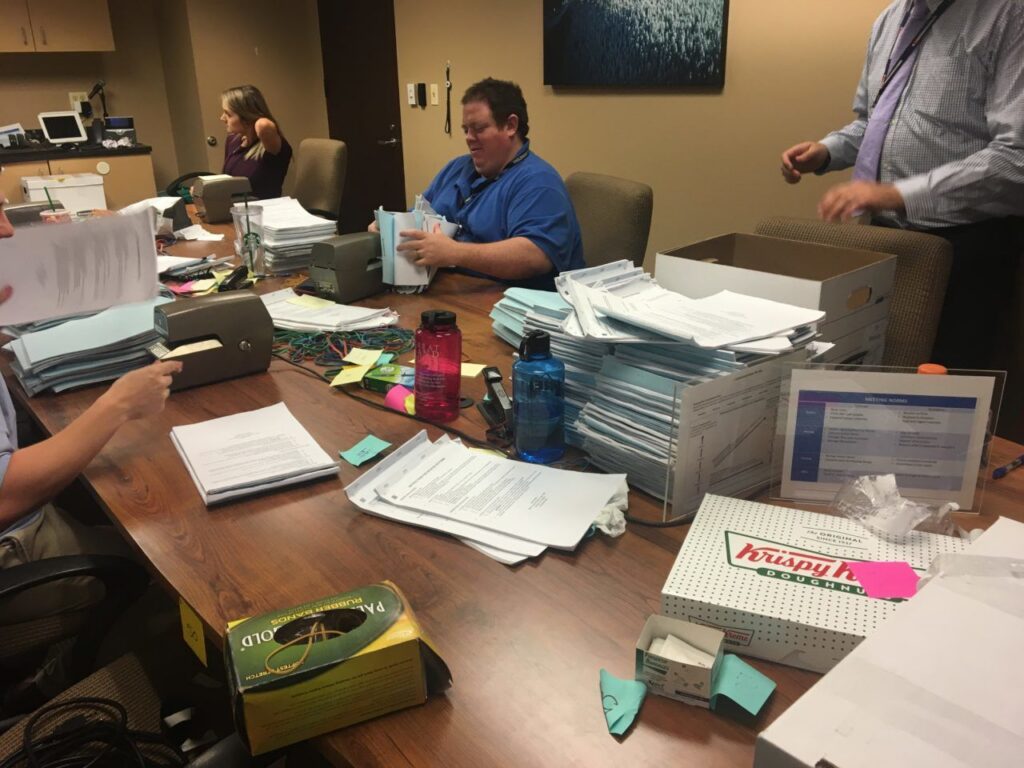
So far, only five of the 69 candidates who have gotten the OK to circulate petitions this year have filed completed petitions, which could make for a traffic jam when petitions start to pour in days before the deadline.
The order that candidates turn in their petitions can make a big difference, because under Colorado law, voters are only allowed to sign one petition per race. If they sign more than one petition for the same race, it doesn’t matter which one they signed first, because signatures are verified and counted in the order that completed petitions are received.
State House District 6 candidate Elizabeth Epps, a Denver Democrat running in a crowded primary for an open seat, submitted hers first, on Feb. 9. Since then, four congressional candidates have gotten theirs in: Lamborn, the Colorado Springs Republican running for a ninth term in the 5th Congressional District; Erik Aadland, a Pine Republican running in the open 7th Congressional District; Jan Kulmann, a Thornton Republican – she’s the city’s mayor – running in the open 8th Congressional District; and Dom Waters, a Denver Democrat hoping to challenge 12-term incumbent U.S. Rep. Diana DeGette in the 1st Congressional District.
As of March 3, two candidates had notified the Secretary of State’s Office they were withdrawing their petitions – a Democrat hoping to challenge Lamborn and a Republican who had his eyes on facing Polis – leaving 62 candidates still circulating theirs.
About half are legislative candidates, though an unusually high number of congressional candidates are also circulating petitions, in part due to the creation of the new 8th CD as well as an unexpected opening in the 7th Congressional District after eight-term Democratic U.S. Rep. Ed Perlmutter announced in January that he isn’t seeking another term.
For the second cycle in a row, Lamborn has qualified for the primary ballot before anyone else.
He learned on March 1 that the Secretary of State’s Office determined he submitted enough valid signatures, making him the only candidate so far guaranteed a berth in the primary. Lamborn had a comfortable margin, with 2,297 signatures ruled valid, well above the required 1,500 signatures for congressional races. Last cycle, Lamborn tied with Democratic legislative candidate Daniel Himelsbach when both petitioning candidates qualified on the same day. (Himelsbach went on to lose the primary in the Denver-based state House District 6 to state Rep. Steven Woodrow, who was appointed to fill a vacancy months before the primary and easily won election to a full term in the heavily Democratic district.)
Hours after Lamborn was notified he’d made the ballot, Waters found out she’d failed to qualify, though it couldn’t have come as much of a surprise, since she only turned in 105 of signatures out of the 1,500 needed.
Lamborn, who has faced primary challengers in all but two of his nine campaigns for Congress, has changed his tune about petitions over the years.
In 2012, Lamborn derided petitioning opponent Robert Blaha, saying that the Republican was demonstrating his weakness among the party faithful by bypassing the assembly and doubted “the people of Colorado can be bought so easily.” After a close call in 2016 when he was nearly kept from the ballot by a surprise challenger at the assembly, Lamborn has petitioned his way into the race every time since.


Kentucky Gov. Andy Beshear set to headline Colorado Democrats’ annual fundraising dinner
Ernest Luning
ernest.luning@coloradopolitics.com
Updated 2 days ago
Kentucky Gov. Andy Beshear, one of the Democrats’ top 2028 presidential prospects, is scheduled to deliver the keynote address at the Colorado Democratic Party’s annual fundraising dinner in June in Denver, the party said Friday. Serving his second term as...
Colorado sues Trump administration, calling new election order ‘unconstitutional’
Marissa Ventrelli
marissa.ventrelli@coloradopolitics.com
Updated 20 hours ago
Colorado Attorney General Phil Weiser has joined a multistate coalition suing President Donald Trump over a new executive order on elections, arguing the directive unlawfully intrudes on states’ authority to run their own voting systems and threatens access to mail...
Denver Democrat Neal Walia lands endorsement from Ro Khanna in Colorado’s state House District 9
Ernest Luning
ernest.luning@coloradopolitics.com
Updated 2 days ago
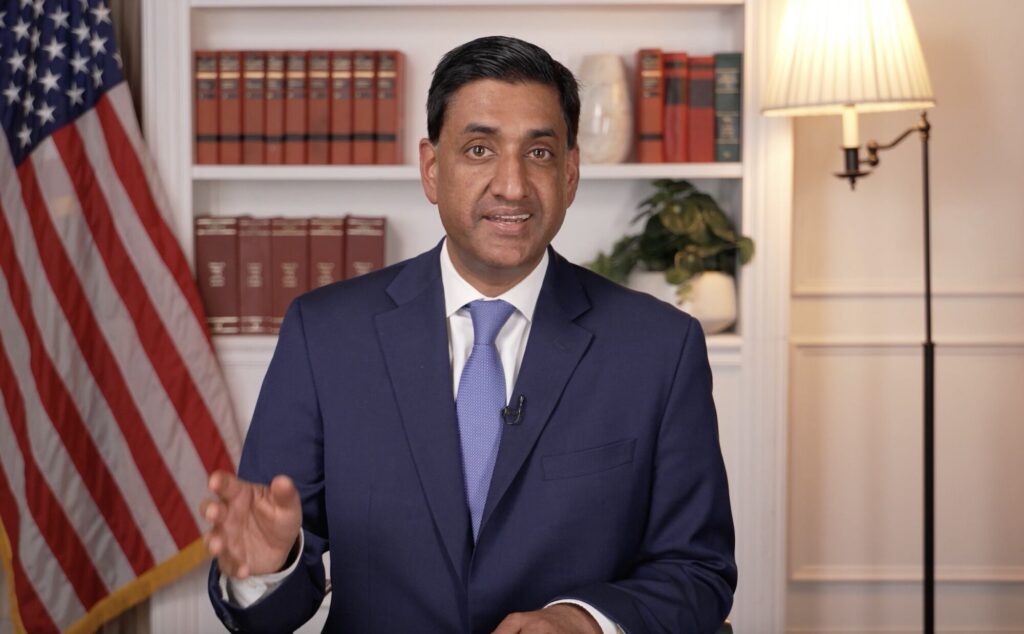
California Rep. Ro Khanna on Friday endorsed legislative candidate Neal Walia in the race for an open state House seat, praising the Denver Democrat’s commitment to public service and progressive goals. Walia, who mounted an unsuccessful challenge against U.S. Rep....
Redistricting fight escalates as Colorado Title Board clears competing ballot proposals
Marianne Goodland
marianne.goodland@coloradopolitics.com
Updated 2 days ago
Colorado’s title board on Wednesday gave final approval to multiple ballot measures related to congressional redistricting, setting up a series of proposals that could alter how the state draws its U.S. House districts for the 2028 and 2030 elections. The...
Judge rules that Colorado law makes it too hard for parties to bar unaffiliated voters from primaries
Ernest Luning
ernest.luning@coloradopolitics.com
Updated 3 days ago
A federal judge ruled in favor of the Colorado Republican Party late Tuesday, saying that a portion of the state law that allows unaffiliated voters to cast ballots in party primaries is unconstitutional because it imposes an unrealistic burden on...
Colorado leaders say Trump’s executive order targeting mail voting violates state election authority
Marissa Ventrelli
marissa.ventrelli@coloradopolitics.com
Updated 4 days ago
Colorado leaders criticized President Donald Trump’s new executive order issued Tuesday, arguing that its creation of a national voter‑eligibility list and new limits on mail voting violate states’ constitutional authority to run their own elections. President Donald Trump has frequently...

Phil Weiser wins top spot in Colorado’s Democratic gubernatorial primary at party’s state assembly
Ernest Luning
ernest.luning@coloradopolitics.com
Updated 1 week ago
Attorney General Phil Weiser’s name will appear first on Colorado’s Democratic gubernatorial primary ballot after his overwhelming win Saturday at the party’s state assembly in Pueblo. Weiser joins U.S. Sen. Michael Bennet in the June 30 primary for the office...
Denver Democrat Diana DeGette trails challenger Melat Kiros at assembly as both qualify for primary
Ernest Luning
ernest.luning@coloradopolitics.com
Updated 5 days ago
U.S. Rep Diana DeGette, a Denver Democrat, qualified for Colorado’s June primary by the skin of her teeth Friday at the party’s district assembly, where the 15-term incumbent received fewer than half as many delegate votes as her challenger, 28-year-old...
Federal judge upholds constitutionality of Colorado campaign contribution limits
Michael Karlik
michael.karlik@coloradopolitics.com
Updated 1 week ago
A federal judge upheld Colorado’s individual campaign contribution limits as constitutional on Thursday, finding that three Republican plaintiffs failed to prove the campaign finance framework violates their First Amendment rights. U.S. District Court Senior Judge John L. Kane recognized that...
Seligman, Bridges, Gonzales lead downballot races heading into Colorado Democrats’ state assembly
Ernest Luning
ernest.luning@coloradopolitics.com
Updated 1 week ago
As Colorado Democrats prepare to designate candidates to the June primary ballot at the party’s state assembly in Pueblo on Saturday, three candidates appear poised to win top-line designation in downballot statewide races, according to data compiled by the state...
PREV
PREVIOUS

Parties argue over mundane, salacious issues as DaVita trial looms
With weeks to go until the high-profile white collar trial, attorneys for the United States and for Fortune 500 company DaVita, Inc. clashed in a downtown Denver courtroom, arguing over the admissibility of expert testimony, the multimillion-dollar compensation for DaVita’s CEO-turned-defendant, and the government’s withholding of information. The parties on Thursday even disputed whether the […]

10th Circuit tosses inmate's lawsuit over prison's response to safety complaint
The federal appeals court based in Denver has dismissed an inmate’s civil rights lawsuit because he had not fully pursued his administrative grievance, even though prison officials rejected a virtually identical grievance he previously filed. Arthur James Moore was incarcerated at Buena Vista Correctional Facility on June 10, 2019, when Sgt. Anthony Tresch allegedly told […]