

In 2-1 decision, appeals court upholds man’s conviction for threatening judge
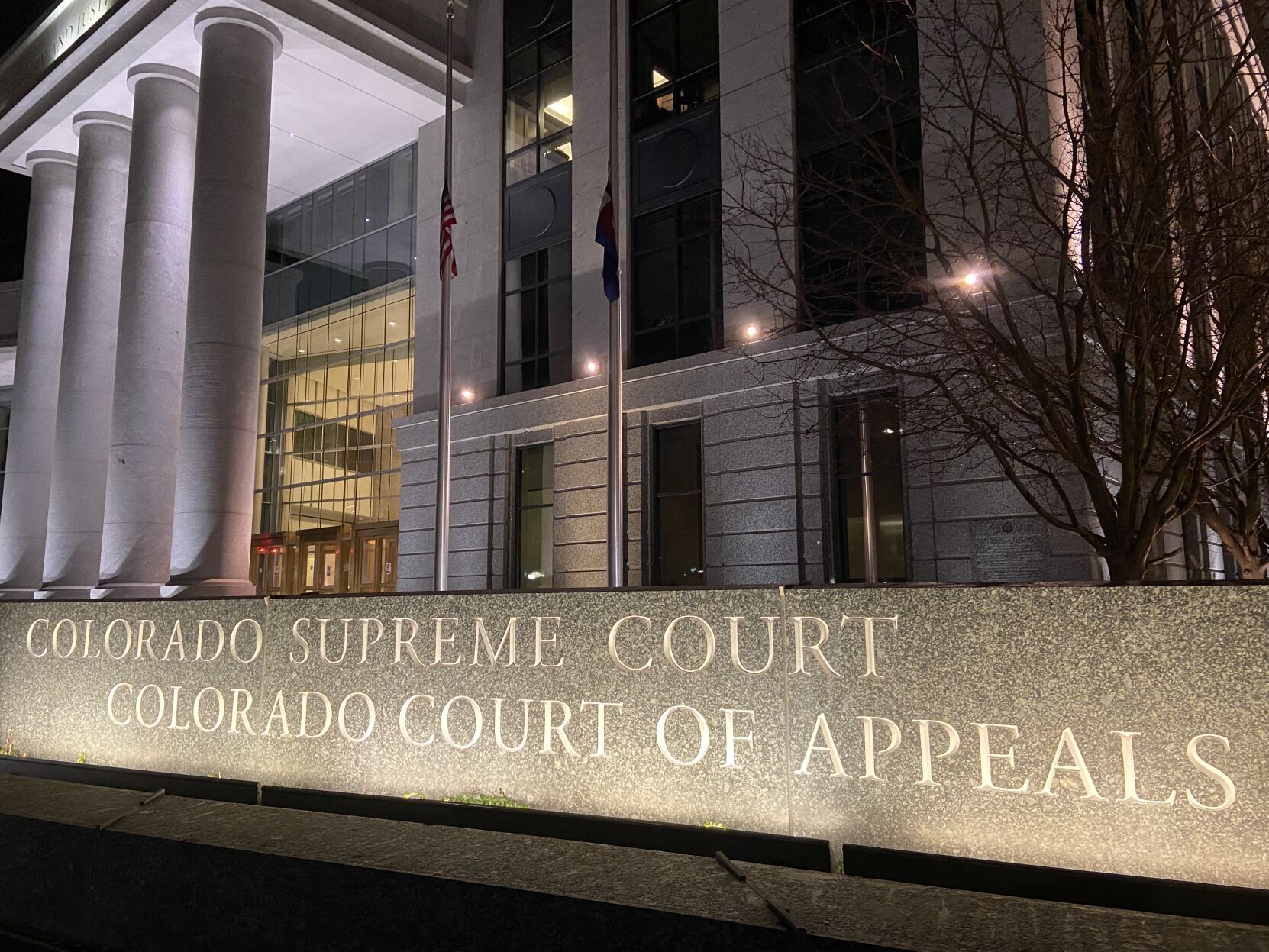
A man was properly convicted for telling a judge that he would “kidnap your daughter,” the state’s second-highest court ruled on Thursday, determining the comments were a threat under the law and not constitutionally-protected speech.
The 2-1 decision from a panel of the Court of Appeals found that Adrian Jeremiah Brown had communicated an intent to personally commit a crime against the Adams County judge, and his message came after a history of outbursts, hostility and threats toward others involved in his case.
“Brown did not say ‘what if’ your daughter ‘were kidnapped.’ The statement is not posing a hypothetical action by an unknown or unnamed party, but a concrete active proposal by the speaker,” wrote Judge James S. Casebolt in the majority’s Feb. 17 opinion.
Even though the judge who Brown threatened did not take action immediately after his kidnapping comments, the panel determined she was justified in perceiving his statement as a genuine threat given everything she knew about Brown’s volatility. The judge, as the victim of a crime, went unnamed in the appellate court’s decision.
Although the U.S. and Colorado constitutions protect vulgar or even upsetting statements, there are circumstances under which a person’s free speech crosses the line into criminal conduct. The U.S. Supreme Court, in the 1969 case of Watts v. United States, decided that an 18-year-old man had engaged in political hyperbole at a rally, rather than made a “true” threat, when he insinuated that he wanted to shoot the president in the context of opposing the draft.
Using the Watts case as a foundation, the Colorado Supreme Court in 2020 established a set of criteria for determining whether speech constitutes a true threat. The court, in focusing on how the recipient perceives the alleged threat, deemed it necessary to examine the words used, the surrounding events and the relationship between the speaker and recipient, among other factors.
In Brown’s case, the Adams County Department of Human Services took custody of his infant daughter after learning she had methamphetamine in her umbilical cord. Throughout the process, Brown had been hostile toward the county’s caseworker and a magistrate assigned to the child welfare case.
During a subsequent hearing, Brown called the department personnel “kidnappers” and “terrorists.” Because county employees were concerned about hosting Brown’s supervised visits with his child, the judge offered to let the visits happen in her courtroom.
However, Brown continued to behave menacingly. He threatened to change his daughter’s “sh—y diaper” on the judge’s desk because there was “enough s— up there.” He clenched his fists and shouted at the judge. Finally, when the judge ordered a domestic violence evaluation for Brown, he lashed out.
“Let me kidnap your daughter and see if you don’t get angry,” he said. “As a matter of fact, where do you live, Your Honor? Let’s see if we can get this all resolved. See if you would be angry.”
He added, “I’m an activist. And they’re trying to shut me up. This whole case is designed to shut me up, and all you’ve done thus far is help them.”
Jefferson County prosecutors – who handled the matter in lieu of Adams County – charged Brown with retaliation against a judge, which requires a credible threat. As defined in Colorado law, a credible threat would cause a person to fear for their safety or the safety of their immediate family.
At trial, the judge whom Brown threatened testified that following his comments about kidnapping, she was concerned because Brown knew about her children and could potentially find her home. The judge, who also received harassing documents at the courthouse from Brown, knew Brown had reportedly threatened to kill the mother of his child. The judge had installed motion-activated lights at her home and requested a security escort to her car after work.
A jury found Brown guilty and he received five years in prison.
Courts “must be cautious in distinguishing between an emotional courtroom outburst of a frustrated litigant and a credible threat directed to a judicial officer,” Casebolt, a retired judge who sat on the appellate panel at the chief justice’s assignment, acknowledged in reviewing Brown’s appeal.
Using the state Supreme Court’s rubric, the panel determined the words Brown used and the surrounding circumstances supported the claim that Brown had crossed the line from free speech to threat.
“We also acknowledge that Brown did not apparently know where the judge lived, which militates against the threat’s credibility, but his question shows that he had sufficient chutzpah to demand information from the judge about her personal address, and his going to the judge’s bench and poking around it shows a failure to respect boundaries,” Casebolt wrote for himself and Judge David Furman.
Judge Lino S. Lipinsky de Orlov disagreed that Brown’s comments amounted to a threat. Brown’s outburst – “Let me kidnap your daughter and see if you don’t get angry” – came immediately after the judge had referenced potential anger management treatment for Brown.
“Brown was not referring to a specific child when he mentioned a daughter of the judge. Rather, he was attempting to justify his anger about losing custody of his own daughter when he said to the judge that she, too, would become angry” if someone kidnapped her child, Lipinsky reasoned.
His belief was that Brown merely wanted the judge to see the situation from his point of view. Given that Brown had referred to human services personnel as “kidnappers,” Brown was likely expressing his feelings about government interference in a parent’s relationship with their child, and not about criminal kidnapping.
Because Brown had not crossed the line from words into action, nor had he promised to take action if the judge did not comply with his demands, Lipinsky would have reversed Brown’s conviction.
Earlier this week, Reuters reported that 4,500 threats were made against federal judges in 2021. A spokesperson for Colorado’s Judicial Department said it does not keep statistics on threats against state judges.
The case is People v. Brown.

10th Circuit to address resentencing of probation violators in rare all-judges hearing
Michael Karlik
michael.karlik@coloradopolitics.com
Updated 17 hours ago
The Denver-based federal appeals court agreed on Thursday to hold a rare all-judges hearing to determine the proper procedure for resentencing a criminal defendant who has violated the terms of his probation. In the federal appellate courts, the vast majority...
Appeals court overturns Adams County sex offense convictions due to prosecutor’s misconduct
Michael Karlik
michael.karlik@coloradopolitics.com
Updated 21 hours ago
Colorado’s second-highest court reversed multiple child sex assault convictions on Thursday after concluding an Adams County prosecutor committed misconduct while cross-examining the defendant. A three-judge Court of Appeals panel observed the charges against Daniel Michael Boerner depended on the jury...

Fort Carson soldier’s wife could be deported
Carol McKinley
carol-mckinley@coloradopolitics.com
Updated 2 days ago
As the country’s largest immigration enforcement crackdown continues in Minnesota’s Twin Cities, a Fort Carson sergeant is fighting a personal immigration crisis — one that may implode his family. Sgt. Tyler Garza’s wife, Jennifer Maradiaga Baca, is not a legal...
Elizabeth School District dismisses challenge to book-ban injunction on eve of appellate arguments
Michael Karlik
michael.karlik@coloradopolitics.com
Updated 23 hours ago
An Elbert County school district has dismissed its challenge to a judge’s injunction ordering it to return banned books to library shelves, days before the Denver-based federal appeals court was set to hear oral arguments this week. Although a three-judge...

Colorado Supreme Court to hear cases on insurance coverage for COVID, witness credibility
Michael Karlik
michael.karlik@coloradopolitics.com
Updated 3 days ago
The Colorado Supreme Court announced on Tuesday that it will decide the degree to which a virus or other hazard must affect a commercial property before it can trigger loss-or-damage coverage under an insurance policy. At least three of the...
Federal judge says prisoner cannot sue for dog-bite injury
Michael Karlik
michael.karlik@coloradopolitics.com
Updated 3 days ago
A federal judge concluded last week that a man cannot sue the government for injuries he sustained when a dog allegedly attacked him while he participated in a prison program. Kenneth M. Chandler, representing himself, was participating in the “FIDOS”...

Federal judge recommends dismissing trans athletics lawsuit by area school districts
Eric Young
eric.young@gazette.com
Updated 3 days ago
A judge has recommended dismissing a federal lawsuit filed by multiple school districts against the Colorado Attorney General’s and Civil Rights Offices over their policies dictating students’ participation in athletics and activities based on their biological sex rather than gender...
Appeals judge asks Colorado Supreme Court to once again clarify magistrate rules
Michael Karlik
michael.karlik@coloradopolitics.com
Updated 4 days ago
A member of Colorado’s second-highest court urged the state Supreme Court last week to revise confusing language in the rules governing magistrates, less than two weeks after an attempted cleanup of the rules took effect. Magistrates are judicial employees who are...
10th Circuit dismisses paralyzed man’s claims against Colorado Springs, officer
Michael Karlik
michael.karlik@coloradopolitics.com
Updated 13 hours ago
The Denver-based federal appeals court upheld the dismissal last week of a man’s excessive force claims against the city of Colorado Springs and the officer who tased him, causing him to fall down a sloped surface and break his neck....
Colorado justices weigh overlap between child prostitution offenses
Michael Karlik
michael.karlik@coloradopolitics.com
Updated 4 days ago
Members of the Colorado Supreme Court last week appeared willing to uphold a man’s conviction for an attempted child prostitution offense, which the state’s second-highest court previously found to be a violation of his right to equal protection under the...
PREV
PREVIOUS

Federal judge in Colorado announces retirement, creating fourth trial court vacancy for Biden
William J. Martínez, a judge on Colorado’s U.S. District Court, announced that he will step down as an active judge effective Feb. 10, 2023. Martínez, who is 68 this year, was an appointee of President Barack Obama, and has served since December 2010. He has opted to take a form of retirement known as senior status, […]

Gov. Jared Polis’ agenda advances through state legislature
One month after Gov. Jared Polis announced his legislative agenda during the State of the State address, bills reflecting his priorities are steadily advancing through the legislature. Polis, whose signature or veto ultimately determines the fate of any legislation, set the tone of the 2022 session when he addressed the legislature in January. Polis’ address […]