

Colorado schools bend but don’t break under omicron surge

At Evelyn Gonzalez’s Denver high school, the Italian teacher, who luckily speaks Spanish, filled in recently for the Spanish teacher, who was out sick for two days.
So many students were absent from Haven Coleman’s history class at another high school that the teacher held off on teaching the day’s lesson rather than have to repeat it later for the missing kids. Coleman’s class had a study hall instead.
In Carbondale, an entire grade level at Crystal River Elementary switched to remote learning, not because teachers were sick, but because several of them were also parents of preschool-aged children quarantined at home.
If this past fall felt “mostly normal,” Assistant Principal Kendall Reiley said, then after winter break, “it felt like we were coming back into a different world.”
January’s massive COVID-19 surge has tested pandemic-weary teachers, students, and families in new ways, with half-empty classrooms, missing teachers and abrupt temporary switches to remote learning, often for just a number of days.
The lack of substitute teachers is a major problem. In District 11 in Colorado Springs, almost half of teacher absences went unfilled earlier this month. Many districts are dispatching central office workers, many of whom were never teachers, to help at schools. Denver sent out 500 of them a day, prioritizing coverage for schools at risk of closing.
Some teachers and students have said a short period of remote learning would provide more stability and question whether the disruption involved in keeping schools open is worth it. Amber Elias, Denver’s lead operational superintendent, believes it is.
“As much as our primary purpose is instruction, we provide so many more benefits,” Elias said. “I keep going back to the research that shows students are physically, mentally, and emotionally safer in school. We would rather keep kids in school when we can. We know we are not able to provide that quality of instruction that we would at full staffing, but there are a lot of other benefits to school.”
District leaders statewide have mostly kept buildings open amid case rates that would have shuttered them a year ago. They cite the availability of vaccines, plus widespread concern about the toll virtual learning took on children’s mental health. Relaxed safety protocols are also giving schools new tools to stay open, like combining classes and shortening quarantine.
That doesn’t mean this month has been easy. Some students say they’re worried about catching the virus but also dread a return to virtual schooling.
“Going remote learning is like going a step back to the past,” said Andrew Caballero, a sophomore at Denver’s Abraham Lincoln High School. “Students should be able to go to school and interact with other students and not be home 24/7.”
For Shane Knight, principal at Denver’s Knapp Elementary School, the text messages start at 5 a.m. and go until late. At first, he and his assistant principal were keeping track of sick or absent teachers on a whiteboard, marking those who were out with COVID-19 with a red “C+.”
They later moved that accounting to a spreadsheet, but the logistics of who was absent and who was covering their classes became so unsustainable that Knapp temporarily switched to remote learning, one of more than 45 Denver schools to do so by the third week of January.
“As soon as I informed my staff, the tension in the building dropped dramatically,” Knight said. “It was palpable. They were on edge like, ‘Who is leaving next?'”
It’s a feeling teachers from across Colorado said they know well.
Cara Godbe teaches a combined second and third-grade class in Montrose. Vaccination means some students who would have had to quarantine in the fall can now stay in the classroom, but that presents its own challenges.
“I might have eight kids who are eligible to stay in the classroom, and 16 that are not,” she said. “And that puts teachers in a bind. How do you teach both groups of kids?”
When the third-grade teacher at Kate Tynan-Ridgeway’s school, Palmer Elementary in Denver, was out with COVID-19 right after winter break, she and the other second-grade teacher split his class, adding 10 more kids to each of their rooms.
Instead of teaching the regular second-grade curriculum, Tynan-Ridgeway said, “I was inventing my whole day. It was like, ‘Let me adapt this. Let me adapt that.'” Though the students were still getting academic instruction, it wasn’t what they’d normally learn.
The next week, Tynan-Ridgeway had to miss school because of her own COVID-19 exposure.
It’s hard to get a clear picture of school closures because Colorado doesn’t track them. Some districts reported that student and staff absences were similar to those in the fall when Colorado endured a prolonged delta wave. Other districts reported a dramatic increase in cases, lower attendance and teachers out sick.
The Adams 14 district in Commerce City went remote the second week of January but opened most of its schools later in the month. Bayfield in southwestern Colorado canceled all classes and activities in mid-January after a fifth of the entire teaching staff either tested positive or entered quarantine.
Jason Hoang, a senior in Aurora, decided to quarantine after finding out that a friend tested positive for COVID-19. The quarantine wasn’t required, but Hoang felt it was the right thing to do. Some teachers offered him a way to participate in classes remotely, but others just gave him assignments to do on his own at home.
“I’m surprised we’re actually still in person considering how COVID-19 numbers have skyrocketed,” Hoang said. “I prioritize safety. I wish the school did that as well.”

Jeffco Public Schools found in violation of Title IX
Sage Kelley
sage.kelley@denvergazette.com
Updated 2 days ago
Civil rights office: Male students occupy 61 roster positions on girls’ sports teams The U.S. Department of Education announced Friday that the Jeffco Public Schools district violated Title IX by permitting male students to access female bathrooms and compete in...
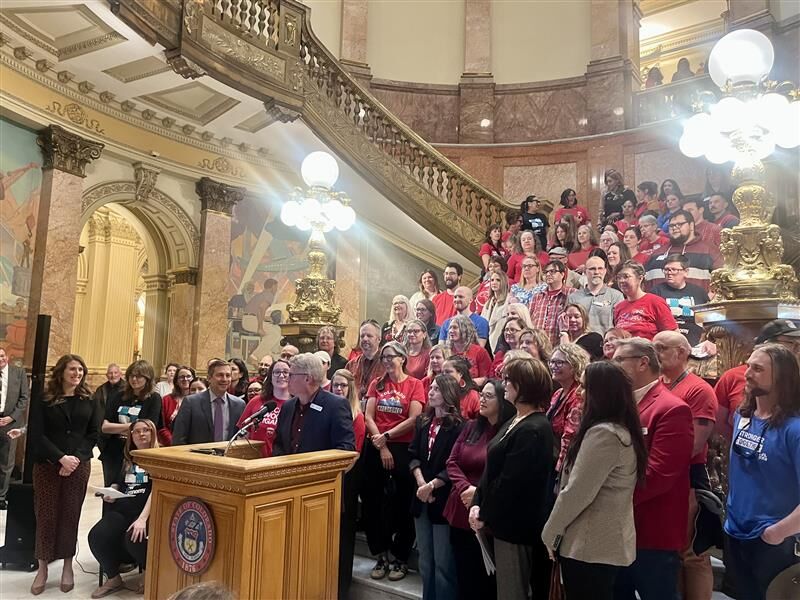
Senate committee moves forward with Colorado ballot measure to redirect TABOR refunds to schools
Marianne Goodland
marianne.goodland@coloradopolitics.com
Updated 2 days ago
A Senate panel on Thursday voted along party lines to move forward with a bill that would ask voters for permission to eliminate Taxpayer’s Bill of Rights refunds and redirect those dollars to K-12 public education. The 6-3 vote in...
Another TABOR fight: Democrats plan to redirect residents’ refunds to K-12 spending
Marianne Goodland
marianne.goodland@coloradopolitics.com
Updated 6 days ago
Colorado voters could decide this fall whether billions of dollars that would otherwise be returned as refunds under the Taxpayer’s Bill of Rights should instead go to public schools under a ballot measure unveiled Thursday by Democrats. Supporters say the...

Colorado bill aims to launch $1 million ‘Cradle to Career’ program
Marissa Ventrelli
marissa.ventrelli@coloradopolitics.com
Updated 2 weeks ago
Saying it would help Colorado families living in poverty, legislators are proposing to allocate $1 million to organizations that support impoverished communities. Senate Bill 080 — sponsored by Senate President James Coleman, D-Denver, Minority Leader Cleave Simpson, R-Alamosa, and Rep....
Ex-Cherry Creek superintendent must repay one month’s salary after abrupt resignation
Nico Brambila
nico.brambila@denvergazette.com
Updated 3 weeks ago
Former Cherry Creek School District Superintendent Chris Smith must repay one month’s salary for failing to provide the board of education with three-month’s notice of his resignation, The Denver Gazette has learned. The board of education has not waived the...
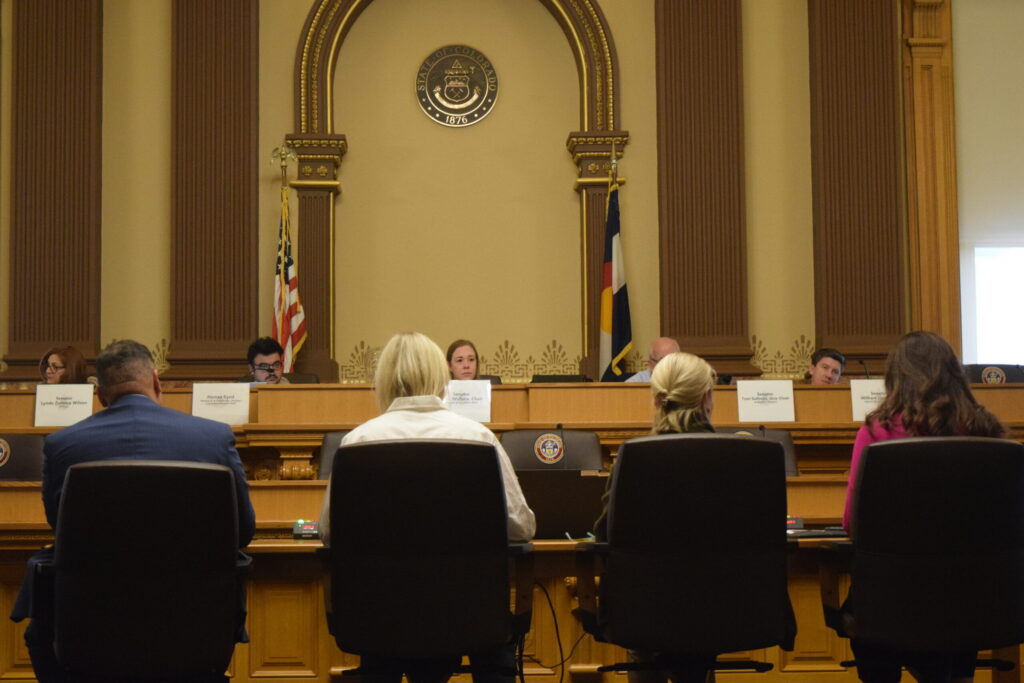
Senate committee kills bill to track education violations
Sage Kelley
sage.kelley@denvergazette.com
Updated 3 weeks ago
A proposed bill following in the wake of multiple Jeffco Public Schools sexual misconduct cases won’t make it to the Senate floor. The Colorado Senate State, Veterans and Military Affairs committee denied proposed Senate Bill 26-055 on Tuesday afternoon with...
Cherry Creek school district to pay ex-superintendent $165K after resignation amid toxic workplace claims
Nico Brambila
nico.brambila@denvergazette.com
Updated 3 weeks ago
The Cherry Creek School District will pay nearly $165,000 to former Superintendent Chris Smith following his resignation last month amid allegations of a toxic workplace. The board of education announced last week that the district is contractually obligated to pay...

Colorado’s ‘first public Christian school’ sues state, alleges discrimination
Eric Young
eric.young@gazette.com
Updated 3 weeks ago
Riverstone Academy, a public elementary school that opened last fall in Pueblo as a tuition-free option with Christian-based instruction, has filed a lawsuit against the state of Colorado over alleged religious discrimination. The lawsuit, filed in U.S. District Court for...

CU Boulder, state launch economic research in coal-transition areas
Scott Weiser
scott.weiser@gazette.com
Updated 1 month ago
Communities in northwest Colorado built on coal mining and power plants are losing hundreds of high-paying jobs and a major share of their tax revenue as operations wind down. In a yearlong effort, the University of Colorado Boulder is teaming...
Several Denver-area school districts cancel classes Friday amid national shutdown
Michael Braithwaite
michael.braithwaite@gazette.com
Updated 1 month ago
The protest is in response to ICE operations Several Denver-area school districts canceled classes on Friday due to staff shortages amid a shutdown campaign nationwide. The shutdown, held across the country on Friday, came about in response to recent U.S....
PREV
PREVIOUS

CDOT says season going well despite snowplow driver shortage
Officials across the country are working to address a shortage of snowplow drivers as winter rages on and the Colorado Department of Transportation is among the many agencies impacted. CDOT full team consists of 1,600 road maintenance specialists and frontline supervisors across the state and currently has around 200 openings. This is nearly double the […]
OUT WEST ROUNDUP | Yellowstone logs record visits; NM residents could get tuition-free college
WYOMING Yellowstone visits hit record high in 2021 MAMMOTH HOT SPRINGS – A record number of visitors flocked to Yellowstone National Park last year despite fewer hotel rooms and campsites being available because of the coronavirus pandemic and construction projects. About 4.86 million visits were tallied in 2021, breaking the prior record set in 2016. […]