

Omicron leads to record surge in Denver, escalating concerns about hospital workforce
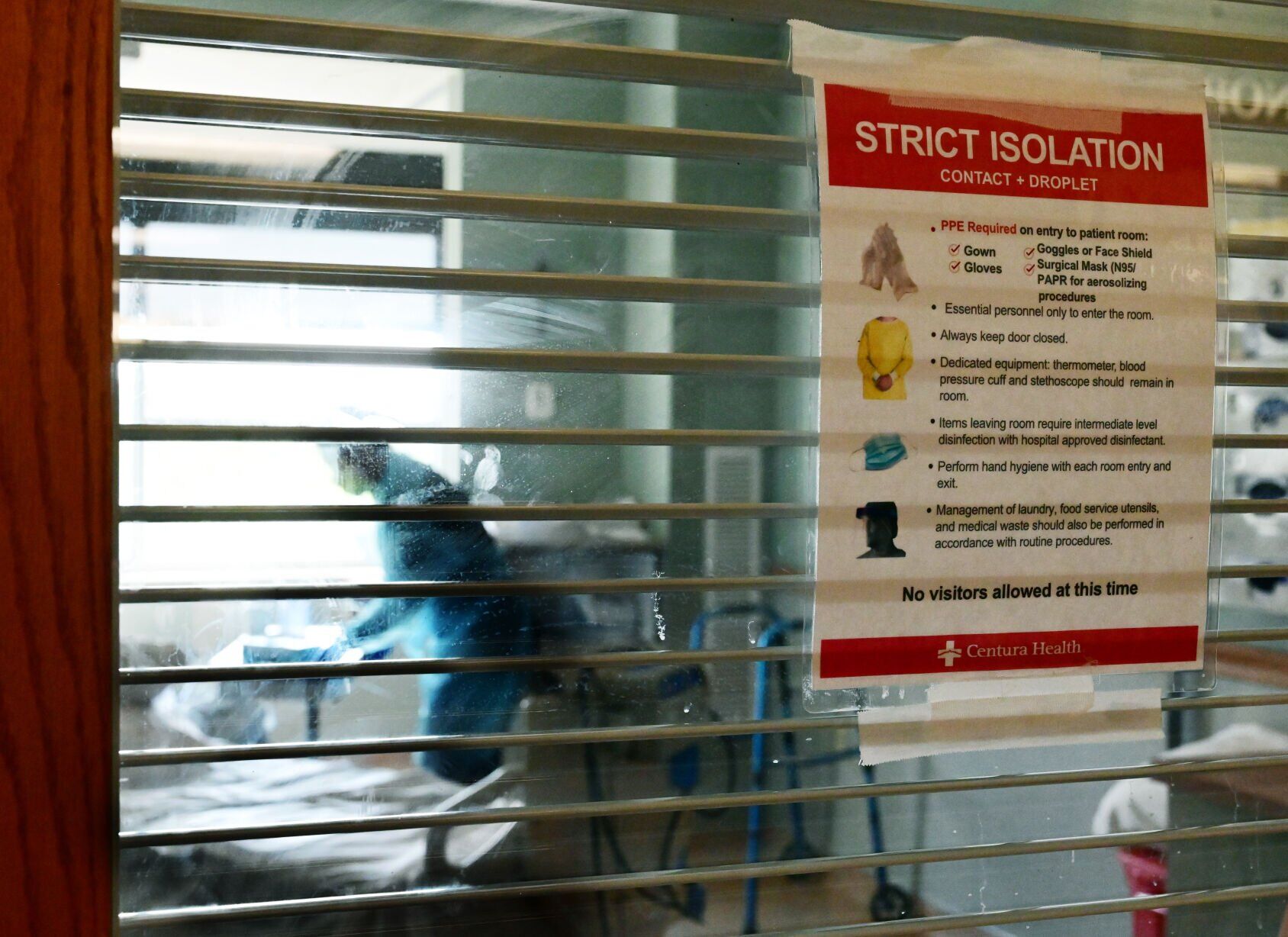
Omicron’s wildfire-like surge through Denver has skyrocketed positivity and case rates to their highest levels of the pandemic, and officials warned Tuesday that hospital capacity in the city is “razor thin.”
“I think we are in for a very tough two to three weeks,” Connie Price, the chief medical officer for Denver Health, told reporters at a Tuesday morning news conference.
One in four COVID-19 tests in the city are returning positive, said Mayor Michael Hancock, who announced last week that he had tested positive for the virus. The case count here has nearly doubled from its previous high in November 2020. Omicron, which first appeared in Colorado a month ago, is now the overwhelmingly dominant variant statewide, and though it appears to cause less severe disease than previous strains of the virus, its ability to infect people is depleting an already beleaguered hospital workforce.
“This is probably going to be the scariest point of this pandemic over the next month,” said Kathy Howell, UCHealth’s chief nursing officer. “We’ve all seen the increase in positivity among our employees, and then coupled by the steep climb again of inpatient admissions. … (This is) probably the most worried that I’ve been, over the next month.”
The situation statewide is not much better. Colorado confirmed more than 11,000 COVID-19 cases on Dec. 31, the most of any day in the pandemic yet. That record had been set and rebroken on Dec. 29 and 30. The positivity rate over the past seven days is also at its worst level of the crisis: Twenty-four percent of COVID-19 tests statewide have been positive on average over the past week.
The good news is that hospitalizations, though ticking upward, have not followed the same rocketship-esque trend line. As of Monday afternoon, 1,167 Coloradans were hospitalized with COVID-19. That’s up from 992 on Christmas Day but still far below the recent peak of 1,565 from mid-November.
But COVID-19 is not the only problem plaguing hospitals. In addition to the staffing problems Howell highlighted, hospitals are seeing sicker patients than they did pre-pandemic due to delayed care. Not only are staff getting infected at higher rates than had happened during the delta wave, but there are fewer of them: Many have left the workforce since the pandemic began because of exhaustion and burnout.
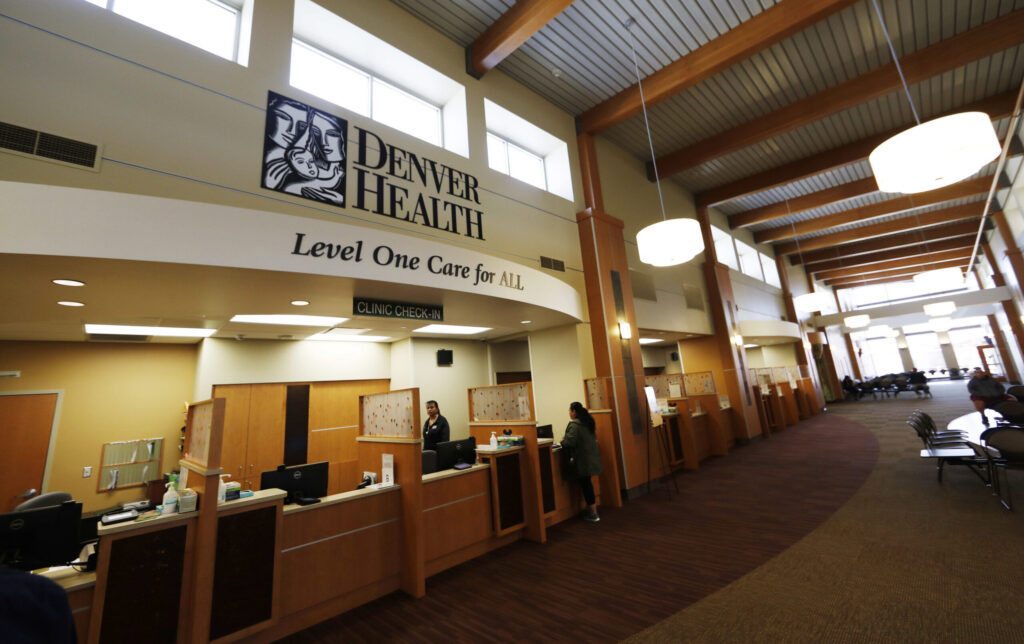
Price said she was “very concerned” about keeping up with the rise in cases and high levels of hospitalizations with her hospital’s “depleted staff.” She said Denver Health has intensive care beds left, but no medical-surgical beds. The system has more COVID-19 patients now than at any other point, she said.
“If you want a bed, what we have available is an ICU bed,” she said. “We just don’t have other beds available.”
She and others said local hospitals in the area were coordinating to move patients as needed because all of them were in similarly tense capacity situations. David Brumbaugh, the chief medical officer at Children’s Hospital Colorado, said omicron is a “threat” to hospitals’ ability to safely deliver care and maintain the “integrity of our workforce.”
Late last month, Denver extended its indoor mask-or-vax mandate through early February, four weeks after it was initially set to expire. Bob McDonald, the executive director of Denver’s Department of Public Health and Environment, told The Denver Gazette last week that officials were not considering any additional measures.
He said Tuesday that no other additional restrictions were being considered for schools, including school closures. He and other officials all stressed the need to keep kids in school for their own mental health, which – they said – is why masking and vaccinations are vital to cut down on infections within buildings.
McDonald told The Denver Gazette last week that it was “frustrating” that so many unvaccinated people refused to get protected, despite the wealth of evidence reinforcing vaccines’ efficacy and safety.
“We wouldn’t be having this conversation about hospitals – many of which in Denver are at capacity, they’re tapped out, they don’t have any beds available left – we wouldn’t be having that conversation if everybody would get vaccinated,” he told reporters Tuesday. “Because the unvaccinated people are primarily the ones … going to the hospital for help.”
Brumbaugh emphasized repeatedly the importance of in-person learning. In late 2021, he said, between 25 and 40 patients were turning up every day at Children’s emergency rooms for “acute behavioral health crises.”
Still, omicron’s dominance and high rate of spread make school closures very likely, said Dawn Comstock, the executive director of Jefferson County Public Health, because staff will get sick.

Healthcare freefall: Once built on federal investment, rural hospitals today fight to survive
Thelma Grimes
thelma.grimes@coloradopolitics.com
Updated 1 hour ago
Editor’s Note: Colorado’s healthcare system is entering a period of accelerating instability — a “tsunami,” as multiple leaders describe it — driven by collapsing hospital finances, shrinking Medicaid reimbursements, disappearing services and a political fight over who is responsible for...
Healthcare freefall: Subsidy cuts, insurance gaps reshape how Coloradans will seek care
Thelma Grimes
thelma.grimes@coloradopolitics.com
Updated 28 minutes ago
Editor’s Note: Colorado’s healthcare system is entering a period of accelerating instability — a “tsunami,” as multiple leaders describe it — driven by collapsing hospital finances, shrinking Medicaid reimbursements, disappearing services and a political fight over who is responsible for...
Healthcare Freefall: Finger‑pointing intensifies as Colorado’s healthcare system strains under rising costs, shrinking coverage
Thelma Grimes
thelma.grimes@coloradopolitics.com
Updated 4 minutes ago
Editor’s Note: Colorado’s healthcare system is entering a period of accelerating instability — a “tsunami,” as multiple leaders describe it — driven by collapsing hospital finances, shrinking Medicaid reimbursements, disappearing services and a political fight over who is responsible for...
Colorado appeals judge’s delays in releasing opinions noted by performance commission
Michael Karlik
michael.karlik@coloradopolitics.com
Updated 6 hours ago
The citizen-led performance commission that provides guidance to voters about whether to retain members of Colorado’s second-highest court raised concerns by judges and attorneys that Judge Elizabeth L. Harris sometimes struggles with releasing opinions promptly. Harris, who joined the Court...

DPS board sends $44 million tax increase to Denver voters
Nico Brambila
nico.brambila@denvergazette.com
Updated 4 hours ago
The Denver Public Schools board on Thursday unanimously voted to place a mill levy override on the November ballot that — if approved by voters — would raise taxes by $43.9 million annually, largely to fund employee raises. The request...

Jeff Crank, Jessica Killin set to face off in 2 debates in Colorado’s 5th Congressional District
Ernest Luning
ernest.luning@coloradopolitics.com
Updated 2 hours ago
Republican U.S. Rep. Jeff Crank and Jessica Killin, his Democratic challenger, have agreed to debate twice in the weeks leading up to the general election in Colorado’s 5th Congressional District, their campaigns have said. Crank is seeking a second term...

Colorado judge explores sanctions against DOJ, ICE for rearresting man 4 days after release on bond
Michael Karlik
michael.karlik@coloradopolitics.com
Updated 19 hours ago
A federal judge in Colorado is considering sanctions against the government after immigration agents rearrested a man four days after an immigration judge found him suitable for release on bond. On July 28, U.S. Magistrate Judge N. Reid Neureiter ordered...

White House deploys private companies to help crack down on cybersecurity breaches
David Zimmermann
david-zimmermann@coloradopolitics.com
Updated 1 day ago
The White House intends to use private companies in the United States to help crack down on cybersecurity breaches perpetrated by transnational criminal organizations. President Donald Trump signed a memorandum on Wednesday, directing his administration to employ the private sector...

Voters prefer socialist over MAGA candidate in 2028 matchup: Poll
Mabinty Quarshie
mabinty-quarshie@coloradopolitics.com
Updated 24 hours ago
New polling released this week suggests that a socialist candidate would defeat a Make America Great Again candidate in a hypothetical 2028 presidential matchup, a move that implies the reach of progressive leftists isn’t abating despite recent setbacks in Wisconsin....

Fort Carson garrison commander says staff cuts created ‘uncertainty and fear’
Mary Shinn
mary-shinn@coloradopolitics.com
Updated 21 hours ago
The Fort Carson garrison commander departed Wednesday after what he described as a difficult 18 months for installation and garrison staff. “I know the last 18 months has been marked by profound uncertainty and fear, but you weathered the storm...
PREV
PREVIOUS

Colorado Department of Corrections halts in-person visitation over omicron, staffing concerns
People incarcerated in a state correctional facility won’t be able to visit their families or friends in person for at least the next two weeks effective Tuesday, according to a announcement from the Colorado Department of Corrections. Due to the “highly contagious nature” of the omicron variant, along with staff shortages arising from COVID-19 and […]

Bennet challenger Joe O'Dea posts $1 million haul for 4th quarter
Construction company owner Joe O’Dea, a Republican candidate for Colorado’s U.S. Senate seat, plans to report receipts totaling more than $1 million through the end of the most recent fundraising period, including $500,000 he chipped in to his own campaign, a spokesman said Tuesday. O’Dea, one of eight Republicans running in a primary for the […]