

Colorado medical experts approve update to crisis triage plans

If overwhelmed, Colorado hospitals would be able to turn away and approve early discharges for patients who are deemed safe to go home and seek care elsewhere, according to a crisis plan finalized by a team of medical experts Monday.
The unanimous vote by the group does not activate the plan, a critical piece of the crisis standards of care. It instead sends a final version to Gov. Jared Polis for approval, after which point the governor can trigger it should Colorado’s hospital capacity be overwhelmed. The document, an update of a plan approved last year, details guiding principles for hospitals to follow should they have to ration care and decide who needs a hospital bed and who doesn’t. Though some parts of the plan have been activated – like those governing staffing – Colorado has not had to begin rationing care to this worst-case degree.
The plan, if ever activated, would apply to all hospital patients, not just those with COVID-19. Vaccination status is not a factor that will be considered when making triage decisions; earlier this month, several members of the team drafting the standards flatly opposed such a consideration.
Anuj Mehta, a Denver Health physician who led the drafting process, said that the “psychological distress” caused by even considering a triage scenario is “extreme.” But given the state of Colorado’s hospitals, which at some points in recent weeks have had fewer than 700 beds available, members of Polis’s Expert Emergency Epidemic Response Committee moved swiftly this month to update the plan.
If hospitals got to the point of being overwhelmed, Mehta continued, even a 10% “decompress” in patient volume via the standards would be “a boon” to providers and the health system.
The previous version of the plan would weigh a patient’s likelihood of survival in deciding if he or she should get one of a limited number of ventilators or other treatments. That piece is still part of the plan, Mehta said, but the larger focus is on patients whose care can either be stepped down – from an intensive care bed to a standard medical-surgical, for instance – or relegated to outpatient facilities, like a primary care or specialty physician.
A patient could enter the emergency room, for instance, with chest pain. That patient’s status would be evaluated by a triage team and a scoring system, which would weigh various factors to help determine a patient’s prognosis. Depending on that evaluation, the patient could either be sent home to seek outpatient care, or they could be admitted to a bed.
The same system would be used for a patient already admitted. Using a similar system, a patient may be discharged early should he or she be well enough to go home and get care elsewhere.
Mehta said the standards would identify the “lowest-risk patients” who were not only well enough in that moment to go home but would also be less likely to return to the hospital in the near future. The patient’s survivability could also be taken into account: “Is the patient going to pass away, unfortunately, even if they receive a ventilator?” he said.
Given the needed emphasis on the ability of patients to seek care outside of the hospital, Mehta said socioeconomic factors must be considered in those decisions. A person living on the street, for instance, could not be referred to outpatient care. The same is true for an uninsured patient or other vulnerable populations.
As a result, Mehta said the plan would inevitably give priority to the most vulnerable patients, rather than relegating them to the back of the line. Older people or people with disabilities may not be able to care for themselves at home and thus need a hospital bed.
“In those settings, these patients would be prioritized for inpatient care because they don’t have access to standard outpatient therapy,” he said, adding that hospitals and the state would need to conduct constant evaluations to ensure one demographic group wasn’t being disproportionately affected by the standards.
No member of the committee – which included local and state health officials as well as individual hospital leaders and physicians – criticized or spoke against the plan. Dan Pastula of UCHealth said the document was “as logical and fair a document as I can think of under the circumstances.”

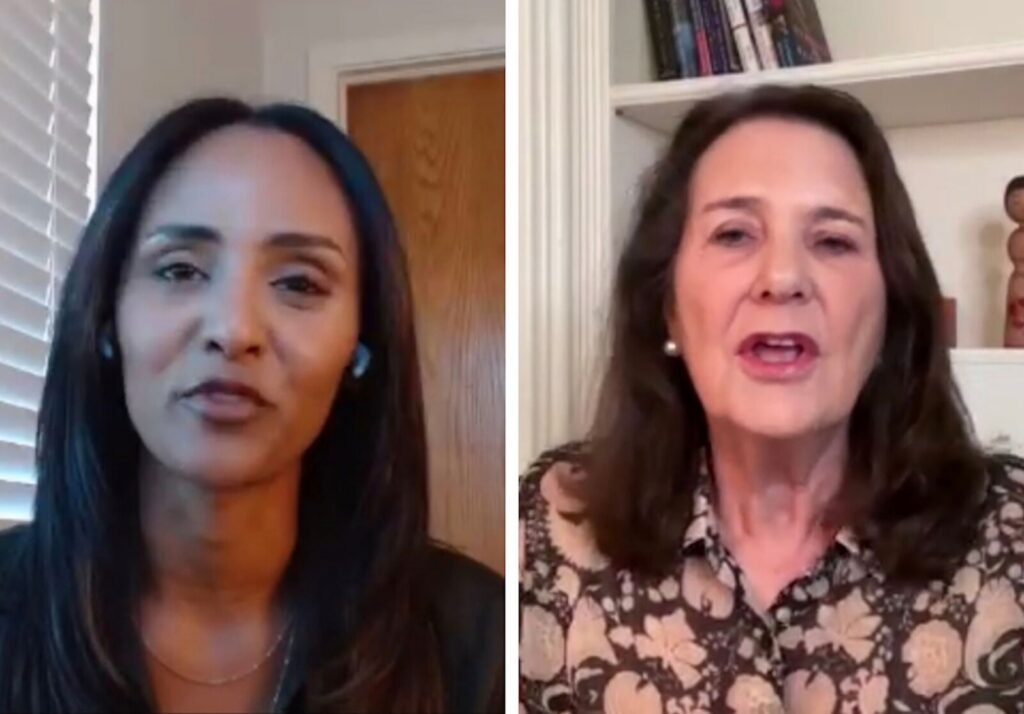
Denver Democrat Diana DeGette trails challenger Melat Kiros at assembly as both qualify for primary
Ernest Luning
ernest.luning@coloradopolitics.com
Updated 32 minutes ago
U.S. Rep Diana DeGette, a Denver Democrat, qualified for Colorado’s June primary by the skin of her teeth Friday at the party’s district assembly, where the 15-term incumbent received fewer than half as many delegate votes as her challenger, 28-year-old...

Kwame Spearman warrants plenty of criticism, not cancellation | SONDERMANN
By Eric Sondermann
by-eric-sondermann@coloradopolitics.com
Updated 2 days ago
All of us are flawed humans, some more so than others. This is the tale of Kwame Spearman who burst onto Denver’s business and political scene a handful of years back. His ride has taken a downhill trajectory. Within the...

Colorado Politics Calendar Mar. 30-Apr. 5
Rachael Wright, Special to Colorado Politics
rachael.wright@coloradopolitics.com
Updated 1 day ago
CoPo’s weekly political calendar will help you find political and public-policy events throughout Colorado. It includes candidate and issue campaign events, public policy meetings, court hearings, state and local party conventions, assemblies, debates, rallies, parades, speaking engagements, traveling dignitary appearances,...
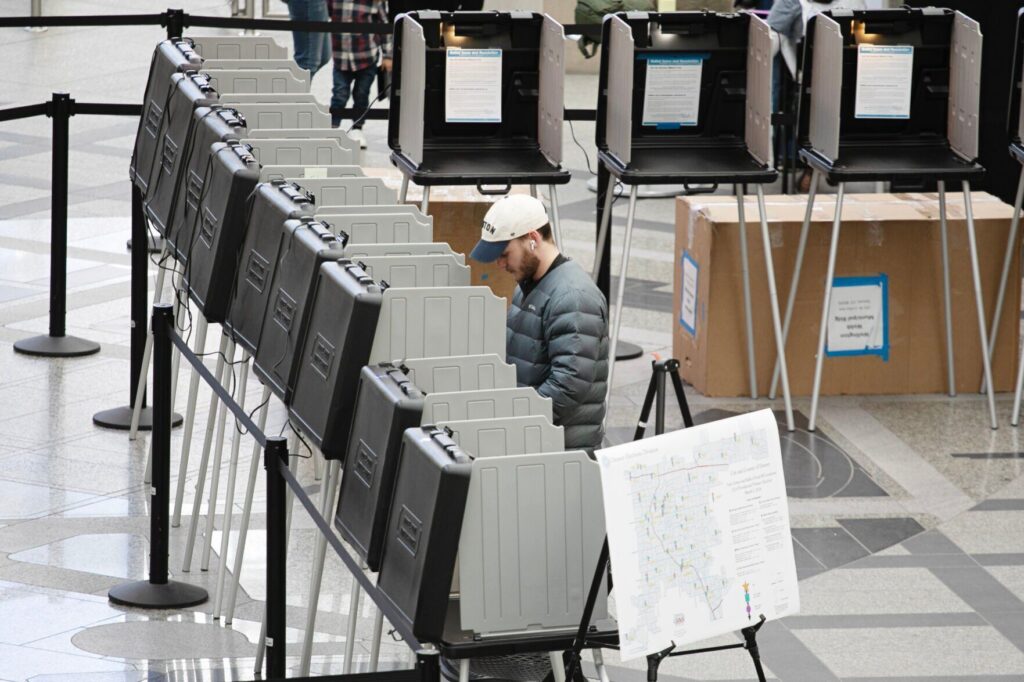
Federal judge upholds constitutionality of Colorado campaign contribution limits
Michael Karlik
michael.karlik@coloradopolitics.com
Updated 13 hours ago
A federal judge upheld Colorado’s individual campaign contribution limits as constitutional on Thursday, finding that three Republican plaintiffs failed to prove the campaign finance framework violates their First Amendment rights. U.S. District Court Senior Judge John L. Kane recognized that...

Appeals court rejects theory that existing tax revenue undermines need for new fees
Michael Karlik
michael.karlik@coloradopolitics.com
Updated 18 hours ago
Colorado’s second-highest court rejected a plaintiff’s claim on Thursday that the tax revenue generated by an existing activity should prevent local governments from imposing new fees aimed at regulating the activity. The question stemmed from Colorado’s unique constraints on taxation...

Colorado ski resorts announce early closures amid historic snowpack lows, high temperatures
Kyla Pearce
kyla.pearce@gazette.com
Updated 18 hours ago
As Colorado’s historically low snowpack year comes to a close and spring conditions take over the mountains, the state’s major ski resorts are announcing closing dates — some of which are weeks before historic closing dates. Most of Colorado’s ski...

Marco Rubio’s star power rises at CPAC 2026
Mabinty Quarshie and Samantha-Jo Roth, Washington Examiner
mabinty.quarshie.and.samantha-jo.roth.washington.examiner@gazetteedit.wpenginepowered.com
Updated 20 hours ago
GRAPEVINE, Texas — Secretary of State Marco Rubio’s popularity is growing and could possibly boost him to one of the top two spots in the 2028 GOP presidential race, if attendees at the Conservative Political Action Conference are to be believed. ...

Boulder police investigate sexual assault, ‘drugging’ at bar near CU
Matt Kyle
matt.kyle@denvergazette.com
Updated 22 hours ago
The Boulder Police Department is investigating reports of sexual assault and “suspected drugging” involving underage girls at a bar. There may be additional victims who have not yet come forward, the department said in a news release. The bar, Scrooge...
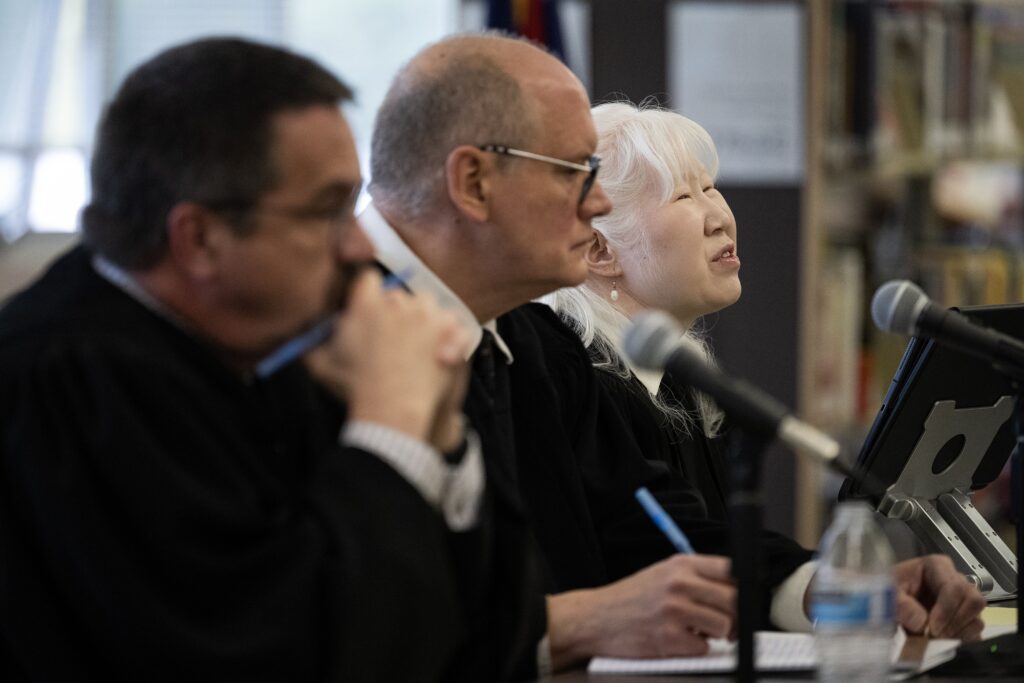
Appeals court finds no illegal sentence when defendants forfeit time-served credit
Michael Karlik
michael.karlik@coloradopolitics.com
Updated 23 hours ago
Colorado’s second-highest court ruled on Thursday that criminal defendants may agree to relinquish the credits they earned while incarcerated pending trial, despite a state law guaranteeing that such time “shall be deducted” from a person’s sentence. Kerry Ellis Endsley pleaded...
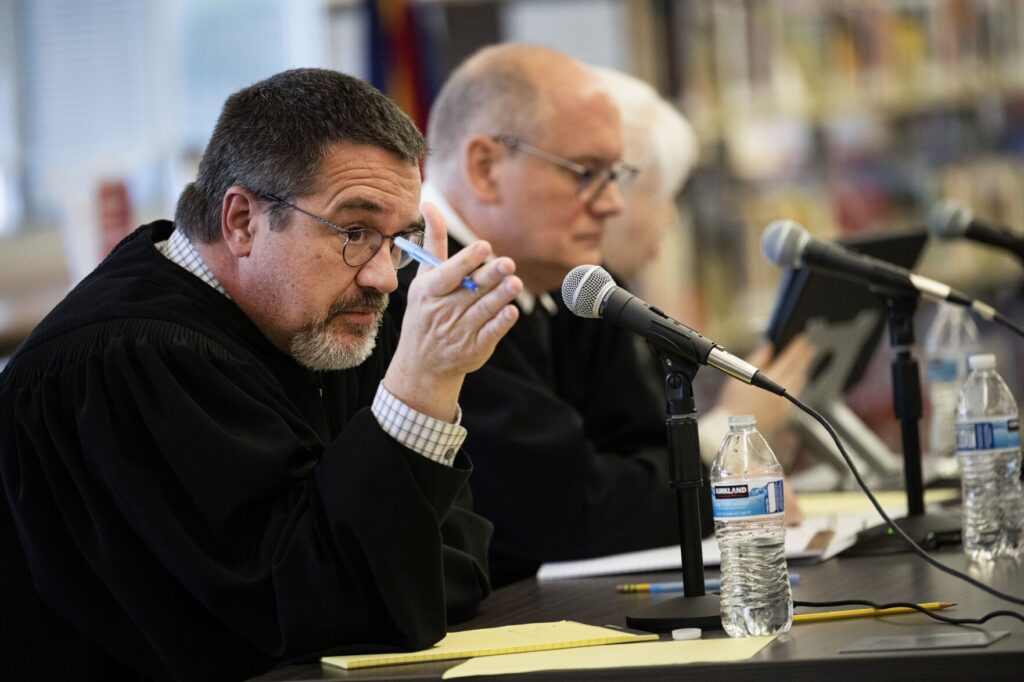
Appeals court reinstates Garfield County arson charge
Michael Karlik
michael.karlik@coloradopolitics.com
Updated 2 days ago
Colorado’s second-highest court reinstated a Garfield County defendant’s arson charge on Thursday, concluding a trial judge improperly credited a witness’s claim that she alone was responsible for starting the fire. A sheriff’s deputy responded to a brush fire near Parachute...
PREV
PREVIOUS
Ilhan Omar hangs up on Lauren Boebert, ends 'unproductive' call over anti-Muslim remarks
Tensions flared Monday as U.S. Rep. Lauren Boebert dug in on her recent comments suggesting that a Muslim congresswoman has ties to terrorism amid mounting calls for GOP leaders to condemn the Colorado Republican. A phone call between Boebert and U.S. Rep. Ilhan Omar, a Minnesota Democrat, ended with Omar hanging up on Boebert after […]

Aurora’s latest mass shooting connected to party; multiple shooters at large
Sunday’s mass shooting that left five people wounded in Aurora has been connected to a nearby party, according to the Aurora Police Department. No arrests have been made as of Monday evening. The shooting happened just after midnight in the area of North Dayton Street and East Colfax Avenue. Police said they believe the shooters […]