

PODIUM | Build Back Better will stifle state’s small drug companies
A key part of the federal budget bill being debated in Washington is an anti-jobs overreach that risks setting a precedent where government decides what companies can earn and what they do with those earnings – including creating jobs. We are hopeful that U.S. Sen. Michael Bennet, who understands job creation and had a successful business career, will consider the long-lasting problems with this proposal.
This year, drug companies – including innovative companies in Colorado – are the target. Despite creating vaccines and other COVID treatments in literally record time, they are now the whipping boy for health-care ills.
This problem, which should trouble all of us in northeastern Colorado concerned about the future of regional economic growth and quality jobs, is a symptom of today’s often shallow, sound-bite politics that puts ideology ahead of substance and common sense.
The core issue is one that virtually everyone agrees on: health-care costs, including drug costs, are too high. Regrettably, many politicians have decided that the easy solution is to declare that drug companies “make too much money” and want to forcibly siphon those dollars into federal programs, such as Medicare.
Specifically, the Biden “Build Back Better” budget bill would allow the federal government to set prices for drugs, and also set an arbitrary “inflation penalty” that, in essence, requires companies to cut their prices when they exceed the current inflation rate.
Like many soundbites and slogans, this sounds great and seems simple and straightforward. But what is the effect when government targets companies it doesn’t like and begins to set prices and requires that revenue be reduced?
In the case of drug companies, the result is that fewer dollars will be invested in research and development of new medicines and other therapies. Every American has seen the complexity, expense and ingenuity involved with developing COVID-19 vaccines and treatments. This process, although normally one that takes many years, commonly requires billions in investments just to bring one new drug to market.
What many politicians overlook is that most of the new drug development is being done by smaller, more agile, entrepreneurial companies, including a number here in Colorado. They may think they are targeting big-business behemoths but, in fact, they will hurt small, local research companies focused on innovation.
With the government injecting itself in setting drug prices, it is universally agreed that companies will have significantly reduced research-and-development budgets. The Congressional Budget Office estimates a 10% cut in the number of new drugs that will come to market if the government price-setting plan becomes law.
This, in turn, means fewer family-sustaining jobs. Much more significantly, it means fewer new treatments for the patients who desperately need them. This is how the sound bites meet reality in northeastern Colorado, and across the country.
There are two reasons why Bennet should find these concepts a non-starter. He is one of the few Senators who understands first-hand the difficult and expensive challenges of job creation and product development, having built a successful business career turning around struggling companies. And, as a cancer survivor himself, he clearly appreciates the vital importance of getting life-saving treatments to as many patients as possible.
He is a leader interested in the ins and outs of policy, and we are hopeful that he will consider the real-world implications of this problematic expansion of government authority.
Beyond this one industry, if this government intervention is allowed in this arena, what other companies in our area will be in the federal crosshairs when politicians say they “make too much money?” And is that really what we want the federal government doing?
We need our elected leaders to stand up for Colorado workers and employers alike. We need substantive solutions that truly work for all, not quick fixes rooted in soundbites that divide us rather than unite us.
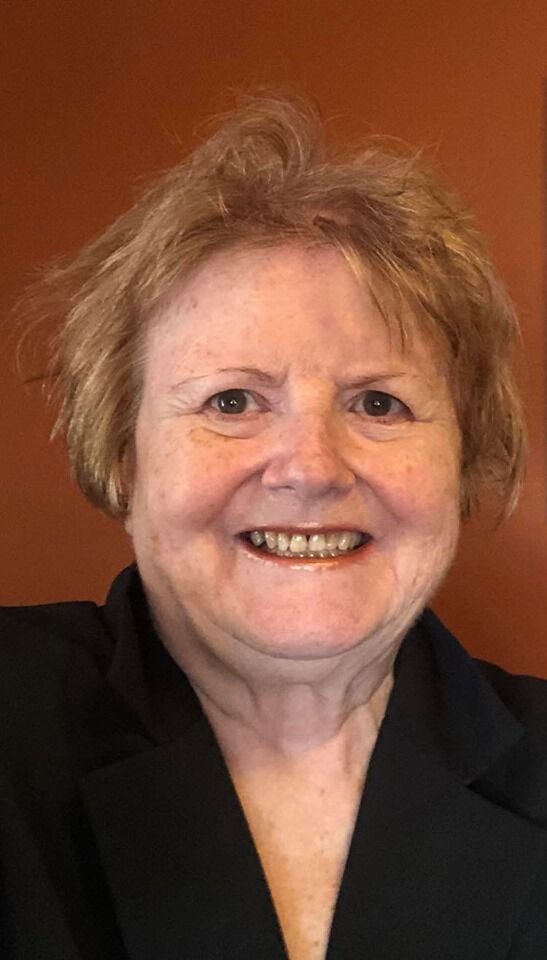
Cathy Shull is the executive director of PRO 15, an organization that advocates for policies that enhance Northern Colorado’s economic vitality and quality of life.


Kwame Spearman warrants plenty of criticism, not cancellation | SONDERMANN
By Eric Sondermann
by-eric-sondermann@coloradopolitics.com
Updated 2 days ago
All of us are flawed humans, some more so than others. This is the tale of Kwame Spearman who burst onto Denver’s business and political scene a handful of years back. His ride has taken a downhill trajectory. Within the...
From pause to progress — a better path on AI policy | OPINION
Colorado Politics
colorado-politics@coloradopolitics.com
Updated 1 day ago
By Brittany Morris Saunders and Loren Furman Last year, following the Special Legislative Session, we wrote in Colorado Politics that delaying Colorado’s AI Act was not a setback. It was an opportunity. We asked state leaders to pause, bring more...

Cutting Prop 123 would cost Colorado far more than it saves | OPINION
Colorado Politics
colorado-politics@coloradopolitics.com
Updated 22 hours ago
By Luke Teater Colorado’s legislative budget writers are about to receive updated revenue forecasts and begin making final cuts to close a historic budget gap, and Proposition 123’s affordable housing financing tools are on the chopping block. But in their...
Colorado’s place in President Trump’s oil-and-gas approach | Paula Noonan
Paula Noonan
paula-noonan@coloradopolitics.com
Updated 2 days ago
Head spinning is the unwanted reality of today’s world. Let’s start at the international level. The wars in the Middle East since the 1950s have never ended. Though religion and ethnicity are factors, oil and gas access is always predominant...

Reject onerous ad limits in sports-betting bill | OPINION
Colorado Politics
colorado-politics@coloradopolitics.com
Updated 2 days ago
By Justin Sasso A dangerous precedent is potentially afoot in the Colorado state Senate right now, where a bill was recently introduced to restrict advertising for local broadcast media across Colorado. Senate Bill 26-131, seemingly designed to discourage Coloradans from participating...

Reform to Colorado’s grantmaking drives efficiency, strengthens state’s partnership with nonprofits | OPINION
Colorado Politics
colorado-politics@coloradopolitics.com
Updated 2 days ago
By Marco Dorado and Jack Murphy Colorado’s nonprofit sector is one of the most significant contributors to our state’s economic and civic life, with more than 14,000 registered nonprofit organizations supporting more than 262,000 jobs — approximately 10% of all...

Costly auto mandate amounts to needless overkill | FEEDBACK
Colorado Politics
colorado-politics@coloradopolitics.com
Updated 2 days ago
HB26-1199 is currently in the legislature, and let me explain how this affects you. Currently in the state of Colorado, your vehicle’s emissions have to meet California standards even though you do not live in California. Though we all can agree...
Congress needs to protect 340B for rural Colorado | PODIUM
Colorado Politics
colorado-politics@coloradopolitics.com
Updated 2 days ago
By Rod Pelton A lot of politicians talk about understanding what life is like for our rural communities, but not many really do. I’m a third-generation Cheyenne County farmer and rancher; I grew up on the eastern plains of Colorado, raised...

Caldara overlooked facts in slamming utilities | FEEDBACK
Colorado Politics
colorado-politics@coloradopolitics.com
Updated 3 days ago
Normally, I appreciate the variety of perspectives published on Colorado Politics. But regarding Jon Caldara’s recent column on Xcel, he irresponsibly neglects key facts to the point of annihilating credibility (“Are our overlords normalizing power outages?” March 15). He neglects...

Fix the process before reauthorizing state PUC | OPINION
Sara Blackhurst
sara-blackhurst@gazette.com
Updated 3 days ago
What needs to be fixed before reauthorizing the Public Utilities Commission? The answer is simple: the process. The last time the commission was reauthorized in 2021, lawmakers expanded its role in meaningful ways — particularly as Colorado accelerated its clean...
PREV
PREVIOUS

FEEDBACK | Nonsense claims of 'miniscule' oil & gas regulations
Re: “State must improve oil well management,” Nov. 18. There are too many errors and false assumptions in this opinion piece to know where to begin, but one thing absolutely must be corrected. Any claims that SB19-181 has resulted in a “minuscule flow of protective regulations” on Colorado’s oil and gas industry is utter nonsense. […]

SENGENBERGER | 'Strained' hospitals? Blame government
Jimmy Sengenberger Today, new indoor mask mandates for everyone ages 3 and older are effective within the Tri-County Health Department (Adams and Arapahoe Counties) and Jefferson County. Yes, parents of toddlers: You are hereby ordered to force your small children to wear masks at the grocery store or in the Dunkin Donuts line, even while […]