

SPECIAL EDITION | Denver council, local politicos analyze the ballot
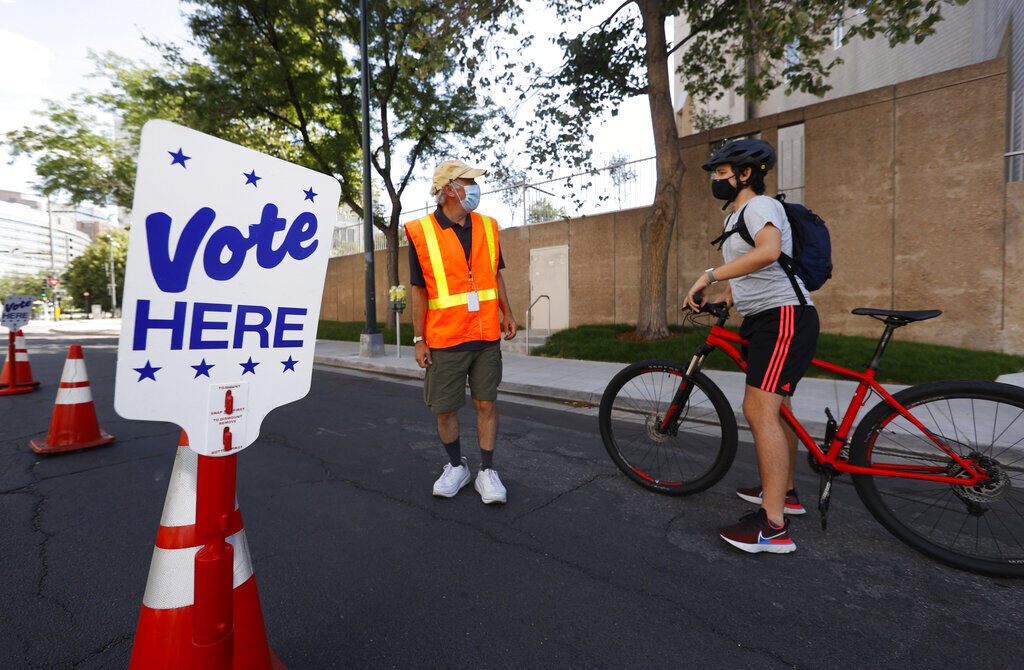
Denver’s election is less than one month away, and with it comes the annual confusion and controversy regarding ballot measures.
This year, the city’s ballot includes 13 measures, seven referred by the City Council and six initiated by citizens. That is the most ballot measures out of any municipality in Colorado and the most citizen-initiated measures in Denver in at least two decades.
Several of the measures have received massive pushback from the City Council and others have been criticized by politicians and citizens alike for contradicting each other.
“We are seeing a unique abuse of our ballot in this cycle,” Councilwoman Robin Kniech said. “When these individuals can’t win in partisan races, they are turning to the ballot to advance an agenda that they can’t win through representative democracy, and we should be deeply concerned about that.”
Kniech led two council proclamations this month, urging voters to vote against measures 303 and 304, calling them “an unprecedented conservative attack on our city.”
Measure 303 would require Denver to shut down illegal homeless camps within 48 hours and allow citizens to sue if the city fails, conflicting with federal requirements to provide seven days’ notice before clearing camps. Measure 304 would lower the city’s sales and use tax from 4.81% to 4.5%.
Kniech is advocating against 2F, which would overturn the council’s decision to allow up to five unrelated adults to live together in a single home. The council passed the new zoning code earlier this year with a supermajority vote, with only two council members voting in opposition.
“There aren’t a lot of things 11 council members agree on in this body,” Kniech said. “And if you look at the fact that all three are being funded by the same conservative sources, you can see that this is about harming Denver and setting up a chaotic situation in the city for political gain.”
Garrett Flicker leads the Denver Republican Party and the efforts to pass 303 and 304. He said it might be hard sell to convince tax-loving Denver voters – city voters have passed nine various tax hikes in the last decade – but recent history tells him that addressing homelessness in a serious way is in step with the public mood, noting voters passed a sales tax and upheld the urban camping ban in recent elections.
“Taxes (are) incredibly too high,” he told Colorado Politics, noting city sales levy has increased 32% since 2018.
“They continue to try to raise them despite going through COVID and businesses suffering and people suffering. It’s become oppressive.”
He said the city is fast approaching a breaking point on discouraging new businesses and residents to move to Denver because of its ever-increasing cost of living, instead of more affordable suburbs.
Flicker has tried to make sense of local voters’ willingness to approve tax hike after tax hike.
“I think we’re seeing a situation where a lot of the young people moved to Denver, who are not native to Colorado,” he said. “A lot of Coloradans vote more liberally with our (candidates) and then separately with our wallets. That’s what we see throughout the rest of the state.
“It’s less common in Denver because you don’t have as many native Coloradans there.”
The taxing and spending is going to catch up to Denver in terms of economic activity that bleeds to the more fiscally responsible suburbs.
“It’s already hurting economic activity in Denver, and then on top you have a homelessness situation that’s out of control. The city says they’re dealing with it, but they’re not engaging in an effective way. It’s strangling businesses and it’s strangling the broader network of where people can get taxes from as a result, so they have no choice but to continue to increase taxes on the people and businesses that are still around.”
Michael Fields, executive director of the conservative political advocacy group Colorado Rising State Action, has been involved in statewide measures to reign in taxes. He said the homelessness issues are a double burden for the city.
“Denver, the last few years, has changed,” he said. “I mean, I don’t like to go anywhere downtown if I don’t have to. I think more and more people are getting that way, including businesses.
“Look, if your city is awesome and you’ve got to pay a little more then fine, but I think there’s a lot of things that people don’t enjoy about Denver anymore, and that should be a wake-up call,” he said. “Take the 16th Street Mall. I used to go down there all the time and (now) I don’t … not at night. The homeless people have taken it over.”
Paul Teske, dean of the School of Public Affairs at the University of Colorado Denver, said measures 301 and 302, regarding the development of the Park Hill Golf Course, will likely confuse voters. The two measures use similar language, but the former would require a citywide vote to lift the conservation easement on the golf course and the latter would change the definition of a conservation easement to exempt the golf course.
Councilman Kevin Flynn similarly denounced measure 301, saying its proponents have falsely claimed that keeping the conservation easement in place would allow the golf course to be used as open space, when the easement requires it be a privately owned and operated 18-hole golf course.
“I don’t even think people who support 301 think that it should be a private golf course for the rest of all time, but that’s what their vote ‘yes’ would do. I think it’s a very harmful initiative,” Flynn said. “It deliberately shuts up the voices of the communities of color in Northeast Park Hill, who have said they would like to at least discuss some development on that land. Talk about entitlement.”
Flynn also criticized measure 300, calling it “stupid” and saying it directly conflicts with 304. Measure 300 would increase sales tax on retail marijuana to fund pandemic research at the University of Colorado Denver.
“The University of Colorado never asked for it and doesn’t do pandemic research. And it was proposed by a corporation in Delaware. What the eff is that all about?” Flynn said. “What if the Denver voters passed 300 and 304? So, they would simultaneously pass a sales tax increase and an initiative that would require us to cut it. Which one would we obey? I don’t know. We can’t do both, people.”
Seth Masket, director of the Center on American Politics at the University of Denver, said misleading and overly complicated legislation can also be an issue for those drafting the measures.
“Legislation often is fairly lengthy and detailed and goes through a long process before something becomes law,” Masket said. “Getting something on the ballot as an initiative just doesn’t do that. It tends to be very simple measures that can be explained in one or two sentences and sometimes they’re honestly just not very good law.”
Masket said citizen-initiated ballot measures tend to be either overly simple or so complex that voters don’t understand what they’re voting for.
Councilman Paul Kashmann agreed, saying the council has previously had to help the authors of some ballot measures rewrite them so they would make legal and operational sense.
“I think people have realized that, if they can get the necessary signatures, they can throw stuff on the ballot, a lot of which is often not well-conceived,” Kashmann said. “I support citizens having access to the ballot, but you need to look deeply as to what’s being presented … when used properly, it can be a valuable addition to how our system operates.”
Kashman praised 2G as a citizen-initiated ballot measure done right, as the authors worked with the city to address legal issues and unintended consequences of the measure ahead of time. 2G would allow a citizen oversight board to appoint Denver’s independent monitor instead of the mayor.
In contrast, Kashmann echoed other council members’ criticisms of measures 2F, 303 and 304, saying they “don’t make sense” and calling them “a bit of a nightmare.”
Regarding the city-led measures, council members Debbie Ortega, Christopher Herndon and Clark applauded the five general obligation bond measures, which would spend $450 million on more than 80 infrastructure projects as part of the city’s COVID-19 recovery plan.
“I support all the bond measures because I believe in the importance of investing in our future as a city,” Herndon said. “The full bond package was thoughtfully and thoroughly vetted and provides an effective way for us to bolster our recovery and build a stronger foundation for future generations of Denverites.”
Though direct democracy can help inspire City Council action or allow citizens to bring up topics officeholders don’t want to address, Masket said the negatives typically outweigh the positives.
“You’ll have a fairly small number of voters trying to make complex decisions on behalf of everyone else and honestly, that’s generally what a city council is for,” Masket said. “Direct democracy can honestly make things very messy and it can be very hard to change them if voters have made a mistake.”
Teske said direct democracy also opens the door for wealthy interest groups to fund measures that may not be supported by most residents or representatives. This is exacerbated by Colorado having some of the easiest requirements for getting measures on the ballot out of any state in the U.S., he said.
“If you have a couple million dollars, you can definitely get things on the ballot,” he said. “A lot of the initiatives and proposals in Denver and Colorado need money behind them to get the signatures. It’s not usually grassroots citizens. … So, individuals and interest groups have done that, including in the current 13 Denver measures.”
Teske said a mark against Denver’s fullsome approach to direct democracy is that voters might not fully understand what they’re voting on.
“You have to be a pretty dedicated voter to sit down with the information and the pros and the cons and the details behind each one,” he said. “That’s a lot of time and effort and, honestly, most voters don’t have the time or the desire to put in that amount of effort.”


Colorado voters head to the polls today — check here for regular updates
Colorado Politics
colorado-politics@coloradopolitics.com
Updated 7 hours ago
Colorado voters head to the polls today to pick primary winners that will vie for statewide offices in November, the result of which would determine the direction of the state in the coming years. At stake are the parties’ nominees...
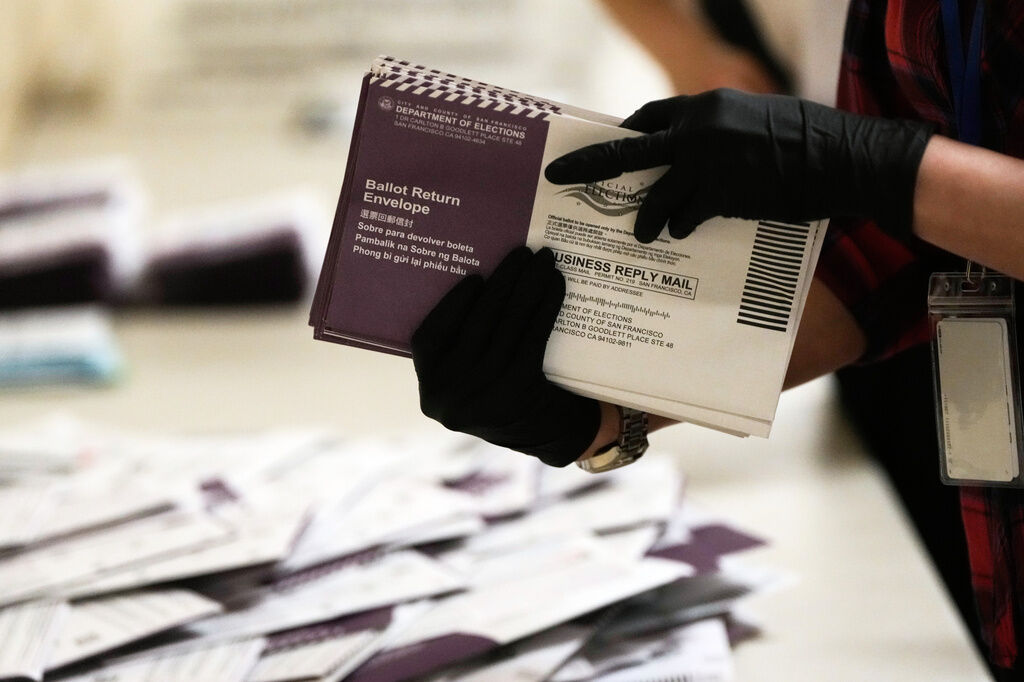
Supreme Court rules states can count late-arriving mailed ballots, rejecting Trump-led challenge
The Associated Press
the-associated-press@coloradopolitics.com
Updated 1 day ago
WASHINGTON (AP) — The Supreme Court on Monday ruled that states can count ballots that arrive after Election Day, a persistent target of President Donald Trump. The 5-4 decision rejected a Republican-led attack on laws in more than half the...
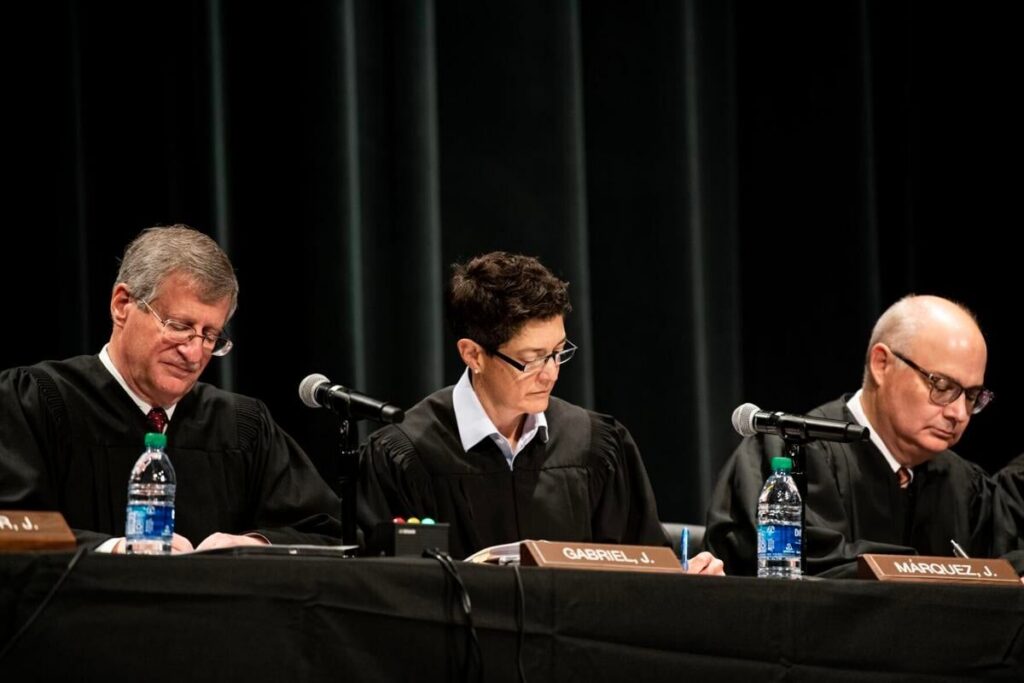
Colorado Supreme Court: Redistricting plans for 2028 election cannot proceed under state constitution
Michael Karlik
michael.karlik@coloradopolitics.com
Updated 19 hours ago
The Colorado Supreme Court blocked all attempts at redrawing congressional district boundaries for the 2028 election from reaching the ballot on Monday, concluding each of the proposed ballot measures violated the constitutional single-subject requirement. The court considered five distinct but...
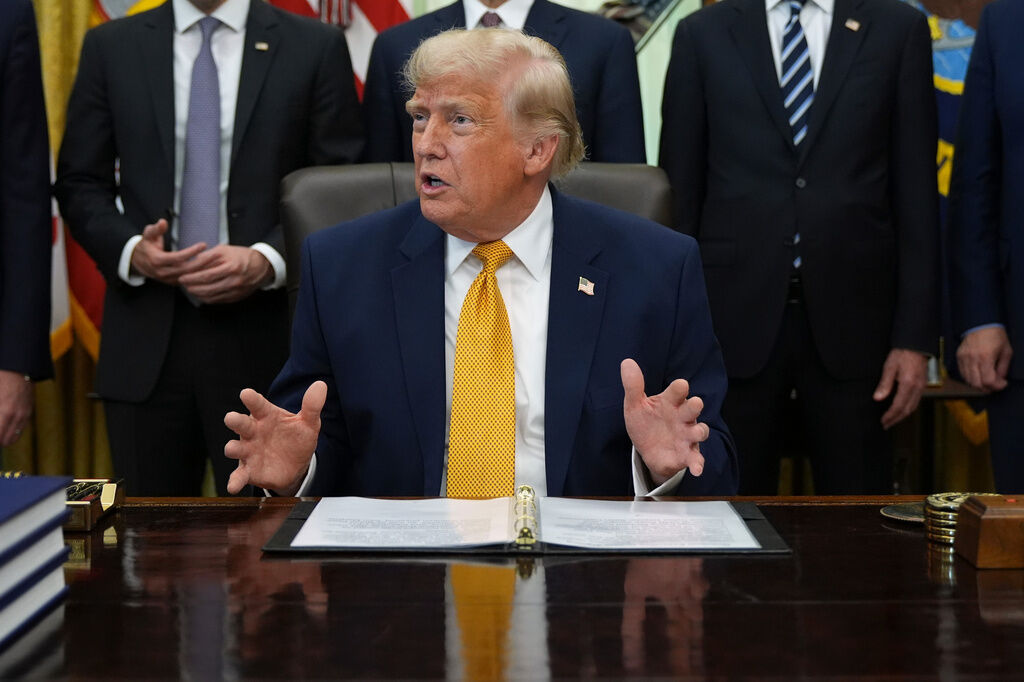
Understanding Trump’s remarkable political comeback in 2024 | Cronin and Loevy
Tom Cronin Bob Loevy
tom-cronin-bob-loevy@coloradopolitics.com
Updated 2 days ago
President Donald Trump lost the 2020 presidential election. He inspired a riot at the U.S. Capitol to try to overthrow the results of that election. He was impeached by the U.S. House of Representatives and later was indicted for several...
Crank challenger Jessica Killin signs on to new centrist Democratic group’s ‘Promise to America’
Ernest Luning
ernest.luning@coloradopolitics.com
Updated 20 hours ago
Jessica Killin, one of the Democrats running in Tuesday’s primary for the chance to challenge U.S. Rep. Jeff Crank in Colorado’s 5th Congressional District, joined with more than a dozen incumbent Democratic lawmakers and candidates this week signing on to...
Who’s spending in Colorado to get your vote?
Marianne Goodland
marianne.goodland@coloradopolitics.com
Updated 3 days ago
Groups that raise unlimited amounts of money have spent about $20 million in May and June to try and influence Colorado voters’ choices in the upcoming June 30 primaries. By law, these groups cannot coordinate with the candidates they support....

Phil Weiser leading Michael Bennet in Colorado’s Democratic gubernatorial primary, internal poll finds
Ernest Luning
ernest.luning@coloradopolitics.com
Updated 4 days ago
Attorney General Phil Weiser holds a lead over U.S. Sen. Michael Bennet among likely voters less than a week before ballots are due in Colorado’s Democratic gubernatorial primary, according to a new poll released Thursday by a group backing Weiser....

Colorado’s ‘right to natural gas’ measure submits signatures to qualify for November ballot
Marissa Ventrelli
marissa.ventrelli@coloradopolitics.com
Updated 4 days ago
A natural-gas rights initiative backed by Advance Colorado is likely headed to the November ballot, triggering a parallel campaign by environmental groups seeking to impose new liabilities on oil and gas operators. Petitions for Initiative No. 177 were turned in...
Colorado’s primary turnout tops 10% as election officials warn it’s too late to mail ballots
Ernest Luning
ernest.luning@coloradopolitics.com
Updated 6 days ago
Colorado election officials cautioned on Tuesday that it’s too late to mail ballots for the June 30 primary and urged voters to use drop boxes and their county’s voting centers instead. Secretary of State Jena Griswold said in a release...
Rural frustration, parental rights shape Scott Bottoms’ pitch ahead of Colorado’s gubernatorial primaries
Thelma Grimes
thelma.grimes@coloradopolitics.com
Updated 3 days ago
With just weeks before Colorado’s June primary, Republican gubernatorial candidate state Rep. Scott Bottoms is spending nearly all his time on the road — literally crisscrossing the Western Slope and Eastern Plains — in a final push to connect with...
PREV
PREVIOUS

Volunteers of America-Colorado gallops away with big money after Western Fantasy gala
Attendance may not have been equal to that of previous years, thanks to a commitment to COVID safety, but the 750 who gathered at the National Western Events Center for Western Fantasy 28 opened their wallets wide, raising $1,035,000 for Volunteers of America-Colorado. Adrienne Ruston Fitzgibbons, who chaired the Oct. 16 event with Stephen Edmonds, […]

Boulder County Commission opposes all statewide ballot questions
The Boulder County Commission has the same official position on all three statewide ballot questions Colorado voters are currently deciding: opposed. The commission released its opposition on: Amendment 78: requiring direct legislative approval for spending all state spending. Proposition 119: taxes on recreational marijuana to pay for tutoring and other out-of-school learning opportunities. Proposition 120: […]