

INSIGHTS | Colorado is pedal to the metal on electrifying travel

The plan for Colorado’s electric vehicle future goes ‘round and ’round, but the wheels on the school bus are already on the go.
I watch the statehouse and make note of it every time Gov. Jared Polis invokes policy and public dollars are put toward electrifying the state’s transportation system, but electric school buses are far ahead of even his rosy expectations.
You might have missed National Drive Electric Week, that ended last Sunday. People get busy. It’s understandable. Electric school buses deliver a dual benefit, slowing climate change and reducing diesel fumes belched from older buses. More than 258 school districts from 33 states have committed to one or more electric school buses. The U.S. has 13,452 regular school districts, so EV buses still face a steep hill.
INSIGHTS | Keep on truckin’ gets harder with government in way
Coincidental or not, Congress is considering the Infrastructure Investment and Jobs Act, which would provide $2.5 million specifically for electric school buses and $2.5 million for other low-emission buses, with $7.5 billion for EV charging infrastructure. (By comparison, President Biden’s beloved Amtrak trains would get $66 billion.)
Colorado, as usual, isn’t waiting around.
Courtesy of the $68.7 million settlement Volkswagen coughed up in Colorado for fudging vehicle emissions, the state will soon be home to 32 electric buses on the road in the Boulder Valley, Vail Valley, West Grand Valley, Denver, Aurora, Fort Collins, Durango, Aspen, Buena Vista, Hayden, Steamboat Springs and Colorado Springs.
“We hope this will inspire more municipalities in Colorado to move forward and use electric school buses to help tackle our climate and air pollution problems,” said Alex Simon, CoPIRG advocate who put the week together. “Our students and all Coloradans deserve better. For many of us, spending time outside often with our families is the reason why we live in this amazing state.
“We can’t afford another summer of air pollution like the one we just had. Transportation is a leading source of the pollutants that fuel climate change and create ozone pollution. Diesel exhaust is especially harmful to kids.”
INSIGHTS | Front Range rail on a collision course with tax reality
On the Zoom call, the EV advocates figuratively rolled out the first two electric buses that are currently picking up and dropping off students in Boulder and Kremmling.
Landon Hilliard, the Safe Routes to School program coordinator for the Boulder Valley School District, which covers 500 square miles and 56 schools with 255 fossil-fueled buses, before becoming the first district in the state with one that runs on juice.
The district was able to get the $350,000 bus at a price it could afford with help from the VW settlement and support from state and local partners, he said.
“Really there’s been an alignment of those who have been following this in the news, in policy, in funding, in technology that makes it an obvious choice, a natural choice to think about electric vehicles in a big picture,” Hilliard said.
INSIGHTS | The road ahead on transportation is one less taken
“The state of Colorado is leading the way with plans and funding more locally for us. The city of Boulder and Boulder County, who are close partners, are thinking about sustainability, and our school district has ambitious plans to cut greenhouse gas emissions.”
In the big picture, long-term, that all sounds great. On a closer look, a reality comes into focus, and that’s that our teachers are underpaid and our schools need a lot of things more pressing than whiz-bang buses.
We also live in a world of unshared wealth, where only a slender fraction live the way people live in, say, Boulder. As we forge ahead on costly technology, we can’t afford to neglect who gets left behind or, worse, driven farther back by higher costs.
Chris Wright, the chairman and CEO of Liberty Oilfield Services, had an op-ed in Colorado Politics last month that hit on this undeniable reality: for some time to come, we need both keep a balance of developing greener resources and ensuring reliable, affordable energy.
INSIGHTS | Spending on Colorado green energy has an opaque destination
“Investments in combating climate change can be done constructively, but all too often we overlook the consequences of driving up energy costs and driving down energy reliability,” he wrote. “These costs are borne disproportionately by lower income folks, who require modern energy to access clean-cooking fuels, easy access to drinking water, sanitation, education, etc.”
Democrats think the time as now, when they control the White House and Congress.
In August, Biden ordered up better mileage and stronger emissions standards for cars and trucks, as it set a goal of making half of all new vehicles sold zero-emission vehicles by 2030.
Last month, Democratic-led House proposed a tax credit expansion for EVs. $12,500 for vehicles produced by unionized American automakers and $7,500 for most others, as well as a $2,500 tax credit for used EVs.
INSIGHTS | Colorado is mighty charged up for electric vehicles, but will they go?
Is the public clamoring for more EVs?
In July, the American Lung Association released poll in June that indicated 70% of voters nationally supported federal investment in zero-emission school buses, and 72% said they would like their local district to transition over. I’m skeptical of those percentages, but OK.
Interestingly, 82% saw the issue above politics, agreeing air pollution around children is “not a Republican or Democratic issue, it’s just common sense.”
Bridging the partisan gap on electrification policies and gut-level support for drilling jobs is the Styx River this issue has to cross.
INSIGHTS | Biden's lean on oil and gas is Colorado's familiar posture
INSIGHTS | Colorado’s wheels go round and round until highways fall off
Colorado Politics Must-Reads:

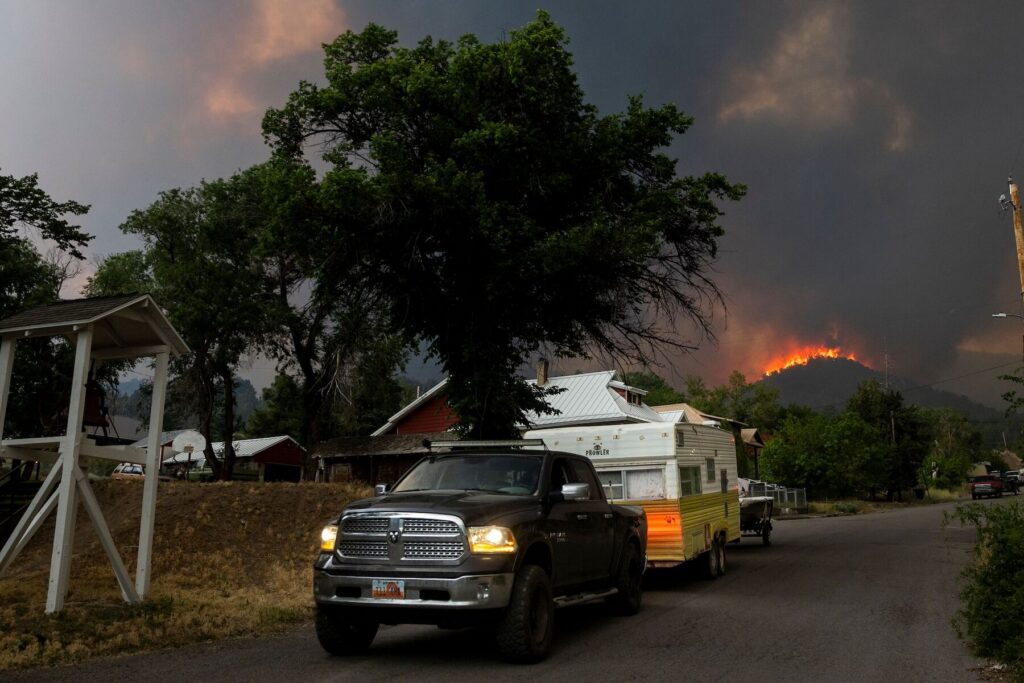
Heat, wind and drought conditions spark wildfires across US West | OUT WEST ROUNDUP
Ernest Luning
ernest.luning@coloradopolitics.com
Updated 4 days ago
Heat, drought spark wildfires Extreme heat and dry, windy conditions fueled several wildfires in the West on June 21, including an uncontained blaze in Utah that forced the evacuation of a small town southwest of Salt Lake City. The Iron...

Read Michener’s ‘Centennial’ | Jon Caldara
Jon Caldara
jon-caldara@coloradopolitics.com
Updated 2 days ago
If you’ve been reading my columns, you’ve noticed I’m basically illiterate. I blame my dyslexia and public education, but my Olympic-level laziness could be the driving factor. Anyway, I basically can’t read (and, still, I graduated from CU Boulder, so...
Crank challenger Jessica Killin signs on to new centrist Democratic group’s ‘Promise to America’
Ernest Luning
ernest.luning@coloradopolitics.com
Updated 8 hours ago
Jessica Killin, one of the Democrats running in Tuesday’s primary for the chance to challenge U.S. Rep. Jeff Crank in Colorado’s 5th Congressional District, joined with more than a dozen incumbent Democratic lawmakers and candidates this week signing on to...
Colorado Politics Calendar June 29-July 5
Rachael Wright, Special to Colorado Politics
rachael.wright@coloradopolitics.com
Updated 4 days ago
CoPo’s weekly political calendar will help you find political and public-policy events throughout Colorado. It includes candidate and issue campaign events, public policy meetings, court hearings, state and local party conventions, assemblies, debates, rallies, parades, speaking engagements, traveling dignitary appearances,...
Gov. Lamm’s GOP challenger gives insights into his campaign | A LOOK BACK
Rachael Wright, Special to Colorado Politics
rachael.wright@coloradopolitics.com
Updated 4 days ago
Forty-five years ago this week: “I see Gov. (Richard) Lamm is fairly popular in general,” said gubernatorial candidate and state Sen. Bill Hughes, R-Colorado Springs. “ … And he’ll be hard to beat.” Hughes was on a whirlwind campaign trail...
Giving credit to Polis where credit is due | SONDERMANN
Eric Sondermann
eric-sondermann@coloradopolitics.com
Updated 4 days ago
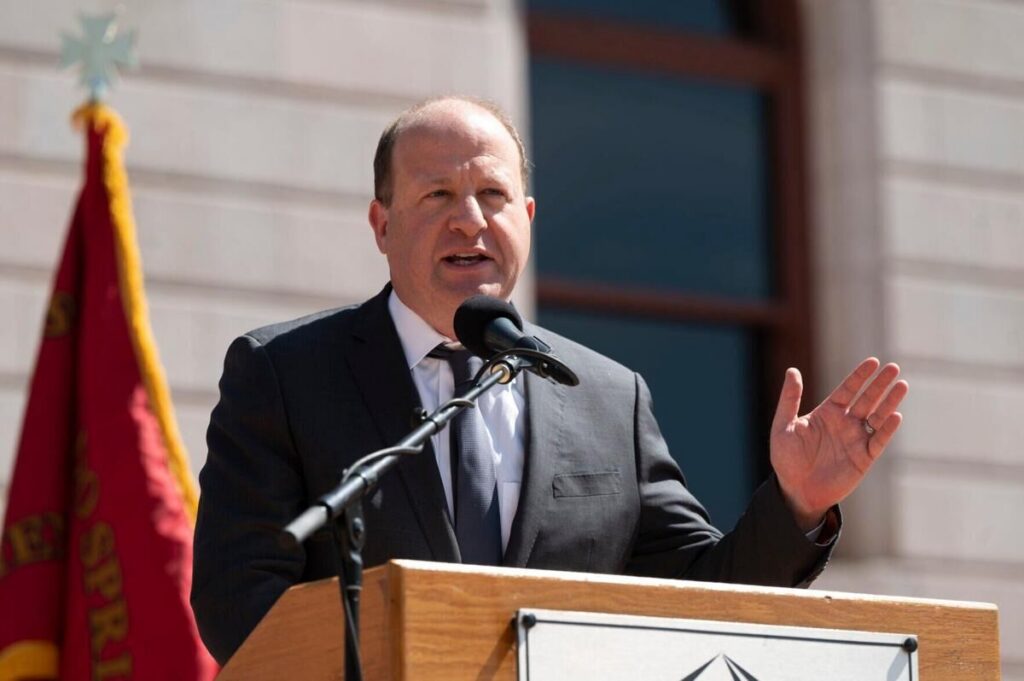
It is an understatement to suggest that Gov. Jared Polis has had a tough couple of months. The bloom was already off the rose and Coloradans were paying far more attention to the choice of his replacement than they were...
Bennet, Hickenlooper to vote against Trump’s 10th Circuit nominee from Colorado
Michael Karlik
michael.karlik@coloradopolitics.com
Updated 20 hours ago
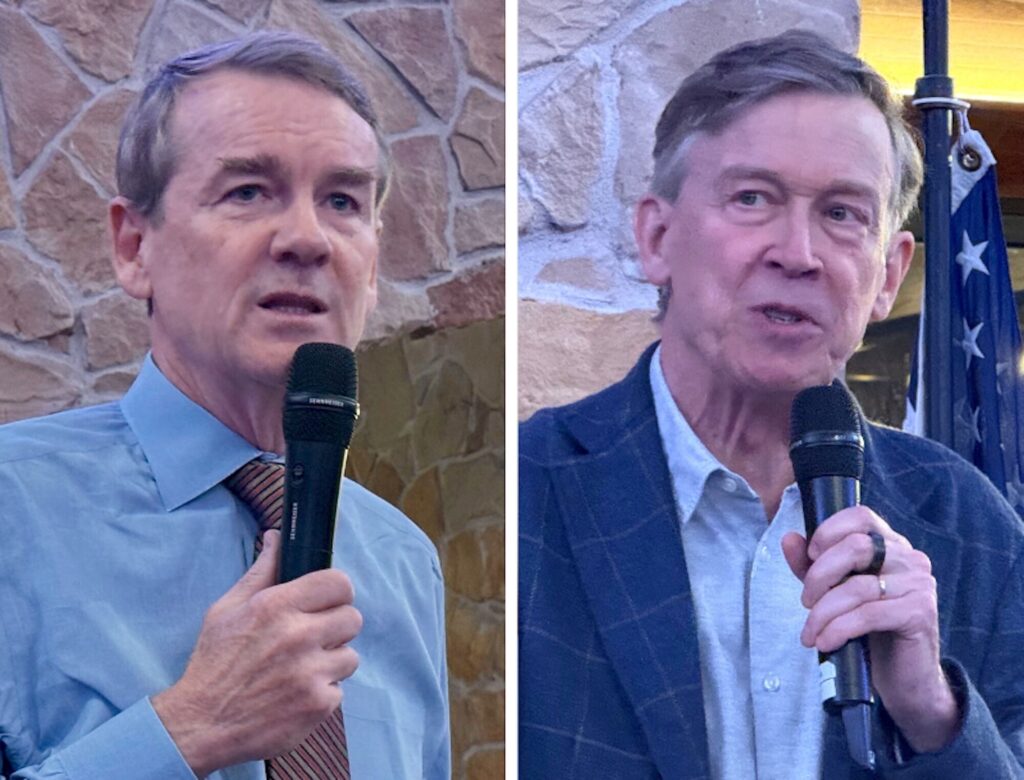
Colorado’s two Democratic senators will not vote to confirm President Donald Trump’s nominee to a vacancy on the Denver-based federal appeals court. Trump has selected U.S. District Court Chief Judge Daniel D. Domenico, who he appointed as a federal trial...
Who’s spending in Colorado to get your vote?
Marianne Goodland
marianne.goodland@coloradopolitics.com
Updated 20 hours ago
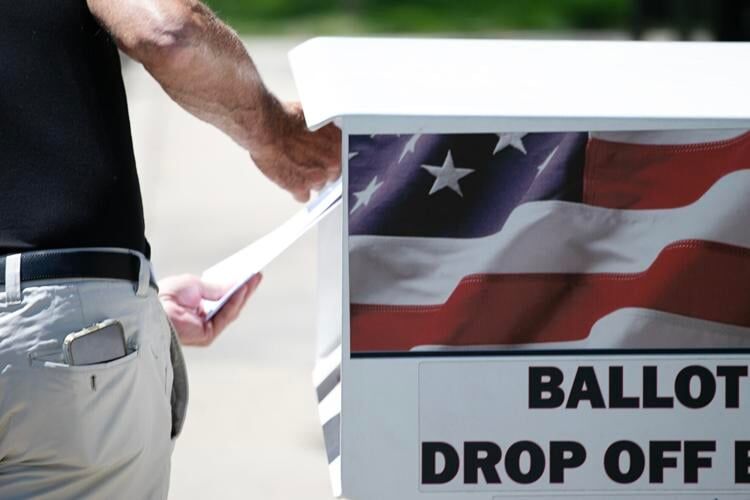
Groups that raise unlimited amounts of money have spent about $20 million in May and June to try and influence Colorado voters’ choices in the upcoming June 30 primaries. By law, these groups cannot coordinate with the candidates they support....
U.S. government declines to oppose multiple challenges to immigration detention in Colorado
Michael Karlik
michael.karlik@coloradopolitics.com
Updated 1 day ago
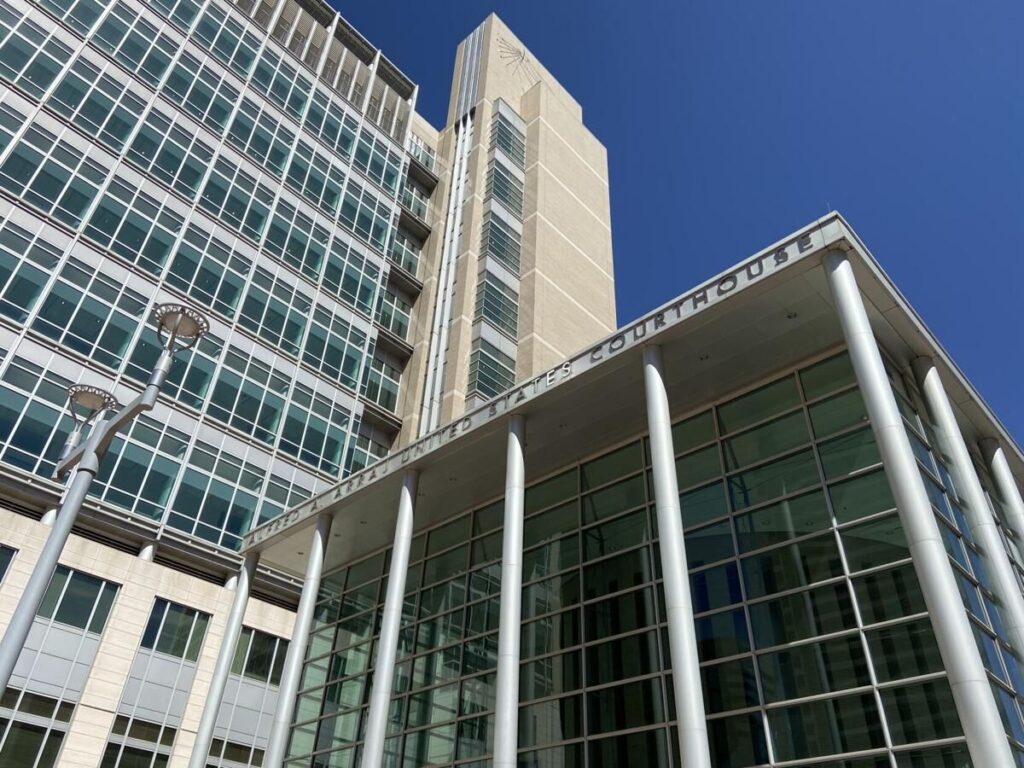
Multiple federal judges in Colorado granted petitions from people challenging the lawfulness of their immigration detention this week after the government took the unusual step of declining to submit arguments in opposition. Colorado’s federal trial court is facing a flood of...
Tina Peters tells supporters to ‘stand up and fight back’ at Castle Rock event
Marissa Ventrelli
marissa.ventrelli@coloradopolitics.com
Updated 1 day ago
Tina Peters, the former Mesa County clerk recently released from prison, warned supporters that what happened to her could happen to them, too, if they did not “stand up and fight back” at an event at the Douglas County Fairgrounds....