

Appeals court finds no disability discrimination from Southwest against ex-DIA employee

Southwest Airlines did not violate civil rights laws when it fired an employee at Denver International Airport who had a learning disability, the federal appeals court based in Denver ruled on Thursday.
The U.S. Court of Appeals for the 10th Circuit rejected the argument of Krista Edmonds-Radford that because Southwest benefitted from a federally-funded airport improvement in Dallas, it was barred from discriminating under the Rehabilitation Act of 1973.
“Although Southwest undoubtedly benefited from the federal funds, the Rehabilitation Act draws a distinction between actual recipients of federal financial assistance and mere beneficiaries of that assistance,” wrote Senior Judge David M. Ebel for the 10th Circuit panel that reviewed Edmonds-Radford’s case.
Southwest, which has more than 4,000 employees at DIA, is headquartered at Dallas Love Field Airport.
Edmonds-Radford described to the court that Southwest hired her to be a customer service agent in September 2014, but she struggled during her classroom training in Texas due to a learning disability. She informed her trainer, who made accommodations for her.
But during her on-the-job training at DIA she continued to struggle. Edmonds-Radford told her coworkers about her disability and received additional training, but she never formally reported it to the department responsible for workplace accommodations.
Southwest eventually fired Edmonds-Radford, and the court found no evidence that the people who made the decision knew about her disability. Edmonds-Radford emailed the CEO of Southwest alleging discrimination, and the airline gave her a second chance with further accommodations for her training. But at that point, Edmonds-Radford was reportedly homeless after losing her job and could not obtain the documents necessary to rejoin the company.
A lower court judge sided with Southwest in the disability discrimination case that followed, and the 10th Circuit upheld that ruling. Specifically, the panel found Edmonds-Radford failed to allege that people who made decisions about her employment knew of her disability and that she did not ask for accommodations specifically for her disability while at DIA.
The case is Edmonds-Radford v. Southwest Airlines.
Colorado Politics Must-Reads:

Judge rules that Colorado law makes it too hard for parties to bar unaffiliated voters from primaries
Ernest Luning
ernest.luning@coloradopolitics.com
Updated 29 minutes ago
A federal judge ruled in favor of the Colorado Republican Party late Tuesday, saying that a portion of the state law that allows unaffiliated voters to cast ballots in party primaries is unconstitutional because it imposes an unrealistic burden on...

10th Circuit upholds regulator’s methodology for Tri-State exit fees
Michael Karlik
michael.karlik@coloradopolitics.com
Updated 1 hour ago
The Denver-based federal appeals court upheld a regulatory agency’s methodology for calculating the fee owed by entities seeking to withdraw from Tri-State Generation and Transmission Association last week. Tri-State is a Westminster-based cooperative that provides and transmits electricity to member...
Federal judge proposes sanctions against Mike Lindell’s lawyers for continued fake citations
Michael Karlik
michael.karlik@coloradopolitics.com
Updated 2 hours ago
A federal judge is once again pursuing sanctions against lawyers for MyPillow CEO Mike Lindell for continuing to cite to court cases that do not exist, likely based on the faulty output of artificial intelligence tools. Last year, a jury...
Susan Blanco signals views on role of appellate courts in first opinion as Colorado justice
Michael Karlik
michael.karlik@coloradopolitics.com
Updated 6 hours ago
Justice Susan Blanco’s first solo opinion as a new member of the Colorado Supreme Court made clear her view of the guardrails that keep the state’s highest court tethered to the issues it is asked to decide. On Monday, the...
Colorado leaders weigh next steps after Supreme Court rejects state ban on ‘conversion therapy’
Marissa Ventrelli
marissa.ventrelli@coloradopolitics.com
Updated 23 hours ago
Colorado leaders said they are weighing next steps after the U.S. Supreme Court on Tuesday rejected the state’s ban on “conversion therapy” for children, as critics and supporters cheered or lambasted the ruling. The court’s near-unanimous decision called the Colorado...
Federal judge dismisses U.S. government lawsuit against Colorado, Denver’s ‘sanctuary’ laws
Michael Karlik
michael.karlik@coloradopolitics.com
Updated 22 hours ago
A federal judge dismissed the U.S. government’s lawsuit against Colorado and Denver on Tuesday, which alleged that various local policies impermissibly infringed on federal immigration enforcement. U.S. District Court Judge Gordon P. Gallagher followed the lead of judges in Illinois...
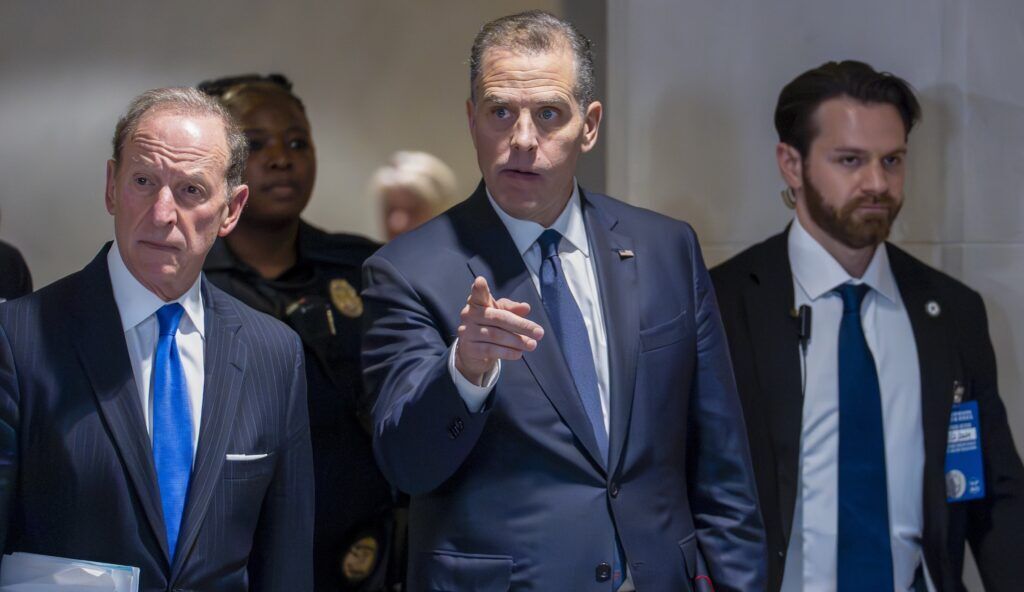
Federal judge finds DOJ adequately searched for, disclosed records related to Bidens
Michael Karlik
michael.karlik@coloradopolitics.com
Updated 1 day ago
A federal judge determined on Friday that the U.S. Department of Justice adequately searched for and disclosed records to a Colorado attorney in response to his request for documents related to former President Joe Biden’s son and brother. In November...
10th Circuit warns lawyers after finding fake case in filing
Michael Karlik
michael.karlik@coloradopolitics.com
Updated 21 hours ago
The Denver-based federal appeals court warned attorneys to be more careful last month after discovering one lawyer cited a fake case in his arguments. In recent months, federal and state judges in Colorado have begun cautioning lawyers explicitly about the...

10th Circuit rules cognitively impaired man’s risk of lobotomy, mistreatment in Mexico not ‘torture’
Michael Karlik
michael.karlik@coloradopolitics.com
Updated 2 days ago
The Denver-based federal appeals court concluded last month that a man’s risk of mistreatment or forced lobotomy in his native Mexico did not amount to “torture” that should shield him from deportation. A three-judge panel of the U.S. Court of...
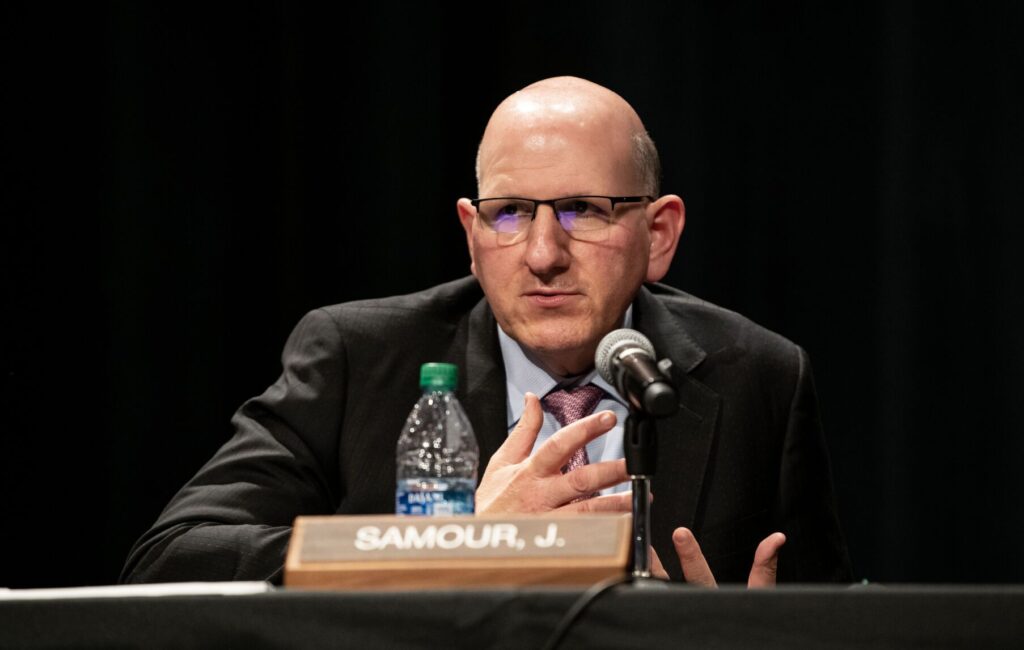
Colorado justices side with news organizations for disclosure of high-level child abuse data
Michael Karlik
michael.karlik@coloradopolitics.com
Updated 24 hours ago
The Colorado Supreme Court ruled on Monday that the state must disclose the number of child abuse reports at individual group living facilities in response to an open records request, as the addresses are already in the public domain. The...
PREV
PREVIOUS
State Supreme Court to hear appeals involving forced blood draws, spitting on officers
The Colorado Supreme Court announced it will review three decisions from the state’s Court of Appeals on subjects ranging from the ability of police to forcibly draw blood from a suspected drunk driver, to the law that criminalizes spitting on first responders, and whether Arapahoe County waited 10 years too long to sue a couple […]

Southern Colo. chief judge exceeded authority, Court of Appeals says in voiding ruling
The chief judge of the Third Judicial District exceeded her authority by appointing a magistrate to act as a district court judge without any legal basis for doing so, prompting the Court of Appeals to walk back the magistrate’s ruling. In Colorado, district and county court judges are appointed by the governor and retained by […]