

Court dismisses Arapahoe inmate’s COVID-19 lawsuit after sheriff’s deputy prevented filing of grievance

An Arapahoe County detainee tried to file a grievance, but a sheriff’s employee allegedly prevented him from doing so. Instead, he sued in federal court, where a panel of judges on Tuesday dismissed his case – for not filing a grievance first.
Tobi Kilman’s lawsuit against Sheriff Tyler S. Brown, which he initiated in June 2020, sought to force a reduction in density at the Arapahoe County Detention Facility amid the spread of COVID-19, alleging that overcrowding and lockdowns amounted to cruel and unusual punishment under the Eighth Amendment. But prior to filing the lawsuit, Kilman claimed that on two separate occasions, a prison official identified as “Deputy Calloway” prevented him from submitting a grievance, which is a necessary first step to a lawsuit.
A lower court judge dismissed Kilman’s claim because he had not followed proper procedures, and on Tuesday the federal appeals court based in Denver agreed.
“[I]t is entirely possible that Deputy Calloway did actually deter Kilman from filing some grievances on two specific dates,” acknowledged Judge Allison H. Eid, in the decision for a panel of the U.S. Court of Appeals for the 10th Circuit. “But we have no evidence before us that these actions made it such that Kilman was deterred from bringing his grievances.”
To Kilman, representing himself before the court, said his predicament was a Catch-22 that he summarized in his appeal to the 10th Circuit.
“Plaintiff was denied grievances, which forced him to sue over his claims, and his lawsuit was stricken because he did not file grievances,” he wrote.
Kilman described the detention facility as having computer kiosks for inmates to submit grievances. Allegedly, he tried to follow the process on May 27 and May 29, 2020, but Calloway prevented him both times, telling Kilman that his complaints were “not grievable.”
Kilman argued to the court that “it should not be up to a deputy to determine what is grievable. This defeats the purpose of having a grievance process. It renders said process moot, and effectively denies the inmate his First Amendment rights.”
He included the names of two other inmates who witnessed the refusals, and alleged they, too, were barred from filing grievances against Calloway about Kilman’s situation. Kilman also obtained signatures from 32 detainees in support of his broader claims about COVID-19 and the jail’s housing policies.
Brown, in his filing at federal district court, contested Kilman’s demands about pandemic protocols, but also pointed out Kilman had not followed administrative procedures by filing and appealing a grievance before suing.
This March, U.S. Magistrate Judge N. Reid Neureiter dismissed Kilman’s lawsuit, concurring with the sheriff and deeming it unlikely that Calloway’s alleged interference was enough to deter a reasonable inmate from finding another way to submit a complaint.
“Assuming that Mr. Kilman and other inmates were all thwarted by this one officer,” Neureiter wrote, “there is no evidence to show that other officials also refused to allow access to a kiosk for the purpose of filing a grievance or that attempts to file grievances with written forms were thwarted.”
Kilman told the 10th Circuit that inmates were entirely dependent on jail staff for the filing of grievances, and that Calloway was only the most “prolific denier of grievances” amid a broader pattern of obstruction.
“So the District Court has basically said with this ruling that jailors can indiscriminately deny inmates in their custody grievances because they have no right to file them; they cannot sue over this issue because it is not a right; and they cannot sue over any other issue they may have because they (the jailors) can always deny grievances,” he wrote. “This situation is obviously unjust.”
But the 10th Circuit agreed with the lower court’s reasoning, as well as the sheriff’s argument that two “isolated occasions” of a “single deputy” blocking Kilman did not amount to a denial of access.
Kilman had filed over 30 grievances at the jail, some of which occurred around the time Calloway allegedly blocked his complaints, Eid wrote for the appeals court. Therefore, despite the alleged actions of Calloway, the grievance process itself was seemingly available to Kilman, in the absence of evidence suggesting that sheriff’s employees were “unable or consistently unwilling to provide any relief.”
The case is Kilman v. Brown.



Federal judge dismisses claims against medical contractor for Eagle County jail suicide
Michael Karlik
michael.karlik@coloradopolitics.com
Updated 2 days ago
A federal judge dismissed the claims against a medical contractor for the Eagle County jail and its employees earlier this month, concluding there were insufficient allegations that they violated the constitutional rights of a man who died by suicide in...
Federal judge advances lawsuit seeking overtime compensation for Aurora firefighter trainees
Michael Karlik
michael.karlik@coloradopolitics.com
Updated 2 days ago
A federal judge gave preliminary approval earlier this month to a class of Aurora firefighter trainees who may sue the city over allegations that they were denied overtime pay in violation of federal law. Joseph Elias, who attended Aurora’s fire...
Appeals court says jury not obligated to apply discounts to determine value of stolen merch
Michael Karlik
michael.karlik@coloradopolitics.com
Updated 2 days ago
Colorado’s second-highest court concluded on Thursday that it was up to a Douglas County jury to determine the value of stolen merchandise at a defendant’s theft trial, after both sides presented different estimates of the items’ value. Under state law,...
Public figures have limited path to sue over accusations of criminality, says appeals court
Michael Karlik
michael.karlik@coloradopolitics.com
Updated 2 days ago
Colorado’s second-highest court ruled last week that a public figure cannot sue for defamation solely because a person publicly accuses them of committing a crime, as the statement may be constitutionally protected opinion. A three-judge Court of Appeals panel narrowed...
Federal judge to consider sanctioning ex-Colorado judicial discipline director
Michael Karlik
michael.karlik@coloradopolitics.com
Updated 3 days ago
A federal judge ordered Colorado’s former head of judicial discipline on Wednesday to explain why she should not sanction him for making inaccurate statements about the defendants in his lawsuit against the Colorado Supreme Court and related entities. U.S. District...

Federal judge green-lights trial against Denver officer over race-based enforcement
Michael Karlik
michael.karlik@coloradopolitics.com
Updated 2 days ago
A federal judge green-lit a jury trial last week on a man’s claim that a Denver police officer engaged in racially selective enforcement of the law by arresting him for video recording at a police station, while not arresting a...
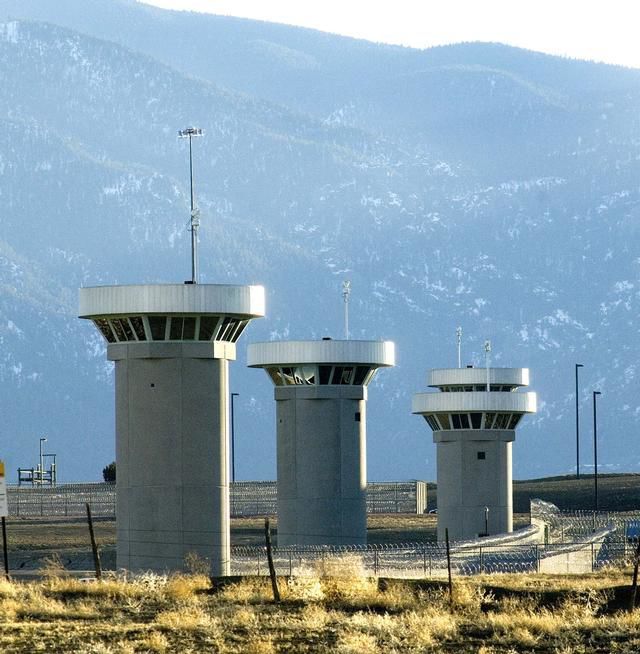
Federal judge says 8 years in solitary confinement not grounds to reduce man’s sentence
Michael Karlik
michael.karlik@coloradopolitics.com
Updated 4 days ago
A federal judge concluded earlier this month that a man’s eight years allegedly spent in solitary confinement did not justify granting his request for a sentence reduction. However, U.S. District Court Senior Judge William J. Martínez signaled his willingness to...

10th Circuit rejects ‘potential for violence’ when police arrest vehicle occupant’s romantic partner
Michael Karlik
michael.karlik@coloradopolitics.com
Updated 3 days ago
The Denver-based federal appeals court rejected the idea on Tuesday that a vehicle occupant poses a danger to police solely because they are romantically involved with another occupant who officers are arresting. By 2-1, a three-judge panel of the U.S....

Colorado justices grill debt collector about compliance with law
Michael Karlik
michael.karlik@coloradopolitics.com
Updated 4 days ago
The Colorado Supreme Court repeatedly pressed a debt collection company last week to explain how its lawsuit against a Boulder woman for an unpaid credit card balance complied with the specific requirements that state lawmakers have created. Portfolio Recovery Associates,...
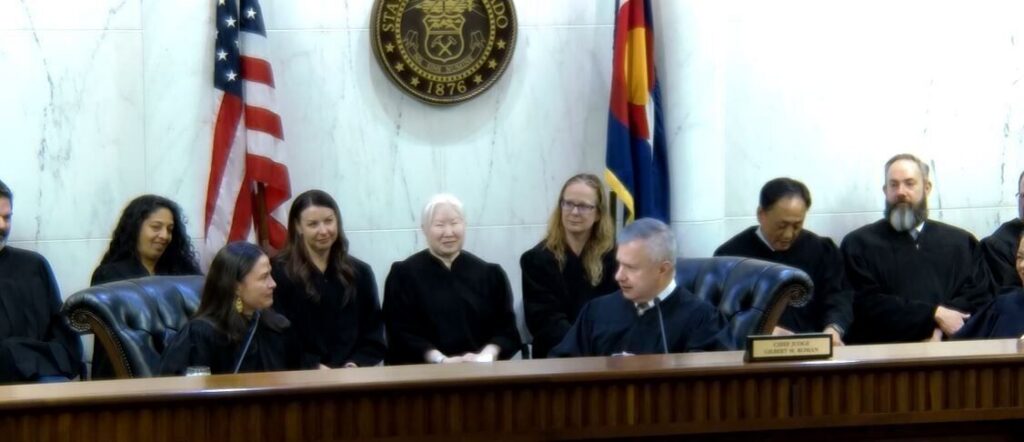
Appeals court agrees defendant’s speech constitutionally protected against El Paso County judge
Michael Karlik
michael.karlik@coloradopolitics.com
Updated 4 days ago
Colorado’s second-highest court agreed last week that a defendant’s critical statements toward an El Paso County judge were constitutionally protected and could not form the basis of a retaliation charge. A three-judge Court of Appeals panel concluded that, in context,...
PREV
PREVIOUS

Wild horse roundup continues in Moffat County, horses injured, advocates say
The Bureau of Land Management (BLM) helicopter roundup of wild horses in the Sand Wash Basin near Maybell, in Moffat County, continued unabated on Thursday, despite injuries to some of the horses, including to foals separated from their mares, several broken legs and at least one death. Abigail, a rare Cremello foal, was among the […]
Biden's buy American goals conflict with emissions reductions targets
There is an inherent tension in President Joe Biden ‘s climate plans between reducing emissions as fast as possible and building up U.S. manufacturing of clean energy technologies to create a strong domestic workforce. Meeting an aggressive timetable of adding more clean energy to the grid would likely mean importing a large supply of solar panels and electric car batteries from abroad because […]