

RIVER TOWNS: FORT COLLINS | A decades-long struggle over the future of the Poudre River nears its boiling point
Welcome to Fort Collins, Colorado, where the Cache La Poudre River, a resource for recreation and industry, flows through town. (Video by Katie Klann)
ABOUT THE SERIES
In the arid West, water means life. Turn on your tap, and you’re part of the Colorado circulatory system. The towns born along the banks of Colorado’s most iconic waterways – the Colorado, the Big Thompson and the Arkansas lead a list of 158 named rivers – live the same way yet differently along the banks. The staff of Colorado Politics with the journalists of the Denver and Colorado Springs Gazettes are fanning out this summer to tell the story of a state as reflected in its water, its people, and its future, with the past as prologue. Come along all summer long to learn more about the people and places that make us all a little bit more Coloradan.
More stories: We’ve been to Estes Park, Alamosa, Pueblo and Cañon City; follow this link as we continue our travels: https://bit.ly/River-Towns
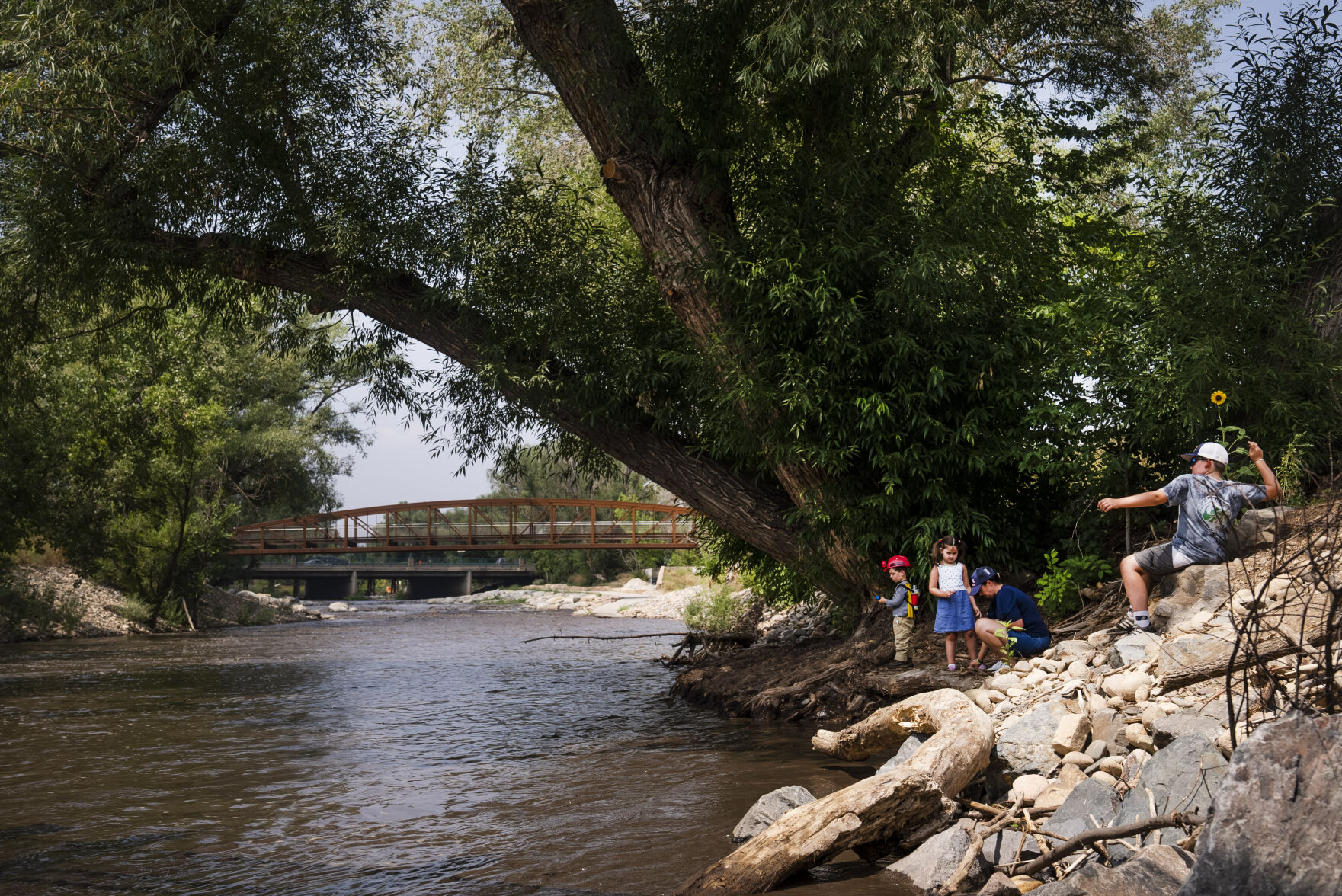
The lifeblood of Fort Collins is running jet black, and a concerned look occupies LeRoy Poff’s face.
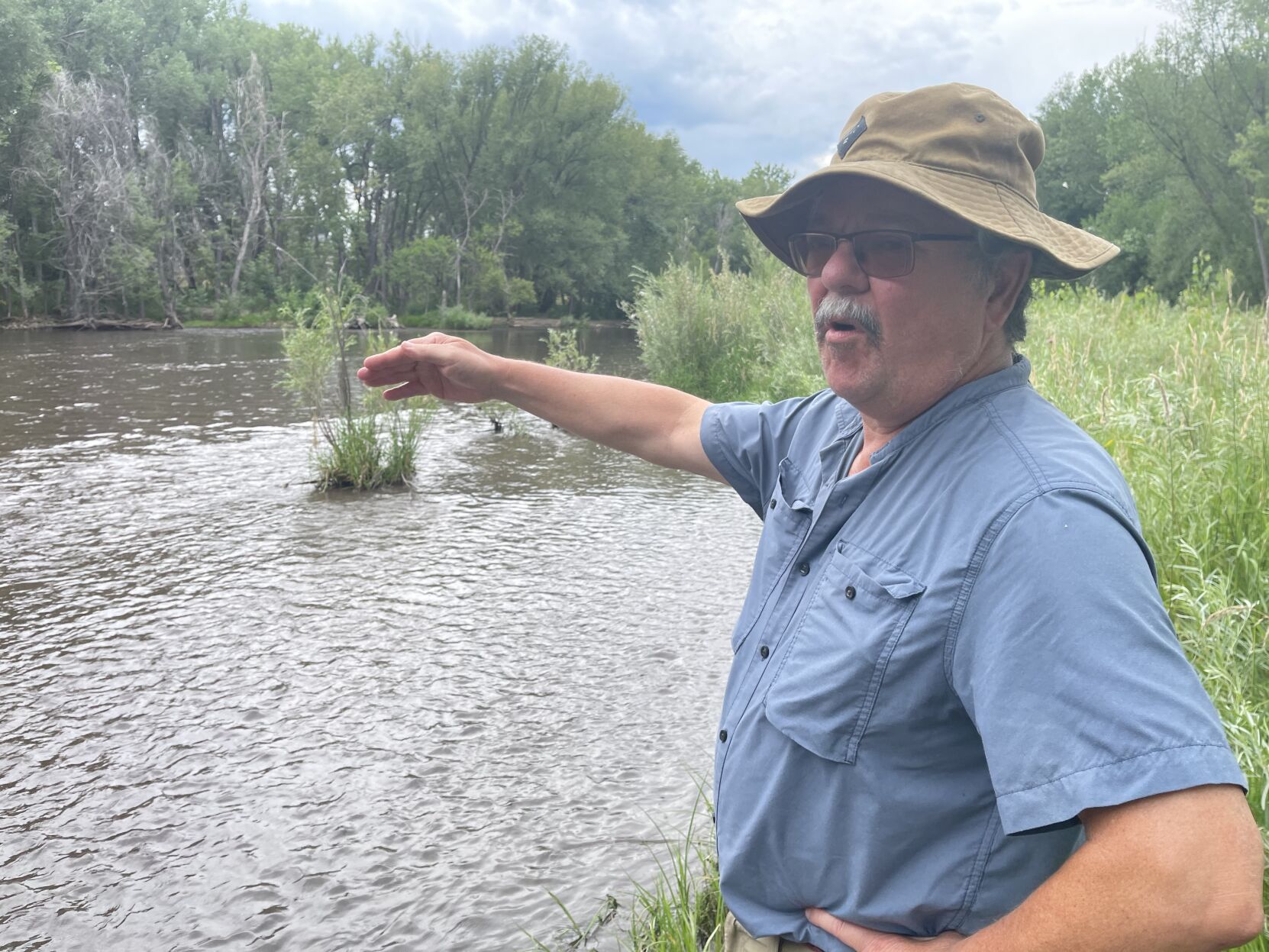
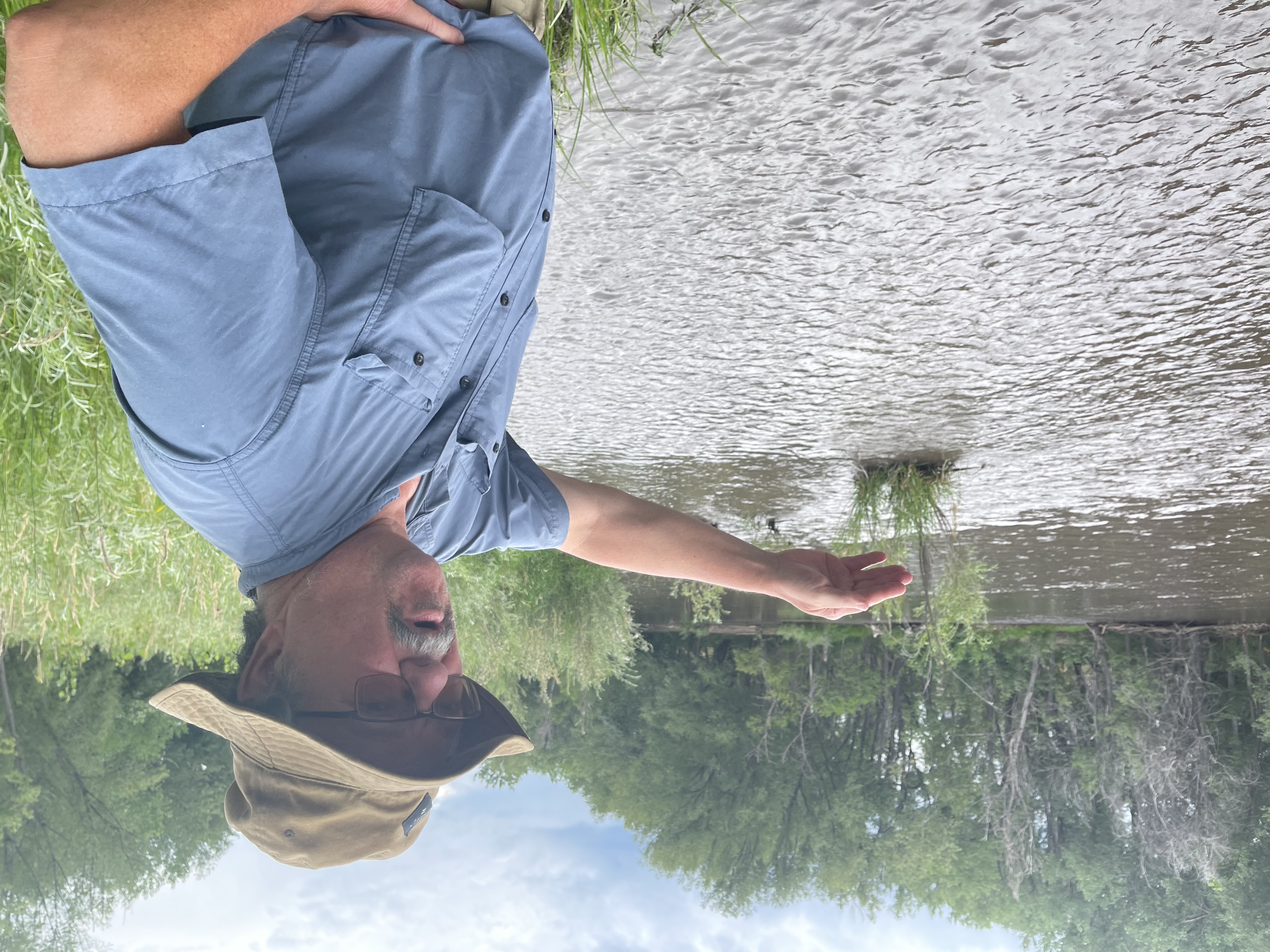
The Colorado State University biology professor and river ecologist spots a trout within arm’s reach of the bank and dips his hand into the Cache la Poudre River to try unsuccessfully to catch it.
“These fish are in bad shape,” he explains. “They breathe the oxygen in the water and this reduces the oxygen level and makes the river almost physically abrasive to them.”
Poff’s hand now bears the burn scars left on northern Colorado’s natural landscape by the Cameron Peak fire last summer. Heavy rain the prior evening in Larimer County miles upstream from Fort Collins pushed the charred earth into the river, prompting deadly flash floods, mudslides, mandatory evacuations and the look on Poff’s face.
It matches the expression borne by Northern Water spokesman Jeff Stahla as he examined a different stretch of the Poudre hours earlier.
Stahla sees less debris than expected, but more ashy runoff than he anticipated as he peers out over a diversion upstream from the newly constructed Poudre River Whitewater Park in Fort Collins.
pat.poblete@coloradopolitics.com
“I wasn’t expecting it to look like this,” Stahla sighs.
The perturbed look sweeping over both men represents a fascinating dichotomy: They care deeply for the Poudre yet stand on diametrically opposed sides of a decades-old struggle that will define the river’s future.
Stahla’s employer is the driving force behind the Northern Integrated Supply Project, an effort kicked off in earnest in 2004 to build a pair of reservoirs to provide water to 15 rapidly growing northern Colorado communities and water districts, including Windsor, Erie, Frederick and Severance. Unlike those communities, about 75% of residents and businesses within the Fort Collins city limits are not Northern Water customers, instead relying on Fort Collins Utilities to manage water supply and demand.
And the project faces vehement opposition from many within the city over concerns one of those proposed storage basins, Glade Reservoir, would be filled by overly taxing the Poudre, leaving it as little more than a “muddy, stinking ditch.” That’s how Gary Wockner, executive director of the Save the Poudre advocacy group, describes the long-term impacts he sees NISP having. Poff is not formally affiliated with Save the Poudre, but has served as an expert witness on the group’s behalf.
It’s the latest, but far from the first, skirmish to define the future of the river.
‘The river was treasured from day one’
It’s difficult to overstate how important Fort Collins’ residents feel the river is to the city.
Mayor Jeni Arndt, a former state lawmaker who championed water issues during her tenure in the legislature, said the evidence lies in the prevalence of the name around town.
“We have Cache la Poudre elementary, middle school, and then I went to Poudre High School, so just everything from Poudre Valley Creamery to Poudre Valley Bank,” she said.
The river has been the “most treasured natural resource” in Fort Collins for generations, Gina Janett adds. She’s a former mayor pro tem and chair of the city’s water board. She also is affiliated with Save the Poudre and deeply versed in the river’s history.
“The short story is the river was treasured from day one,” she said.
For the French trappers that gave the river the name its known by today in 1836, it was a landmark. Trapped in a heavy November snowstorm and forced to reduce their load, the Frenchmen buried their gunpowder on the river’s banks and called it “hiding place of the powder.” The first American settlers farmed along those banks and the military installation of Camp Collins, Fort Collins’ predecessor, was also founded on the river.
“Back then, that was your water supply, and so Fort Collins’ early history is all about farming,” Janett said.
Next came irrigation canals, taking water from the river to transform the arid high desert into a haven for agriculture. Conflicts over use and ownership led to water laws being enshrined in the state constitution in 1876 and are still in place to this day.
‘It’s what allows us to exist’
Flash forward to the present and Arndt said the river is still as important to the region’s agriculture. But she adds the Poudre is so much more for Fort Collins.
“It’s an area of tranquility and natural beauty, a sanctuary, it’s a gathering place, it’s the power to convene, to be restorative,” she said.
It’s also a boon for commerce in Fort Collins.

pat.poblete@coloradopolitics.com
“It’s an enormous part of our business, it’s what allows us to exist,” said Grant Houx, the operating manager and owner of St. Peter’s Fly Shop. “With a fly shop in Colorado… it’s essential to have a river within reach.”
Even for businesses that don’t make their money directly off the river, like Todd Simmons’ Wolverine Farm Letterpress & Publick House, the ties to the Poudre run deep.
“We focus our publishing efforts in part on the river and its surrounding environment,” Simmons said as he filled cups of coffee a stone’s throw away from the riverbank. “It’s the only reason that any of us are here and to ignore it would be tone deaf.

pat.poblete@coloradopolitics.com
“But that pursuit of the river just in human terms is going to be its demise and eventually our demise.”
Like so many others in Fort Collins, Northern’s NISP project is on the tip of Simmons’ tongue. He’s been affiliated with Save the Poudre from nearly the beginning in 2004 and shares the group’s concern about the effects stemming from the storage project.
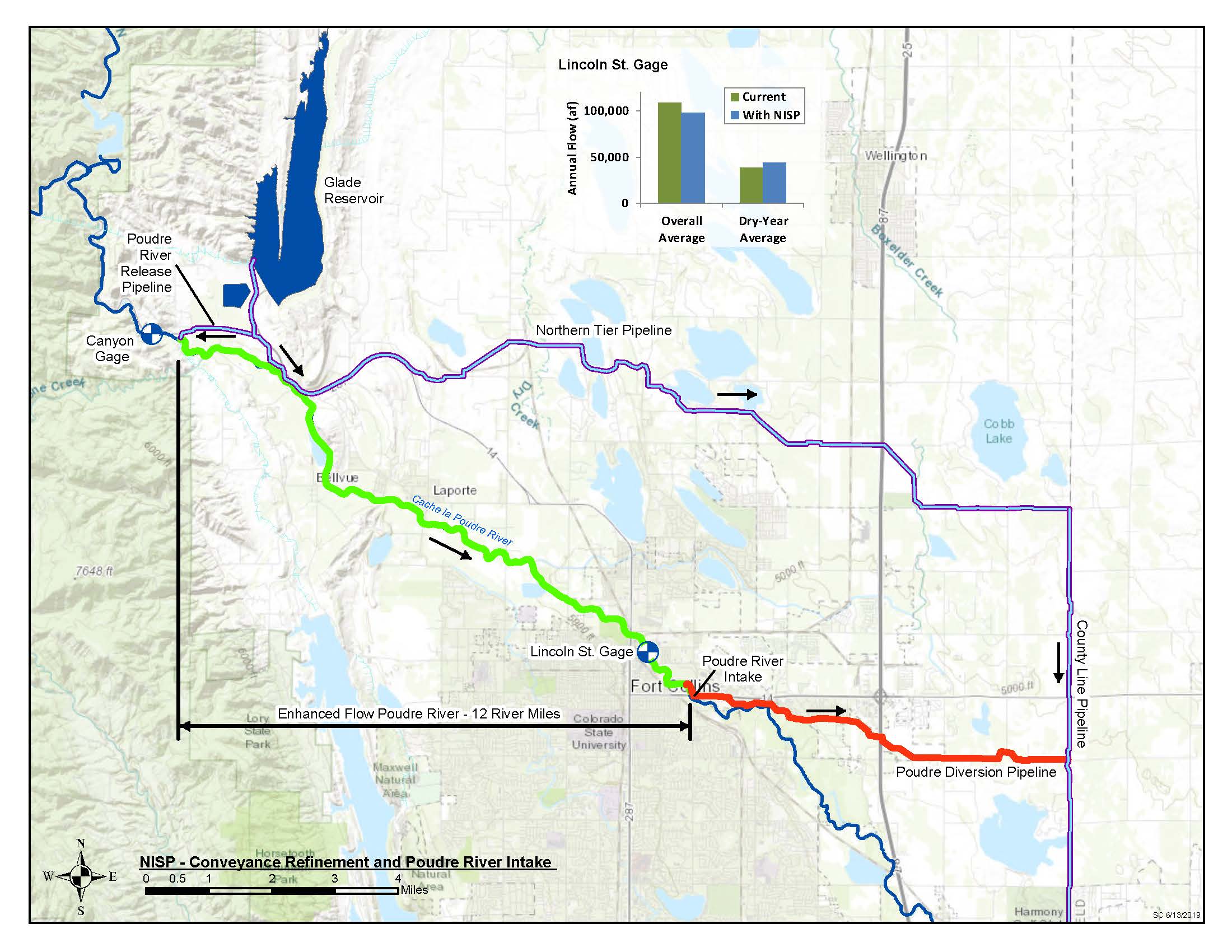
The latest rendition of the project envisions filling Glade Reservoir by taking Poudre water that Northern has rights to during the peak flow periods when the river is bolstered by melted snowpack. From there, Northern would release some of the reservoir water back into the river and use the Poudre to convey it downstream to an intake pipeline in Fort Collins, where it would be taken out again and moved east to another pipeline.
pat.poblete@coloradopolitics.com
River ecology
There are plenty of concerns about the project that opponents harbor, and Poff clearly articulates one of those: the effect to the Poudre’s ecology.
He concedes that Northern’s plan to use water taken during peak flow periods could be helpful in augmenting a stretch of the river that slows to a trickle once the snowpack melts off, but the plan isn’t without its drawbacks.
“That big pulse of water does work on the channel, it maintains the shape of the channel, it cleanses out the spawning beds that the trout use,” he said. “When you take those big flows away it reduces the power of the river to cleanse itself.”
Think about it like a hurricane, Poff said. It’s not just about the duration of the storm or its intensity; both factors must be taken together.
Quizzed on those concerns, Stahla pointed to research done by federal scientists. The conclusion, as published in both the Army Corps of Engineers’ Final Environmental Impact Statement and a fish and wildlife mitigation plan approved by the state in 2017, was that the Poudre needs a minimum of 72 hours of annual peak flows to cleanse itself.
“The question is, ‘Do you want to believe the federal scientists or not?’ Because what happens is that if you end up pitting local versus state versus federal scientists against each other, then you really do create a regimen where decision-making bodies are left to ask, ‘Who do we believe?’ ” Stahla said.
Poff countered by pointing to a decision tree Northern filed as part of the state permitting process showing multiple outcomes, estimated by Northern to represent a 10% likelihood, where the 72-hour peak flow threshold would not be met. He said he was part of the research group that developed the three-day threshold.

“That’s sort of an informed scientific guess,” he said. “Is it enough? Probably not, but I guess you start by saying, ‘If you didn’t have that, what would happen?'”
The future of the Poudre
While the Poudre’s ecology is critically important, Stahla says it can’t be the sole concern. Take population growth, he said. The Corps found that people are coming in droves to northern Colorado whether there’s infrastructure to deliver water to them or not.
That plays into an equity issue.
“Who’s moving to Severance, to Eaton, to Windsor? It’s the folks who can’t afford to buy in central Fort Collins,” Stahla said. “It’s a matter of fairness. It’s saying to these communities that you can have high-quality water too.”
Proponents like former U.S. Sen. Hank Brown, Larimer County Planning Commissioner Sean Dougherty and Jeff Jensen, a former member of that commission, also point to boons for recreation, tourism and agriculture and stress the significance of water storage.
“The basic question here is: do you dry up more irrigated farm ground or do you take water from Nebraska that belongs to Colorado?” Brown said.
Opponents such as Poff, Wockner, Janett and Simmons focus on the environmental issues, which they say will have downstream effects on the benefits the project’s proponents tout. Janett and Simmons also question the need for another reservoir, which they describe as an outdated technology. They instead advocate for more proactive conservation measures, including shifting agricultural practices to focus on crops that are less water-intensive.
But Stahla says conservation efforts alone aren’t enough to sustain the projected growth.
Opponents vow to keep fighting NISP and Save the Poudre has been active in court, filing three separate lawsuits at various stages to stop the project. Still, Stahla sees the war coming to an end with only a few regulatory and permitting battles left.
Northern’s board will meet Aug. 12 to take an override vote after the Fort Collins planning commission rejected a pipeline application. After that, Stahla says he expects to see long-awaited final approval from the Corps by August, which will likely come with conditions.
Arndt falls somewhere in between the bitterly divided poles and is hesitant to weigh in on the project, at least for the time being.
She understands the concerns raised by Poff and Save the Poudre and is committed to getting “the best environmental deal out of this.” But she also sees Northern as a “good actor” that’s made a number of concessions and changes to improve the project from a Fort Collins perspective. Stahla noted even though Northern’s board will likely override Fort Collins’ rejection of the pipeline application, Northern is working to address some of the concerns raised. Add in Save the Poudre’s willingness to be active in court and Arndt sees NISP as a work in progress.
But she wants her constituents to take a wholistic view of water.
“I hope that we, the citizens and residents of Fort Collins, are willing to really educate themselves on a very broad picture and then look forward 50 years,” she said.
Should they do that, they’ll likely see a future featuring NISP. But for some, visions of the Poudre’s future are as clouded as the river as it carried charred earth downstream.

Colorado’s 661‑page budget read aloud after Rep. Bradley invokes procedural rule
Marianne Goodland
marianne.goodland@coloradopolitics.com
Updated 10 hours ago
A rarely used procedural move by Rep. Brandi Bradley, R‑Roxborough Park, has thrown the Colorado House into an extended slowdown, after she invoked her right to have the 661‑page state budget bill read aloud in full. While unprecedented, once Bradley...
Literal reading of budget bill complicates Colorado legislators’ plans for GOP assembly
Marianne Goodland
marianne.goodland@coloradopolitics.com
Updated 9 hours ago
Republican Rep. Brandi Bradley’s decision to force the full reading of the state budget — called the “long bill” for its obvious length — has not only slowed House business to a crawl but also disrupted her colleagues’ plans for...
10th Circuit provides guidance on police searches of cloud-based data
Michael Karlik
michael.karlik@coloradopolitics.com
Updated 11 hours ago
The Denver-based federal appeals court provided guidance to law enforcement agencies on Monday for ensuring that searches of cloud-based accounts comply with the Fourth Amendment’s requirements. A three-judge panel of the U.S. Court of Appeals for the 10th Circuit noted...

Inflation jumped to 3.3% in March as Iran war drove up oil prices
Zach Halaschak, Washington Examiner
zach.halaschak.washington.examiner@gazetteedit.wpenginepowered.com
Updated 14 hours ago
Inflation spiked in March, rising nine-tenths of a percentage point to 3.3% on the year, as towering energy prices drove up the headline number. The Bureau of Labor Statistics reported the update to the consumer price index on Friday. The...
Colorado GOP votes down bid to ask court to prevent unaffiliated voters from voting in June primary
Ernest Luning
ernest.luning@coloradopolitics.com
Updated 10 hours ago
Members of the Colorado Republican Party’s executive committee rejected a proposal Thursday night to seek an emergency injunction in federal court to prevent unaffiliated voters from participating in the state’s upcoming June primary election. The proposed motion, backed by Colorado...
Federal judge releases man after 2 immigration judges disobey order
Michael Karlik
michael.karlik@coloradopolitics.com
Updated 16 hours ago
A federal judge released a man from immigration detention on Thursday after two different immigration judges disobeyed his order in the same case. “At this point, the Court has granted Respondents two bites at the apple to prove detention of...

City of Northglenn, state fail to reach agreement on mental health facility amid safety concerns
Marissa Ventrelli
marissa.ventrelli@coloradopolitics.com
Updated 9 hours ago
The City of Northglenn said it was unable to reach an agreement with the state on a pair of transitional living facilities for individuals with mental health conditions run by the Colorado Department of Human Services. The facilities, located across...
Colorado lawmakers grapple with spending cuts amid $1 billion-plus deficit
Marianne Goodland
marianne.goodland@coloradopolitics.com
Updated 1 day ago
The battle over Colorado’s budget for next year — which stalled in the House over a procedural maneuver — entered a more difficult phase on Thursday, when legislators grappled with hundreds of millions of dollars in proposed reductions to balance...
New rules for private judges in Colorado include discipline oversight, campaign contributions
David Migoya
david.migoya@gazette.com
Updated 5 hours ago
The Colorado Supreme Court recently determined the state’s private judges — retired jurists appointed to oversee civil cases that rarely get public scrutiny — can now make political contributions freely and without reserve, overruling a prohibition that had been in...

Colorado bill reshaping RTD board advances
Marissa Ventrelli
marissa.ventrelli@coloradopolitics.com
Updated 1 day ago
A proposal to reshape the Regional Transportation District’s leadership easily cleared a committee vote Wednesday, advancing the bill sponsors say is needed to revive a transit system still struggling to regain riders and public trust. Critics have countered that, while...
PREV
PREVIOUS
RIVER TOWNS: FORT COLLINS | Sizing up the arguments on Glade Reservoir
When viewing the Northern Integrated Supply Project through the prism of Fort Collins, the downstream effects on the Poudre River are nearly all-encompassing. But zooming out to view the project more broadly brings the water storage element into sharper focus. It’s crucial to maintaining the region’s agricultural economy, Fort Collins Mayor Jeni Arndt said. “I […]
Denver's metro air quality worst in the world Saturday
Denver’s air ranked as the worst in the world Saturday afternoon as the air quality index hit 192, according to IQAir, a website that ranks air pollution in major cities. The Mile High City sat atop cities such as Johannesburg, Dubai and Delhi. But the poor air conditions didn’t keep people from walking around the […]