

Board strikes down effort to reverse zoning permit for Park Hill managed homeless camp
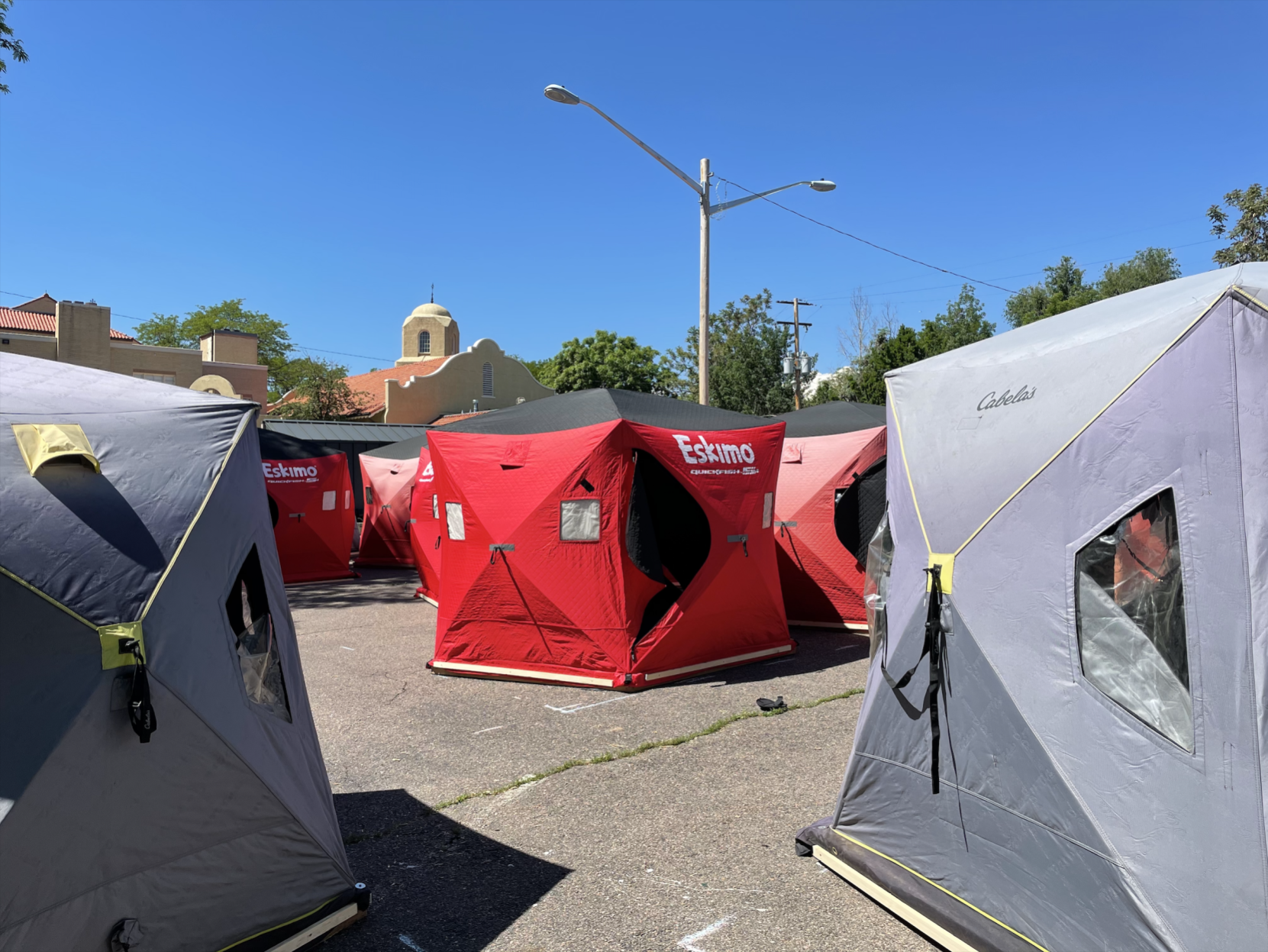
The Denver Board of Zoning Appeals narrowly rejected an effort to reverse the zoning permit for the managed homeless campsite at Park Hill United Methodist Church.
During the board meeting Tuesday, three of the five board members voted to reverse the zoning permit; however, the action required a four-vote supermajority to pass. With two board members voting against the reversal, the effort failed.
Those advocating for the permit reversal argued that the zoning administrator who issued the campsite’s permit did not adequately consider the impacts on the surrounding community. Specifically, the appellants raised issue with the campsite’s policy on drugs.
The Colorado Village Collaborative, which runs the campsite, does not allow drugs or alcohol within the camps; though, staff do not search residents or their belongings for such things.
“It was the multistep resident accountability process that I struggle with in regard to their drug policy,” said Board Member Jim Keavney, who voted in support of the reversal. “The CVC drug policy violates state and federal law with regard to drugs in proximity to schools and daycares.”
“I have concerns about health and safety as well. I think there should be more rule-making around it, but that’s not our job,” said Board Member Charlie Young, who voted against the reversal.
Young said his deciding vote was based on the Denver Zoning Code, saying he couldn’t find anything in it that requires zoning administrators to consider health and safety when issuing a zoning permit for a specific campsite.
Denver’s fourth managed homeless campsite, also called a Safe Outdoor Space, opened at the Park Hill United Methodist Church in June.
The campsite at 5209 Montview Blvd. is intended to house up to 40 residents until Dec. 31, providing them with heated tents, food donations, dental care, food stamps, COVID-19 testing, community service opportunities and services for permanent housing.
This newest site, in addition to a location at Regis University, replaced the first two Safe Outdoor Spaces that opened in December to address Denver’s rising homeless population and increasing public health risk during the COVID-19 pandemic.
In 2020, there were 6,104 homeless residents in the Denver metro area, according to an annual count. Of those homeless residents, 1,561 were unsheltered.
“(Park Hill is) a living example that demonstrates the reality that unsheltered homelessness could be a thing of the past,” said Cole Chandler, executive director of Colorado Village Collaborative. “By working together, we can advance life changing solutions to the housing and homelessness crisis that deliver safety, dignity and hope for the most vulnerable among us.”
Tuesday’s appeal effort is the latest of several attempts from some residents of the surrounding community to shut down or prevent the Park Hill camp.
After the Safe Outdoor Space was announced, a small group of neighbors sued the church, pastor, city and Colorado Village Collaborative for a restraining order to stop the campsite. The lawsuit, which was thrown out by a judge in May citing lack of jurisdiction, claimed the campsite would create a nuisance and present a danger to the community.
Chandler has fought this claim, saying the campsites reduce the neighborhood impact of unsanctioned camps by taking in people already living in illegal camps. The Denver Police Department has also reported no uptick in safety issues in areas surrounding the campsites, according to Police Chief Paul Pazen.
The campsites are fenced off and staffed around the clock, according to Colorado Village Collaborative. Camp residents are screened to keep out all sex offenders and those convicted of violent crimes within the last five years. Despite this, community concerns remain.
“The fact that all board members agreed that (the zoning administrator) failed to ensure the protection of health and safety for all is a win and should have been the end of the story,” said Sarah Baker, counsel for some of the appellants.
With Tuesday’s failed appeal, Denver’s managed homeless campsites are likely to stick around for a while.
During the State of the City address last month, Mayor Michael Hancock committed to increasing the number of Safe Outdoor Spaces in the city, in addition to tiny home villages, safe parking spaces and other sheltering options.
Many residents use the camps to transition into more stable housing, data show. On May 13, the Colorado Village Collaborative reported five people had moved into tiny homes, two into permanent homes, five were on housing vouchers that can be spent on rented housing and 12 had gotten jobs or were looking for jobs.
The campsites have also provided 180 case management appointments to help residents address past legal issues that prevent them from obtaining housing and employment, according to Colorado Village Collaborative.

10th Circuit orders new unlawful arrest trial against Colorado Springs officers
Michael Karlik
michael.karlik@coloradopolitics.com
Updated 11 hours ago
The Denver-based federal appeals court concluded on Friday that a trial judge inappropriately allowed jurors to see several unflattering video clips of a plaintiff being belligerent toward police officers during a trial to determine whether police violated her constitutional rights....

Colorado redistricting limits measure heads to November ballot
Marissa Ventrelli
marissa.ventrelli@coloradopolitics.com
Updated 15 hours ago
A proposed constitutional amendment that would prohibit Colorado’s congressional maps from being redrawn outside of election cycles has qualified for the November ballot, according to the Secretary of State’s Office. Under Initiative No. 256, redistricting changes for the 2028 election...

Polis announces ‘Governor for a Day’ contest for Colorado students
Marissa Ventrelli
marissa.ventrelli@coloradopolitics.com
Updated 16 hours ago
Colorado seventh and eighth graders have the chance to experience a day in the life of the governor through a new contest launched by Gov. Jared Polis. The “Governor for a Day” competition will give one student the chance to...
Federal judge to await SCOTUS decision before addressing Boulder County firearm ordinances
Michael Karlik
michael.karlik@coloradopolitics.com
Updated 10 hours ago
A federal judge agreed on Friday that she would await the U.S. Supreme Court’s decision in an upcoming Second Amendment case before she addresses the constitutionality of similar gun ordinances in multiple Boulder County jurisdictions. Rocky Mountain Gun Owners, the...

Colorado state House Democratic candidate arrested in Texas for public intoxication
Marianne Goodland
marianne.goodland@coloradopolitics.com
Updated 14 hours ago
A Democrat from Lone Tree who is running for a House seat was arrested in Texas in May on charges of public intoxication and resisting arrest. Christian Schilder, the Democrat, is challenging Rep. Brandi Bradley, the Republican incumbent, in the...
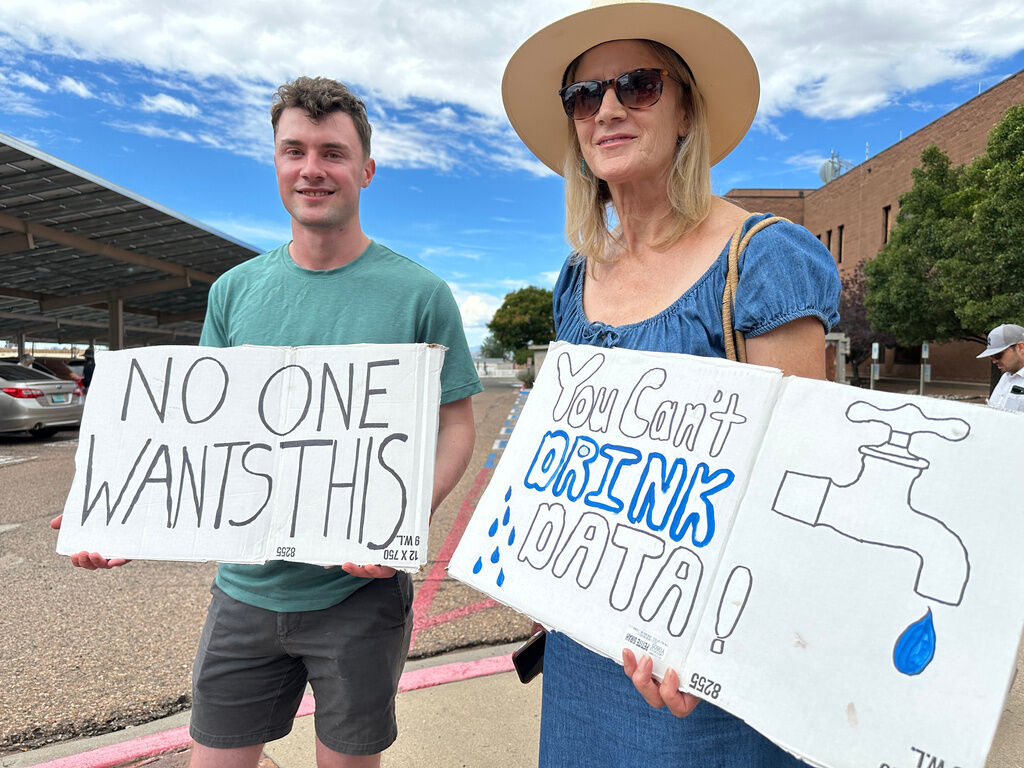
Trump says communities that don’t build data centers will be ‘backwards and poor’
Christian Datoc
christian-datoc@coloradopolitics.com
Updated 16 hours ago
President Donald Trump criticized the rising wave of anti-data center sentiment, clashing with his administration’s aggressive efforts to build out the domestic artificial intelligence sector. Trump has placed a concerted focus on making the U.S. the global leader in AI,...

What happens when robotaxis meet motorcades in DC? The mother of all traffic jams, says AI expert
Rob Crilly
rob.crilly@washingtonexaminer.com
Updated 14 hours ago
Waymo has Washington, D.C. on its list of targets for self-driving taxis. Just two problems: Can they cope with motorcades? And how would lawmakers feel if every time the vehicles grind to a halt in front of the flashing lights...

Trump promises retaliation for Iran attacks: ‘We’re going to hit them hard’
Rena Rowe
rena.rowe@washingtonexaminer.com
Updated 18 hours ago
President Donald Trump on Monday vowed to retaliate against Iran following the latest attack on a U.S. base in Jordan, marking a return to military action after weeks of relative calm. “We’re going to hit them hard. There will be...

State Supreme Court names next chief justice, 10th Circuit releases full-court decision | COURT CRAWL
Michael Karlik
michael.karlik@coloradopolitics.com
Updated 18 hours ago
Welcome to Court Crawl, Colorado Politics’ roundup of news from the third branch of government. The Colorado Supreme Court has named its next chief justice, and the Denver-based federal appeals court released a decision that overwhelmingly rejected one of its...
Initiative asks Colorado voters to approve 8th-grade reading standard for ballot measures
Marissa Ventrelli
marissa.ventrelli@coloradopolitics.com
Updated 15 hours ago
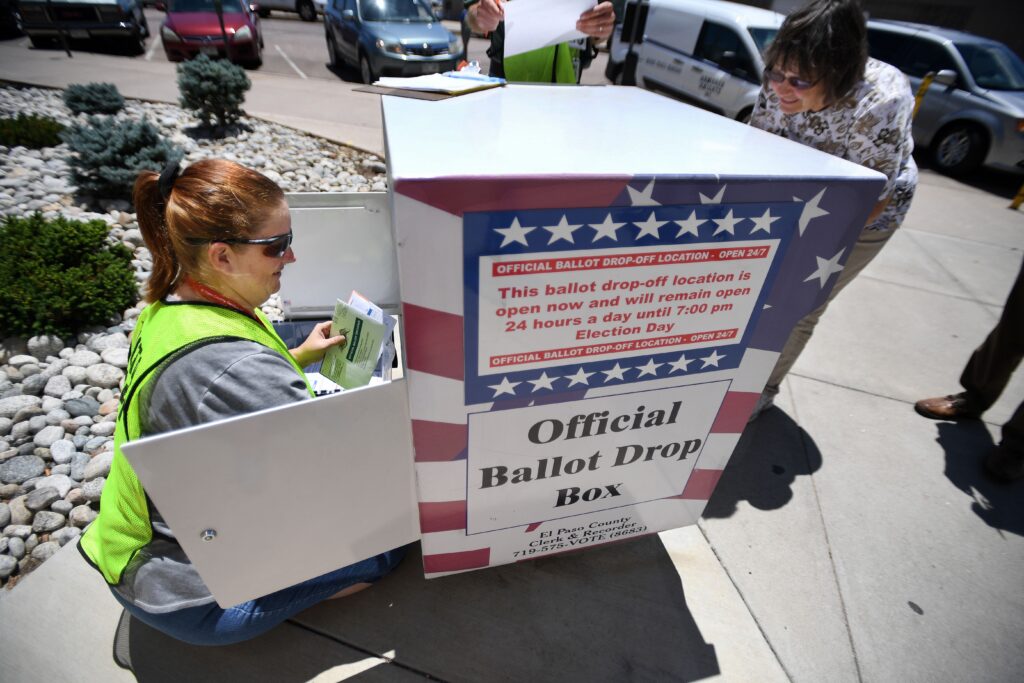
A ballot initiative that would require all ballot measures to be written at no higher than an eighth-grade reading level has qualified for the November ballot, according to the Colorado Secretary of State’s Office. The measure, backed by the group...
PREV
PREVIOUS

El Paso County GOP sells out fundraiser featuring Marjorie Taylor Greene
Tickets are sold out for the El Paso County Republican Party’s annual fundraising dinner Friday featuring U.S. Rep. Marjorie Taylor Greene, the controversial and outspoken lawmaker from Georgia, but many of the county’s most prominent party members won’t be there. “If you were able to get in, before we sold out, good for you!” wrote […]

Smoky air will impact Denver, Front Range for foreseeable future, experts say
Heavy smoke from wildfires in the Pacific Northwest and Canada will adversely affect the air quality in Denver and along the Front Range for the foreseeable future, officials said Thursday. Smoke carried by winds originating from the burning areas has been in Colorado for several months, but so far the particulates – soot, dust or ash – […]