

Appeals court finds Adams County judge violated Sixth Amendment with sentencing

An Adams County judge violated a man’s constitutional rights when he departed from established legal principles during sentencing, the Court of Appeals determined on Thursday.
The case implicated the U.S. Supreme Court’s 2004 decision in Blakely v. Washington, in which a majority of justices found that trial courts infringe on a defendant’s Sixth Amendment right to a jury trial when they impose a sentence that exceeds the standard range – even if that range is lower than the maximum allowed under the law.
Subsequently, the Colorado Supreme Court advised that there are certain circumstances in which judges may increase a punishment beyond the range. District Court Judge Roberto Ramirez, a three-member Court of Appeals panel found, relied on none of those reasons when sentencing Ronnie Gene Crutcher.
“This error was both obvious and substantial because it contravened Colorado case law and may have added years to Crutcher’s sentence,” wrote Judge Neeti Vasant Pawar in the July 15 opinion.
A jury in 2018 found Crutcher guilty of second degree assault and child abuse against his children. On appeal, both the prosecution and defense agreed that his sentencing range was two to eight years’ imprisonment. However, Ramirez had opted for a range of one to 16 years.
His calculation was “based on the age and the relationship to the victims in this case as well as the lasting impact that Mr. Crutcher left on his victims, this provides the Court the basis to find that this is an exceptional circumstances case,” the judge said. He gave Crutcher eight years of incarceration and three years of parole.
The state Supreme Court, in interpreting the Blakely decision, noted there were four factors that would support a sentence beyond an established range. First, if there were facts found by a jury to support the increase; second, if there were facts the defendant admitted; third, if the judge found additional facts; and fourth, if there were facts about prior convictions.
“When a judge inflicts punishment that the jury’s verdict alone does not allow, the jury has not found all the facts,” wrote Justice Antonin Scalia in Blakely‘s majority opinion, and “the judge exceeds his proper authority.”
Although Colorado law allows judges to exceed the range based on “extraordinary mitigating or aggravating circumstances,” they still must apply the Blakely factors in doing so.
The panel determined Ramirez had relied on none of the accepted factors when expanding Crutcher’s sentencing range. The appellate judges consequently sent the case back to the trial court for resentencing.
The case is People v. Crutcher.


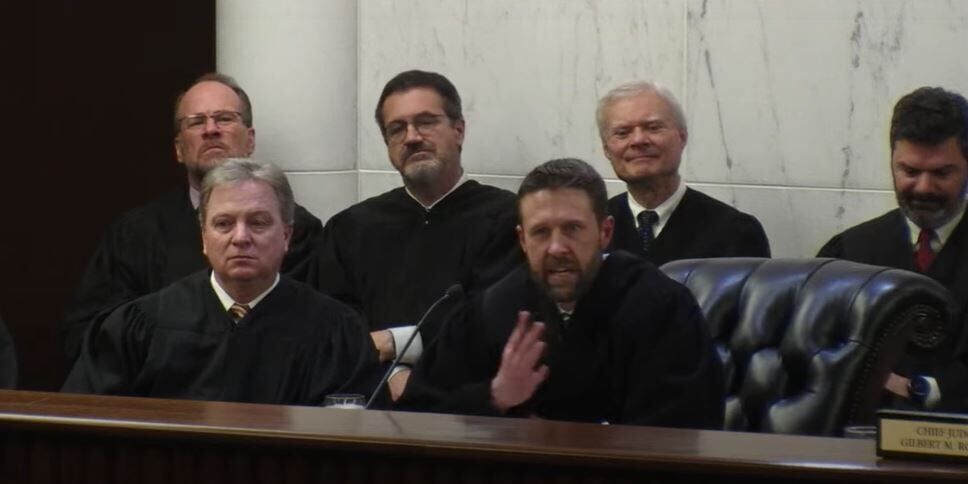
Public figures have limited path to sue over accusations of criminality, says appeals court
Michael Karlik
michael.karlik@coloradopolitics.com
Updated 1 hour ago
Colorado’s second-highest court ruled last week that a public figure cannot sue for defamation solely because a person publicly accuses them of committing a crime, as the statement may be constitutionally protected opinion. A three-judge Court of Appeals panel narrowed...
Federal judge to consider sanctioning ex-Colorado judicial discipline director
Michael Karlik
michael.karlik@coloradopolitics.com
Updated 15 minutes ago
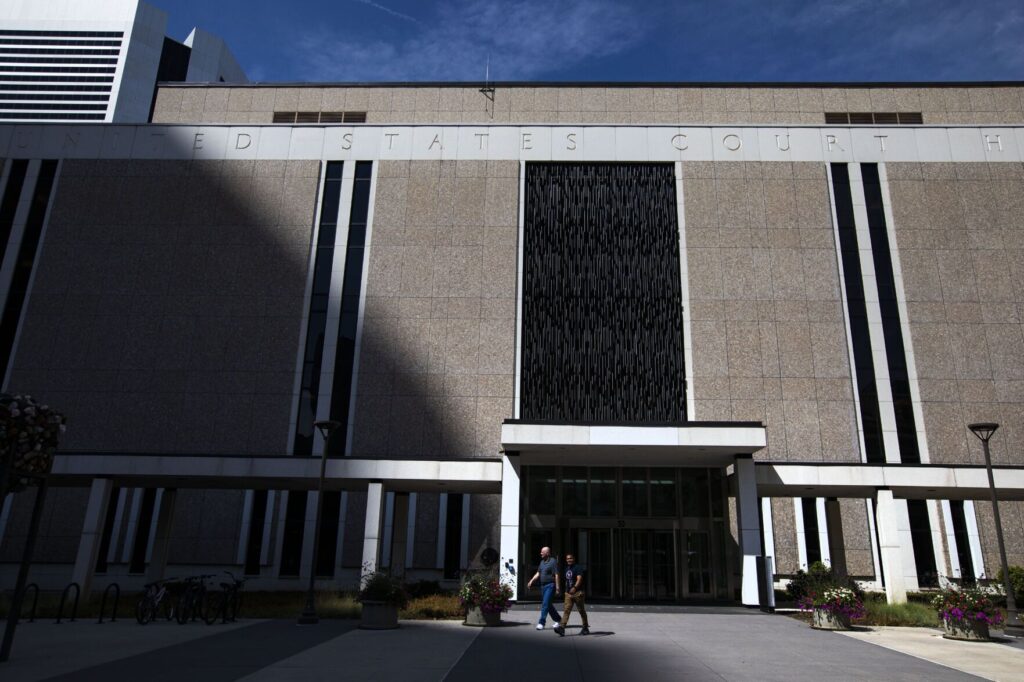
A federal judge ordered Colorado’s former head of judicial discipline on Wednesday to explain why she should not sanction him for making inaccurate statements about the defendants in his lawsuit against the Colorado Supreme Court and related entities. U.S. District...

Federal judge green-lights trial against Denver officer over race-based enforcement
Michael Karlik
michael.karlik@coloradopolitics.com
Updated 1 day ago
A federal judge green-lit a jury trial last week on a man’s claim that a Denver police officer engaged in racially selective enforcement of the law by arresting him for video recording at a police station, while not arresting a...
Federal judge says 8 years in solitary confinement not grounds to reduce man’s sentence
Michael Karlik
michael.karlik@coloradopolitics.com
Updated 1 day ago
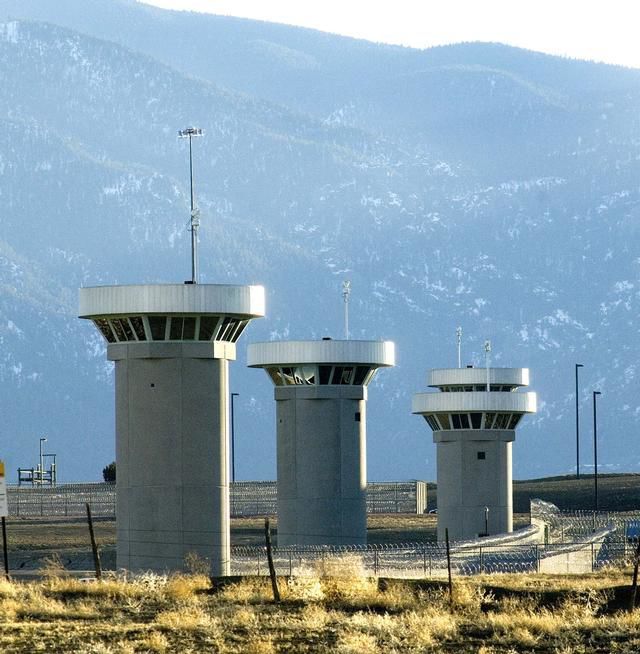
A federal judge concluded earlier this month that a man’s eight years allegedly spent in solitary confinement did not justify granting his request for a sentence reduction. However, U.S. District Court Senior Judge William J. Martínez signaled his willingness to...

10th Circuit rejects ‘potential for violence’ when police arrest vehicle occupant’s romantic partner
Michael Karlik
michael.karlik@coloradopolitics.com
Updated 1 day ago
The Denver-based federal appeals court rejected the idea on Tuesday that a vehicle occupant poses a danger to police solely because they are romantically involved with another occupant who officers are arresting. By 2-1, a three-judge panel of the U.S....

Colorado justices grill debt collector about compliance with law
Michael Karlik
michael.karlik@coloradopolitics.com
Updated 1 day ago
The Colorado Supreme Court repeatedly pressed a debt collection company last week to explain how its lawsuit against a Boulder woman for an unpaid credit card balance complied with the specific requirements that state lawmakers have created. Portfolio Recovery Associates,...
Appeals court agrees defendant’s speech constitutionally protected against El Paso County judge
Michael Karlik
michael.karlik@coloradopolitics.com
Updated 1 day ago
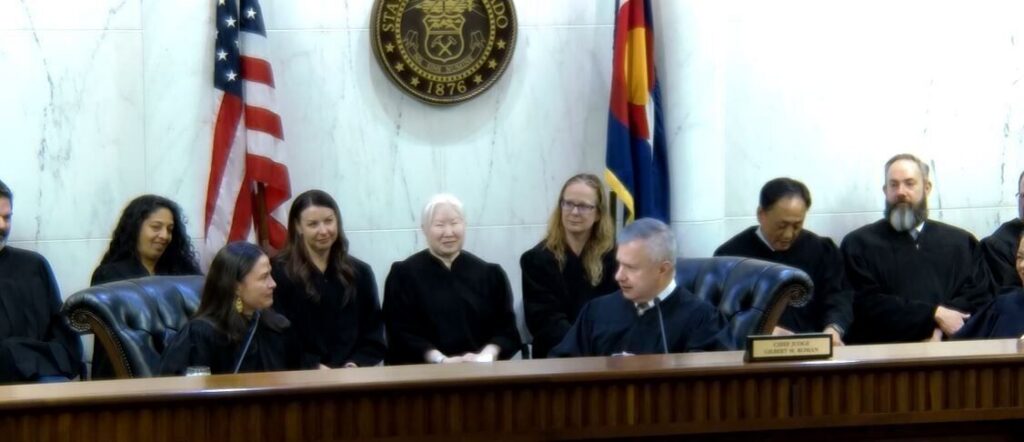
Colorado’s second-highest court agreed last week that a defendant’s critical statements toward an El Paso County judge were constitutionally protected and could not form the basis of a retaliation charge. A three-judge Court of Appeals panel concluded that, in context,...
Colorado justices, 4-3, order new murder trial due to wrongfully excluded evidence
Michael Karlik
michael.karlik@coloradopolitics.com
Updated 2 days ago
The Colorado Supreme Court agreed on Monday that a trial judge incorrectly faulted a defendant for refusing to cooperate in a mental health examination, even though the state’s hospital was the entity that botched its responsibility to evaluate her during...

Overdose deaths from opioids dip in America — but not in Colorado, study says
Jacob Mauk
jacob.mauk@denvergazette.com
Updated 2 days ago
Overdose deaths from opioids rose in Colorado, diverging from the national trend, which has been decreasing, according to a new study from a think tank. In its new report, the Common Sense Institute said synthetic opioid overdose deaths in Colorado...
Error-prone Douglas County judge triggers another reversal of criminal convictions
Michael Karlik
michael.karlik@coloradopolitics.com
Updated 2 days ago
Colorado’s second-highest court overturned a defendant’s Douglas County convictions on Thursday due to the error of a judge whose actions have triggered a disproportionate number of reversals to convictions and sentences in recent years. Since 2021, the Court of Appeals...
PREV
PREVIOUS

Should Colorado students wear masks in school? Most districts are still weighing options.
With the start of school less than a month away, many Colorado parents are still waiting to know if their children will be required to wear masks in the classroom. Colorado’s latest public health order at the beginning of July said masks were no longer required by the state in school settings. But federal guidance […]

Colorado COVID-19 cases, positivity rate tick upward as delta variant remains dominant
Colorado has averaged more COVID-19 cases in recent days than at any point over the past six weeks, a slow incline that’s mirrored by the positivity rate and is driven by the dominant presence of the delta variant. Over the past week, the state has averaged 455 new cases each day. That number is still […]