

Court finds state worker fabricated evidence for discrimination lawsuit

In a bizarre twist to a civil rights lawsuit, a federal court has determined a Colorado state employee fabricated an email exchange and manipulated an audio recording to make it appear his supervisors had discriminated against him.
Yoseph Yadessa Kenno, a former database administrator for the Governor’s Office of Information Technology, brought discrimination charges against his employer after having his privileges rescinded and being placed on an improvement plan in May 2018. However, after a civil rights investigator informed him he did not have a case, Kenno showed evidence of an email exchange with his boss dated two months earlier, in which state employees purportedly told him they would not give him a “welfare check.” Kenno, who is Black, interpreted it as a racial remark.
But Kenno had invented the email, as well as his supervisor’s purported reply that Kenno should not make accusations of discrimination.
“The true scale of Plaintiff’s fabrication in this case may never be known. But what is known is the significant degree of fraud on the Court and interference with the judicial process,” wrote U.S. Magistrate Judge Michael E. Hegarty in a June 30 order dismissing Kenno’s lawsuit and awarding costs to the state.
The Colorado Attorney General’s Office told Hegarty that Kenno’s misconduct forced the state to spend time and money investigating the fraud.
“GOIT expended thousands of taxpayer dollars in attorneys’ and expert fees. Defendants’ damages were compounded because each time Plaintiff was confronted with concerns about fabrication, Plaintiff responded by continuing to produce different versions of fabricated emails and demanding production of audit logs and entire email accounts, as well as live searches,” lawyers for the state wrote.
But Kenno told Colorado Politics that the case “is not the simple thing you saw on the judge’s decision.”
“The more you know, the more you start asking questions,” he said. “I’m the David and they’re the Goliath.”
In April 2018, Kenno received a performance evaluation that included some critical feedback, namely that he was not demonstrating work-appropriate conduct or understanding the importance of deadlines. One month later, his supervisor put Kenno on a performance improvement plan, rescinded his work-from-home capability and added a new time-tracking requirement.
An employee with the human resources department conducted an investigation after Kenno complained, but found his discipline related to missing a deadline was not discrimination or retaliation. Kenno then filed charges with the Colorado Civil Rights Division. An investigator determined his discrimination claim was meritless because he had not made any complaints about GOIT prior to his performance review.
Kenno subsequently compiled a 432-page rebuttal document with several pieces of evidence and sent it to the investigator using Google Drive.
Among the evidence, one of the emails from Kenno to his supervisor complained about an interaction with a health benefits employee over missing contributions to his health savings account.
“During the call, they told me how their dept doesn’t doll out welfare check,” Kenno wrote. “I wasn’t asking for welfare. They were snickering too after telling me this. They wouldn’t have mentioned welfare if I wasn’t a black guy. I want to be treated fairly, just like everyone else.”
His supervisor responded, telling him to “Please follow the OIT Values described in your performance plan when communicating with HR and refrain from making similar accusations going forward.”
The emails were dated March 2018. If valid, they could have suggested that Kenno engaged in protected conduct – raising a claim of discrimination – only to receive a poor performance review as a result.
Although it was true Kenno had an issue with his health savings account, he had, the court decided, fabricated the exchange. When GOIT searched for the messages during the course of his lawsuit, it could not locate them. Moreover, different versions of the emails Kenno produced throughout the process had conflicting header information.
GOIT performed a forensic examination on Kenno’s personal phone and laptop. A phone call that Kenno recorded surreptitiously with his coworker and submitted as an exhibit had been altered to shift the blame to a coworker for missing a deadline.
In addition, several emails had been manipulated. A forensic analyst testified that a person could easily use free software to perform that kind of alteration.
“A fabricated email will even pass traditional email authentication tools, making it appear as though the email was sent and received,” Hegarty summarized.
An administrative law judge with the State Personnel Board concluded on May 3, 2021 that Kenno fabricated the email exchange about the health savings account, and that he created a fraudulent Google recovery email to cover it up.
Hegarty drew the same conclusion, finding Kenno’s explanation that his supervisor was the one who manipulated his statements on the audio call “strains all credulity.” As for the emails, the magistrate judge determined Kenno had the motive, ability and opportunity to misrepresent his health savings account incident, and that the first time the emails surfaced was in mid-2019.
Kenno would not comment when asked repeatedly if he denied fabricating the emails, and instead urged a further investigation into GOIT’s email retention policy. A Denver Post report in 2019 found state agencies varied in how quickly they deleted government emails, ranging from 30 days to not at all.
Robert Liechty, the attorney for Kenno, said Kenno believed the issue was “trumped up against him,” and he remained unconvinced his client had committed fraud.
“If he’s so good at it, why not erase your mistakes?” Liechty said.
The case is Kenno v. Governor’s Office of Information Technology.


Colorado appeals court orders new sentencing for Tina Peters, upholds convictions
Michael Karlik
michael.karlik@coloradopolitics.com
Updated 1 hour ago
Colorado’s second-highest court determined on Thursday that a trial judge improperly sentenced former Mesa County clerk Tina Peters based upon her exercise of protected speech, while at the same time upholding her convictions. The three-judge Court of Appeals panel also...
Judge rules that Colorado law makes it too hard for parties to bar unaffiliated voters from primaries
Ernest Luning
ernest.luning@coloradopolitics.com
Updated 2 hours ago
A federal judge ruled in favor of the Colorado Republican Party late Tuesday, saying that a portion of the state law that allows unaffiliated voters to cast ballots in party primaries is unconstitutional because it imposes an unrealistic burden on...

10th Circuit upholds regulator’s methodology for Tri-State exit fees
Michael Karlik
michael.karlik@coloradopolitics.com
Updated 2 hours ago
The Denver-based federal appeals court upheld a regulatory agency’s methodology for calculating the fee owed by entities seeking to withdraw from Tri-State Generation and Transmission Association last week. Tri-State is a Westminster-based cooperative that provides and transmits electricity to member...
Federal judge proposes sanctions against Mike Lindell’s lawyers for continued fake citations
Michael Karlik
michael.karlik@coloradopolitics.com
Updated 21 hours ago
A federal judge is once again pursuing sanctions against lawyers for MyPillow CEO Mike Lindell for continuing to cite to court cases that do not exist, likely based on the faulty output of artificial intelligence tools. Last year, a jury...
Susan Blanco signals views on role of appellate courts in first opinion as Colorado justice
Michael Karlik
michael.karlik@coloradopolitics.com
Updated 1 day ago
Justice Susan Blanco’s first solo opinion as a new member of the Colorado Supreme Court made clear her view of the guardrails that keep the state’s highest court tethered to the issues it is asked to decide. On Monday, the...
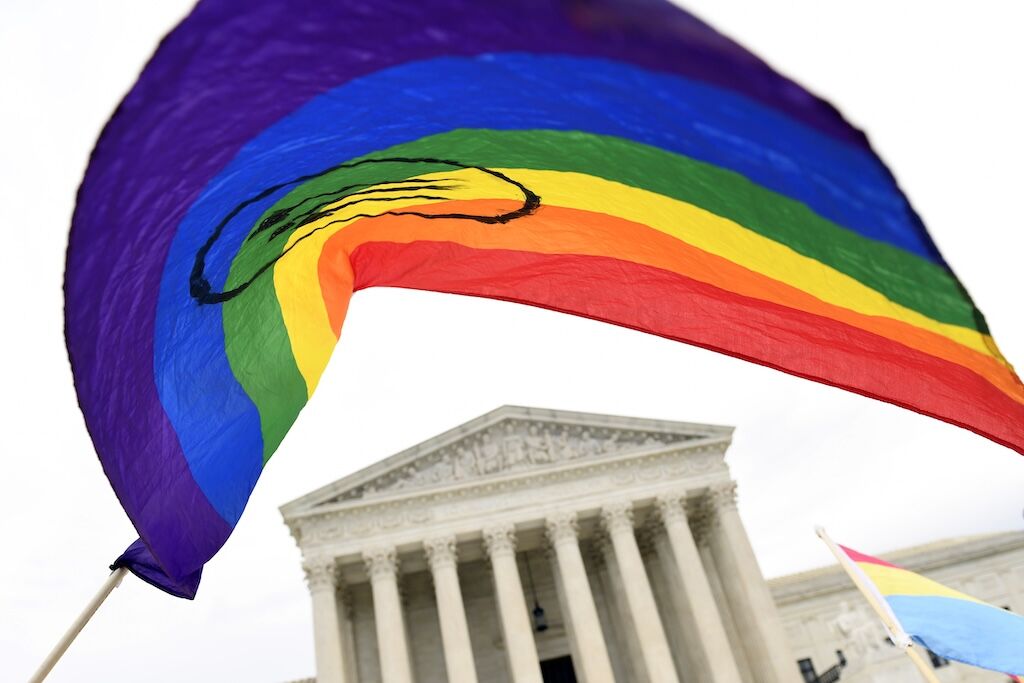
Colorado leaders weigh next steps after Supreme Court rejects state ban on ‘conversion therapy’
Marissa Ventrelli
marissa.ventrelli@coloradopolitics.com
Updated 2 days ago
Colorado leaders said they are weighing next steps after the U.S. Supreme Court on Tuesday rejected the state’s ban on “conversion therapy” for children, as critics and supporters cheered or lambasted the ruling. The court’s near-unanimous decision called the Colorado...
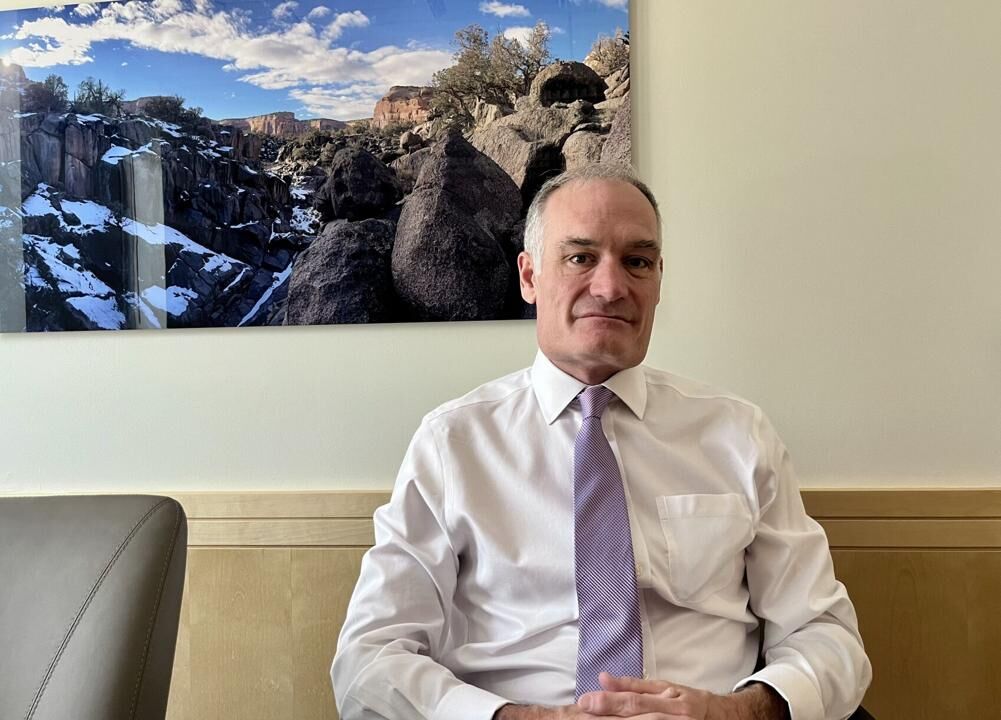
Federal judge dismisses U.S. government lawsuit against Colorado, Denver’s ‘sanctuary’ laws
Michael Karlik
michael.karlik@coloradopolitics.com
Updated 2 days ago
A federal judge dismissed the U.S. government’s lawsuit against Colorado and Denver on Tuesday, which alleged that various local policies impermissibly infringed on federal immigration enforcement. U.S. District Court Judge Gordon P. Gallagher followed the lead of judges in Illinois...
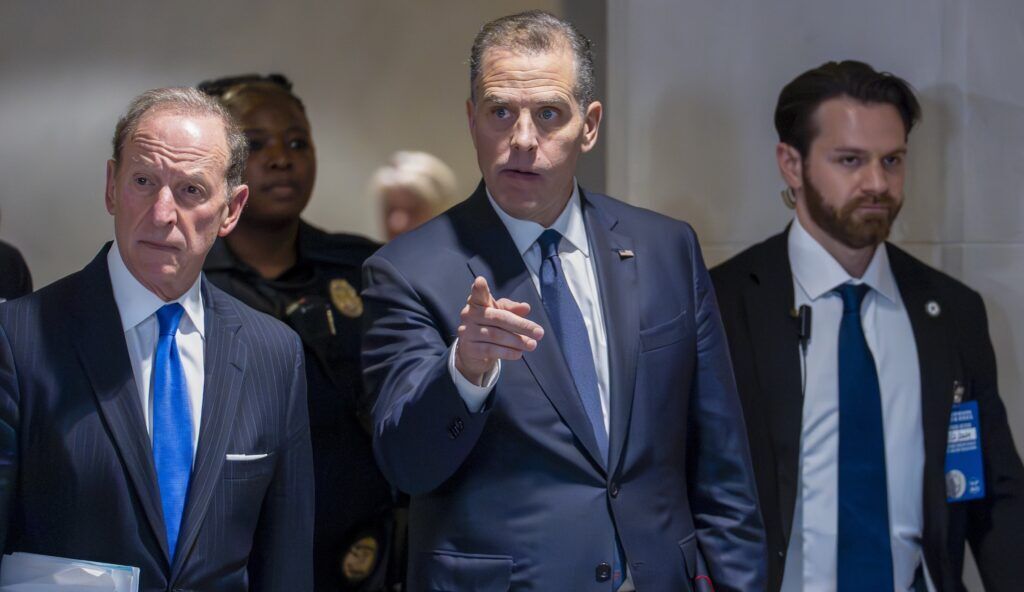
Federal judge finds DOJ adequately searched for, disclosed records related to Bidens
Michael Karlik
michael.karlik@coloradopolitics.com
Updated 2 days ago
A federal judge determined on Friday that the U.S. Department of Justice adequately searched for and disclosed records to a Colorado attorney in response to his request for documents related to former President Joe Biden’s son and brother. In November...
10th Circuit warns lawyers after finding fake case in filing
Michael Karlik
michael.karlik@coloradopolitics.com
Updated 2 days ago
The Denver-based federal appeals court warned attorneys to be more careful last month after discovering one lawyer cited a fake case in his arguments. In recent months, federal and state judges in Colorado have begun cautioning lawyers explicitly about the...

10th Circuit rules cognitively impaired man’s risk of lobotomy, mistreatment in Mexico not ‘torture’
Michael Karlik
michael.karlik@coloradopolitics.com
Updated 3 days ago
The Denver-based federal appeals court concluded last month that a man’s risk of mistreatment or forced lobotomy in his native Mexico did not amount to “torture” that should shield him from deportation. A three-judge panel of the U.S. Court of...
PREV
PREVIOUS
Polis vetoes two bills, administratively signs 19 more
Gov. Jared Polis on Friday issued his second and third vetoes of bills from the 2021 legislative session, killing proposals on titling procedures and sales tax requirements for off-highway vehicle transfers, and updating a technical error from a 2019 bill on transportation infrastructure projects funding. Polis also signed into law 19 bills ranging from a […]

Recall Polis group adds Secretary of State Griswold to recall list; late July drop for petitions planned
The group organizing a late July petition campaign to recall Gov. Jared Polis also has its eyes on Secretary of State Jena Griswold. Polis Recall 2021 said in a statement to Colorado Politics on Thursday that they have now officially amended the name of the group to Recall Polis-Griswold 2021. Recall organizer Lori Cutunilli of Breckenridge […]