

Justice Thomas warns of ‘unstable’ pot policy as SCOTUS denies Denver dispensary’s appeal
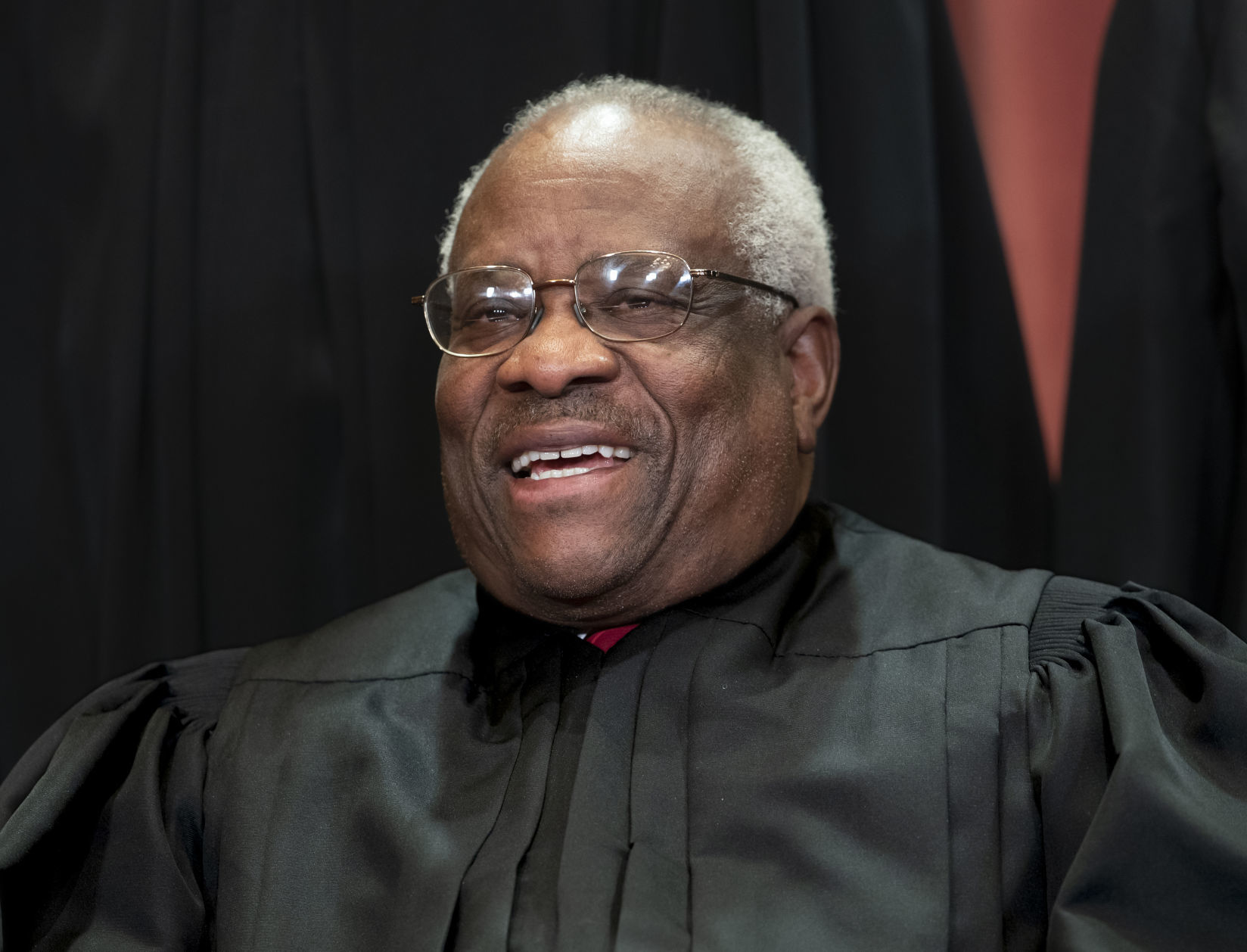
Although the U.S. Supreme Court has declined to hear a Denver dispensary’s appeal over the tax code’s treatment of the marijuana industry, one justice issued a broad statement about the “contradictory and unstable” relationship between state policies legalizing cannabis and the federal government’s inconsistent enforcement of its prohibition.
Justice Clarence Thomas on Monday wrote separately to say that federal authorities have sent mixed signals to the 36 states allowing medicinal marijuana and 18 states with retail marijuana, and suggested it might be time to scrap the Court’s 16-year-old precedent allowing for crackdowns on pot in places where it is legal.
“A prohibition on intrastate use or cultivation of marijuana may no longer be necessary or proper to support the Federal Government’s piecemeal approach,” Thomas argued.
“This is one of the first statements, and maybe the first, I have seen from a Supreme Court justice about it,” said Erwin Chemerinsky, the dean of Berkeley Law who has written about the conflict between state and federal laws regarding marijuana.
James D. Thorburn, the attorney representing Standing Akimbo medical dispensary in Denver, believed Thomas may have been speaking for more members of the court than just himself, and called the statement a positive development for cannabis advocates.
“This is the best consolation prize we could have possibly gotten,” Thorburn told Colorado Politics.
Standing Akimbo challenged Section 280E of the Internal Revenue Code, which prohibits companies “trafficking in controlled substances” from taking business tax deductions. Given marijuana’s status as an outlawed substance on the federal level, this prohibition applies to the cannabis industry.
The Internal Revenue Service, in investigating Standing Akimbo’s tax compliance, sought product tracking records from Colorado’s Marijuana Enforcement Tracking Reporting and Compliance system. The dispensary sought to block the investigation, but the federal appeals court based in Colorado ruled against them.
After Standing Akimbo appealed to the Supreme Court, the Biden administration weighed in firmly against the notion of “state-legal” marijuana.
“States may not countermand Congress’s decision to prohibit trafficking in marijuana. Such activity violates federal law even when it does not independently violate state law (and even when it is affirmatively permitted by state law),” wrote Acting Solicitor General Elizabeth B. Prelogar to the Court in February. The solicitor general’s office did not immediately respond to a request for comment on Monday.
Thomas appeared to find it interesting that the federal government has generally left states to experiment with marijuana legalization, but not when it comes to Section 280E.
“In other words, petitioners have found that the Government’s willingness to often look the other way on marijuana is more episodic than coherent,” he observed.
In 2005, the Supreme Court decided in Gonzales v. Raich that Congress’s authority to regulate interstate commerce also allowed for the federal ban on marijuana to extend locally, even in states where it is legal. But by tolerating the increasing number of states that have bucked federal law and voted to legalize retail marijuana, starting with Colorado and Washington in 2012, the federal government has given the cannabis industry a reasonable impression that they will be treated like any other sector.
“Once comprehensive, the Federal Government’s current approach is a half-in, half-out regime that simultaneously tolerates and forbids local use of marijuana,” he noted. “This contradictory and unstable state of affairs strains basic principles of federalism and conceals traps for the unwary.”
Erik Altieri, executive director of NORML, which advocates for the reform of marijuana laws, called on Congress to “get their heads out of the sand” and end the federal prohibition.
“Justice Thomas’ comments reflect something that has been obvious to a vast majority of Americans for some time now. With nearly half of all Americans residing in a state where the use of marijuana by adults is completely legal, it is both absurd and problematic that the official policy of our federal government is that all marijuana consumption, cultivation or sale are considered criminal actions,” he said.
As of fall 2020, 68% of Americans support the legalization of cannabis, the highest favorable percentage Gallup has measured in its five decades of polling on the question. Last week, Connecticut became the 19th state to allow retail marijuana.
Joe Rogoway, a cannabis attorney based in California, believed the Supreme Court declining to take up Standing Akimbo’s tax law appeal might actually indicate the justices are waiting for a different case presenting a different question before they agree to dive into the Controlled Substances Act.
“It’s really over an arc of time how these develop,” Rogoway said. “I would look out for pieces of [Thomas’s] opinion that could very well become recycled through actual published opinions if they grant review for something in the future.”


Judge rules that Colorado law makes it too hard for parties to bar unaffiliated voters from primaries
Ernest Luning
ernest.luning@coloradopolitics.com
Updated 59 minutes ago
A federal judge ruled in favor of the Colorado Republican Party late Tuesday, saying that a portion of the state law that allows unaffiliated voters to cast ballots in party primaries is unconstitutional because it imposes an unrealistic burden on...
10th Circuit upholds regulator’s methodology for Tri-State exit fees
Michael Karlik
michael.karlik@coloradopolitics.com
Updated 3 hours ago
The Denver-based federal appeals court upheld a regulatory agency’s methodology for calculating the fee owed by entities seeking to withdraw from Tri-State Generation and Transmission Association last week. Tri-State is a Westminster-based cooperative that provides and transmits electricity to member...
Federal judge proposes sanctions against Mike Lindell’s lawyers for continued fake citations
Michael Karlik
michael.karlik@coloradopolitics.com
Updated 5 hours ago
A federal judge is once again pursuing sanctions against lawyers for MyPillow CEO Mike Lindell for continuing to cite to court cases that do not exist, likely based on the faulty output of artificial intelligence tools. Last year, a jury...
Susan Blanco signals views on role of appellate courts in first opinion as Colorado justice
Michael Karlik
michael.karlik@coloradopolitics.com
Updated 8 hours ago
Justice Susan Blanco’s first solo opinion as a new member of the Colorado Supreme Court made clear her view of the guardrails that keep the state’s highest court tethered to the issues it is asked to decide. On Monday, the...
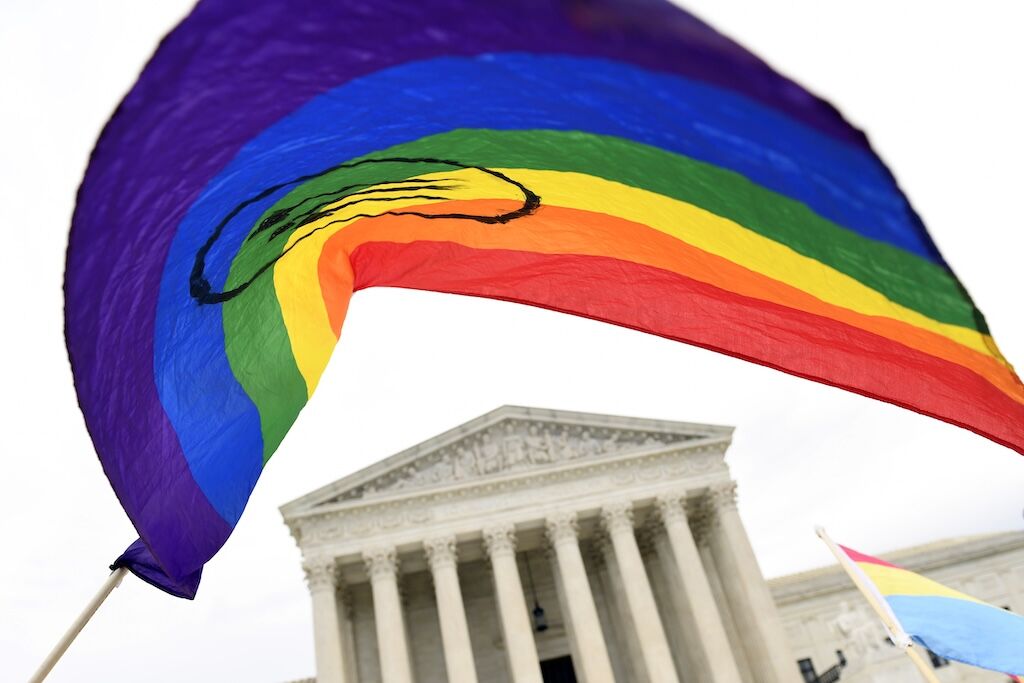
Colorado leaders weigh next steps after Supreme Court rejects state ban on ‘conversion therapy’
Marissa Ventrelli
marissa.ventrelli@coloradopolitics.com
Updated 1 day ago
Colorado leaders said they are weighing next steps after the U.S. Supreme Court on Tuesday rejected the state’s ban on “conversion therapy” for children, as critics and supporters cheered or lambasted the ruling. The court’s near-unanimous decision called the Colorado...
Federal judge dismisses U.S. government lawsuit against Colorado, Denver’s ‘sanctuary’ laws
Michael Karlik
michael.karlik@coloradopolitics.com
Updated 1 day ago
A federal judge dismissed the U.S. government’s lawsuit against Colorado and Denver on Tuesday, which alleged that various local policies impermissibly infringed on federal immigration enforcement. U.S. District Court Judge Gordon P. Gallagher followed the lead of judges in Illinois...
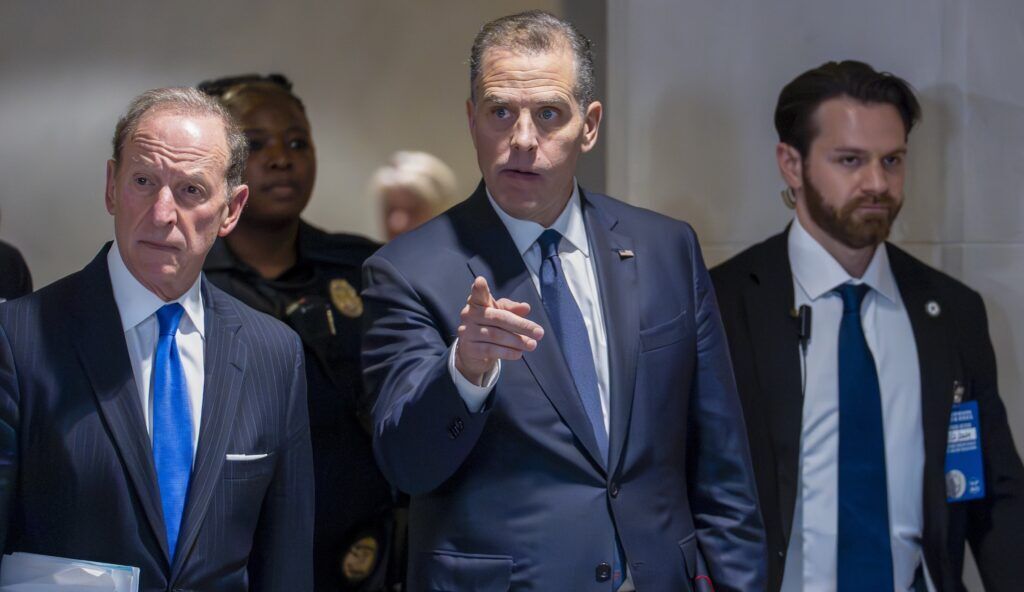
Federal judge finds DOJ adequately searched for, disclosed records related to Bidens
Michael Karlik
michael.karlik@coloradopolitics.com
Updated 1 day ago
A federal judge determined on Friday that the U.S. Department of Justice adequately searched for and disclosed records to a Colorado attorney in response to his request for documents related to former President Joe Biden’s son and brother. In November...
10th Circuit warns lawyers after finding fake case in filing
Michael Karlik
michael.karlik@coloradopolitics.com
Updated 23 hours ago
The Denver-based federal appeals court warned attorneys to be more careful last month after discovering one lawyer cited a fake case in his arguments. In recent months, federal and state judges in Colorado have begun cautioning lawyers explicitly about the...

10th Circuit rules cognitively impaired man’s risk of lobotomy, mistreatment in Mexico not ‘torture’
Michael Karlik
michael.karlik@coloradopolitics.com
Updated 2 days ago
The Denver-based federal appeals court concluded last month that a man’s risk of mistreatment or forced lobotomy in his native Mexico did not amount to “torture” that should shield him from deportation. A three-judge panel of the U.S. Court of...
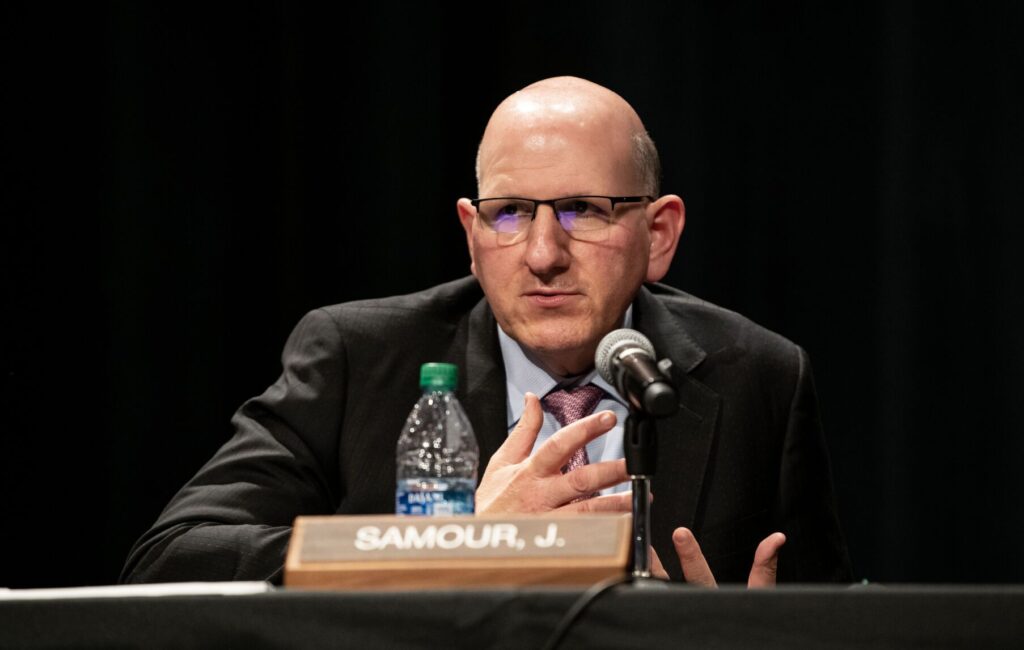
Colorado justices side with news organizations for disclosure of high-level child abuse data
Michael Karlik
michael.karlik@coloradopolitics.com
Updated 1 day ago
The Colorado Supreme Court ruled on Monday that the state must disclose the number of child abuse reports at individual group living facilities in response to an open records request, as the addresses are already in the public domain. The...
PREV
PREVIOUS
U.S. District Court rules in favor of Rep. Lauren Boebert on Twitter blocking lawsuit
A judge in Colorado’s 10th Circuit has ruled in favor of U.S. Rep. Lauren Boebert, R-Silt, in a lawsuit over blocking constituents on Twitter. Judge Daniel Domenico turned down a request for a preliminary injunction against Boebert filed by former state Rep. Bri Buentello, a Pueblo Democrat, whom Boebert had blocked from her personal Twitter […]

Q&A with Sgt. Carla Havard | Police equity advocate on the inside
Colorado Politics: In your mind, what is the purpose of policing in the United States? Carla Havard: The purpose of police in my mind is to ensure a safe environment for all – to make sure laws are followed and boundaries are respected. FAST FACTS Carla Havard is a sergeant with the Denver Police Department and a 23-year […]