

Walmart loses attempt to slash property tax assessment by 60% in Adams County

The Court of Appeals has rejected an attempt by Walmart to slash the tax valuation of its equipment by 60% for three Adams County stores, as a panel of judges on Thursday determined the county assessor had acted correctly in concluding the big box company was not facing a “retail apocalypse.”
Walmart based its appeal on the idea that increased online commerce is forcing traditional stores to close down, saturating the market with secondhand store property – shelving, display racks, tools, forklifts, refrigeration units and the like. These items, known as business personal property, therefore face “economic obsolescence” in addition to physical wear and tear, given that a glut in the aftermarket lowers its price.
“With the surge of e-commerce, traditional brick-and-mortar retailers are struggling to stay alive,” Brian Huebsch, an attorney for Walmart, argued in court filings. “Commentators identify this as the ‘Retail Apocalypse.'”
However, the three-member Court of Appeals panel disagreed that Adams County’s personal property appraiser disobeyed the law by failing to calculate economic obsolescence when evaluating two Walmart and one Sam’s Club (a subsidiary of Walmart) stores.
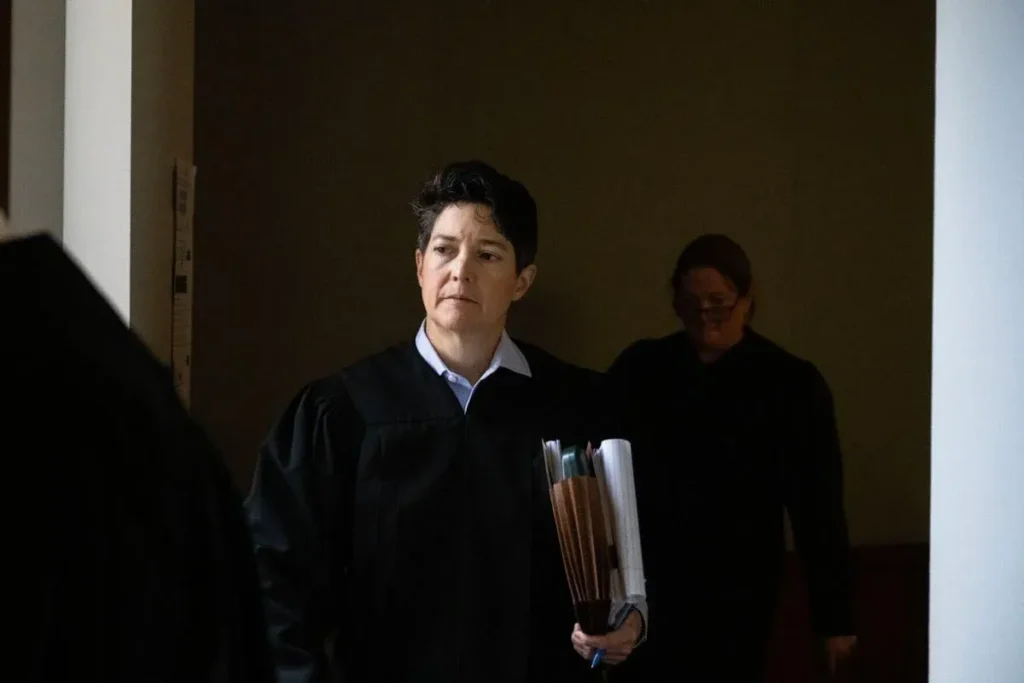
“He evaluated the value of Wal-Mart’s personal property when installed and in use by the three stores – rather than based on a future or hypothetical sale of the used equipment,” wrote Judge Craig R. Welling in the panel’s June 17 opinion. “And the Assessor considered the market in Adams County and in Colorado as a whole and determined that it was growing – not deteriorating.”
Appraiser Loren Morrow calculated the value of Walmart’s business personal property to be nearly $4.4 million after evaluating the purchase cost and applying a depreciation factor found in a manual of the Assessor’s Reference Library. He opted against calculating economic obsolescence, which is a factor if negative market forces affect the value of the property.
Morrow discovered that the National Retail Federation named Walmart a national industry sales leader, that the University of Colorado-Boulder’s Leeds School of Business had said the retail sector was doing well in the state, and that there was robust home construction in Adams County to bring new customers. Those findings indicated no need to apply an additional depreciation factor.
“What Wal-Mart conveniently leaves out of its arguments is that it seemingly has not been affected by this [retail] apocalypse at all here in Colorado or Adams County,” Assistant County Attorney Meredith P. Van Horn told the court.
Walmart argued that its personal property tax valuation should be closer to $1.7 million, and focus on the items’ value in the secondhand market. But the company lost its appeal in Adams County and also the state’s Board of Assessment Appeals, turning at last to the Court of Appeals.
“We’re here because Walmart is a successful retailer,” Huebsch told the judges at oral argument. “Under the constitutional structure of our property tax, the value of property cannot be dependent on the characteristics – large, small, successful or unsuccessful – of the owner. It is an objective standard: market value.”
He cited a Colorado Supreme Court decision from 1962 involving the Colorado & Utah Coal Company’s appeal of a property valuation seven times higher than the company believed it should be. The justices agreed the Routt County assessor should have considered economic obsolesce when calculating the value for the company’s property tax bill.
However, Senior Assistant Attorney General Krista Maher, representing the Board of Assessment Appeals, contended that Walmart’s circumstances were vastly different from the coal company’s.
“The coal mine was struggling so badly it ended up deciding to close and had made that decision before the evaluation,” she said. “Here, in contrast, the county presented evidence that the appraiser found Walmart was thriving.”
An attorney for Walmart did not immediately respond to a request for comment.
Tim Wilmath and Pat Alesandrini, property appraisers for Hillsborough County, Fla., observed in a November 2015 article that big box retailers are “organized and aggressive” in appealing their property tax valuations. Claiming obsolescence is one of the common arguments used.
“Pundits have been forecasting the demise of physical stores for decades. But retail giants such as Walmart, Lowe’s, and Costco apparently didn’t get the memo, because new big-box stores are being built every year,” Wilmath and Alesandrini wrote.
Also sharing that outlook was Gerald Storch, the former CEO of Hudson’s Bay and Toys R Us, who told CNBC in 2018 that Walmart’s brick-and-mortar stores were not necessarily imperiled from online competition.
“Everyone is not shopping on the internet, and they never will, so they came to Walmart stores in droves,” Storch said.
Big box retailers have similarly attempted to achieve lower property tax valuations, including in Colorado, through the “dark store theory,” which suggests operating stores should be valued the same as vacant ones.
Norman Wright, an attorney who has litigated similar tax assessment cases, said the appellate panel’s conclusions about economic obsolescence were unsurprising.
“I suspect, give it another 10 or 15 years, you’ll have gas stations making this argument or petroleum refiners if the market eventually moves to electric cars. They’ll be replaced,” he said. “But until there is pretty objective evidence that you’re in an industry that’s fading, they’re pretty difficult arguments to make.”
The case is Walmart v. Adams County Board of Equalization, et al.



Federal judge finds DOJ adequately searched for, disclosed records related to Bidens
Michael Karlik
michael.karlik@coloradopolitics.com
Updated 29 minutes ago
A federal judge determined on Friday that the U.S. Department of Justice adequately searched for and disclosed records to a Colorado attorney in response to his request for documents related to former President Joe Biden’s son and brother. In November...

10th Circuit warns lawyers after finding fake case in filing
Michael Karlik
michael.karlik@coloradopolitics.com
Updated 4 hours ago
The Denver-based federal appeals court warned attorneys to be more careful last month after discovering one lawyer cited a fake case in his arguments. In recent months, federal and state judges in Colorado have begun cautioning lawyers explicitly about the...

Colorado leaders weigh next steps after US Supreme Court rules against state’s ‘conversion therapy’ ban
Marissa Ventrelli
marissa.ventrelli@coloradopolitics.com
Updated 43 minutes ago
Colorado leaders and advocacy groups remain divided after the U.S. Supreme Court on Tuesday ruled against the state’s ban on conversion therapy for minors, ruling 8-1 that the 2019 law violates the First Amendment. While it is a victory for...

10th Circuit rules cognitively impaired man’s risk of lobotomy, mistreatment in Mexico not ‘torture’
Michael Karlik
michael.karlik@coloradopolitics.com
Updated 17 hours ago
The Denver-based federal appeals court concluded last month that a man’s risk of mistreatment or forced lobotomy in his native Mexico did not amount to “torture” that should shield him from deportation. A three-judge panel of the U.S. Court of...

Colorado justices side with news organizations for disclosure of high-level child abuse data
Michael Karlik
michael.karlik@coloradopolitics.com
Updated 22 hours ago
The Colorado Supreme Court ruled on Monday that the state must disclose the number of child abuse reports at individual group living facilities in response to an open records request, as the addresses are already in the public domain. The...
Divided Colorado Supreme Court finds Denver detective did not violate defendant’s Miranda rights
Michael Karlik
michael.karlik@coloradopolitics.com
Updated 17 hours ago
The Colorado Supreme Court determined on Monday that a Denver detective did not improperly resume questioning of a defendant in custody after he invoked his right to counsel. By 4-3, the justices reversed a trial judge’s order that found a...

Out-of-state judges address ex-discipline director’s lawsuit, Colorado justices accept federal invitation | COURT CRAWL
Michael Karlik
michael.karlik@coloradopolitics.com
Updated 1 day ago
Welcome to Court Crawl, Colorado Politics’ roundup of news from the third branch of government. A pair of out-of-state judges got down to business in a lawsuit brought by Colorado’s former judicial discipline director, plus the state Supreme Court has...

Federal judge upholds constitutionality of Colorado campaign contribution limits
Michael Karlik
michael.karlik@coloradopolitics.com
Updated 4 days ago
A federal judge upheld Colorado’s individual campaign contribution limits as constitutional on Thursday, finding that three Republican plaintiffs failed to prove the campaign finance framework violates their First Amendment rights. U.S. District Court Senior Judge John L. Kane recognized that...

Appeals court rejects theory that existing tax revenue undermines need for new fees
Michael Karlik
michael.karlik@coloradopolitics.com
Updated 4 days ago
Colorado’s second-highest court rejected a plaintiff’s claim on Thursday that the tax revenue generated by an existing activity should prevent local governments from imposing new fees aimed at regulating the activity. The question stemmed from Colorado’s unique constraints on taxation...
Appeals court finds no illegal sentence when defendants forfeit time-served credit
Michael Karlik
michael.karlik@coloradopolitics.com
Updated 3 days ago
Colorado’s second-highest court ruled on Thursday that criminal defendants may agree to relinquish the credits they earned while incarcerated pending trial, despite a state law guaranteeing that such time “shall be deducted” from a person’s sentence. Kerry Ellis Endsley pleaded...
PREV
PREVIOUS

Polis puts his signature on mental health legislation
Gov. Jared Polis rounded out this week’s stimulus bill signings by enshrining into state law two pieces of legislation focused on mental health. At a ceremony at Children’s Hospital in Aurora, Polis put pen to paper on House Bill 1258 and Senate Bill 239, bringing the total number of Colorado Recovery Plan bills that have been signed into […]

Court orders review of Aurora ICE detainee's 32-month detention
A federal judge has ordered the government to hold a bond hearing for a man whom U.S. Customs and Immigration Enforcement detained at the privately-run Aurora facility for more than 32 months while his appeal was pending. U.S. District Court Judge Christine M. Arguello directed that Billa Singh be brought before an immigration judge, where […]