

DougCo deputies acted unconstitutionally in searching driver’s pill bottles, court finds

Douglas County Sheriff’s deputies lacked probable cause to investigate an unlabeled pill bottle they spotted and seized from a man’s car, the Court of Appeals decided on Thursday in reversing the defendant’s drug conviction.
The three-judge panel noted the deputies had been inconsistent about their descriptions of what they saw in the car, initially describing “multiple” unlabeled containers, but eventually testifying there was only one.
“Had evidence been presented,” wrote Judge John Daniel Dailey, “that the deputies had seen, without touching or otherwise moving anything in the driver’s side pocket, multiple unlabeled pill bottles, we might have reached a different conclusion about the existence of probable cause. But we have found no such evidence.”
The panel cited numerous state and federal court decisions from across the country that determined an unlabeled pill bottle by itself is not probable cause to suspect criminal activity. Most of those cases required other unusual circumstances, such as further illegal activity, slurred speech or other suspicious conduct from the defendant while interacting with officers. In this instance, the court did not see other indications the defendant was under the influence of substances.
According to court documents, Henoke Alemayehu backed into another car in a parking lot and a bystander reported it to a nearby Douglas County Sheriff’s employee. A lieutenant approached Alemayehu, who had parked nearby in the lot with his engine running. Alemayehu got out of the vehicle and produced a paper with a fake name and number, the records said.
After discussing the matter with Alemayehu, the lieutenant called for backup and turned off the car himself. When a deputy arrived and asked for registration and insurance, Alemayehu indicated to the driver’s sun visor. The deputy opened the door to look for the documents, and another deputy nearby reportedly noticed prescription pill bottles at the bottom of the door, at least one of which was unlabeled.
The second deputy quizzed Alemayehu about the pills, and Alemayehu eventually said they belonged to a friend. The deputy then opened the bottles, used his phone to research the code on the pills and determined them to be oxycodone, a pain reliever with a high risk for addiction. There was another pill bottle found in the glove compartment during the search for paperwork.
A jury convicted Alemayehu for possessing a controlled substance and failure to report an accident. The Court of Appeals agreed there was sufficient evidence to prove Alemayehu knowingly possessed the pills, including their proximity to him in the car, of which he was the owner and sole occupant.
However, the court sided with Alemayehu that the trial court should have barred the pill bottles as evidence in the first place.
“The Fourth Amendment provides protection to the owner of a container that conceals its contents from plain view,” wrote Dailey in the May 20 opinion, “and a search of the concealed contents of a seized container must be either accompanied by a search warrant or justified by an exception to the warrant requirement.”
The exception, known as the “plain view exception,” permits officers to seize objects without a warrant if the object is obviously incriminating and police lawfully had access to it. However, lawfully seizing a container does not necessarily allow police to open it and search it.
District Court Judge Shay K. Whitaker upheld the search and seizure of the pill bottles because the officers’ training and experience reportedly provided them with reasonable suspicion that the bottles contained illegal narcotics.
But the appellate panel said reasonable suspicion was not the correct standard. The deputies needed probable cause to associate the pill bottles with criminal activity. One deputy had stated to the trial court that a missing label most likely indicates the pills belong to someone else. The other told the court, “it’s illegal to have pills in a bottle without a label on it.”
“Neither the prosecution in the trial court nor the People on appeal, however, have identified a statutory provision prohibiting the removal or alteration of labels,” Dailey countered.
The court reversed Alemayehu’s drug conviction and ordered a new trial.
The case is People v. Alemayehu.


Colorado justices accept appeals on Netflix taxation, children pursuing neglect cases
Michael Karlik
michael.karlik@coloradopolitics.com
Updated 13 hours ago
The Colorado Supreme Court announced on Monday that it will decide whether Netflix subscriptions are subject to the state’s sales tax as “tangible personal property.” At least three of the court’s seven members must agree to hear an appeal. The...

Denver judge denies Gov. Polis request to dismiss ICE-related records case
Marianne Goodland
marianne.goodland@coloradopolitics.com
Updated 16 hours ago
A year after blocking the release of state records to federal immigration agents, a Denver judge has now denied Gov. Jared Polis’ effort to end the lawsuit at the center of the dispute. The lawsuit filed against the governor in...

10th Circuit grants rare all-judges’ review of Colorado banking regulation
Michael Karlik
michael.karlik@coloradopolitics.com
Updated 17 hours ago
The Denver-based federal appeals court announced on Thursday that it will hold a rare all-judges review of a recent decision that permits Colorado to require out-of-state banks to abide by the state’s maximum interest rates when they lend to in-state...
Colorado appeals court orders new sentencing for Tina Peters, upholds convictions
Michael Karlik
michael.karlik@coloradopolitics.com
Updated 12 hours ago
Colorado’s second-highest court determined on Thursday that a trial judge improperly sentenced former Mesa County clerk Tina Peters based upon her exercise of protected speech, while at the same time upholding her convictions. The three-judge Court of Appeals panel also...
Judge rules that Colorado law makes it too hard for parties to bar unaffiliated voters from primaries
Ernest Luning
ernest.luning@coloradopolitics.com
Updated 19 hours ago
A federal judge ruled in favor of the Colorado Republican Party late Tuesday, saying that a portion of the state law that allows unaffiliated voters to cast ballots in party primaries is unconstitutional because it imposes an unrealistic burden on...
10th Circuit upholds regulator’s methodology for Tri-State exit fees
Michael Karlik
michael.karlik@coloradopolitics.com
Updated 19 hours ago
The Denver-based federal appeals court upheld a regulatory agency’s methodology for calculating the fee owed by entities seeking to withdraw from Tri-State Generation and Transmission Association last week. Tri-State is a Westminster-based cooperative that provides and transmits electricity to member...
Federal judge proposes sanctions against Mike Lindell’s lawyers for continued fake citations
Michael Karlik
michael.karlik@coloradopolitics.com
Updated 2 days ago
A federal judge is once again pursuing sanctions against lawyers for MyPillow CEO Mike Lindell for continuing to cite to court cases that do not exist, likely based on the faulty output of artificial intelligence tools. Last year, a jury...
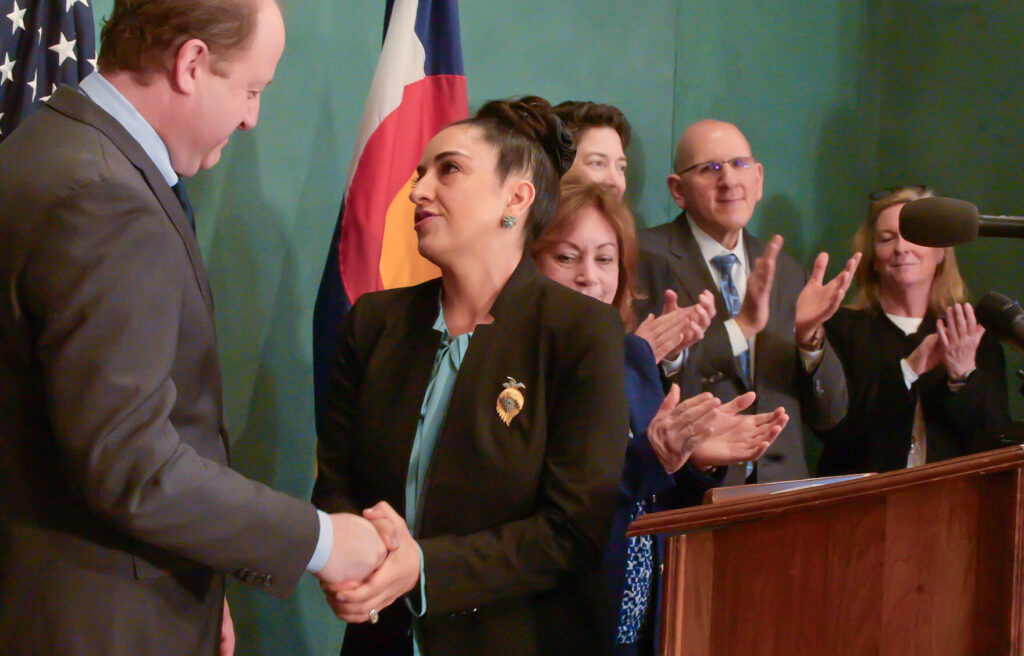
Susan Blanco signals views on role of appellate courts in first opinion as Colorado justice
Michael Karlik
michael.karlik@coloradopolitics.com
Updated 2 days ago
Justice Susan Blanco’s first solo opinion as a new member of the Colorado Supreme Court made clear her view of the guardrails that keep the state’s highest court tethered to the issues it is asked to decide. On Monday, the...
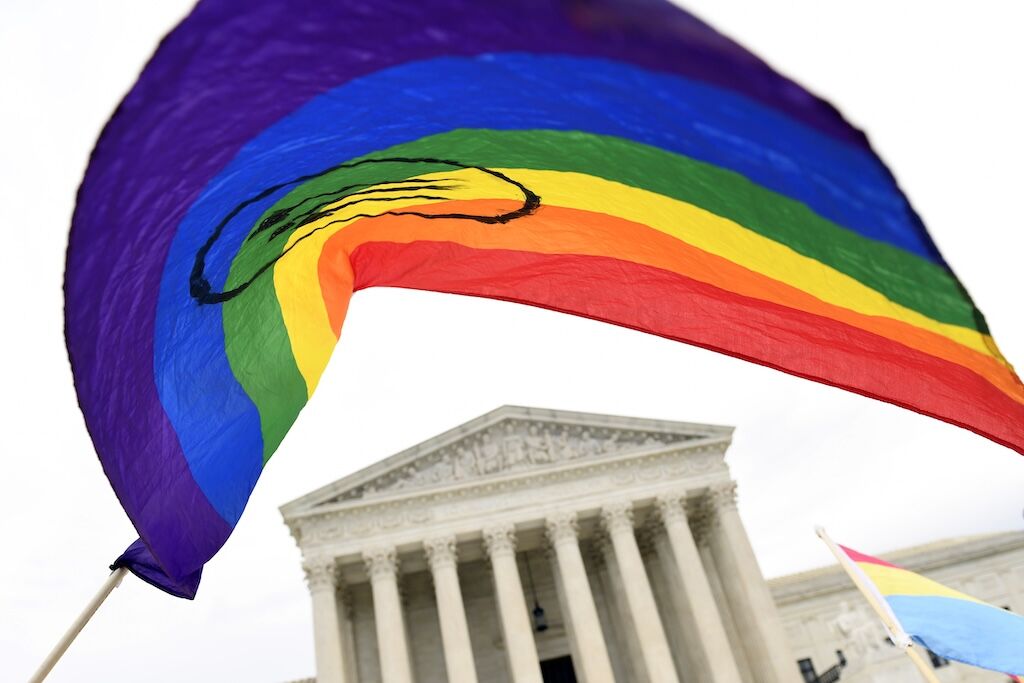
Colorado leaders weigh next steps after Supreme Court rejects state ban on ‘conversion therapy’
Marissa Ventrelli
marissa.ventrelli@coloradopolitics.com
Updated 2 days ago
Colorado leaders said they are weighing next steps after the U.S. Supreme Court on Tuesday rejected the state’s ban on “conversion therapy” for children, as critics and supporters cheered or lambasted the ruling. The court’s near-unanimous decision called the Colorado...
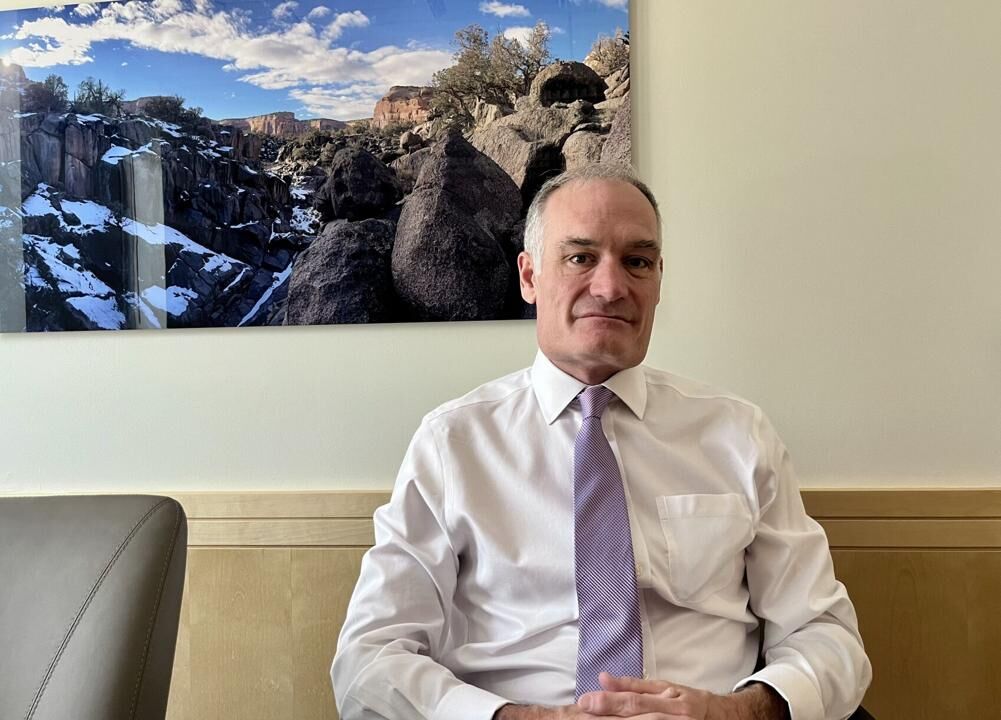
Federal judge dismisses U.S. government lawsuit against Colorado, Denver’s ‘sanctuary’ laws
Michael Karlik
michael.karlik@coloradopolitics.com
Updated 2 days ago
A federal judge dismissed the U.S. government’s lawsuit against Colorado and Denver on Tuesday, which alleged that various local policies impermissibly infringed on federal immigration enforcement. U.S. District Court Judge Gordon P. Gallagher followed the lead of judges in Illinois...
PREV
PREVIOUS

Adults can now possess up to two ounces of marijuana under new law
A bill signed into law Thursday by Gov. Jared Polis doubles the amount of marijuana that adults can possess from one ounce to two. Prior to the signing of House Bill 1090, possessing between one and two ounces of marijuana was a petty offense under state law. House Bill 1090 also allows those convicted of […]

As vaccination rates slow and supply grows, Colorado loosens storage protocols
Colorado is relaxing its COVID-19 storage and use requirements, Gov. Jared Polis said Thursday, a reflection of the growing supply of doses that now outstrip the demand of the remaining unvaccinated population. “The priority is, now, making sure that everybody who wants it can get it, and we don’t use any supply constraint as an […]