

Herd immunity in Colorado possible by mid-August if high vaccination rates continue
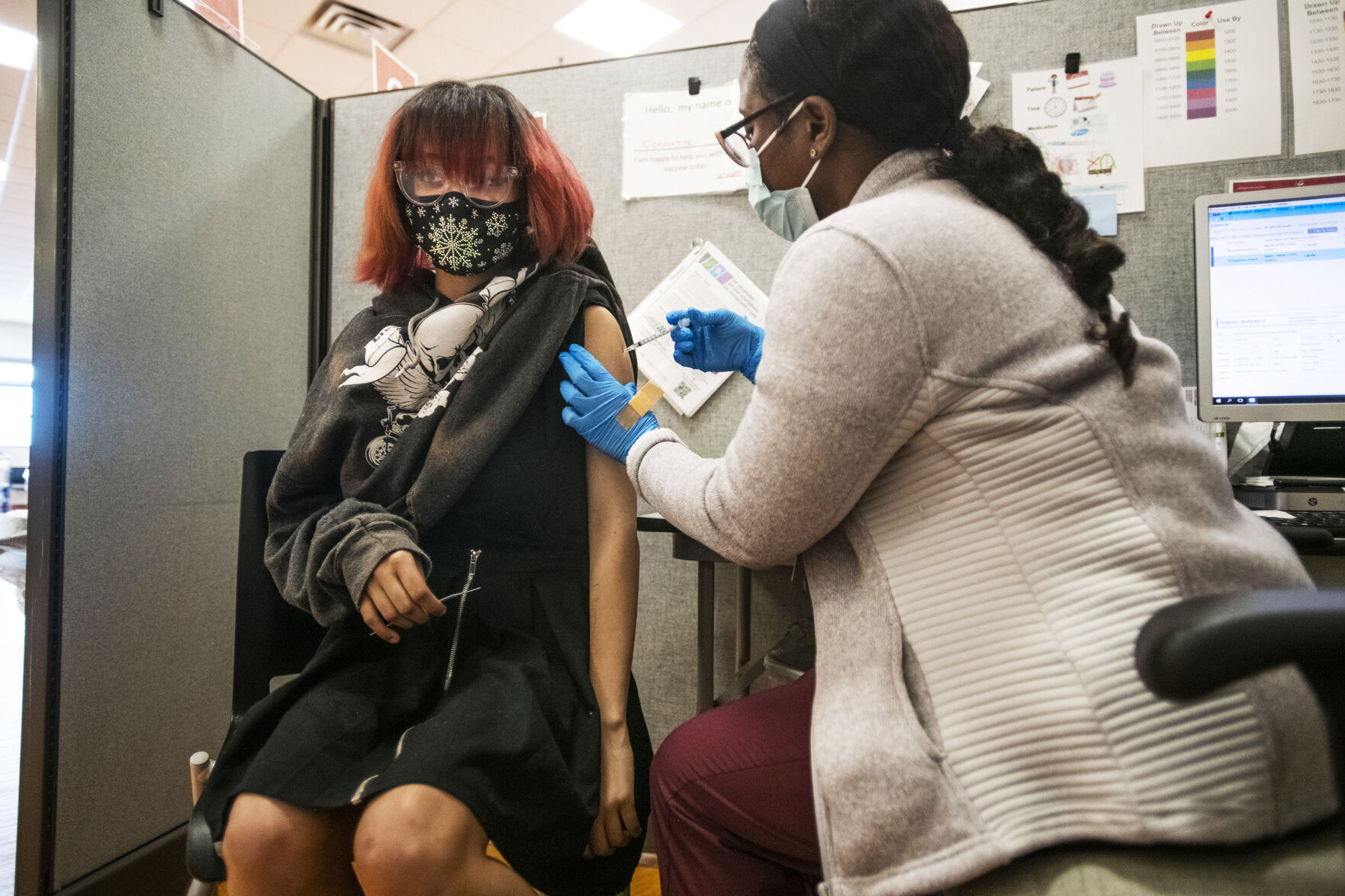
Local health experts are projecting that Colorado could reach herd immunity by the middle of August if people continue to get vaccinated at a high rate, according to a new statewide modeling report released Friday.
Health experts with the University of Colorado the Colorado School of Public Health wrote that in order to reach herd immunity, 80% of the state’s population 65 and under must get the vaccine.
Currently, researchers project that 48% of all Coloradans are immune to COVID-19 either due to the vaccine or prior infection.
Although the report gives a glimpse of optimism, it also shows that one in 81 Coloradans currently have COVID-19.
In wake of new mask order, who needs to keep covered up?
“There are high levels of SARS-CoV-2 infection in Colorado right now, and the unvaccinated, even those under 65, face real risks of infection and, in some cases, hospitalization and death,” said Beth Carlton, an associate professor with the public health school and a member of the modeling team.
Although an estimated 71,400 Coloradans are currently infected with COVID-19, there has been an overall decline in the number of cases and hospitalizations over the last two weeks.
To keep the numbers down throughout the summer and inch closer to herd immunity in Colorado, experts say vaccination is key. In the report, experts compared high and low rate vaccination rates to create long-term projections for the state.
Polis ends mask order in nearly all settings, says masking is a ‘suggestion,’ not a requirement
In the high-rate category, experts assumed 80% of all individuals aged 12 to 64 would receive the vaccine, while in the low they assume only 62% of people aged 40 to 64 and 50% of people 12 to 39 would receive the vaccine during the same period.
Values were estimated based on hesitancy rate surveys in Colorado provided by CDPHE.
Experts found that in the high-rate scenario, 70% of the state’s population would be vaccinated by the middle of August, and hospitalizations would decrease along with new cases of COVID-19.
In the low-rate scenario, there is no timeline for when herd immunity could potentially be achieved.
Cases and hospitalizations would continue to decline, but at a slower rate, and researchers project more than 150 additional hospitalizations in July compared to the high-rate scenario.
“This modeling indicates that the course of the epidemic curve into summer depends on the success of vaccinating Coloradans in the weeks ahead,” CDPHE officials said in a press release unveiling the report.


Colorado to get $615M from Meta child safety settlement
Thelma Grimes
thelma.grimes@coloradopolitics.com
Updated 5 hours ago
The parent company of Facebook and Instagram will pay hundreds of millions of dollars to Colorado, part of an $18 billion multistate deal, in which the company also agreed to adopt extensive child-safety changes to its operations. The settlement ended...
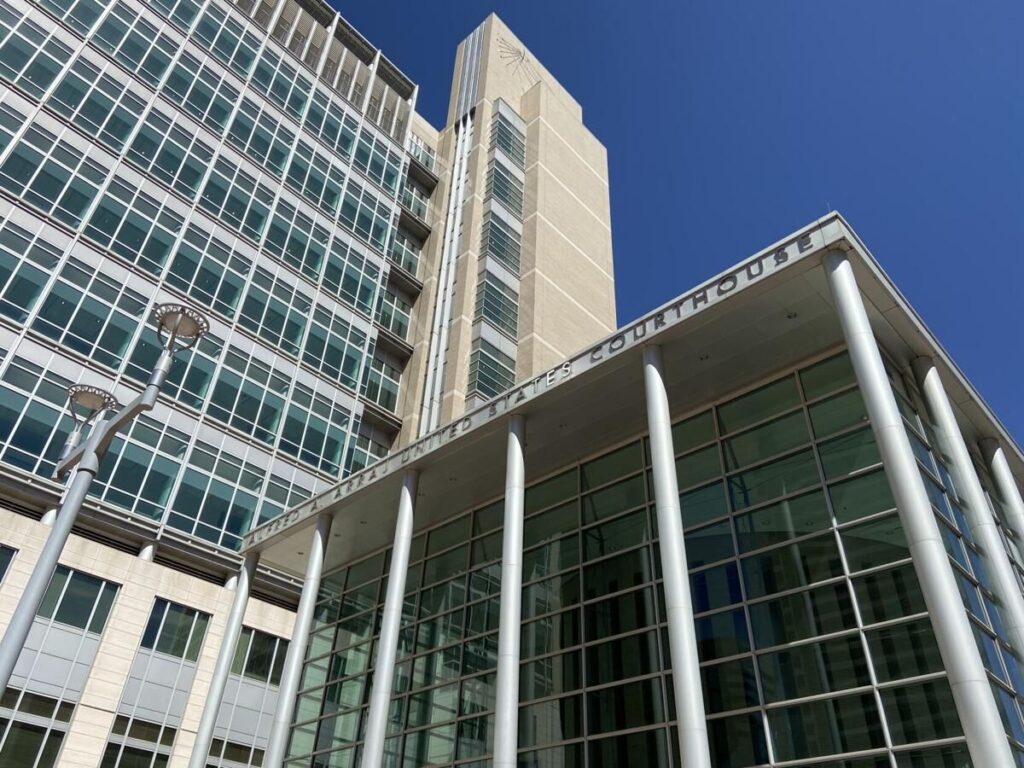
Colorado’s chief federal judge orders return of wrongfully deported man, second judge to explore ‘series’ of violations
Michael Karlik
michael.karlik@coloradopolitics.com
Updated 8 hours ago
Colorado’s chief federal judge took the extraordinary step of directing the government on Tuesday to do everything it can to return a man it deported in violation of his order. At the same time, Colorado’s chief magistrate judge has set...

Counties warn CPW that new comment limits sideline local governments
Marianne Goodland
marianne.goodland@coloradopolitics.com
Updated 6 hours ago
The September meeting of the Colorado Parks and Wildlife Commission will feature newly revised public‑comment rules — changes introduced by chair Jay Tutchton of Bent County, who announced them without first discussing the revisions publicly with the rest of the...

Controversial two-bag furbearer limit heads to CPW meeting under legal threat
Marianne Goodland
marianne.goodland@coloradopolitics.com
Updated 6 hours ago
Next week’s Colorado Parks and Wildlife Commission meeting in La Junta is likely to open under the cloud of threatened legal action. Safari Club International and the Sportsmen’s Alliance Foundation warned the commission this month that its July vote imposing...

Golden to pay $155,000 to fired city manager
Matt Kyle
matt.kyle@denvergazette.com
Updated 8 hours ago
The Golden City Council on Tuesday approved a roughly $155,000 severance payout to former city manager Scott Vargo, who was fired earlier this month following a “racist incident” at a city fire station. The payout is part of a separation...

Trump says the US doesn’t need Canada. America’s economy says otherwise.
The Associated Press
the-associated-press@coloradopolitics.com
Updated 9 hours ago
TORONTO (AP) — U.S. President Donald Trump says his country does not need Canada. But every day, roughly 4 million barrels of Canadian crude oil flow south, helping fuel American cars, trucks and airplanes and supply U.S. industry. And oil...

USPS ballot rule faces lawsuit from Colorado, other states
Thelma Grimes
thelma.grimes@coloradopolitics.com
Updated 7 hours ago
Colorado, along with 25 other states, filed a lawsuit against the U.S. Postal Service to challenge a new rule that seeks to restrict the mailing of ballots to American citizens in an eligible voters list. Colorado relies heavily on the...

FDA approves landmark pancreatic cancer drug that’s shown to improve survival
The Associated Press
the-associated-press@coloradopolitics.com
Updated 9 hours ago
WASHINGTON (AP) — The Food and Drug Administration on Wednesday approved a groundbreaking new drug for advanced pancreatic cancer, offering U.S. patients a more effective treatment against one of the deadliest types of cancer. FDA officials gave expedited approval to...
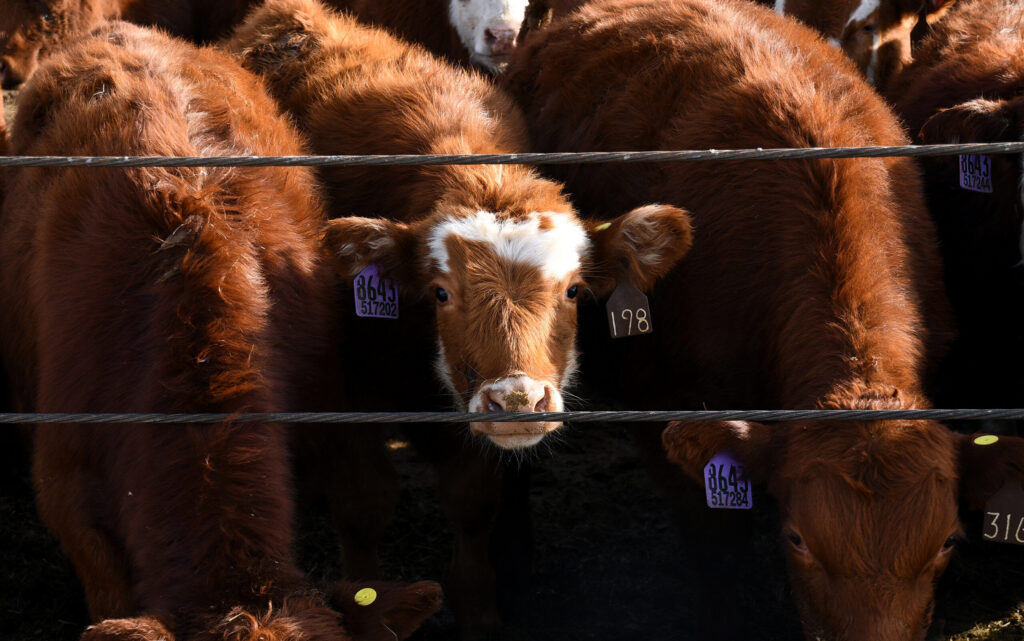
Trump defends pause on beef tariffs: Prices are ‘coming down very rapidly’
Naomi Lim
naomi-lim@coloradopolitics.com
Updated 11 hours ago
President Donald Trump defended his decision to pause tariffs on some beef imports, even as Republicans criticize the decision. “Prices are coming down very rapidly, and now beef is starting to come down,” Trump told The Glenn Beck Program on...
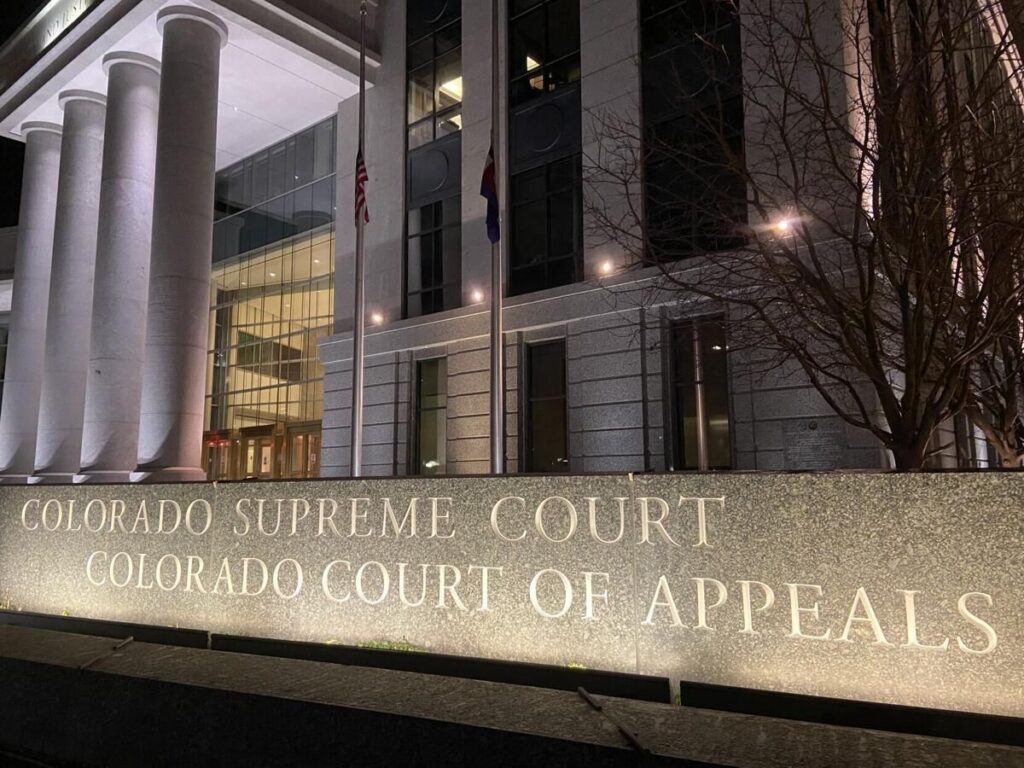
Denver murder, assault convictions reversed due to faulty jury instructions
Michael Karlik
michael.karlik@coloradopolitics.com
Updated 6 hours ago
Colorado’s second-highest court reversed a defendant’s convictions for murder and assault last week after concluding a Denver judge incorrectly omitted key jury instructions that could have affected the verdict and sentencing. Stephen C. Swainson fatally stabbed Israel Casillas in downtown...
PREV
PREVIOUS
State redistricting commissions rebuke lawmakers’ ‘unconstitutional infringement’ in census matter
Colorado’s two independent redistricting commissions have two words for state lawmakers: Hands off. In legal briefs filed by the two commissions, they wrote that state lawmakers overstepped their boundaries when they quickly advanced a piece of legislation that would change the redistricting process overwhelmingly approved by voters in 2018. Now they want the Colorado Supreme […]

Colorado appeals court agrees double jeopardy not applicable to foreign countries
Prosecuting a man in Colorado after he was already prosecuted and acquitted in a foreign country does not run afoul of the legal prohibition on double jeopardy, the Court of Appeals ruled for the first time on Thursday. The three-judge appellate panel affirmed the 2017 murder conviction of Rafael Aguilar Garcia, following an unusual scenario […]