

A LOOK BACK | Russian Jew credits Congressman Wirth with his release
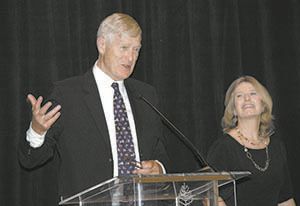
Forty Years Ago This Week: Democratic Congressman Tim Wirth of the 2nd CD, in a column for The Colorado Statesman, wrote “Few activities of Congress are as emotionally trying as our attempts to persuade the government of the Soviet Union, through our letters and telegrams, to allow its Jewish citizens to emigrate freely.”
Wirth and a number of his congressional colleagues worked tirelessly for months to secure the right of Lev Roitburd to leave the Soviet Union. Roitburd first asked permission to emigrate to Israel in 1973 and was subsequently arrested on charges of “showing resistance to authorities” and interred in a hard labor camp in Siberia.
Wirth wrote that even after Roitburd was released from the camp he was still denied permission to emigrate, at that time the U.S. Congress became involved.
“In 1980 we began a campaign of letters and telegrams to Soviet leaders,” Wirth wrote, “including President Leonid Brezhnev and Ambassador to the United States Antaoly Dobrynin, urging the release of Roitburd in accordance with internationally recognized human rights.”
In early 1981 Roitburd was finally allowed to emigrate to Israel and in April visited Wirth in Washington, D.C.
“Before me stood a man — not quite knowing what to make of the whirlwind of his sudden release and his tumultuous reception in America — but obviously pleased by it,” Wirth wrote. “Lev showed me that the efforts of the Americans to secure basic human rights for our brethren in the Soviet Union need not be in vain — for this I owe him a great deal.”
Shortly after returning to Israel Roitburd wrote to Wirth, stating that, “There is no doubt in my mind that the tireless efforts undertaken by all of you … were crucial to bringing about my emigration.”
Roitburd reminded Wirth in his letter that many Soviet Jews were still trapped and fighting for their right to come to Israel.
“I ask you to continue your efforts and to help other Soviet Jews to gain their freedom,” Roitburd wrote.
Fifteen Years Ago: In two prepared statements Colorado Republican Party Chairman Bob Martinez called for an investigation into House Majority Leader Alice Madden, D-Boulder.
“Politically Correct,” a blog by former Rep. Bob Fairbank, published a story outlining Madden’s membership on the board of the University of Colorado Law School’s Energy and Environmental Security Initiative and her sponsorship of House Bill 06-1317.
Madden’s bill would send $316,000 from the state’s Severance Fund to the EESI to “fund the first year of the study compiling comprehensive statistics, data and policy neutral analysis about the state’s current and projected future energy resources.”
Martinez told The Colorado Statesman that it all sounded fairly innocuous on first glance but that Article V, Section 43 of the Colorado Constitution requires members of the Legislature with “personal or private interest” in a bill “shall disclose the fact to the house of which he is a members and shall not vote thereon.”
“I’m especially disturbed by the fact that she had not disclosed to the Secretary of State as she is obligated to by the Colorado Constitution,” Martinez said.
Madden confirmed that she resigned from the EESI board and denied any ethical lapses.
Secretary of State Spokeswoman Dana Williams said that the forms lawmakers must file with her office require them to list only “the membership on boards in which they had a financial interest or fiduciary responsibilities.”
“This is a good bill that would provide good energy information for the government, businesses and the public,” Madden said. “I wonder why some Republicans don’t want uncensored data on energy in the public’s hands.”
EESI Director Lakshman Guruswamy told The Colorado Statesman that he’d worked hard to bring big names to the initiative from all political backgrounds and sides of the energy divide but, “they are just ceremonial.”
“Rep. Madden’s decision to vote for a bill that benefited an organization she was so closely tied to without disclosing that relationship does a disservice to our open system of government,” Fairbank wrote.
Rachael Wright is the author of the Captain Savva Mystery series, with degrees in Political Science and History from Colorado Mesa University, and is a contributing writer to Colorado Politics and The Gazette.

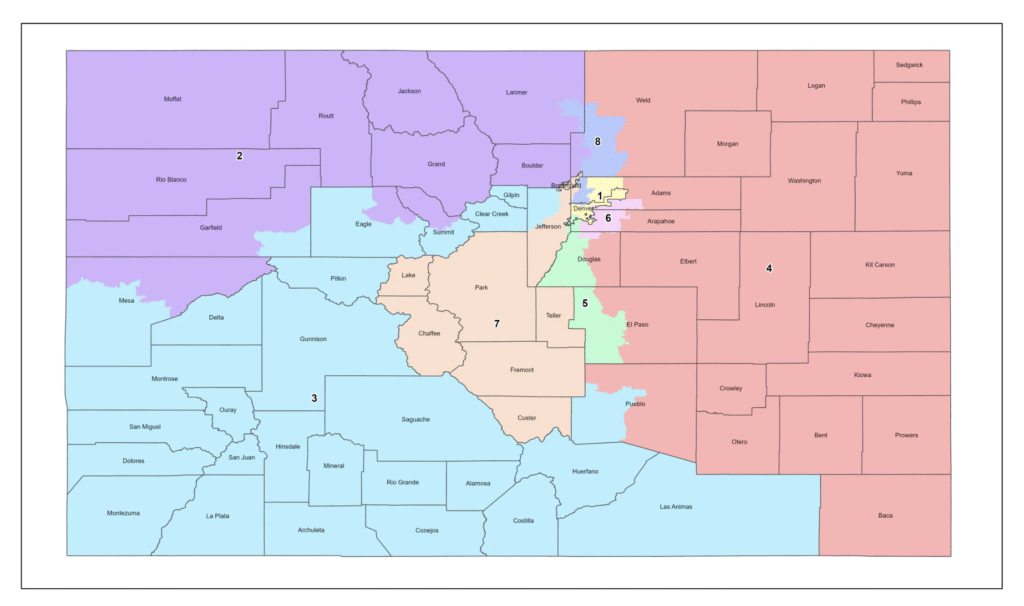
Colorado Title Board advances competing redistricting proposals and revised Pinnacol measure as April ballot deadline nears
Marianne Goodland
marianne.goodland@coloradopolitics.com
Updated 5 hours ago
With just two meetings left before an April 15 deadline, the state’s Title Board on Wednesday pushed through a slate of ballot measures — including a revised proposal to privatize Pinnacol Assurance and dueling plans to redraw Colorado’s congressional map...
SAVE America Act showdown relished by GOP and Democrats alike
Ramsey Touchberry, Washington Examiner
ramsey.touchberry.washington.examiner@gazetteedit.wpenginepowered.com
Updated 6 hours ago
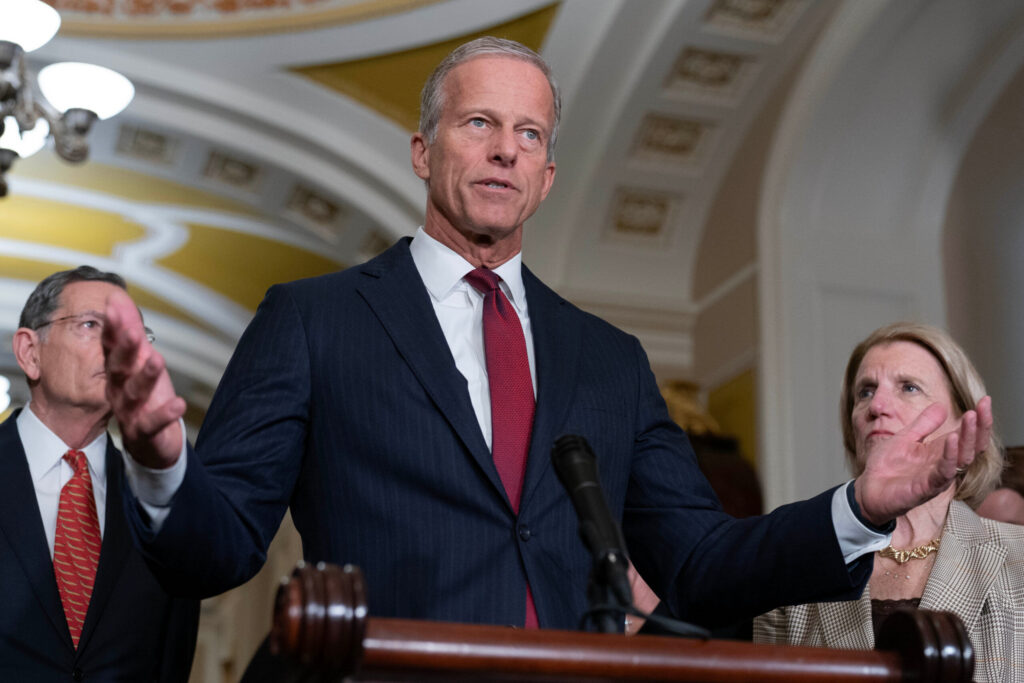
Both political parties have found rare agreement in a divided Washington, convinced that the GOP’s federal voter ID and election bill is a slam-dunk messaging opportunity. But that’s where the bipartisanship quickly ends. The two sides are diametrically opposed over...

Senate panel advances bill to tighten Colorado sports betting rules amid youth addiction concerns
Marissa Ventrelli
marissa.ventrelli@coloradopolitics.com
Updated 4 hours ago
A divided Senate Finance Committee on Tuesday narrowly advanced a bill to impose new restrictions on Colorado’s booming sports betting industry, as lawmakers cited rising concerns about youth gambling and addiction while operators warned the changes could drive bettors to...

Federal judge green-lights trial against Denver officer over race-based enforcement
Michael Karlik
michael.karlik@coloradopolitics.com
Updated 6 hours ago
A federal judge green-lit a jury trial last week on a man’s claim that a Denver police officer engaged in racially selective enforcement of the law by arresting him for video recording at a police station, while not arresting a...
Federal judge says 8 years in solitary confinement not grounds to reduce man’s sentence
Michael Karlik
michael.karlik@coloradopolitics.com
Updated 6 hours ago
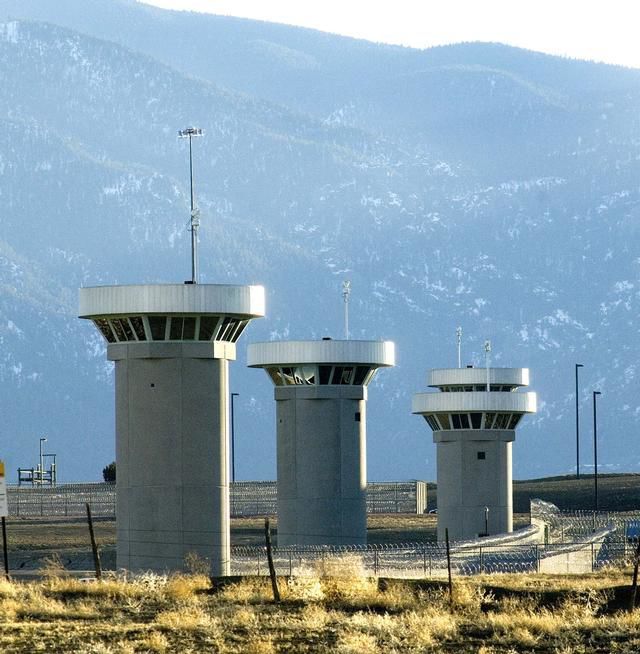
A federal judge concluded earlier this month that a man’s eight years allegedly spent in solitary confinement did not justify granting his request for a sentence reduction. However, U.S. District Court Senior Judge William J. Martínez signaled his willingness to...

Democrat Matt Cavanaugh ends campaign in Colorado’s 5th CD, says petition firm came up short
Ernest Luning
ernest.luning@coloradopolitics.com
Updated 3 hours ago
Democratic congressional candidate Matt Cavanaugh said Wednesday that he was ending his bid to challenge Republican U.S. Rep. Jeff Crank in Colorado’s 5th District because the firm his campaign hired to gather petition signatures failed to deliver. Cavanaugh, an Army...

Colorado voters to decide whether to ban gender surgeries for minors
Marissa Ventrelli
marissa.ventrelli@coloradopolitics.com
Updated 2 hours ago
Colorado voters will decide this November whether to prohibit gender surgeries for minors and bar public funding or insurance coverage for procedures that alter children’s biological sex characteristics. The measure qualified for the ballot amid a push by the federal...

Democrats want to bar use of consumer data to set Colorado prices, employee wages
Marissa Ventrelli
marissa.ventrelli@coloradopolitics.com
Updated 4 hours ago
A closely divided House committee advanced a bill aimed at curbing the use of personal data to set individualized prices and wages, reviving a proposal that failed last year and setting up a broader debate over how far the state...
10th Circuit rejects ‘potential for violence’ when police arrest vehicle occupant’s romantic partner
Michael Karlik
michael.karlik@coloradopolitics.com
Updated 9 hours ago
The Denver-based federal appeals court rejected the idea on Tuesday that a vehicle occupant poses a danger to police solely because they are romantically involved with another occupant who officers are arresting. By 2-1, a three-judge panel of the U.S....

Colorado justices grill debt collector about compliance with law
Michael Karlik
michael.karlik@coloradopolitics.com
Updated 3 hours ago
The Colorado Supreme Court repeatedly pressed a debt collection company last week to explain how its lawsuit against a Boulder woman for an unpaid credit card balance complied with the specific requirements that state lawmakers have created. Portfolio Recovery Associates,...
PREV
PREVIOUS

Colorado bans high-capacity magazines, but that doesn't make them impossible to get
In a news conference Thursday, Boulder County District Attorney Michael Dougherty said he believes high-capacity gun magazines used in March’s supermarket attack were sold legally. But in 2013, following the Aurora theater massacre, Colorado’s legislature banned magazines holding more than 15 rounds. And charges against the Boulder suspect include 10 counts of using a prohibited high-capacity magazine while committing a felony. […]

Resolution explains removal of Douglas County commissioners chair
The chair of the Douglas County Board of Commissioners was removed from that position after her fellow board members accused her of lying and using her title “for personal gain politically,” according to a resolution posted to the Douglas County website April 23. The resolution, which will be voted on in an April 27 meeting, also states […]