

CDOT responds to estimates on traffic and air pollution in transit report
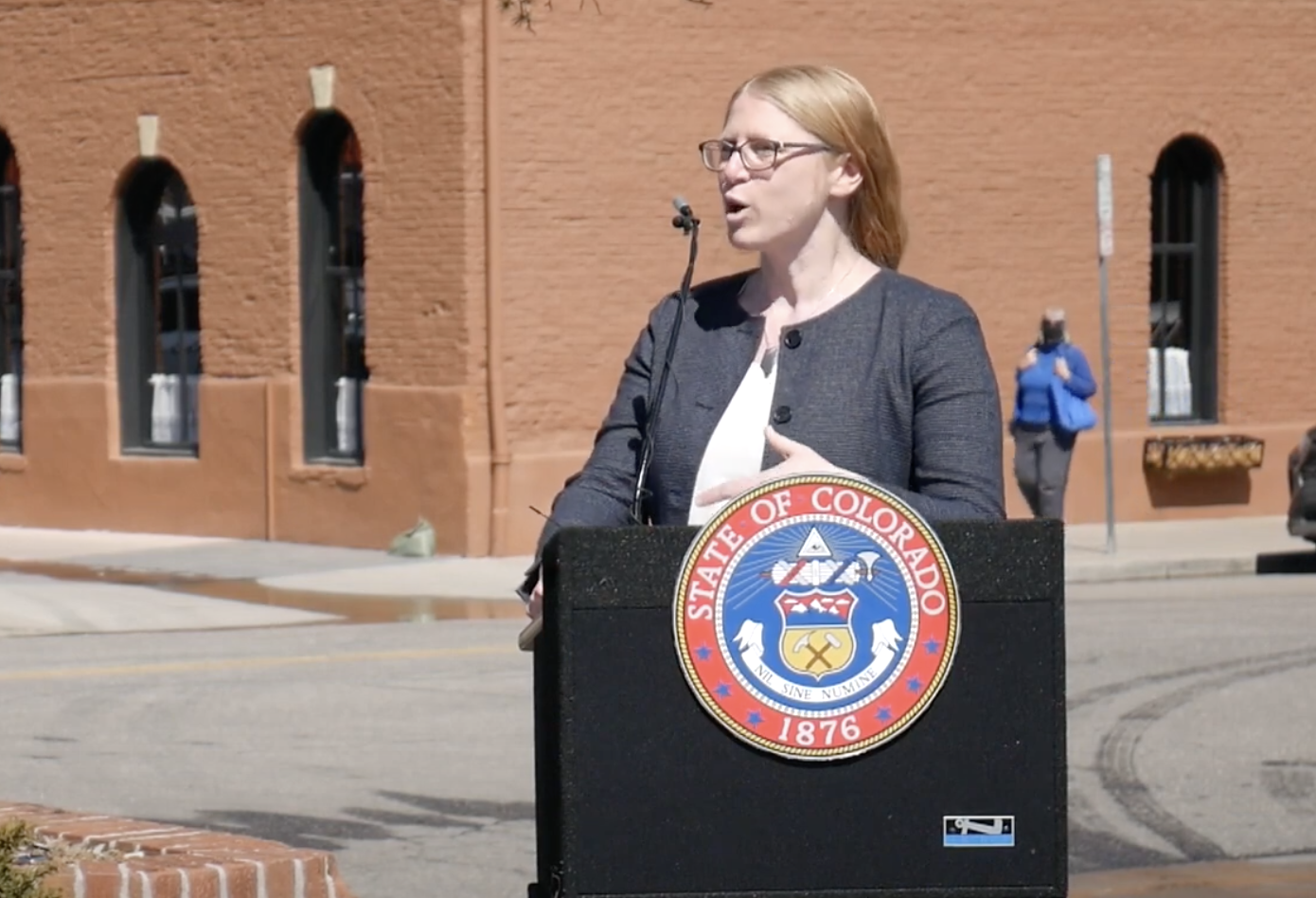
A calculation on how much new lanes of interstate add in cars and gas use quickly got jammed again after the costly expansion didn’t add up to state highway director Shoshana Lew.
The Rocky Mountain Institute hopes its analysis, released Wednesday, will add to the conversation about how to spend federal stimulus dollars on transportation.
RMI and CoPIRG, the Colorado public interest group, want those dollars to go to mass transit and local alternative routes to travel.
Each lane mile added to a Colorado interstate adds an average of 400 more cars and trucks to that stretch of road annually and burning up 200,000 more gallons of gasoline. In the immediate Denver area, the number is closer to 600 more cars and trucks.
The report identified potentially 176 more miles of new lanes that could be added across the state in the next 10 years, listing the projects with expected mileage of new asphalt.
RELATED:
Transit advocates measure the impact of investing in roads
INSIGHTS: Potholes line road ahead on transportation
Colorado stuck at a crossroads: Leaders look ahead on gridlocked finances and politics around transportation
CDOT rolling out 10-year ‘accountability program' Friday morning
Highway commission looks to slash projects amid millions lost in revenue
Transportation Commission approves $1.6 billion for statewide projects
COVER STORY | Colorado grapples with I-70 mountain gridlock
That was Wednesday morning. Lew sent a letter to Danny Katz, the executive director of CoPIRG, saying she wished she’d had more time and input, learning about the report the day before.
“As such, it concerns us that today’s report, which appears to be based on a generic calculator tool developed in California, did not cross check against the specifics of CDOT’s projects or the modeling analysis we are developing in support of project review documents. The report appears to look only at a simple calculation of lane mileage, omitting a broad range of other factors pertinent to traffic modeling that affect vehicle miles traveled, mitigations, and the geographic nuances of individual projects,” she said. “Taking any single variable out of context tends to lead to misleading conclusions that fail to reflect the full costs and benefits of a more comprehensive project.”
Lew went into more detail in her letter, which is attached to this article.
RMI said the report it used a calculator developed at the University of California – Davis calculated the estimate based on DOT numbers.
The state should invest, advocates contended, in more reliable and more frequent bus service in the short term and support mass transit long-term, including commuter rail, to get vehicles off the road, the proponents argued.
“If we can get more people moving without of cars, it’s going to have a lot of benefits in a lot of ways,” Katz said earlier Wednesday.

By Shoshana Lew
Combustion emissions are a key source of Front Range air quality problems.
Front Range commuter rail is at least a decade away, if that soon. Gov. Jared Polis, however, has set a goal, and the legislature passed a climate action plan in 2019, to to reduce greenhouse gas emissions by 26% by 2025 over 2005 levels and a 50% by 2030.
Sandra Hagen Solin, who represents Fix Colorado Roads, the statewide coalition of chambers and economic development organizations, thought the calculations were overly broad and came up short, particularly on environmental concerns.
“The plot points and modalities they are seeking all require investment in roads,” she said. “Congestion mitigation has a benefit to the larger goal of greenhouse gas reduction. Roadway investment is actually an environmentally smart approach to improving air quality.”
Sandra Hagen Solin, who represents Fix Colorado Roads, the statewide coalition of chambers and economic development organizations, thought the calculations were overly broad and came up short, particularly on environmental concerns.
“The plot points and modalities they are seeking all require investment in roads,” she said. “Congestion mitigation has a benefit to the larger goal of greenhouse gas reduction. Roadway investment is actually and environmentally smart approach to improving air quality.”
The calculator leaves out a lot of nuance, mitigation and the reality of fixing chokepoints that primarily cause traffic jams, not add vehicles, according to the Colorado Department of Transportation leader.
“Models that include induced demand should also factor pollution from sitting in traffic to have accurate pros/cons,” Lew wrote to Katz, adding: “Both need to be included to accurately assess net impact. For us to assess the accuracy of the new model, we would need to fully understand how it incorporates sensitivities that are key to accurate traffic modeling.”
She indicated to proponents of transit that CDOT shares many of their goals.
“We view these changes as essential from the perspective of fighting climate change, reducing local pollution and improving equity for communities who live in close proximity to highways, and believe that we have an opportunity to establish best practices in our professional discipline, working together with a wide range of partners,” Lew wrote.

Home rule has protected Colorado cities for over 125 years | Cronin and Loevy
Tom Cronin Bob Loevy
tom-cronin-bob-loevy@coloradopolitics.com
Updated 2 hours ago
Colorado is currently gripped by a political struggle between the governor plus the state legislature in Denver and populous “home-rule” city governments, mainly on the Front Range, such as Colorado Springs. In the past few years, the legislature has been passing bills that applied to city government policies,...

Colorado Politics calendar Apr. 13-19
Rachael Wright, Special to Colorado Politics
rachael.wright@coloradopolitics.com
Updated 3 days ago
CoPo’s weekly political calendar will help you find political and public-policy events throughout Colorado. It includes candidate and issue campaign events, public policy meetings, court hearings, state and local party conventions, assemblies, debates, rallies, parades, speaking engagements, traveling dignitary appearances,...
Minority Leader Peña argues against oil and gas bill | A LOOK BACK
Rachael Wright, Special to Colorado Politics
rachael.wright@coloradopolitics.com
Updated 3 days ago
Forty-Five Years Ago This Week: “The Colorado House of Representatives had just given its final approval to House Bill 81-1152, which created $9 million in tax relief to oil and gas companies. But this came “at the expense of local...

A longshot, upset bid and a few quick takes | SONDERMANN
By Eric Sondermann
by-eric-sondermann@coloradopolitics.com
Updated 2 days ago
It is hard to keep up these days. The flow of news often seems overwhelming. Let’s focus today on an unusual congressional race before moving on to a few quick, supplementary observations. Since its creation 54 years ago, Congressional District...
An “-“ends tribute in a week full of “odds” | Capitol M | Week of April 11, 2026
Marianne Goodland
marianne.goodland@coloradopolitics.com
Updated 2 days ago
The lighter side of the Capitol, usually… The decision to read the budget bill — the long bill, which spans 661 pages this year — put a damper on the House’s already less‑than‑festive mood. So Capitol M decided to catch...
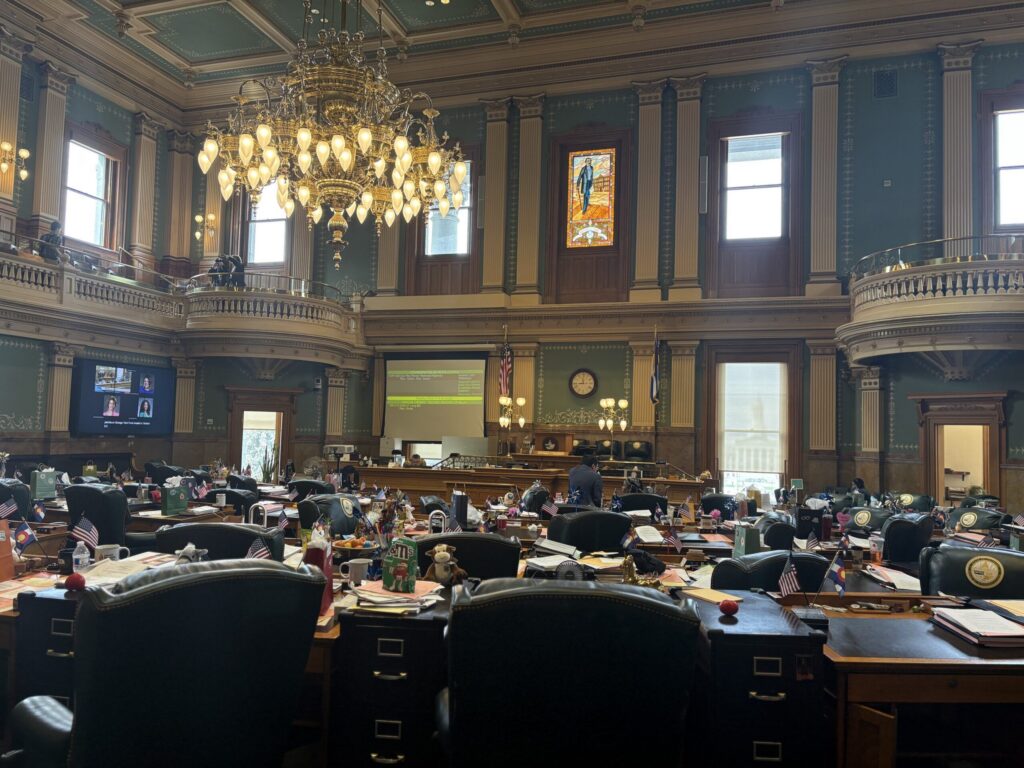
What you need to know about the Colorado legislature reading a 661-page bill aloud
Marianne Goodland
marianne.goodland@coloradopolitics.com
Updated 1 hour ago
A rarely used procedural move by a Republican legislator has thrown the Colorado House into an extended slowdown, after she invoked her right to have a nearly 700-page state budget bill read aloud in full. Once Rep. Brandi Bradley, R‑Roxborough...
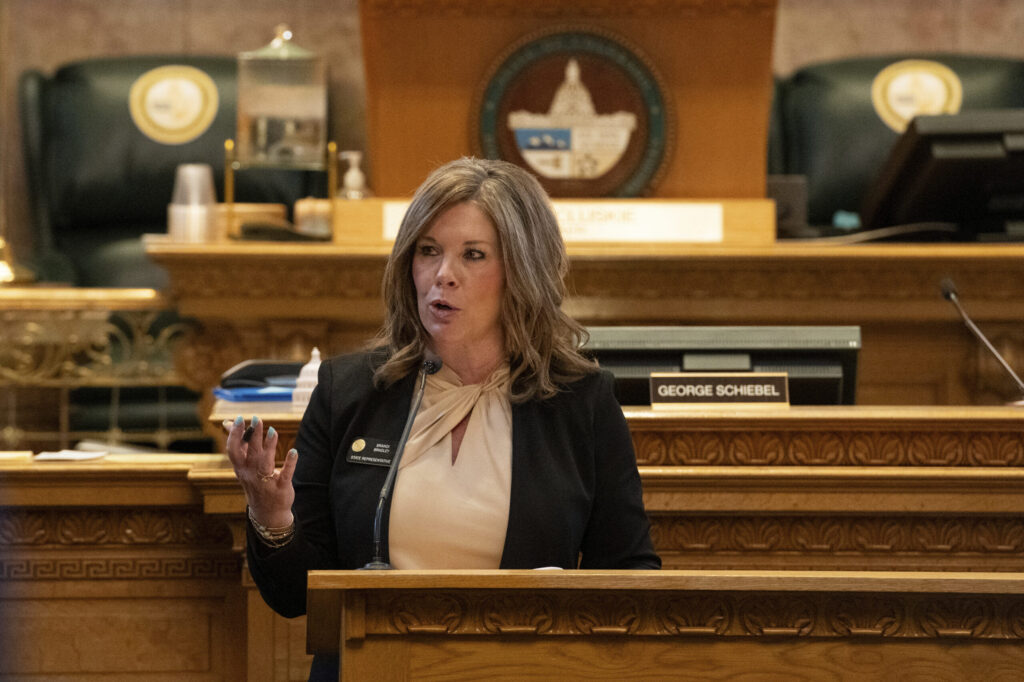
Literal reading of budget bill complicates Colorado legislators’ plans for GOP assembly
Marianne Goodland
marianne.goodland@coloradopolitics.com
Updated 3 hours ago
Republican Rep. Brandi Bradley’s decision to force the full reading of the state budget — called the “long bill” for its obvious length — has not only slowed House business to a crawl but also disrupted her colleagues’ plans for...
10th Circuit provides guidance on police searches of cloud-based data
Michael Karlik
michael.karlik@coloradopolitics.com
Updated 20 hours ago
The Denver-based federal appeals court provided guidance to law enforcement agencies on Monday for ensuring that searches of cloud-based accounts comply with the Fourth Amendment’s requirements. A three-judge panel of the U.S. Court of Appeals for the 10th Circuit noted...

Inflation jumped to 3.3% in March as Iran war drove up oil prices
Zach Halaschak, Washington Examiner
zach.halaschak.washington.examiner@gazetteedit.wpenginepowered.com
Updated 23 hours ago
Inflation spiked in March, rising nine-tenths of a percentage point to 3.3% on the year, as towering energy prices drove up the headline number. The Bureau of Labor Statistics reported the update to the consumer price index on Friday. The...
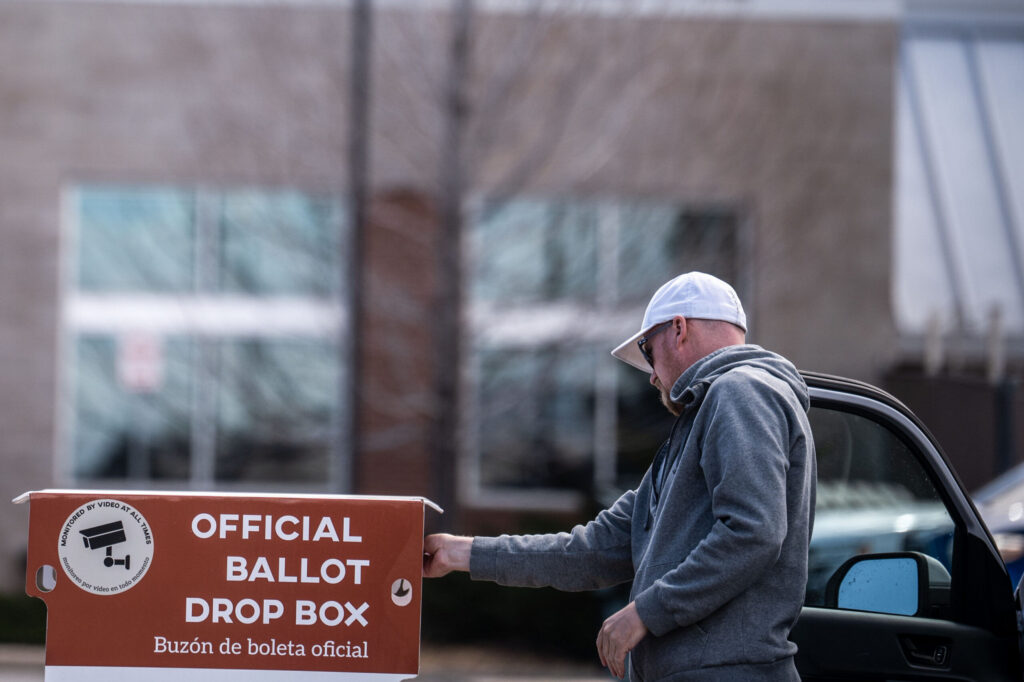
Colorado GOP votes down bid to ask court to prevent unaffiliated voters from voting in June primary
Ernest Luning
ernest.luning@coloradopolitics.com
Updated 19 hours ago
Members of the Colorado Republican Party’s executive committee rejected a proposal Thursday night to seek an emergency injunction in federal court to prevent unaffiliated voters from participating in the state’s upcoming June primary election. The proposed motion, backed by Colorado...
PREV
PREVIOUS

Bill to have preliminary redistricting maps rely on survey data sails through first hearing
A panel of lawmakers gave unanimous approval to a bill that aims to fix the state redistricting commissions’ census data delay problems, by deeming survey data appropriate to use for the preliminary maps, instead of waiting for the U.S. Census Bureau’s official decennial census data. The state’s redistricting commissions would normally have had the decennial […]

Biggest drop for new Colorado jobless claims in 2021
After a week of good news with Denver area companies adding thousands of jobs, the Colorado Department of Labor and Employment provided more positive economic growth news Thursday. New regular jobless claims dropped sharply as 6,718 were filed for the week ending April 17, a 25% slide from the prior week’s total of 8,927. That’s […]