

TRAIL MIX | Iconic Colorado politicians owe wins to historic blizzards
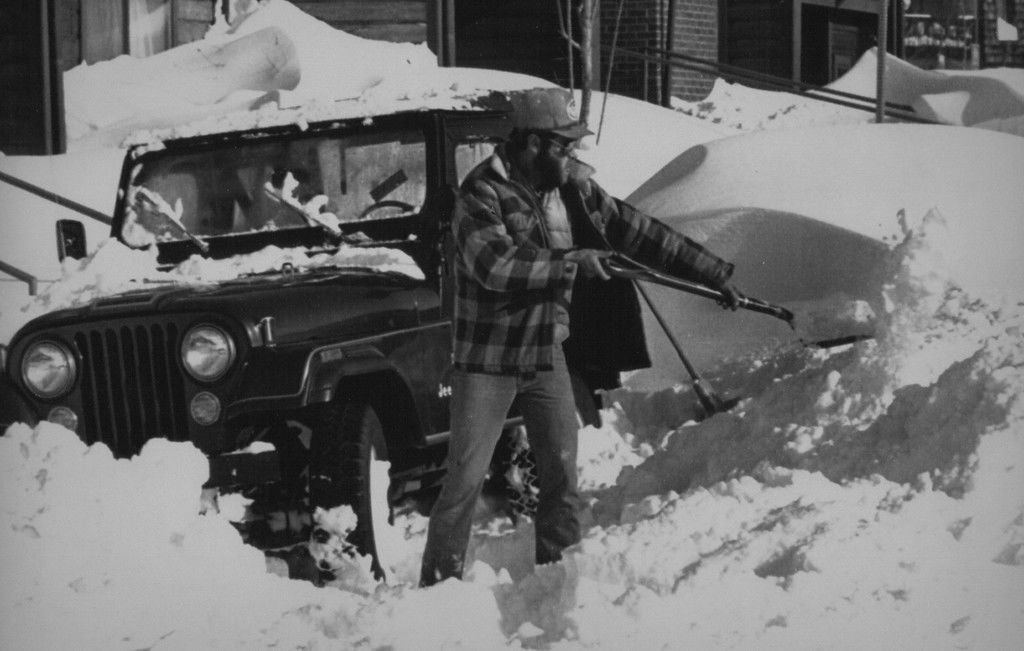
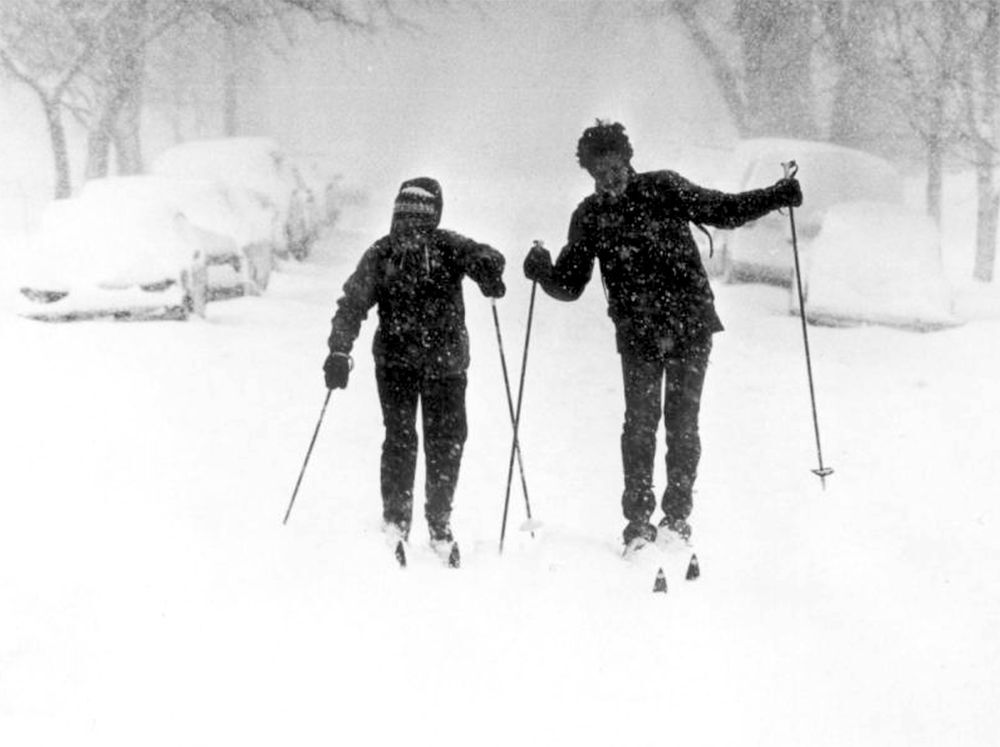
As Colorado braces for what could be one of the Front Range’s biggest snowstorms on record, longtime residents can’t help but recall monumental blizzards of the past.
At press time, a day and a half before the big flakes are supposed to start falling, the forecasters are saying the Great Blizzard of 2021 – headline writers appear to be leaning toward Snowmageddon, though Snowpocalypse is still in play – could dump anywhere from a foot to three feet of snow on the cities and suburbs, with potentially higher totals in the foothills and mountains, depending on meteorological phenomena that’s hard to predict.
In these pages, thoughts naturally turn to politics and elections. Surprisingly, there have only been a few times that “major snow events,” in the dry language of weather archivists, have had a significant, direct impact on election outcomes.
On two memorable occasions over the last 50 years, however, blizzards profoundly influenced the results of Denver mayoral races in ways that are still being felt today – the one-two punch of the Christmas Eve blizzard of 1982 and the late spring blizzard that swept into the metro area on May 17, 1983, and two decades later, a three-day blizzard that paralyzed the Front Range in mid-March 2003.
A few other times, blizzards reverberated all the way to the polls, though their effects were less clear.
Only one of the 24 deepest snowfalls to blanket Denver over the last 140 years -as compiled by the National Weather Service and rounded up this week by The Denver Channel – landed anywhere near a November Election Day, and none arrived as late as Denver’s municipal general election in the middle of May.
That one storm, though, was a doozy.
The blizzard of 1946, ranked third on the list of the biggest snowstorms to hit Denver since 1881, saw snow start falling on Nov. 2 and keep falling for four straight days, eventually totaling 30.4 inches. There were flurries in the air the next day, when the city began to dig out on Election Day, Nov. 5.
Bending the old political rule of thumb that bad weather keeps Democrats from making it to the polls, Colorado voters elected Democrat William Knous to his first of two terms as governor by a comfortable margin in the 1946 midterm, marking the first time in a decade that a Democrat won the office.
As a past president pro tem of the state Senate and former chief justice of the Colorado Supreme Court, Knous, a lawyer from Montrose, became the only person in state history to have occupied the highest offices in each of the three branches of government.
The Colorado connection is a bit tenuous, but Superstorm Sandy, the enormous hurricane-turned-blizzard that blasted the Northeast in late October 2012, is widely credited with helping quash any remaining momentum behind Mitt Romney’s challenge to Barack Obama after the Democratic incumbent whiffed the Oct. 3 debate at the University of Denver.
Not only did coverage of the destructive storm dominate the news in the final week of the fall campaign – taking attention away from Romney’s attacks on the floundering economy – but footage of Obama and Republican Gov. Chris Christie touring storm-ravaged New Jersey bolstered Obama’s bipartisan credentials and allowed him to be seen as the “Comforter-in-Chief,” GOP strategist Karl Rove concluded.
The record-shattering Bomb Cyclone that pummeled Colorado’s Front Range on March 13, 2019, might have influenced the results of an election held last year.
As the powerful storm – the strongest ever recorded in Colorado – whipped through the state, downing power lines and grounding flights, state Senate President Leroy Garcia, D-Pueblo, credited his can-do gumption as a Marine Corps veteran when he defied advice and kept the Senate open while nearly everything else around town shut down.
“You are not leading a Marine platoon,” 9News anchor Kyle Clark scolded. “You’re leading a legislature and citizens should not have to risk their lives so they can testify about the bills you’re rushing into law.”
The avalanche of criticism threw cold water on any momentum for a possible Garcia run the next year in the 3rd Congressional District. It’s impossible to say for sure, but the young veteran and emergency medical technician might have fared better than Democratic nominee Diane Mitsch Bush did against Republican Lauren Boebert in an election held during a historic pandemic.
There’s no doubt, however, that two Denver mayors can thank snowstorms, at least in part, for early wins in what have proven to be enduring political careers.
It was the massive 1982 Christmas Eve blizzard that paralyzed Denver and softened up three-term Mayor Bill McNichols, while a sloppy snowfall that hit the metro area on May 17, 1983 – the day voters were heading to the polls – helped finish off the old-school politician.
At 23.8 inches of white stuff, the holiday blizzard ranks fourth on the list of biggest Denver snowfalls, though its impact was magnified further by the McNichols administration’s disastrous response.
Whipped by 50 mph winds, the ill-timed snowfall – dubbed the “Nightmare Before Christmas” – buried the metro area, shutting down Stapleton International Airport for Christmas Eve and much of Christmas Day. Thousands of travelers were stranded, and many more were stuck at shopping malls and elsewhere around town.
The aftermath was worse, though, as Denver’s snowplows proved unable to remove the snow and cold temperatures kept snow on the ground into February. A decision by McNichols to compact the snow with trash trucks made matters worse, leaving streets rutted and nearly impassable for weeks.
Months later, the debacle fueled the campaign of 36-year-old state lawmaker Federico Peña, who promised better infrastructure and improved transportation.
A gusty late spring snowstorm when Denver voters went to the polls in May – mild by comparison with the record-setters – helped seal McNichols’ fate.
Feddy and the Dreamers, as Peña and the batch of fresh-faced newcomers who accompanied him to city hall were sometimes called, shook off Denver’s cobwebs and propelled the city from its sleepy, overgrown-cowtown past into the burgeoning municipality it quickly became.
Five years later, Peña ran into a blizzard predicament of his own during his second term, when he jetted off to Mexico around the holidays while Denver dealt with another brutal winter storm, prompting an unsuccessful recall campaign. But Peña’s star remained bright, and he later served two stints in Bill Clinton’s cabinet, running the Transportation and Energy departments.
The three-day blizzard of March 17-19, 2003 – at 31.8 inches the second-biggest recorded snowfall in Denver – played a crucial part in avuncular barkeep John Hickenlooper’s upset mayoral win a few months later.
One of seven candidates for the open seat, the Wynkoop Brewing Co. founder likes to note he was polling at 4% in February, far behind frontrunners Don Mares, the city auditor, and former police chief Ari Zavaras, though a sizable chunk of the electorate was undecided.
As war with Iraq was looming in mid-March ahead of the first round of voting in May, Hickenlooper decided to bank the bulk of the money he’d raised on a pair of attention-getting TV ads that highlighted his outsider status – one shows him trying on different suits in an effort to “look more mayoral” before hopping on a moped, the other features a showdown with a parking enforcement officer – over objections by his strategists, who warned him against going on the air unless he could afford to stay there.
None of the other candidates were running commercials that early, so when the blizzard shut everything down the day before the Iraq invasion, leaving viewers glued to their sets for days – this was before Facebook and Twitter existed -Hickenlooper had the mayoral campaign space to himself. As the city dug out, everyone, it seemed, was buzzing about this quirky dark horse and his “aw shucks” brand, juxtaposed against the war’s “shock and awe.”
Suddenly finding himself in front of the pack, accolades and donations started pouring in, and Hickenlooper never looked back, taking 43% to Mares’ 22% in the general election and then cruising to an easy win in the runoff with 65% of the vote.
And to think, 18 years later, after Hickenlooper’s two terms as mayor, two terms as governor, a brief presidential campaign and last fall’s successful U.S. Senate campaign – all thanks to a few feet of snow.

Understanding Trump’s remarkable political comeback in 2024 | Cronin and Loevy
Tom Cronin Bob Loevy
tom-cronin-bob-loevy@coloradopolitics.com
Updated 7 hours ago
President Donald Trump lost the 2020 presidential election. He inspired a riot at the U.S. Capitol to try to overthrow the results of that election. He was impeached by the U.S. House of Representatives and later was indicted for several...
Crank challenger Jessica Killin signs on to new centrist Democratic group’s ‘Promise to America’
Ernest Luning
ernest.luning@coloradopolitics.com
Updated 16 hours ago
Jessica Killin, one of the Democrats running in Tuesday’s primary for the chance to challenge U.S. Rep. Jeff Crank in Colorado’s 5th Congressional District, joined with more than a dozen incumbent Democratic lawmakers and candidates this week signing on to...
Who’s spending in Colorado to get your vote?
Marianne Goodland
marianne.goodland@coloradopolitics.com
Updated 2 days ago
Groups that raise unlimited amounts of money have spent about $20 million in May and June to try and influence Colorado voters’ choices in the upcoming June 30 primaries. By law, these groups cannot coordinate with the candidates they support....
Phil Weiser leading Michael Bennet in Colorado’s Democratic gubernatorial primary, internal poll finds
Ernest Luning
ernest.luning@coloradopolitics.com
Updated 3 days ago
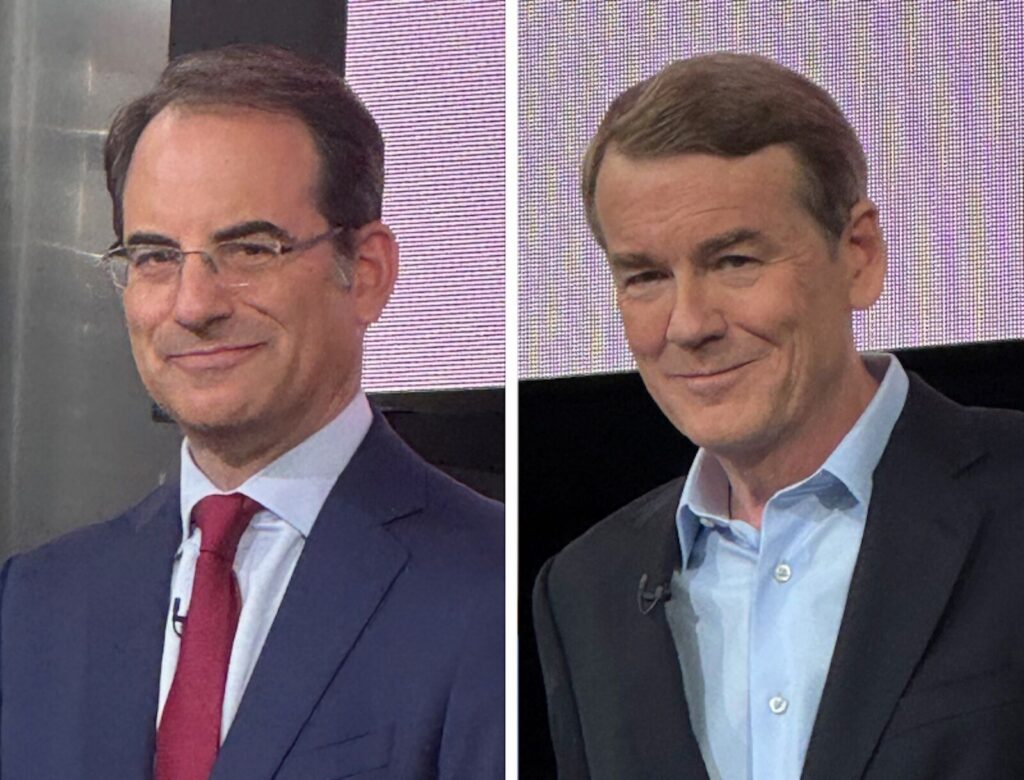
Attorney General Phil Weiser holds a lead over U.S. Sen. Michael Bennet among likely voters less than a week before ballots are due in Colorado’s Democratic gubernatorial primary, according to a new poll released Thursday by a group backing Weiser....
Colorado’s ‘right to natural gas’ measure submits signatures to qualify for November ballot
Marissa Ventrelli
marissa.ventrelli@coloradopolitics.com
Updated 4 days ago
A natural-gas rights initiative backed by Advance Colorado is likely headed to the November ballot, triggering a parallel campaign by environmental groups seeking to impose new liabilities on oil and gas operators. Petitions for Initiative No. 177 were turned in...
Colorado’s ‘right to natural gas’ measure submits signatures to qualify for November ballot
Marissa Ventrelli
marissa.ventrelli@coloradopolitics.com
Updated 4 days ago
A natural-gas rights initiative backed by Advance Colorado is likely headed to the November ballot, triggering a parallel campaign by environmental groups seeking to impose new liabilities on oil and gas operators. Petitions for Initiative No. 177 were turned in...
Colorado’s ‘right to natural gas’ measure submits signatures to qualify for November ballot
Marissa Ventrelli
marissa.ventrelli@coloradopolitics.com
Updated 4 days ago
A natural-gas rights initiative backed by Advance Colorado is likely headed to the November ballot, triggering a parallel campaign by environmental groups seeking to impose new liabilities on oil and gas operators. Petitions for Initiative No. 177 were turned in...
Colorado’s ‘right to natural gas’ measure submits signatures to qualify for November ballot
Marissa Ventrelli
marissa.ventrelli@coloradopolitics.com
Updated 4 days ago
A natural-gas rights initiative backed by Advance Colorado is likely headed to the November ballot, triggering a parallel campaign by environmental groups seeking to impose new liabilities on oil and gas operators. Petitions for Initiative No. 177 were turned in...
Colorado’s ‘right to natural gas’ measure submits signatures to qualify for November ballot
Marissa Ventrelli
marissa.ventrelli@coloradopolitics.com
Updated 4 days ago
A natural-gas rights initiative backed by Advance Colorado is likely headed to the November ballot, triggering a parallel campaign by environmental groups seeking to impose new liabilities on oil and gas operators. Petitions for Initiative No. 177 were turned in...
Colorado’s ‘right to natural gas’ measure submits signatures to qualify for November ballot
Marissa Ventrelli
marissa.ventrelli@coloradopolitics.com
Updated 4 days ago
A natural-gas rights initiative backed by Advance Colorado is likely headed to the November ballot, triggering a parallel campaign by environmental groups seeking to impose new liabilities on oil and gas operators. Petitions for Initiative No. 177 were turned in...
PREV
PREVIOUS
Colorado Farm Bureau sets up blizzard portal for farmers, ranchers
The Colorado Farm Bureau on Thursday said it’s preparing for the coming blizzard by setting up a way to field requests for help from the state’s farmers and ranchers. The web portal for non-emergency help is available by clicking here. “We are going to work to help local and state officials understand the immediate needs […]
'Hustle mentality': Workers hit first by pandemic forge different paths amid job loss
Alex Billman was among the workers at the Denver Center for the Performing Arts loading in for the March 2020 opening of “Until the Flood,” a play inspired by the police killing of Michael Brown in Ferguson, Mo. But suddenly, the crew received an order to pack everything up in two days, before Denver’s stay-at-home […]