

Media literacy bill once again hits a snag with GOP lawmakers
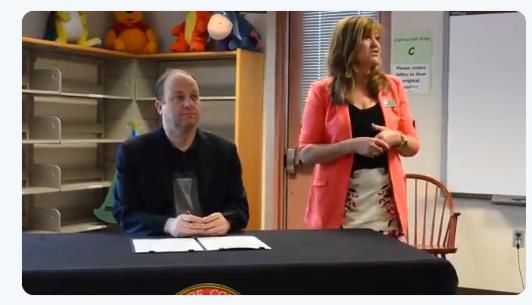
The Colorado House on Thursday had just a few bills up for second reading debate, but the morning was taken up with just one: House Bill 21-1103, intended to implement the recommendations from a media literacy report from 2019.
The bill is the successor to House Bill 19-1110, which required the Colorado Department of Education to convene a committee that would come up with recommendations on a media literacy curriculum that would become part of civics education the next time those standards are updated. That just happens to be taking place this year, under a bill (SB 21-067) now headed to the House.
In 2019, Republicans objected to adding more to the elementary and secondary curriculum as well as who would sit on that media literacy panel, complaining the report would be skewed by appointing teachers and other union personnel. “The fox [would be] in charge of the henhouse,” according to Rep. Mark Baisley, R-Roxborough Park. “To bring the folks who produce what we should be skeptical about to advise how it should be taught, [makes it] ripe for bias and defeats the purpose.”
House GOP objections to the 2021 bill focused on alleged bias and lack of community engagement.
Rep. Tim Geitner, R-Falcon, said what kids need is to learn critical thinking, not media literacy. He also had concerns over a resource bank listed in the bill, which he indicated could include materials that could be controversial or biased.
There is also no process for the public to weigh in on those resources, Geitner said.
Arguing in favor of a Geitner amendment, Rep. Colin Larson, R-Littleton, said most would agree that “we’re in a particularly difficult time in our democracy. There are a lot of heated opinions on both sides. Something like this is going to be under an extra level of scrutiny,” and information in the resource bank should be under the scrutiny of the public, given that media literacy is likely to evolve over time.
Rep. Janice Rich, R-Grand Junction, added that the public, which pays the taxes that runs the schools, should be allowed to be engaged in what goes into the resource bank. There’s no guarantee that the Department of Education will ensure ideological diversity, she said. “It can’t be all about one side.”
“I’m kind of old school,” said Rep. Dave Williams, R-Colorado Springs. “More speech is always better. People can draw on multiple resources from differing points of view and we’re all better served.” But the list in the report is a static list from which educators can draw, he said, which could make it one-sided. Without a counter-balance, or at least allowing for adjustments, “I don’t buy that this is about media literacy” or that it would teach a specific point of view, he said
Rep. Stephanie Luck, R-Penrose, decided the bill needed to be filibustered. Reading the bipartisan bill at length wouldn’t delay things much; it’s only four pages.
However, the accompanying CDE report comes in at 158 pages, and that’s what she chose to read to the House .
There was a little grumbling about that overheard in the caucus.
Luck made it through 24 pages when Majority Leader Daneya Esgar, D-Pueblo, laid over the bill until Friday.
Stay tuned.

Colorado, Utah mourn after 3 firefighters killed in wildfires
Nicholas Fogleman
nicholas.fogleman@denvergazette.com
Updated 8 hours ago
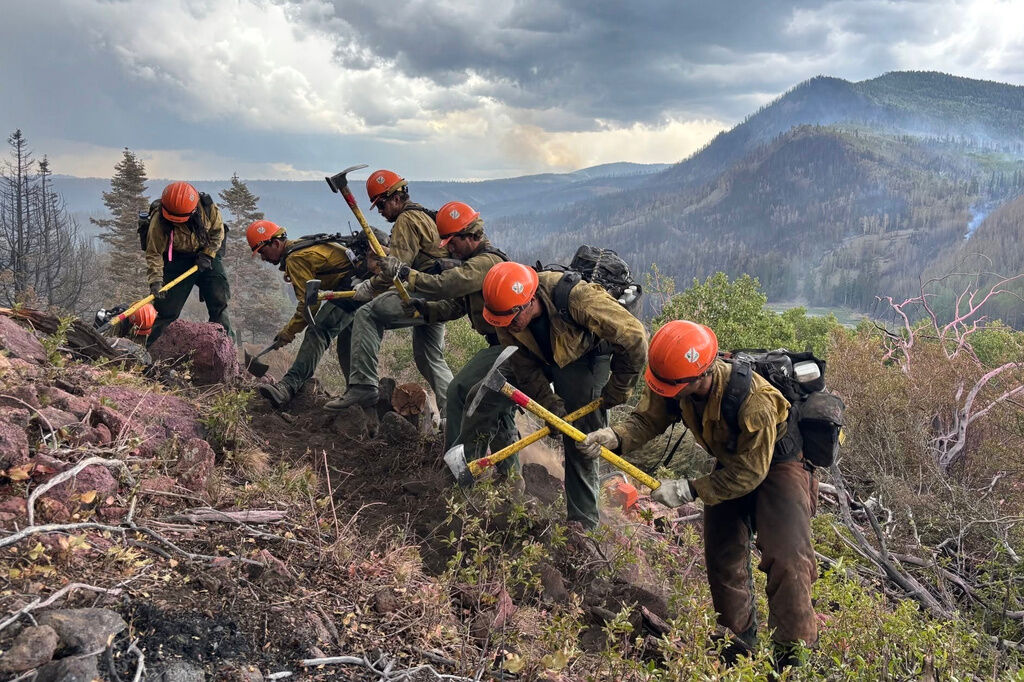
Gov. Jared Polis on Sunday mourned the deaths of three firefighters killed while battling a wildfire on the Colorado-Utah border, calling the loss a tragedy for the state and the firefighting community. The firefighters died Saturday while responding to a...
Understanding Trump’s remarkable political comeback in 2024 | Cronin and Loevy
Tom Cronin Bob Loevy
tom-cronin-bob-loevy@coloradopolitics.com
Updated 6 hours ago
President Donald Trump lost the 2020 presidential election. He inspired a riot at the U.S. Capitol to try to overthrow the results of that election. He was impeached by the U.S. House of Representatives and later was indicted for several...
Heat, wind and drought conditions spark wildfires across US West | OUT WEST ROUNDUP
Ernest Luning
ernest.luning@coloradopolitics.com
Updated 18 hours ago
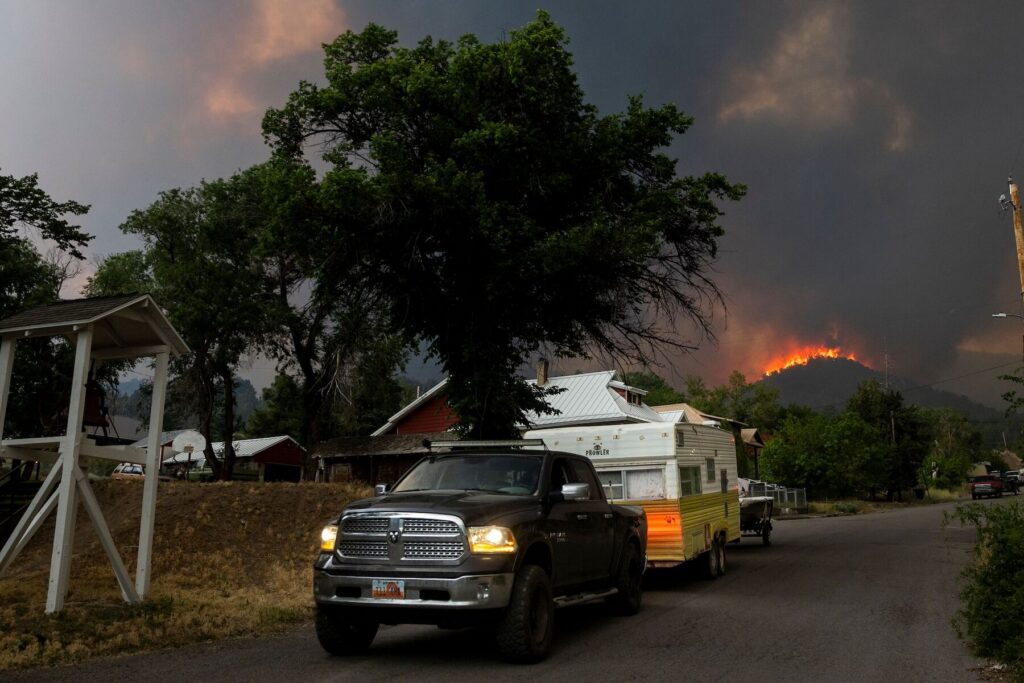
Heat, drought spark wildfires Extreme heat and dry, windy conditions fueled several wildfires in the West on June 21, including an uncontained blaze in Utah that forced the evacuation of a small town southwest of Salt Lake City. The Iron...
Crank challenger Jessica Killin signs on to new centrist Democratic group’s ‘Promise to America’
Ernest Luning
ernest.luning@coloradopolitics.com
Updated 15 hours ago
Jessica Killin, one of the Democrats running in Tuesday’s primary for the chance to challenge U.S. Rep. Jeff Crank in Colorado’s 5th Congressional District, joined with more than a dozen incumbent Democratic lawmakers and candidates this week signing on to...

Colorado Politics Calendar June 29-July 5
Rachael Wright, Special to Colorado Politics
rachael.wright@coloradopolitics.com
Updated 5 days ago
CoPo’s weekly political calendar will help you find political and public-policy events throughout Colorado. It includes candidate and issue campaign events, public policy meetings, court hearings, state and local party conventions, assemblies, debates, rallies, parades, speaking engagements, traveling dignitary appearances,...
Gov. Lamm’s GOP challenger gives insights into his campaign | A LOOK BACK
Rachael Wright, Special to Colorado Politics
rachael.wright@coloradopolitics.com
Updated 5 days ago
Forty-five years ago this week: “I see Gov. (Richard) Lamm is fairly popular in general,” said gubernatorial candidate and state Sen. Bill Hughes, R-Colorado Springs. “ … And he’ll be hard to beat.” Hughes was on a whirlwind campaign trail...

Giving credit to Polis where credit is due | SONDERMANN
Eric Sondermann
eric-sondermann@coloradopolitics.com
Updated 4 days ago
It is an understatement to suggest that Gov. Jared Polis has had a tough couple of months. The bloom was already off the rose and Coloradans were paying far more attention to the choice of his replacement than they were...

Bennet, Hickenlooper to vote against Trump’s 10th Circuit nominee from Colorado
Michael Karlik
michael.karlik@coloradopolitics.com
Updated 2 days ago
Colorado’s two Democratic senators will not vote to confirm President Donald Trump’s nominee to a vacancy on the Denver-based federal appeals court. Trump has selected U.S. District Court Chief Judge Daniel D. Domenico, who he appointed as a federal trial...
Who’s spending in Colorado to get your vote?
Marianne Goodland
marianne.goodland@coloradopolitics.com
Updated 2 days ago
Groups that raise unlimited amounts of money have spent about $20 million in May and June to try and influence Colorado voters’ choices in the upcoming June 30 primaries. By law, these groups cannot coordinate with the candidates they support....
U.S. government declines to oppose multiple challenges to immigration detention in Colorado
Michael Karlik
michael.karlik@coloradopolitics.com
Updated 2 days ago
Multiple federal judges in Colorado granted petitions from people challenging the lawfulness of their immigration detention this week after the government took the unusual step of declining to submit arguments in opposition. Colorado’s federal trial court is facing a flood of...
PREV
PREVIOUS

Titone to chair the legislative LGBTQ Caucus
Rep. Brianna Titone, the state’s first transgender legislator, will be the next chair of the Colorado Legislative LGBTQ Caucus. The Arvada Democrat in a statement touted the “great strides” the caucus had made for LGBTQ Coloradans, including “banning conversion therapy, updating laws so Coloradans can more easily obtain ID that reflects their true selves, and we’ve pushed […]

No gap in unemployment benefits this time, Colorado vows
On the heels of Congress passing the $1.9 trillion American Rescue Plan stimulus package and President Joe Biden signing it into law, Colorado’s Department of Labor and Employment officials vowed there would be no gap in benefits payments like there was earlier this year. “We’re grateful Congress passed this before the current unemployment insurance benefits […]