

Wildfire mitigation tops list of priorities for new head forester of Rocky Mountain region
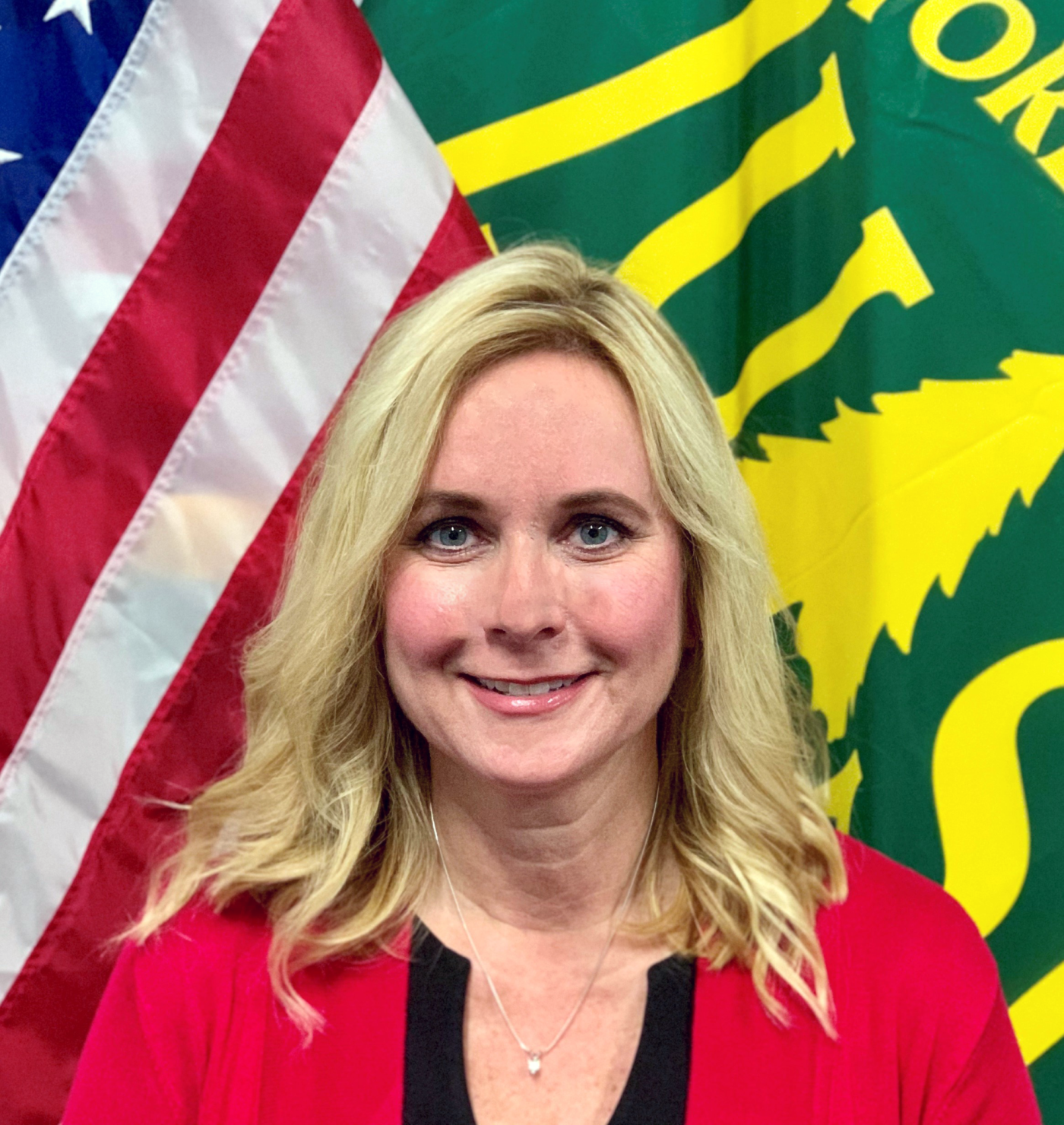
Growing up in Arvada and embarking on family camping trips, Tammy Angel would always have a sketchbook on hand.
“My thing was to always draw pictures,” she said. “Look around and catch fish and draw pictures.”
Now Angel is helping to craft the future of this state’s wilds and also those of Wyoming, Kansas, Nebraska and South Dakota.
She is the U.S. Forest Service’s new acting forester of the Rocky Mountain region, encompassing 22 million acres of national forests and grasslands.
The third-generation Colorado native and 1989 graduate of Colorado School of Mines has spent the past three years as a deputy forester in the region, tasked with managing budgets, grants and multiple uses of lands from recreation to extraction. She previously worked for the U.S. Fish and Wildlife and National Park services.
Angel’s “acting” title, putting her in charge of more than 2,000 employees, could last anywhere from a couple of months to many more, she said.
“It’s an opportunity,” she said. “It’s being able to demonstrate leadership at a different level. … Being able to coordinate with the Washington office and making sure that we are doing what we need to be doing in this region.”
Wildfire mitigation tops priorities, she said, recognizing the trend long warned by scientists and grimly represented in 2020: longer seasons brought on by extended drought and bigger, more devastating blazes due to several factors, including mismanaged forests and an expanding wildland-urban interface.
Beetle infestation resulting in more vulnerable timber is another emerging issue, Angel noted, “and the rising costs of much-needed landscape and vegetation treatment.”
The Forest Service is focused on combining money and staff with adjacent land-owning agencies and working collaboratively on “large-scale restoration projects,” Angel said. “Not just smaller areas that have been typically done in the past.”
Another priority, she said, is “striving for balance” between recreation and conservation in the wake of the coronavirus pandemic. During the unprecedented boom on public lands, managers enacted measures such as permits and fees and have hinted at more on the way, predicting the period inspired a permanent, broader base of outdoor enthusiasts.
Addressing this and fire is about “really trying to navigate towards a new normal in our region,” Angel said.
She mentioned the Great American Outdoors Act as posing another objective. While the law creating historic funds still wades through bureaucratic waters, the Forest Service has listed more than 100 maintenance and development jobs slated for Colorado lands.
“We’re trying to make sure we have appropriate staffing to enact those projects,” Angel said. “It’s still, I’m gonna say, a work in progress.”


US and Iran signal new ceasefire talks in Islamabad as truce nears end
Jon Gambrell
jon.gambrell@associatedpress.com
Updated 1 hour ago
ISLAMABAD (AP) — The United States and Iran have signaled they will hold a new round of ceasefire talks in Pakistan, two regional officials said Tuesday, as leaders on both sides warned they were prepared for more fighting if a...
Aurora council moves forward with statement of ‘mourning’ for police shooting victims
Kyla Pearce
kyla.pearce@gazette.com
Updated 28 minutes ago
In Monday night’s Aurora City Council study session, councilmembers moved forward with a resolution stating that the City Council “stands in mourning” with people who have lost loved ones to officer-involved shootings. The resolution, which initially passed through the Public...

Denver City Council makes annual bison donation permanent
Deborah Grigsby
deborah.smith@denvergazette.com
Updated 27 minutes ago
Denver has codified its annual donation of surplus buffalo to American Indian tribes and American Indian nonprofits into law after a unanimous vote by the City Council on Monday. The City and County of Denver has managed one of the...

Colorado lawmakers push reforms for handling defendants deemed incompetent
Marissa Ventrelli
marissa.ventrelli@coloradopolitics.com
Updated 15 hours ago
Colorado lawmakers from both parties are backing a bill that would reshape how the state handles defendants found incompetent to stand trial and unlikely to regain competency, aiming to fill long-standing gaps in treatment and placement. Sponsors of Senate Bill...

Colorado title board rejects government transparency measure, backers plan appeal
Marianne Goodland
marianne.goodland@coloradopolitics.com
Updated 14 hours ago
A broad coalition’s push for stronger government transparency hit a major setback last week when Colorado’s title board rejected a proposed ballot measure that would allow more public access to most legislative deliberations. The three‑member title board on April 15...

Polis administration awards $12.4 million for geothermal projects in Colorado
Scott Weiser
scott.weiser@gazette.com
Updated 25 minutes ago
The Polis administration is awarding another $12.4 million in state energy tax credits and cash to advance geothermal energy development in Colorado, supporting seven new projects for building heating and cooling systems as well as electricity generation. The funding, announced...

Colorado body reviews redistricting proposals as battle heats up nationwide
Marianne Goodland
marianne.goodland@coloradopolitics.com
Updated 14 hours ago
With 60 proposals on the April 15 agenda, Colorado’s title board wrapped up its final initial hearing for the 2026 election cycle, sending forward a slate of measures that could reshape workers’ compensation and reignite partisan battles over congressional redistricting....

Colorado sees surge in new business filings, but economy still faces major risks
Bernadette Berdychowski
bernadette.berdychowski@denvergazette.com
Updated 24 minutes ago
New business filings in Colorado grew in the first quarter of the year, despite several concerning economic trends across the state, according to a new report released Monday. There were nearly 55,000 new businesses registered in the state during the...

What we know about nearly a dozen scientists who went missing, died, or were murdered
Emily Hallas, Washington Examiner
emily.hallas.washington.examiner@gazetteedit.wpenginepowered.com
Updated 14 hours ago
The Trump administration is probing concerns surrounding nearly a dozen scientists said to be connected to highly secretive space research whose deaths and disappearances are under increasing scrutiny. President Donald Trump called the situation “pretty serious stuff” last Thursday, revealing...

Businesses can claim refunds starting Monday for Trump tariffs declared unconstitutional
Mae Anderson
mae.anderson@associatedpress.com
Updated 22 hours ago
NEW YORK (AP) — A refund system for businesses that paid tariffs which the U.S. Supreme Court ruled President Donald Trump imposed without the constitutional authority to do so is scheduled to launch Monday. Importers and their brokers will be...
PREV
PREVIOUS

NONPROFIT SPOTLIGHT | New One Colorado director Nadine Bridges leads with "political fortitude"
Nadine Bridges is the newest face in an organization that needs no introduction in Colorado political circles. One Colorado is the state’s largest and politically visible advocacy organization for lesbian, gay, bisexual, transgender and queer Coloradans. Bridges took over as executive director on Jan. 19. She takes over for Daniel Ramos, who had been in […]

Denver officials seek feedback on future improvements to Civic Center
The city of Denver is looking for public feedback on the future improvements that will be made to the Civic Center over the next 100 years. Officials from the city and the Civic Center Conservancy announced “Civic Center Next 100,” a project that will elevate and renew the Civic Center as the heart of Denver […]