

Denver’s group living proposal draws heated opposition while proponents call it necessary for affordable housing
During her eight months living in “the collective,” as she called it, Athena Landy remembered there being anywhere from eight to 15 people in the house.
“Every other Sunday, everybody is required to get together to have a house meeting to do chores, to talk about things around the house that needs fixing,” she described. “We would bring stuff up to certain house members that they would have beef with or if they weren’t paying their rent.”
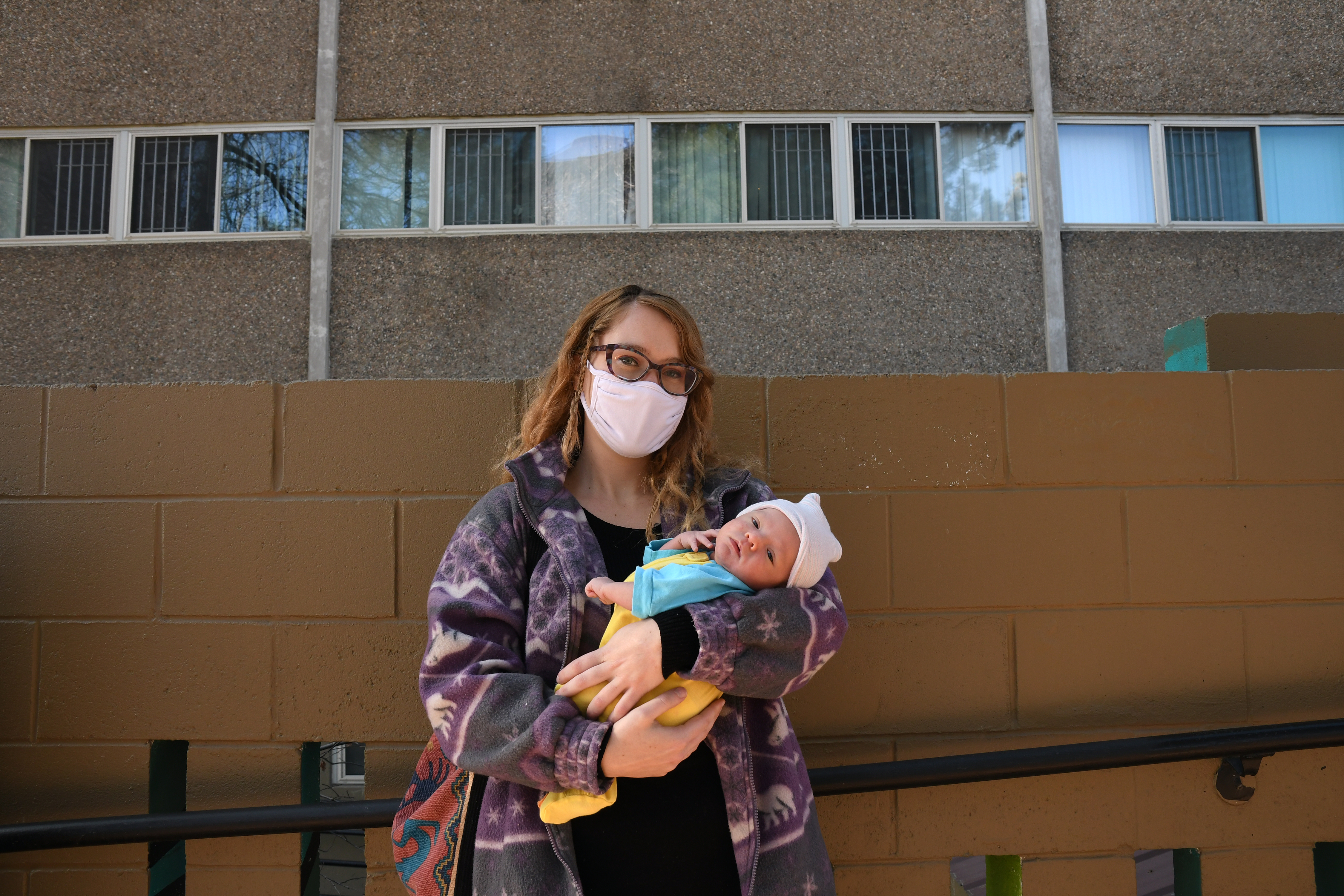
At the time, six years ago, Landy was 18 and earning $10 per hour. She could not afford her own apartment, so she said she paid somewhere north of $200 per month to live in the collective. Everyone there, Landy explained, worked in organizing or nonprofit activism. While she never saw the cops come to the collective, next-door neighbors were not happy when everyone gathered on the porch late at night.
That scenario – or worse – is what many Denver residents fear with a current proposal set for a city council vote on Monday. The policy change would raise the maximum number of unrelated adults able to live in a household to five and, if all adults are related, there would be no limit to how many could live in a household, as is the case now.
Even more controversially, the proposed group living change, known formally as the Denver Zoning Code Text Amendment #8, is intended to expand housing options by way of opening up areas of the city to certain groups like individuals experiencing homelessness or incarceration that were previously off-limits. Rather than allow housing types based on function, the proposal correlates the size to the surrounding neighborhood.
For example, all residential areas of the city will allow facilities of 10 or fewer residents. Areas with higher-density zoning can have facilities of between 40 and 100 residents, with the highest-zoned districts being able to accommodate more than 100.
By one tally of public comments, more than 90% of respondents opposed the group living change at one point.
“The stigma is very immature,” Landy said, now living by herself in Warren Village, a U.S. Department of Housing and Urban Development-supported residence for low-income, single-parent families. “It’s kind of an American cultural thing to have a one-family home or a large home with unoccupied rooms. In other countries, people live collectively a lot more.”
Opponents say their worries are well-founded.
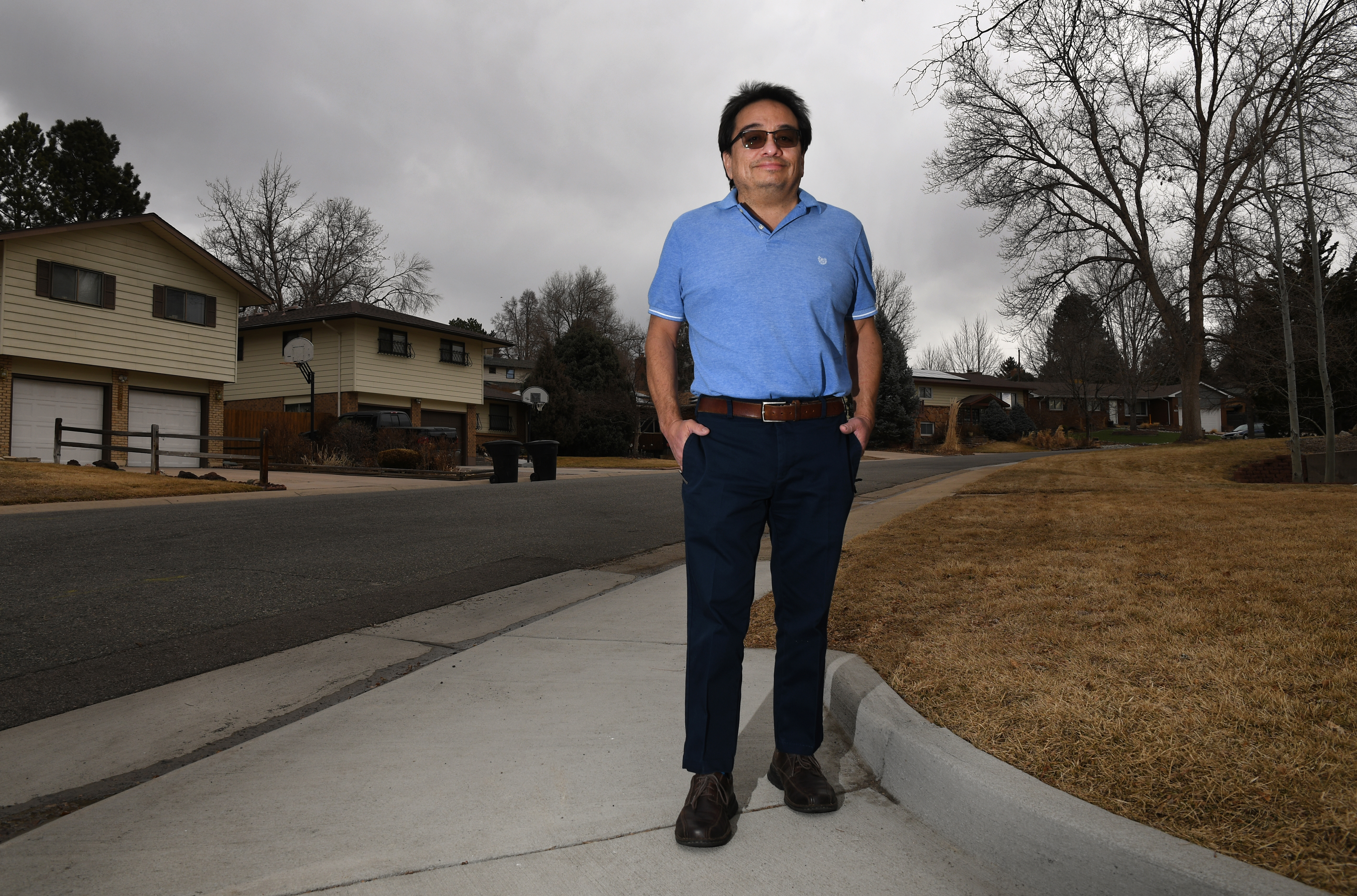
“My concern is that to have a smaller homeless shelter in a house, up to 10 people, the nonprofit that’s operating the house may not have the resources to manage their guests or the residents,” said Richard Saiz, president of the Bear Valley Improvement Association, a neighborhood group in southwest Denver that opposes the ordinance.
While Saiz says that most neighbors he has heard from are fine with increasing the maximum number of unrelated adults, it is the proliferation of community corrections – Colorado’s term for halfway houses – and living options for homeless residents that people cannot abide.
“We have a demand for about 550 total beds for community corrections,” countered Laura Swartz, the communications director for the department of Community Planning and Development. Due to a council vote ending contracts with private prison operators, there will be a need for 360 beds in June once the contract expires.
A change to the original group living proposal would permit the location of halfway houses in commercial corridors, pulling back from the original expansion to citywide. Still, it would amount to 19,000 of the city’s 99,000 acres being eligible for that purpose.
“The current zoning doesn’t allow for any new facilities. There is a need to say, we have to expand our community corrections locations, and we need to do it in a way than how it’s been done in the past,” Swartz continued. “We cannot continue to zone these types of uses in areas where they border communities of color.”

Adjustment to longstanding rule
In the 1950s, the zoning code allowed up to five unrelated adults to live together, but Denver in the 1960s revised the rules to only permit related adults in single-family homes.
In 1988, the state Supreme Court considered a case involving an unmarried, unrelated Denver couple who alleged the ordinance violated their right to privacy and the use of their property. While finding that Denver “possesses broad legislative discretion to determine how best to achieve declared municipal objectives,” the justices sent the case back to a lower court to further investigate possible violations of constitutional rights.
However, the Denver council stepped in and allowed up to two unrelated persons to cohabit in response to the litigation.
“Zoning should be used for regulating land use and density, not relationships,” Councilwoman Mary DeGroot said. Councilman Robert Crider countered that it was “a step towards destroying our city.”
Increasing the maximum number of unrelated adults in a household to five would apply to 80% of the city, because roughly 20% of residential parcels are still covered by old zoning laws, called Chapter 59, largely sprinkled in the eastern and southwestern parts of the city. Those would retain the two-person limit until updated separately.
Becky Crockett lives in Lakewood, but owns a house in Bear Valley in southwest Denver and is aware of the neighborhood group’s opposition. While she is apprehensive about the loosened restrictions for group living, Crockett tacitly supports the change.
“Two students don’t want to live there,” she said of her five-bedroom house she rents. Crockett mentioned that a group of more than two college students did approach her about living in the rental. She declined to say on the record what the outcome was.
In the process of updating its ordinance, Denver has pointed to “peer cities” like Albuquerque, Phoenix and Oklahoma City that already have a limit of five unrelated adults per household. Larry McAtee, the Ward 3 councilman in Oklahoma City, indicated he was unaware of any problems with the decade-and-a-half old ordinance.
“We did receive some resistance when it was initially passed, but do not receive too many calls for possible violations,” McAtee said.
In some jurisdictions, like Idaho Falls, Idaho, an unlimited number of unrelated adults can live together – as long as they act as a single household.
“I think one or our Board of Adjustment members put it like this: if you have to write your name on the groceries in the fridge or the shampoo in the shower then you’re not living as a single household,” said Kerry Beutler, assistant planning director for Idaho Falls.
While the city council considered changing its ordinance in 2016, they opted against it. Beutler cited no problems – other than the escalating cost of housing.
Denver received more than 6,000 pages of public comments between Aug. 19 and Dec. 16, overwhelmingly against the group living change.
A sticking point on felons, homeless
While some residents offered suggestions or requested specific tweaks – some of which made it into a subsequent revision – many more commenters broadly painted the group living proposal as radical and dangerous. They feared frat houses, neighborhood streets turning into parking lots and trash. Safe and Sound Denver, the chief opposition group to the amendment, has even calculated how much excess garbage a nine-person household would create, fearing it could “overwhelm” trash pickup cycles.
Most of the comments took the form of the group’s Change.org petition, which has more than 10,000 signatures as of Feb. 4. Although the petition text indicated that signers “don’t object” to community corrections and homeless shelters, there were concerns about “using single-family neighborhoods as an experiment.”
A subsequent version of the document also decried the removal of buffers that separate shelters and community corrections facilities from schools and neighborhoods. Community Planning and Development has asserted that the buffers have been “largely arbitrary,” and do not prevent new schools or childcare facilities from opening within the radius. In response, some commenters showed outright hostility to the idea of housing incarcerated persons in the community:
“I haven’t chosen to break the law – why should someone who did, get to choose to live next to me before they’ve completed their sentence? How dare you put my biggest financial investment at risk.”
“FIVE elderly women sharing a home is just NOT the same as 5 college boys OR 5 homeless people with addiction and mental health issues OR 5 convicted felons still in the prison system!”
“Kids won’t be able to walk to school safely. I will not be safe in my neighborhood after dark with possible felons & homeless people in my neighborhood.”
“You are robbing us of the peace and security homeownership affords.”
The senior planner working on the group living changes, Andrew Webb, acknowledged that “the most equitable approach would be to treat all residential care uses the same, not exclude any population.” But by backtracking on the number of areas that would now allow community corrections, “we did have to make some practical choices to get to a point where we felt like this was something the city council could adopt.”
Robert M. Silverman, a professor in the Department of Urban and Regional Planning at the University of Buffalo who reviewed Denver’s draft changes, said that most group homes do not cater to those serving criminal sentences. Even so, halfway houses serve nonviolent offenders, potentially awaiting parole, who receive treatment and supervision.
In his experience, the arguments that opponents use “are unfounded and based on stereotypes that are fairly widespread,” Silverman said. “They reflect a lack of awareness of how group homes are regulated. The draft of the ordinance seems to put safeguards in place that are designed to address the safety and community concerns the comments identify.”
Other people read more sinister meaning into opponents’ words.
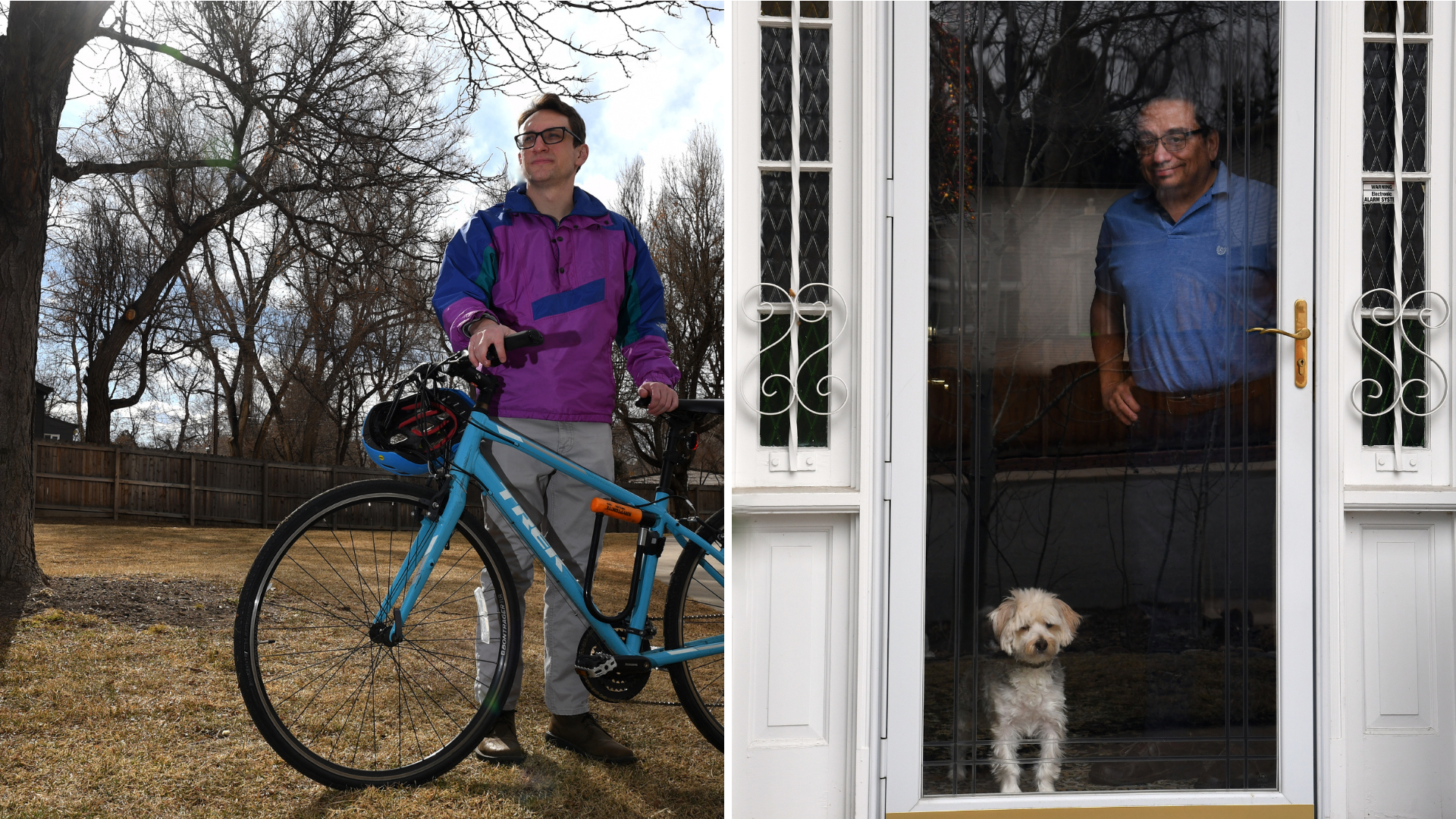
“‘Neighborhood character’ has been a dog-whistle for segregated neighborhoods since the 1940s,” said Evan Derby. In March 2020, Derby graduated from the University of Denver and he currently lives in a household that violates the two-adult limit. He admitted his status to the city in supporting the changes.

“I was hesitant to submit my comment at first because I have heard that people in a similar arrangement have had other people report them to the city after talking about their living arrangement during public meetings,” he said. “I don’t want to be the reason that my roommates and I are kicked out onto the street.”
(The city has made enforcement of the limit its lowest priority during the pandemic.)
Saiz, the neighborhood group president, agrees there is a need for housing for those experiencing homelessness and those in the criminal justice system. He wishes the council would take a separate vote to raise the cap on unrelated adults, and start the group living process over again.
“Chances are that a community corrections facility would not open” on a commercial property in the neighborhood, he conceded. “But you never know.”
Asked what options for affordable housing he would support, Saiz, who has been with the neighborhood association for more than a decade, suggested implementing the group living ordinance neighborhood by neighborhood at first; having sunset provisions for group homes after five to 10 years; or requiring that residences for individuals experiencing homelessness and halfway houses “adopt the home of a neighbor who needs help maintaining the exterior of their home.”
Derby, 22, said he has only met one of his neighbors, who seemingly has no problem with their arrangement. Ultimately, he decided in favor of sharing his story because he believed the city was hearing overwhelmingly from older homeowners, not young renters.
“Their collective voice often actively works to preserve housing scarcity, meaning that my generation and many more are priced out of actually owning a home in Denver,” said Derby, pointing to a 2019 report from housing finance company Unison that found 22 years was the amount of time a median income-earner in Denver would take to save for a 20% down payment on a median-priced home.
Common desire for security
“The silent killer of most mental illness is isolation,” added Luna Raine, 30, who lives in a tiny home village in Denver. She moved from New Jersey four years ago to escape domestic violence, and used to reside in a group home for mental health. After hearing some of the public comments that expressed fear and danger, Raine believed the attitude exhibited a lack of understanding for others’ experiences.
“The security that they think they will lose is all that we want. I also don’t want to be afraid all the time. There is a common denominator of people wanting to feel safe,” she said. “I’m not coming to be nefarious in your neighborhood.”
Of the people who weighed in to the city against the proposal, several proactively mentioned that their opposition was not based in racism. Councilman Chris Hinds, who represents the central neighborhoods of Denver, theorized that views toward the group living changes were more a consequence of class and age.
“District 10 is not racially or ethnically diverse, but we are diverse in class,” he said. “Folks in Capitol Hill want group living to succeed. Folks in Cherry Creek want it to fail.”
One developer used more explicit language in endorsing the changes, while acknowledging that he only built housing for “fortunate white rich entitled residents.”
“Don’t worry or lose any sleep the rich entitled white residents will still have plenty of wonderful homes to chose [sic] from,” he wrote to the city. “I know I build them homes every day, the city is their oyster.”


Colorado’s 661‑page budget read aloud after Rep. Bradley invokes procedural rule
Marianne Goodland
marianne.goodland@coloradopolitics.com
Updated 6 hours ago
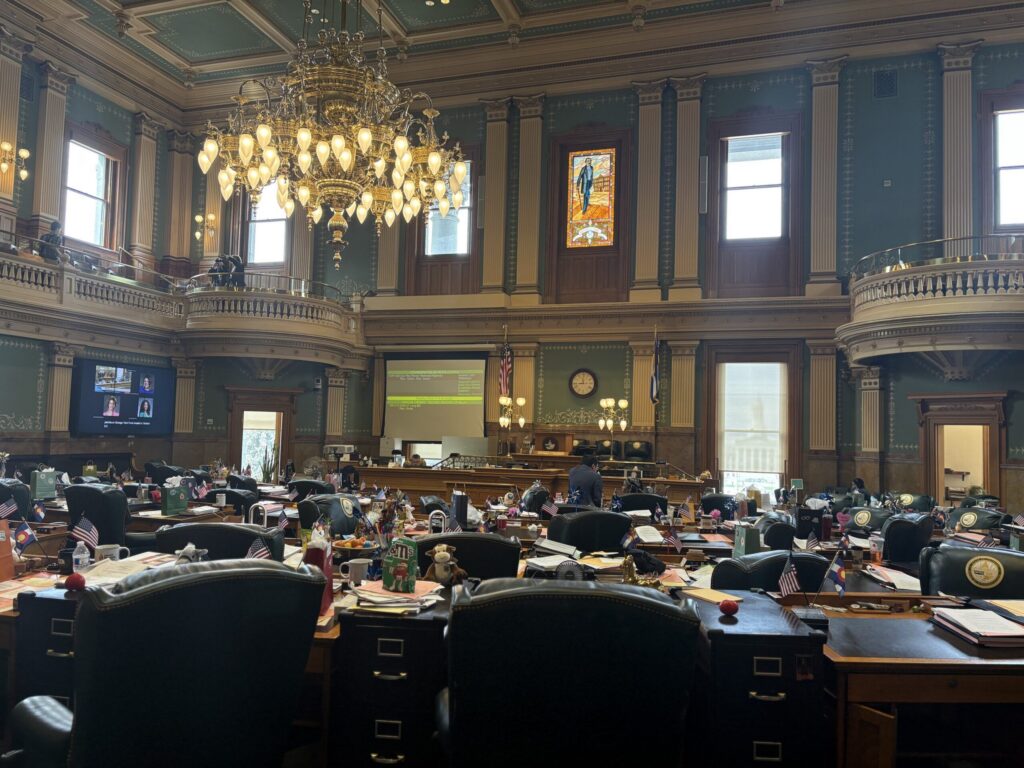
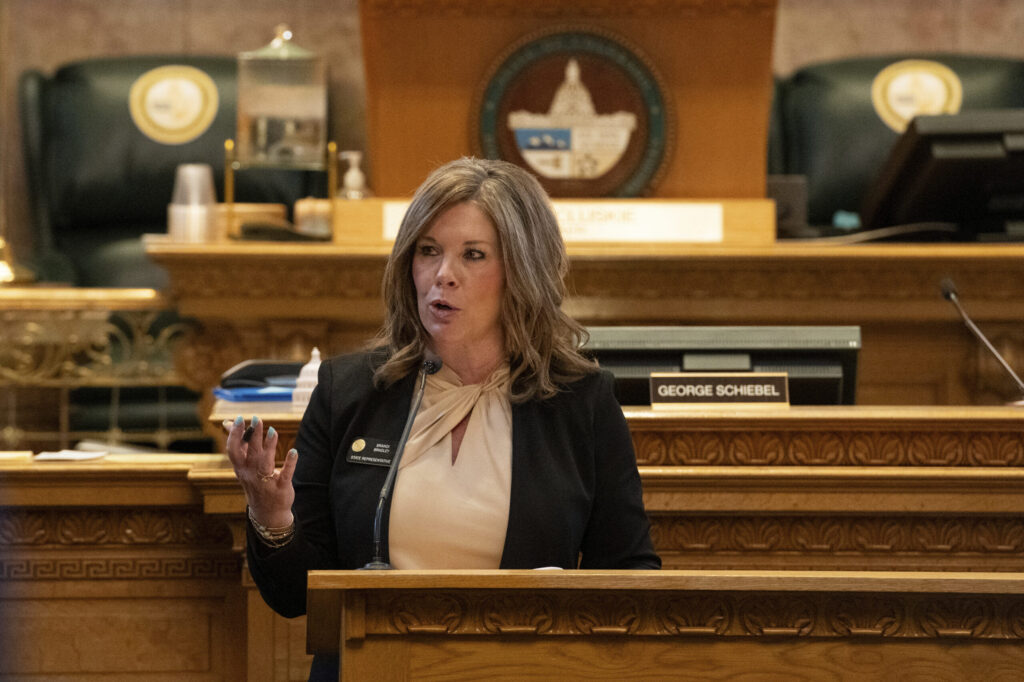
A rarely used procedural move by Rep. Brandi Bradley, R‑Roxborough Park, has thrown the Colorado House into an extended slowdown, after she invoked her right to have the 661‑page state budget bill read aloud in full. While unprecedented, once Bradley...
Literal reading of budget bill complicates Colorado legislators’ plans for GOP assembly
Marianne Goodland
marianne.goodland@coloradopolitics.com
Updated 5 hours ago
Republican Rep. Brandi Bradley’s decision to force the full reading of the state budget — called the “long bill” for its obvious length — has not only slowed House business to a crawl but also disrupted her colleagues’ plans for...
10th Circuit provides guidance on police searches of cloud-based data
Michael Karlik
michael.karlik@coloradopolitics.com
Updated 7 hours ago
The Denver-based federal appeals court provided guidance to law enforcement agencies on Monday for ensuring that searches of cloud-based accounts comply with the Fourth Amendment’s requirements. A three-judge panel of the U.S. Court of Appeals for the 10th Circuit noted...

Inflation jumped to 3.3% in March as Iran war drove up oil prices
Zach Halaschak, Washington Examiner
zach.halaschak.washington.examiner@gazetteedit.wpenginepowered.com
Updated 10 hours ago
Inflation spiked in March, rising nine-tenths of a percentage point to 3.3% on the year, as towering energy prices drove up the headline number. The Bureau of Labor Statistics reported the update to the consumer price index on Friday. The...
Colorado GOP votes down bid to ask court to prevent unaffiliated voters from voting in June primary
Ernest Luning
ernest.luning@coloradopolitics.com
Updated 6 hours ago
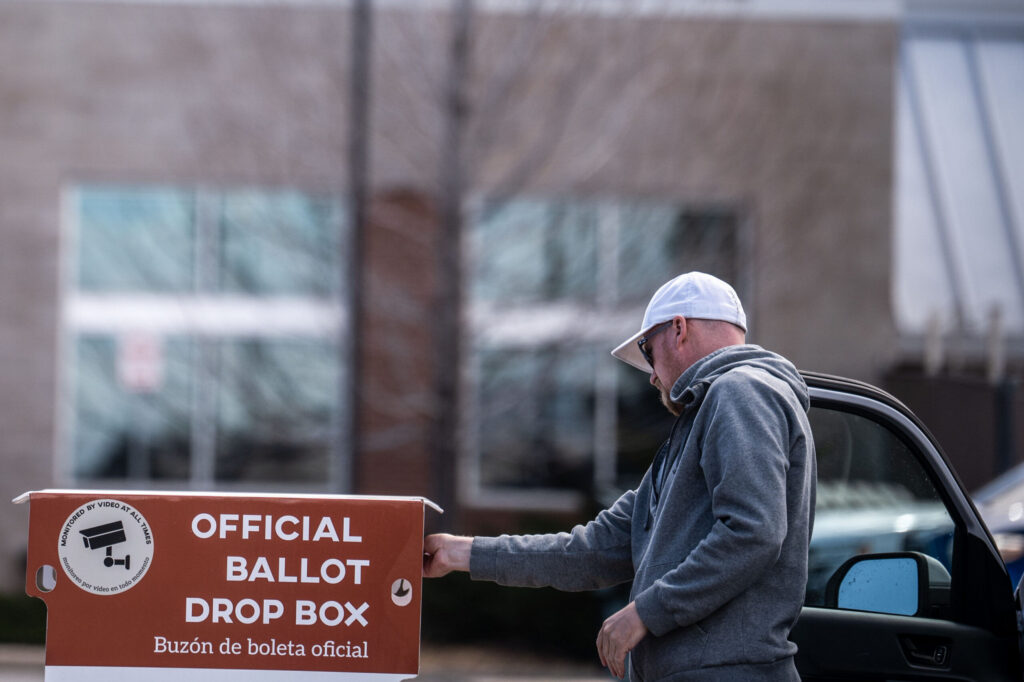
Members of the Colorado Republican Party’s executive committee rejected a proposal Thursday night to seek an emergency injunction in federal court to prevent unaffiliated voters from participating in the state’s upcoming June primary election. The proposed motion, backed by Colorado...

Federal judge releases man after 2 immigration judges disobey order
Michael Karlik
michael.karlik@coloradopolitics.com
Updated 11 hours ago
A federal judge released a man from immigration detention on Thursday after two different immigration judges disobeyed his order in the same case. “At this point, the Court has granted Respondents two bites at the apple to prove detention of...
City of Northglenn, state fail to reach agreement on mental health facility amid safety concerns
Marissa Ventrelli
marissa.ventrelli@coloradopolitics.com
Updated 5 hours ago
The City of Northglenn said it was unable to reach an agreement with the state on a pair of transitional living facilities for individuals with mental health conditions run by the Colorado Department of Human Services. The facilities, located across...
Colorado lawmakers grapple with spending cuts amid $1 billion-plus deficit
Marianne Goodland
marianne.goodland@coloradopolitics.com
Updated 1 day ago
The battle over Colorado’s budget for next year — which stalled in the House over a procedural maneuver — entered a more difficult phase on Thursday, when legislators grappled with hundreds of millions of dollars in proposed reductions to balance...

New rules for private judges in Colorado include discipline oversight, campaign contributions
David Migoya
david.migoya@gazette.com
Updated 45 minutes ago
The Colorado Supreme Court recently determined the state’s private judges — retired jurists appointed to oversee civil cases that rarely get public scrutiny — can now make political contributions freely and without reserve, overruling a prohibition that had been in...

Colorado bill reshaping RTD board advances
Marissa Ventrelli
marissa.ventrelli@coloradopolitics.com
Updated 1 day ago
A proposal to reshape the Regional Transportation District’s leadership easily cleared a committee vote Wednesday, advancing the bill sponsors say is needed to revive a transit system still struggling to regain riders and public trust. Critics have countered that, while...
PREV
PREVIOUS

Gov. Jared Polis extends mask mandate another 30 days
Gov. Jared Polis has extended, once again, the mandate on masks and other face coverings for another 30 days. The original order for all Coloradans to wear masks in public places was issued July 17, 2020 and has been extended about every 30 days since then. At the time Polis issued the original order, 39 […]

Judge asks state Supreme Court to lower threshold for voiding laws
An appeals judge has urged the Colorado Supreme Court to revise its 1884-era standard for finding laws unconstitutional, advocating for the state’s court system to lower its level of scrutiny to conform with its federal counterpart. Judge Daniel M. Taubman, writing in a case the Court of Appeals decided on Feb. 4, believed the current […]