

With Colorado’s most vulnerable increasingly vaccinated, state in a ‘different place in the pandemic’

Colorado is in a “different place in the pandemic” now that many of its most vulnerable residents have been vaccinated, a top health official said Monday, which is why the state is looking to further loosen some infection control measures.
The state announced over the weekend that it was preparing to change its dial – the COVID metric-driven framework used to determine how tightly controlled various counties should be.
At a news conference Monday, Colorado chief medical officer Eric France said tinkering with the dial “is absolutely what we should be doing.”
“Now we’re in a place where health care workers and our most vulnerable (who) are most likely to die or be hospitalized, are becoming vaccinated,” France said.
“It’s a different place than we were in six months ago when the dial was built in partnership with communities.”
He said with the vaccine and increased control of the pandemic in Colorado, officials are considering “the important desire to open up businesses and solve for the crisis at hand.”
Under the proposed changes to the dial, the most stringent levels of restrictions would require a higher number of cases in a community.
As of now, for instance, having 300 cases per 100,000 residents would put a county at Level Orange. Under the new dial, 300 cases would put counties at the upper limit for yellow, one step looser than orange.
The new dial would have higher benchmarks for positivity rate, though.
An 8% positivity rate under the current dial would land a county in yellow; under the new dial, that county would be in orange based on their positivity rate.
By every metric, the presence of COVID in Colorado is far lower than it was in November or December.
The seven-day average of new cases added here is at its lowest since late October, and hospitalizations – long the boogeyman that threatened to overwhelm the state – are the lowest they’ve been since before Halloween.
Ninety percent of the state’s health care workers have been vaccinated, and most vaccine clinics within the state’s skilled-nursing homes are also complete.
Just less than 40% of the state’s 70-and-older population has been inoculated, which is more than halfway toward the state’s end-of-February goal.
All of the state’s allocation of vaccines for this week will go to those older than 69 years old, National Guard Brigadier Gen. Scott Sherman said at the news conference.
After that, as much as 65% of the state’s allocation will go toward that group to ensure at least 70% of those 70 and up are inoculated by the end of February.
He added that the state is hoping to get enough vaccine in the coming weeks – 300,000 doses per week or more – to begin doling out shots from as many providers as possible.
“We’re certainly hoping here in March that the amount of vaccine increases substantially so we can get vaccine at every pharmacy, every provider,” he said.
“We think that’s somewhere above 300,000 a week, where we can make sure everybody’s included so we can do that. Once we get above 300,000, that’s also where we look at bringing in (Federal Emergency Management Administration and the Department of Defense) to run larger clinics, too.”


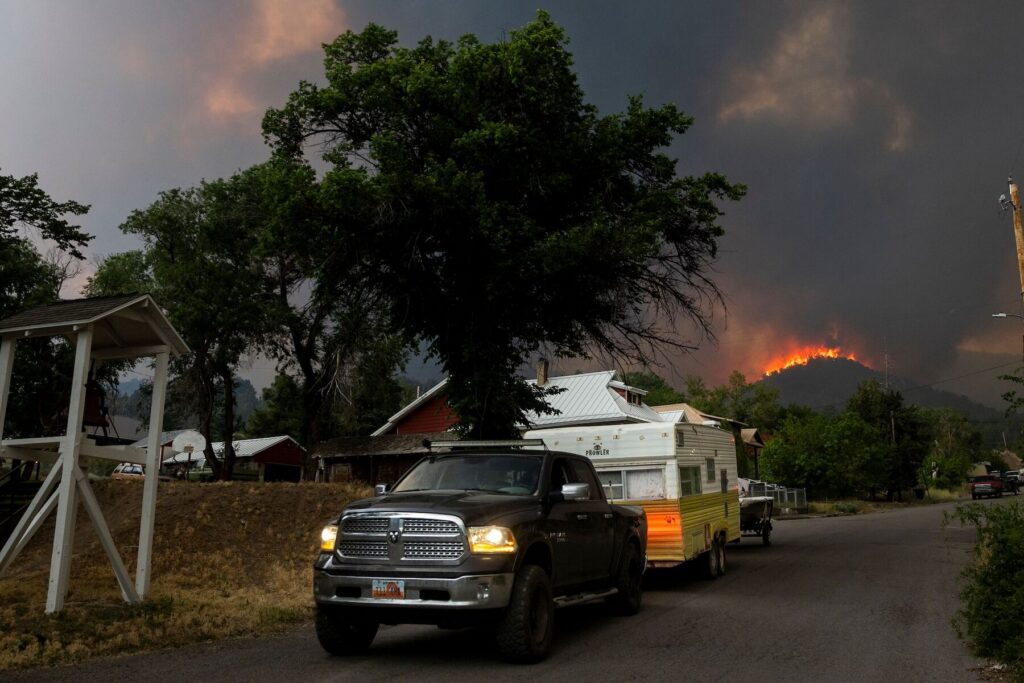
Heat, wind and drought conditions spark wildfires across US West | OUT WEST ROUNDUP
Ernest Luning
ernest.luning@coloradopolitics.com
Updated 9 hours ago
Heat, drought spark wildfires Extreme heat and dry, windy conditions fueled several wildfires in the West on June 21, including an uncontained blaze in Utah that forced the evacuation of a small town southwest of Salt Lake City. The Iron...
Crank challenger Jessica Killin signs on to new centrist Democratic group’s ‘Promise to America’
Ernest Luning
ernest.luning@coloradopolitics.com
Updated 6 hours ago
Jessica Killin, one of the Democrats running in Tuesday’s primary for the chance to challenge U.S. Rep. Jeff Crank in Colorado’s 5th Congressional District, joined with more than a dozen incumbent Democratic lawmakers and candidates this week signing on to...

Colorado Politics Calendar June 29-July 5
Rachael Wright, Special to Colorado Politics
rachael.wright@coloradopolitics.com
Updated 4 days ago
CoPo’s weekly political calendar will help you find political and public-policy events throughout Colorado. It includes candidate and issue campaign events, public policy meetings, court hearings, state and local party conventions, assemblies, debates, rallies, parades, speaking engagements, traveling dignitary appearances,...
Gov. Lamm’s GOP challenger gives insights into his campaign | A LOOK BACK
Rachael Wright, Special to Colorado Politics
rachael.wright@coloradopolitics.com
Updated 4 days ago
Forty-five years ago this week: “I see Gov. (Richard) Lamm is fairly popular in general,” said gubernatorial candidate and state Sen. Bill Hughes, R-Colorado Springs. “ … And he’ll be hard to beat.” Hughes was on a whirlwind campaign trail...
Giving credit to Polis where credit is due | SONDERMANN
Eric Sondermann
eric-sondermann@coloradopolitics.com
Updated 4 days ago
It is an understatement to suggest that Gov. Jared Polis has had a tough couple of months. The bloom was already off the rose and Coloradans were paying far more attention to the choice of his replacement than they were...

Bennet, Hickenlooper to vote against Trump’s 10th Circuit nominee from Colorado
Michael Karlik
michael.karlik@coloradopolitics.com
Updated 1 day ago
Colorado’s two Democratic senators will not vote to confirm President Donald Trump’s nominee to a vacancy on the Denver-based federal appeals court. Trump has selected U.S. District Court Chief Judge Daniel D. Domenico, who he appointed as a federal trial...
Who’s spending in Colorado to get your vote?
Marianne Goodland
marianne.goodland@coloradopolitics.com
Updated 1 day ago
Groups that raise unlimited amounts of money have spent about $20 million in May and June to try and influence Colorado voters’ choices in the upcoming June 30 primaries. By law, these groups cannot coordinate with the candidates they support....
U.S. government declines to oppose multiple challenges to immigration detention in Colorado
Michael Karlik
michael.karlik@coloradopolitics.com
Updated 2 days ago
Multiple federal judges in Colorado granted petitions from people challenging the lawfulness of their immigration detention this week after the government took the unusual step of declining to submit arguments in opposition. Colorado’s federal trial court is facing a flood of...

Tina Peters tells supporters to ‘stand up and fight back’ at Castle Rock event
Marissa Ventrelli
marissa.ventrelli@coloradopolitics.com
Updated 2 days ago
Tina Peters, the former Mesa County clerk recently released from prison, warned supporters that what happened to her could happen to them, too, if they did not “stand up and fight back” at an event at the Douglas County Fairgrounds....

Iran strikes cargo ship in Strait of Hormuz, endangering Trump’s peace
Christian Datoc
christian-datoc@coloradopolitics.com
Updated 2 days ago
Iran attacked a cargo ship traveling through the Strait of Hormuz on Thursday, possibly upending President Donald Trump‘s diplomatic end to the war with Iran. A U.S. official confirmed to the Washington Examiner that the Islamic Revolutionary Guard Corps “struck...
PREV
PREVIOUS

14 Front Range cities to coordinate drought response
As drought conditions intensify across Colorado, at least 14 cities in the Denver metro area say they will join forces to warn residents of looming water shortages and the need to cut back use this spring. Denver Water’s Jason Finehout said a metro drought coordination effort would help ensure a consistent message on reducing water […]

State Supreme Court rules against Polis, declines to remove him from transgender inmate lawsuit
The Colorado Supreme Court rejected a request from Gov. Jared Polis to be dropped as a defendant in a lawsuit that alleges the state’s prison system allows transgender inmates to be subjected to rape, trafficking and harassment. “The people we elect to those offices have to be held accountable for some of the most critical […]